A record of documented arms, meaning and origin, researched for the Abel family lines. Documented in 3 countries.
Reg. 4545 · German, A–C
Coat of Arms & Family Crest Details
Symbols on this shield
lambGentleness, patience and faith
fireZeal and purification
cloudDivine favour, and mystery
Colours
Black (Sable)Means: Constancy
Silver (Argent)Means: Peace and sincerity
Historical info
Source
J. B. Rietstap, Armorial Général, Gouda: G. B. van Goor Zonen, 1884–87
Blazon (the actual original written record)
“De sa. à un autel carré d'arg., supp. un agneau couché, entouré de flammes et de fumée, le tout au nat. Cq. cour. C.: un jeune homme iss., chevelé d'or, hab. d'arg., les mains jointes et les yeux levés, dans l'attitude de la prière.”
WurttembergWurttemberg, c. 1627
Digital archive packCoat of arms PNG, gold border print PDF, vector SVG and the certificate of authenticity. Sent to your email in minutes.
Map of Germany showing where the Abel arms are recorded
The Abel arms were recorded in Wurttemberg, c. 1627.
Wurttemberg was southern German country of small estates and well-off market towns. Both landowners and leading townsmen kept arms there, so the region carries far more names than its size suggests.
This is where the arms were entered in the register. Families often moved to other parts of the country, so the same name can turn up in more than one region.
The body that granted and recorded arms in Germany in this period.
Ferdinand II, Holy Roman Emperor
Sovereign of the period
Ferdinand II, Holy Roman Emperor
1619–1637
Reigning in Germany when the Abel arms are first recorded.
How Arms Worked in Germany
In the Holy Roman Empire, coats of arms were often granted to individuals by the Emperor or his representatives. These arms were then passed down through the generations to all legitimate descendants of the original holder. Younger branches of a family usually kept the same shield design without needing to change it, as the arms belonged to the entire lineage.
Granting authority
The Holy Roman Emperor held the sole power to grant new coats of arms throughout his vast imperial territories.
How they got arms
Families typically obtained their coats of arms through a formal imperial grant or by proving their noble status to the authorities.
Where arms were recorded
These grants were officially recorded in the Imperial Chancery registers, which began keeping formal records of such honors during the Middle Ages.
The family's standing
Recorded among the armigerous families of Wurttemberg.
Origin & History of the Abel Family in Germany
The name Abel has deep roots in Germany, functioning originally as a personal name derived from the Hebrew name Hevel. In the German-speaking regions, it became a common given name during the Middle Ages before eventually transitioning into a hereditary surname. By the early 17th century, the family was well-established in the region of Württemberg, where records confirm their presence by 1627. During this era, families in southwestern Germany were often tied to the land through agriculture or skilled trades, and the name Abel appeared frequently in local church registers that tracked births, marriages, and deaths. As the population grew and moved through the German states, the name remained a consistent identifier for families living in the rural villages and growing towns of the Württemberg region. This history reflects the broader pattern of how Germanic surnames evolved from simple personal identifiers into the lasting family names used today.
Coat of Arms & Family Crest Details
Symbols on this shield
mountThe ground held, and steadfastness upon it
lionCourage, strength and royalty
Colours
Black (Sable)Means: Constancy
Gold (Or)Means: Generosity
Green (Vert)Means: Hope
Historical info
Source
J. B. Rietstap, Armorial Général, Gouda: G. B. van Goor Zonen, 1884–87
Blazon (the actual original written record)
“Coupé de sa. sur or; au lynx ramp. au nat., br. sur le coupé, soutenu d'un tertre de sin. Cq. cour. C.: le lynx, iss., entre deux prob., coupées alt. d'or et de sa., ornées chacune dans son embouchure d'une fleur-de-lis d'arg.”
Austriac. 1772
Digital archive packCoat of arms PNG, gold border print PDF, vector SVG and the certificate of authenticity. Sent to your email in minutes.
Map of Austria showing where the Abel arms are recorded
The Abel arms were recorded in Austria, c. 1772.
Arms such as these were typically recorded in Tyrol.
Tyrol was mountain country in western Austria, where the valleys were held by families who had been there a very long time. Old tenure counted for more than money, and old families carried arms.
This is where the arms were entered in the register. Families often moved to other parts of the country, so the same name can turn up in more than one region.
Region
Tyrol
First recorded
1772
Granting Authority for the Abel Arms
Imperial and Royal chancery
Sodacan · CC BY-SA 3.0
The body that granted and recorded arms in Austria in this period.
Joseph II, Holy Roman Emperor
Sovereign of the period
Joseph II, Holy Roman Emperor
1765–1790
Reigning in Germany when the Abel arms are first recorded.
How Arms Worked in Austria
Austrian coats of arms were often linked directly to noble titles granted by the Emperor. These symbols belonged to the entire family line rather than just one individual. When a family grew, new branches kept the original design without needing to change it. This system allowed all members of a noble house to share the same identity across many generations.
Granting authority
The Imperial and Royal chancery managed all heraldic matters and controlled the official granting of arms throughout the Austrian lands.
How they got arms
Families typically received their arms through a formal imperial decree that often accompanied the elevation of a person to noble status.
Where arms were recorded
Official records of these grants were kept in the Imperial Register of Nobility which began its formal documentation process in 1453.
The family's standing
Recorded among the armigerous families of Austria.
Origin & History of the Abel Family in Austria
The family name Abel has deep roots in the Alpine regions of Central Europe, particularly within the rugged landscape of Tyrol. By the year 1772, records confirm that members of the Abel family were firmly established in this area, likely living as farmers or skilled tradespeople in the mountain valleys. The name itself is of ancient origin and is derived from a Hebrew given name that became popular across Europe during the Middle Ages. In the context of Austrian history, families like the Abels often lived in small, tight-knit communities where they relied on agriculture and local trade to survive the harsh winters. Because Tyrol served as a vital crossroads for travel between Italy and the rest of the German-speaking world, the family likely witnessed significant cultural and political shifts as the region moved through the late eighteenth century. Their presence in these official records suggests they were recognized members of their local parishes, contributing to the social fabric of the Austrian Empire long before the modern era.
Coat of Arms & Family Crest Details
Symbols on this shield
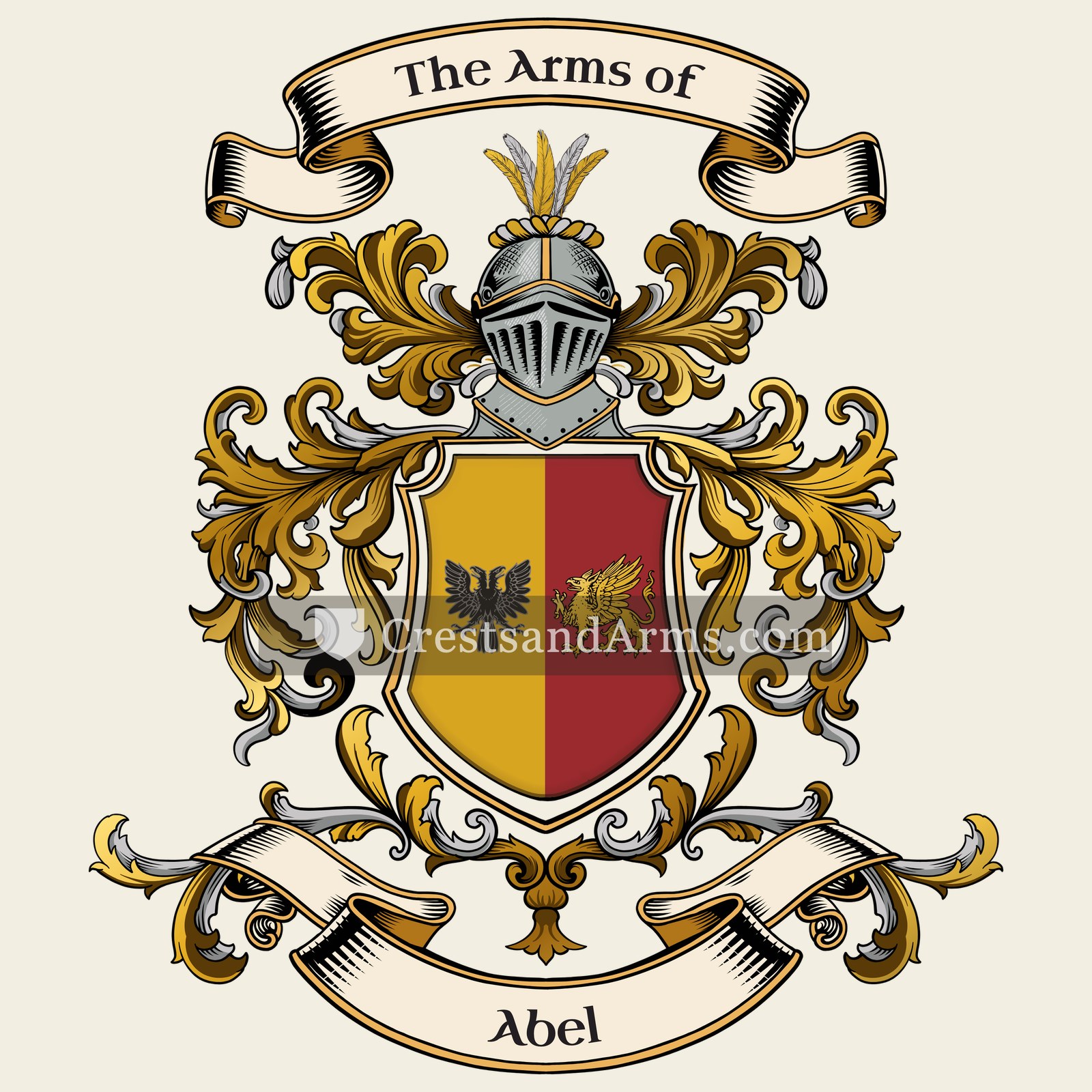
eagleNobility, strength and a keen mind
griffinValour and vigilance, guarding great treasure
Colours
Gold (Or)Means: Generosity
Red (Gules)Means: Military strength
Black (Sable)Means: Constancy
Historical info
Source
J. B. Rietstap, Armorial Général, Gouda: G. B. van Goor Zonen, 1884–87
Blazon (the actual original written record)
“Parti: au 1 d'or à l'aigle de sa.; au 2 de gu. au griffon d'or, cour du même, sa queue recourbée supportant un petit griffon naiss. d'or qui tient de ses pattes une fleur-de-lis d'azur.”
CastileCastile, c. 1722
Digital archive packCoat of arms PNG, gold border print PDF, vector SVG and the certificate of authenticity. Sent to your email in minutes.
Map of Spain showing where the Abel arms are recorded
The Abel arms were recorded in Castile, c. 1722.
Castile was the heart of Spain and the source of most of its noble families. Land won in the long wars against the Moors was granted out to fighting men, and a man granted land was granted arms along with it.
This is where the arms were entered in the register. Families often moved to other parts of the country, so the same name can turn up in more than one region.
The body that granted and recorded arms in Spain in this period.
Philip V of Spain
Sovereign of the period
Philip V of Spain
1714–1724
Reigning in Germany when the Abel arms are first recorded.
How Arms Worked in Spain
In Spain, a coat of arms was considered a form of property that belonged to the entire family line. These arms were passed down from a father to all his children equally. Younger branches of the family usually kept the original design without needing to add any special marks to distinguish their specific line.
Granting authority
The Cronista Rey de Armas was the official body that regulated and granted coats of arms throughout Spain.
How they got arms
Families often obtained their arms through royal grants or by proving their noble status to the official heraldic authority.
Where arms were recorded
Coats of arms were officially recorded in the registers of the Cronista Rey de Armas starting in 1496.
The family's standing
Recorded among the armigerous families of Castile.
Origin & History of the Abel Family in Spain
The family name Abel has deep roots in the Iberian Peninsula, where it emerged as a distinct surname during the centuries of social and administrative development in the region. While the name is often associated with biblical origins, its presence in Spain reflects the movement of families across the rugged landscapes of the interior. By the early eighteenth century, records confirm that members of the Abel family were firmly established in the Kingdom of Castile. During this period, the family participated in the local life of Castilian towns, likely contributing to the agricultural and civic growth that defined the region. Their presence in 1722 suggests a family that was well-integrated into the social fabric of the Spanish heartland, living through a time of significant transition as the country adjusted to new political leadership and shifting economic structures. This history highlights the family as part of the broader demographic story of Castile, where surnames served as vital markers of identity and lineage within local communities.
Abel Meaning & Related Branches
Root word
Hevel
A Hebrew term meaning breath or vapor.
This name
AbelDerived from a biblical name signifying transience or a fleeting existence.
also spelled
Abell
Abele
Related arms
van den Abeelevariant spelling
Hellrecorded with Abel, same area
Widmannrecorded with Abel, same area
Documented Sources
J. B. Rietstap, Armorial Général, Gouda: G. B. van Goor Zonen, 1884–87
Bahlow, Hans, Deutsches Namenlexikon: Familien- und Vornamen nach Ursprung und Sinn erklärt, 1967
Heintze, Albert, Die deutschen Familiennamen: geschichtlich, geographisch, sprachlich, 1903
Hauptstaatsarchiv Stuttgart, Kirchenbücher der evangelischen Landeskirche in Württemberg, 1627
Digital archive packCoat of arms PNG, gold border print PDF, vector SVG and the certificate of authenticity. Sent to your email in minutes.


 lambGentleness, patience and faith
 fireZeal and purification
 cloudDivine favour, and mystery
 lambGentleness, patience and faith
 fireZeal and purification
 cloudDivine favour, and mystery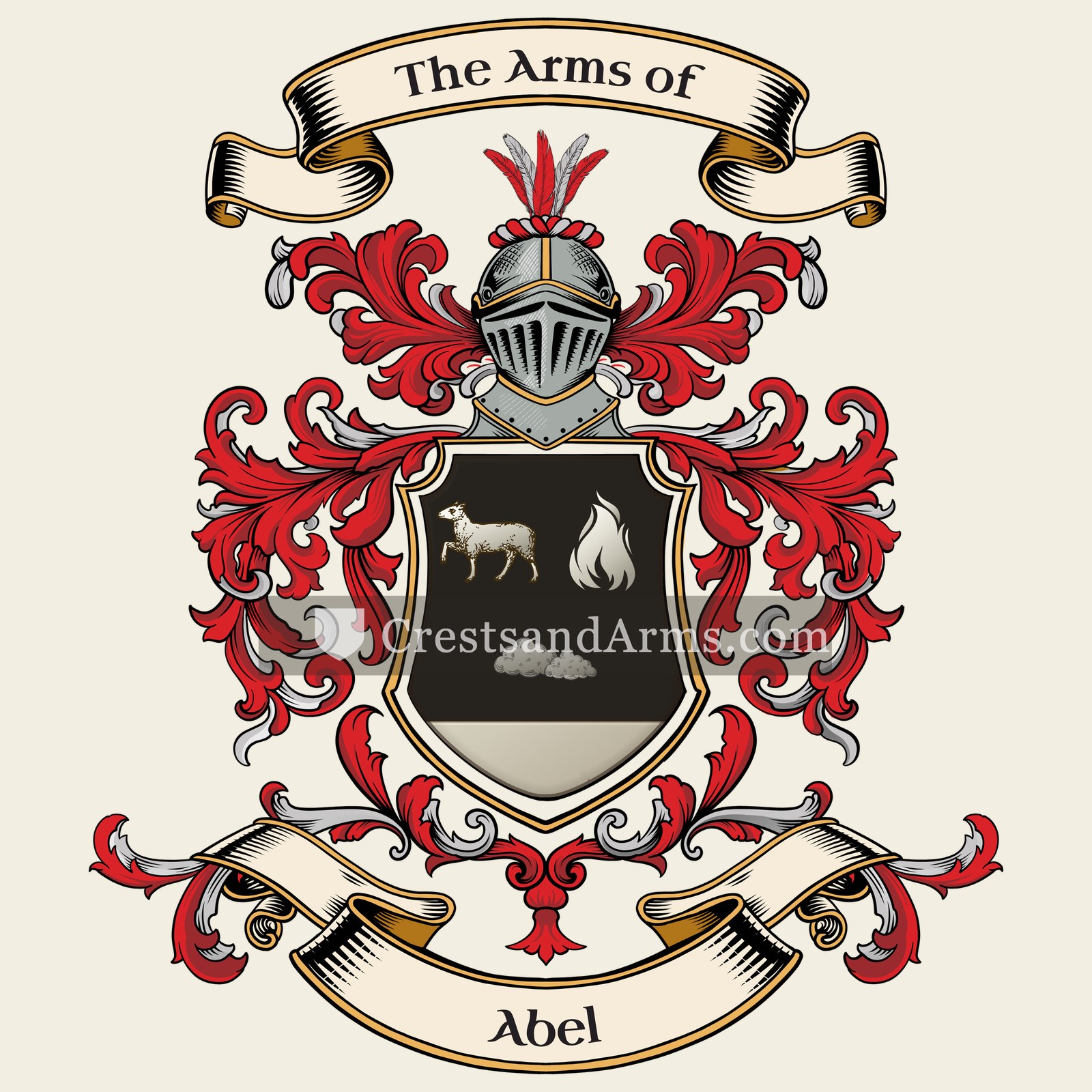


 mountThe ground held, and steadfastness upon it
 lionCourage, strength and royalty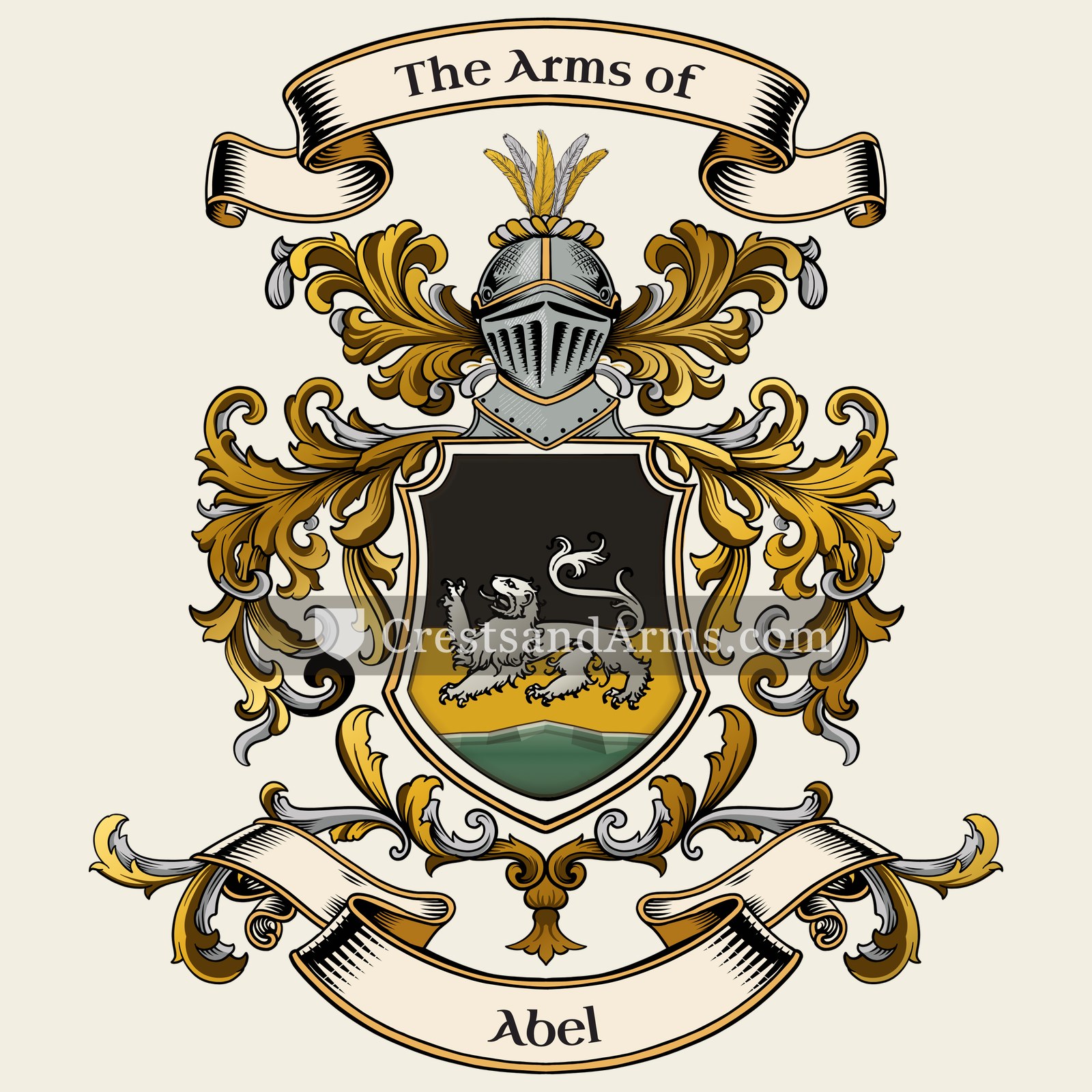


 eagleNobility, strength and a keen mind
 griffinValour and vigilance, guarding great treasure