Map of Italy showing where the Adamy arms are recorded
The Adamy arms were recorded in Florence, c. 1775.
This is where the arms were entered in the register. Families often moved to other parts of the country, so the same name can turn up in more than one region.
The body that granted and recorded arms in Italy in this period.
Alvise Giovanni Mocenigo
Sovereign of the period
Alvise Giovanni Mocenigo
1763–1778
Reigning in Italy when the Adamy arms are first recorded.
How Arms Worked in Italy
In the Italian states, coats of arms were often used by noble families to show their status and history. These symbols were passed down through the generations to all legitimate male descendants. Younger branches of a family usually kept the original design but sometimes added small changes to distinguish their specific line from the main branch.
Granting authority
Various local rulers and city governments controlled the use of coats of arms across the different Italian states.
How they got arms
Families often assumed their own arms or received them as official grants from local lords, popes, or city councils.
Where arms were recorded
Arms were recorded in local city archives or private family books rather than in one single national register.
The family's standing
Recorded among the armigerous families of Italy.
Origin & History of the Adamy Family in Italy
The Adamy family name holds deep roots in the cultural landscape of Italy, with documented evidence placing members of the family in the vibrant city of Florence by the year 1775. During this period, Florence was a major center for art, trade, and intellectual growth under the influence of the Grand Duchy of Tuscany. Families like the Adamy group often integrated into the local urban structure by participating in the city’s thriving merchant guilds or professional circles. As the name appears in records from this era, it suggests that the family was part of the established middle or upper class that helped maintain the city’s reputation for excellence in craftsmanship and administration. By living in such a historically significant city, the early Adamy family members were likely witnesses to the transition of Italy into the modern age, contributing to the social fabric of a region defined by its long history of innovation and civic pride.
Coat of Arms & Family Crest Details
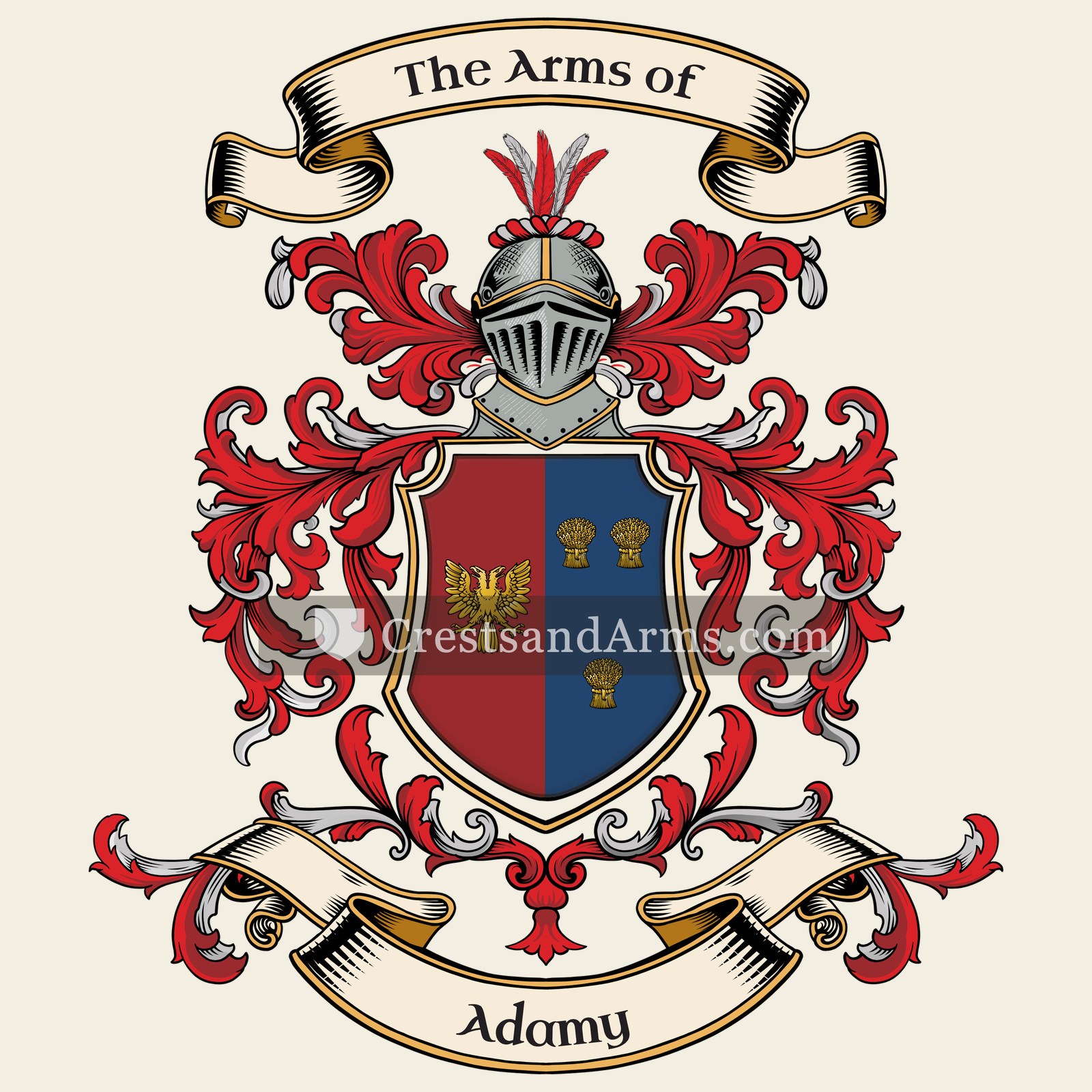
Symbols on this shield
eagleNobility, strength and a keen mind
wheatsheafPlenty, and the harvest of one's own labour
Colours
Red (Gules)Means: Military strength
Blue (Azure)Means: Loyalty and truth
Gold (Or)Means: Generosity
Historical info
Source
J. B. Rietstap, Armorial Général, Gouda: G. B. van Goor Zonen, 1884–87
Blazon (the actual original written record)
“Parti: au 1 de gu. à la demi-aigle d'or, mouv. du parti; au 2 d'azur à trois épis sur une seule tige, feuillée de deux pièces, le tout d'or. C.: les épis du 2.”
GermanyBrème, c. 1765
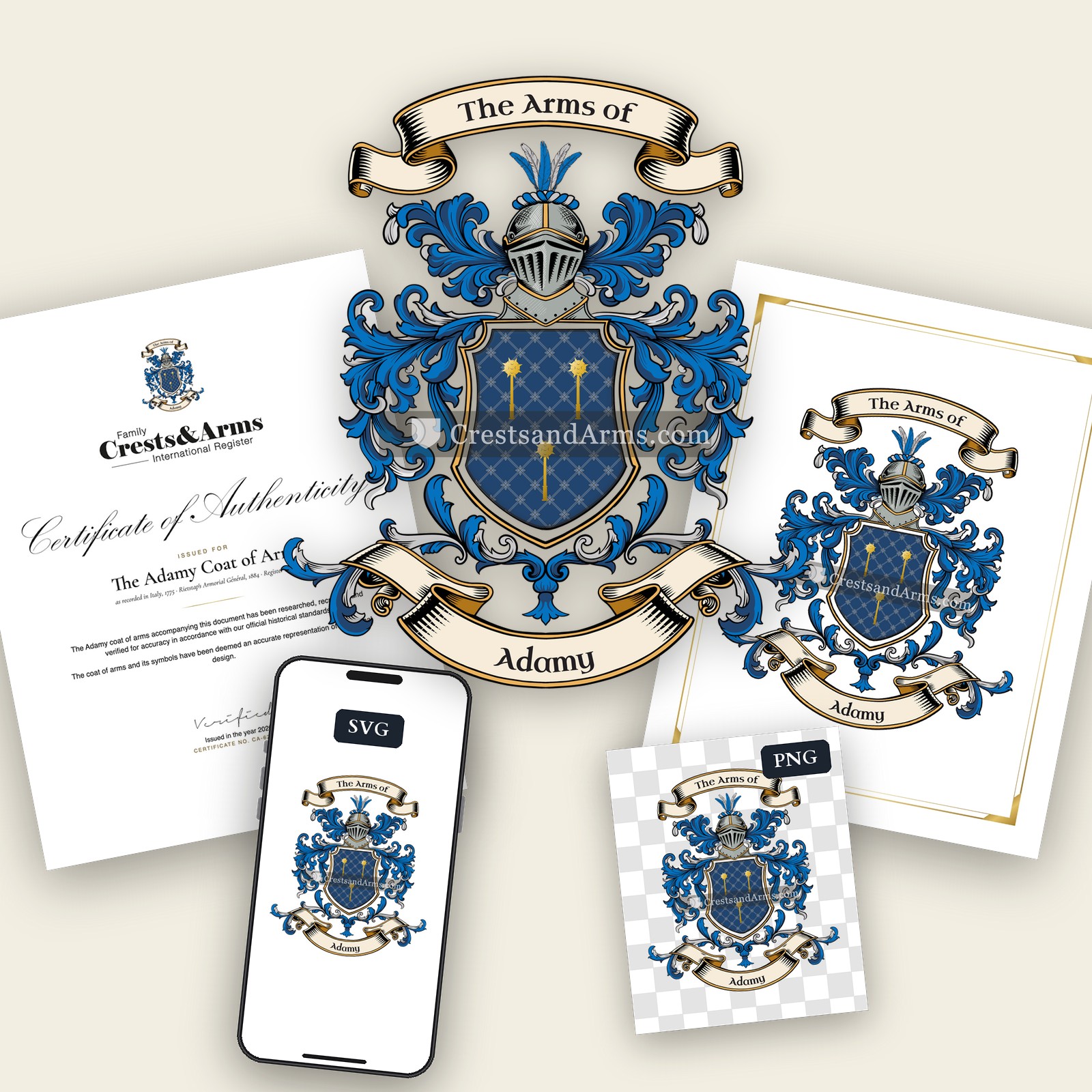
Digital archive packCoat of arms PNG, gold border print PDF, vector SVG and the certificate of authenticity. Sent to your email in minutes.
Map of Germany showing where the Adamy arms are recorded
The Adamy arms were recorded in Brème, c. 1765.
This is where the arms were entered in the register. Families often moved to other parts of the country, so the same name can turn up in more than one region.
The body that granted and recorded arms in Germany in this period.
Francis I, Holy Roman Emperor
Sovereign of the period
Francis I, Holy Roman Emperor
1745–1765
Reigning in Italy when the Adamy arms are first recorded.
How Arms Worked in Germany
In the Holy Roman Empire, coats of arms were often granted to individuals by the Emperor or his representatives. These arms were then passed down through the generations to all legitimate descendants of the original holder. Younger branches of a family usually kept the same shield design without needing to change it, as the arms belonged to the entire lineage.
Granting authority
The Holy Roman Emperor held the sole power to grant new coats of arms throughout his vast imperial territories.
How they got arms
Families typically obtained their coats of arms through a formal imperial grant or by proving their noble status to the authorities.
Where arms were recorded
These grants were officially recorded in the Imperial Chancery registers, which began keeping formal records of such honors during the Middle Ages.
The family's standing
Recorded among the armigerous families of Germany.
Origin & History of the Adamy Family in Germany
The name Adamy is a variation of the ancient name Adam, which was used across Germany for centuries as both a given name and a surname. By the middle of the eighteenth century, the family had established a notable presence in the city of Bremen. Records confirm that members of the Adamy family were living in this major port city by 1765. During this era, Bremen was a thriving center of trade and commerce, which likely attracted families looking for new opportunities in urban life. As a surname, Adamy often served as a way to identify a person as a descendant of someone named Adam, reflecting the common practice of using biblical names to form family identities in early modern Germany. The family’s residence in a prominent city like Bremen suggests they were part of the growing middle class that helped shape the social and economic landscape of the region during the eighteenth century.
Adamy Meaning & Related Branches
Root word
Adam
Hebrew term meaning earth or red clay.
This name
AdamyA patronymic surname derived from the biblical name meaning son of Adam.
also spelled
Adamy
Documented Sources
J. B. Rietstap, Armorial Général, Gouda: G. B. van Goor Zonen, 1884–87
Archivio di Stato di Firenze, Stato Civile della Restaurazione, 1775
Bec, Christian, Les marchands écrivains à Florence 1375-1434, 1967
Cantagalli, Roberto, La Toscana dei Medici nel Granducato, 1987
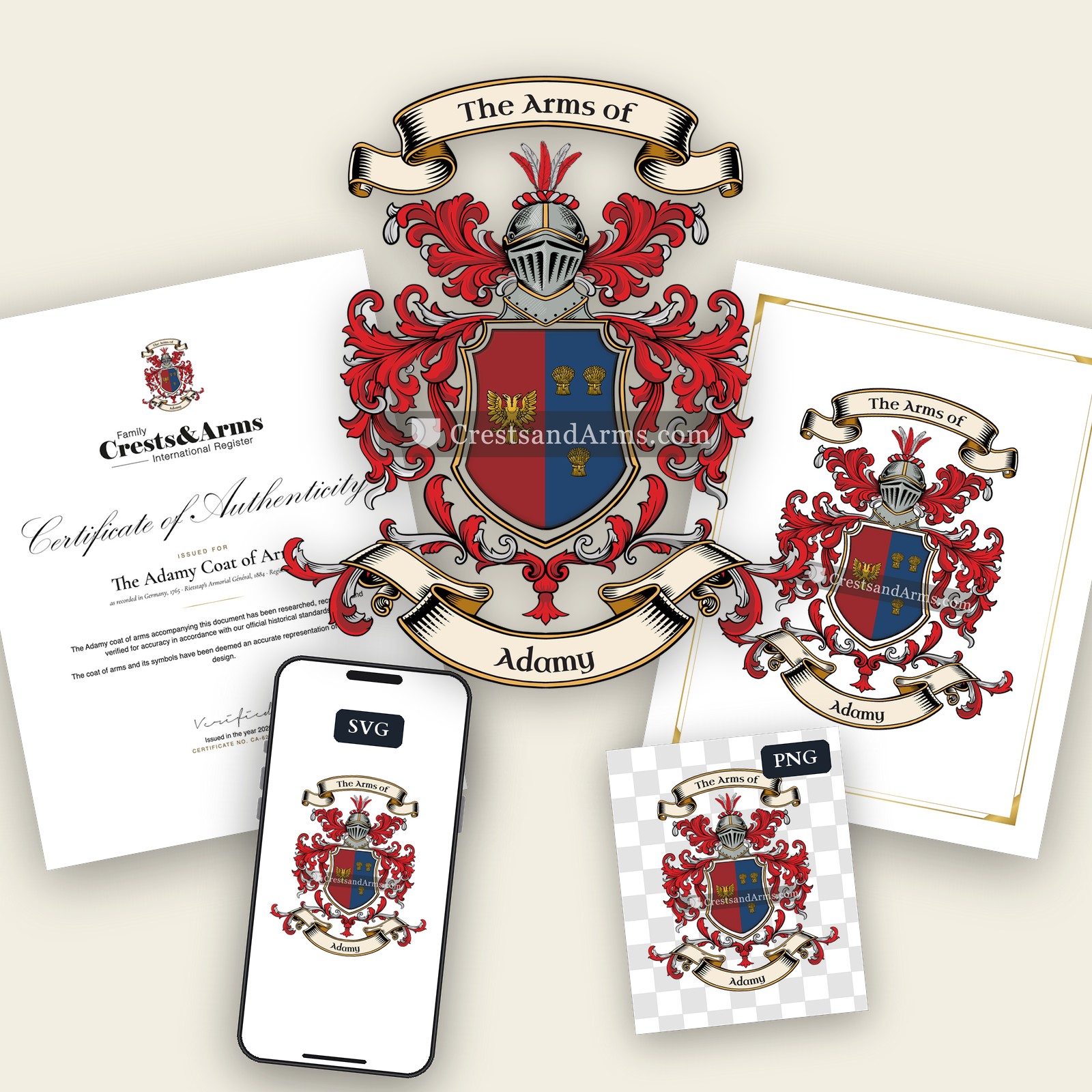
Digital archive packCoat of arms PNG, gold border print PDF, vector SVG and the certificate of authenticity. Sent to your email in minutes.


 maceAuthority, and the officer who bears it
 maceAuthority, and the officer who bears it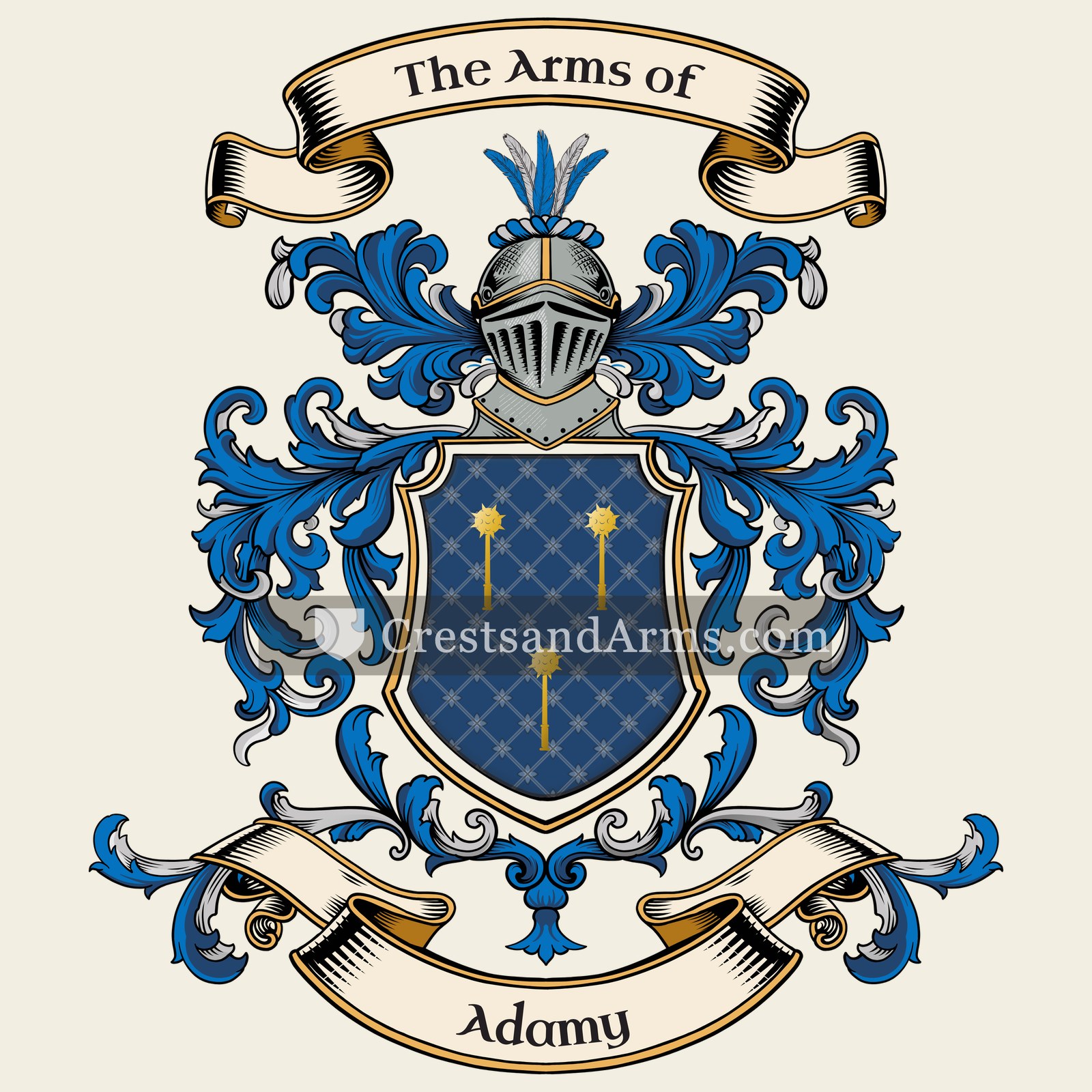


 eagleNobility, strength and a keen mind
 wheatsheafPlenty, and the harvest of one's own labour