A record of documented arms, meaning and origin, researched for the Adas family lines. Documented in 3 countries.
Reg. 9043 · Welsh, A–C
Coat of Arms & Family Crest Details
Symbols on this shield
bordureA difference between branches of one family
martletA younger son, who must win his own land
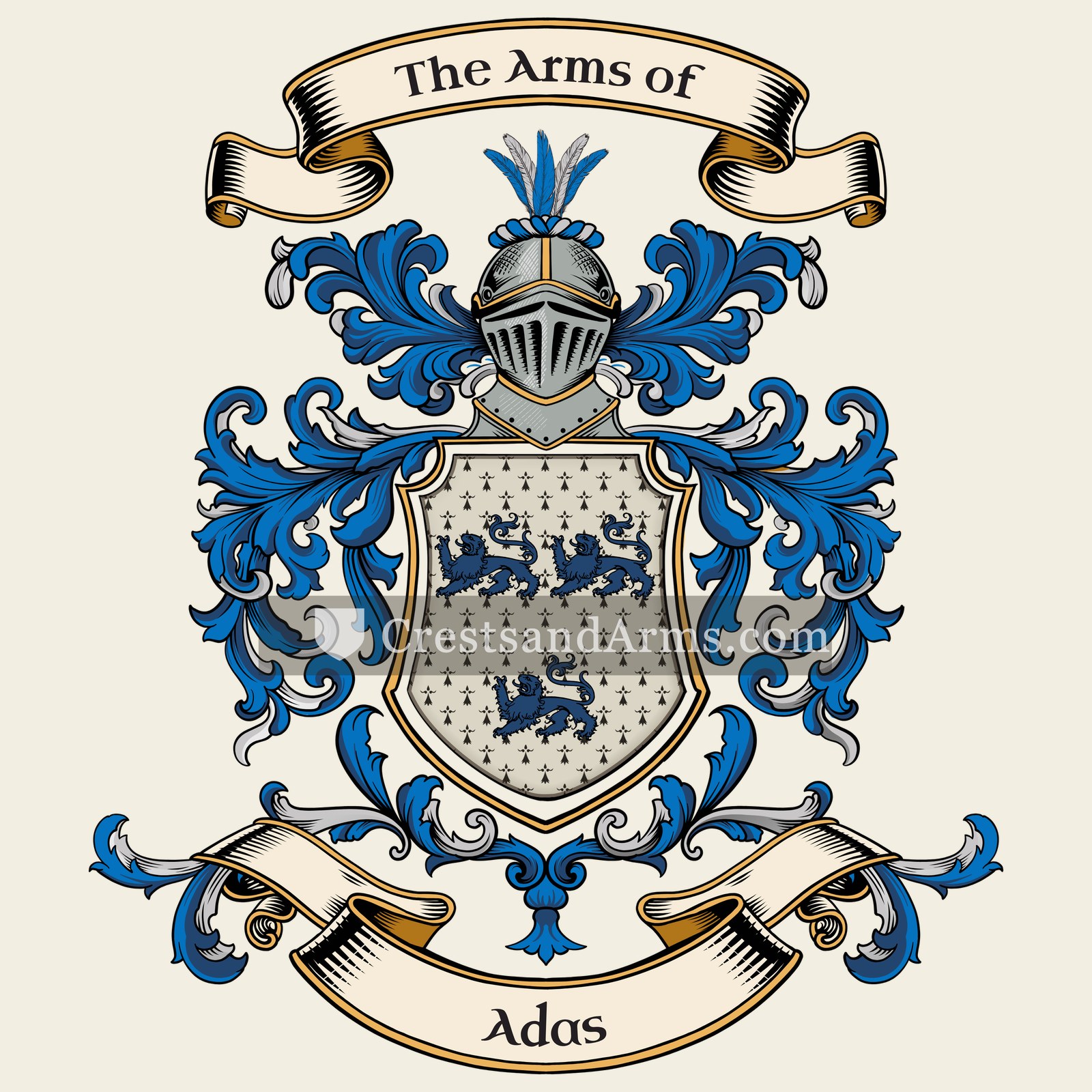
lionCourage, strength and royalty
Colours
Black (Sable)Means: Constancy
Gold (Or)Means: Generosity
Silver (Argent)Means: Peace and sincerity
Historical info
Source
Sir Bernard Burke, The General Armory of England, Scotland, Ireland and Wales, London: Harrison & Sons, 1884
Blazon (the actual original written record)
“Sa. a martlet ar. Another coat—Quarterly, 1st and 4th, sa. two martlets ar.; 2nd, sa. five martlets in saltire ar.; 3rd, sa. a lion ramp. within a bordure engr. or. (”
PembrokePaterchurch · Pembroke, c. 1422
Digital archive packCoat of arms PNG, gold border print PDF, vector SVG and the certificate of authenticity. Sent to your email in minutes.
Map of Wales showing where the Adas arms are recorded
The Adas arms were recorded in Pembroke, c. 1422.
Pembrokeshire was settled from England early enough to be called Little England beyond Wales. Its landed families were Norman in origin and held their ground for centuries, which is what put them in the records.
This is where the arms were entered in the register. Families often moved to other parts of the country, so the same name can turn up in more than one region.
The body that granted and recorded arms in Wales in this period.
Henry V of England
Sovereign of the period
Henry V of England
1413–1422
Reigning in Wales when the Adas arms are first recorded.
How Arms Worked in Wales
English heraldry allowed arms to be shared by all legitimate descendants of the original owner. These symbols were treated as personal property that moved through the generations to all children. While the eldest son kept the original design, other family members could use the same shield without needing to change it or register their own unique versions.
Granting authority
The College of Arms in London has regulated the use of coats of arms throughout England and Wales since 1484.
How they got arms
Families typically obtained their coats of arms through a formal grant from the Crown or by proving their ancient right to them.
Where arms were recorded
All official coats of arms are recorded in the registers kept at the College of Arms, which date back to the fifteenth century.
The family's standing
Recorded among the armigerous families of Pembroke.
Origin & History of the Adas Family in Wales
The history of the Adas family in Wales begins to emerge clearly in the early fifteenth century, specifically within the county of Pembroke. By 1422, records indicate that members of the family were established in this region, which was then a significant area for trade and cross-cultural exchange between Welsh and English populations. The name likely evolved from local naming customs or occupational descriptions common to the borderlands of South Wales. Living in Pembroke placed the family at a strategic crossroads, as the town served as a vital port and a center for regional administration. During this period, families in the area were often involved in the agricultural and mercantile life that defined the coastal landscape. While the name remains relatively rare, its presence in early fifteenth-century documents suggests that the family was integrated into the local community during a time of significant political transition in Wales.
Coat of Arms & Family Crest Details
Symbols on this shield
lionCourage, strength and royalty
Colours
ErmineMeans: Dignity
Blue (Azure)Means: Loyalty and truth
Historical info
Source
Sir Bernard Burke, The General Armory of England, Scotland, Ireland and Wales, London: Harrison & Sons, 1884
Blazon (the actual original written record)
“Erm. three cats-a-mountain in pale az”
NorthamptonCharwelton · Northampton, c. 1360
Digital archive packCoat of arms PNG, gold border print PDF, vector SVG and the certificate of authenticity. Sent to your email in minutes.
Map of England showing where the Adas arms are recorded
The Adas arms were recorded in Northampton, c. 1360.
Northamptonshire was grazing and hunting country in the middle of England, thick with manor houses. Its families were numerous and long-settled, and a settled landed family almost always ended up with arms.
This is where the arms were entered in the register. Families often moved to other parts of the country, so the same name can turn up in more than one region.
The body that granted and recorded arms in England in this period.
Edward III of England
Sovereign of the period
Edward III of England
1327–1377
Reigning in Wales when the Adas arms are first recorded.
How Arms Worked in England
English heraldry allowed arms to be shared by all legitimate descendants of the original owner. These symbols were treated as personal property that moved through the generations to all children. While the eldest son kept the original design, other family members could use the same shield without needing to change it or register their own unique versions.
Granting authority
The College of Arms in London has regulated the use of coats of arms throughout England and Wales since 1484.
How they got arms
Families typically obtained their coats of arms through a formal grant from the Crown or by proving their ancient right to them.
Where arms were recorded
All official coats of arms are recorded in the registers kept at the College of Arms, which date back to the fifteenth century.
The family's standing
Recorded among the armigerous families of Northampton.
Origin & History of the Adas Family in England
The history of the Adas family in England is rooted in the social and economic landscape of the fourteenth century. Historical records confirm that members of the family were established in Northampton by 1360, a period when the town served as a vital hub for the wool trade and leather industry. During this era, surnames were often transitioning from simple descriptive nicknames or patronymics into permanent family identifiers. The name Adas likely originated as a variation of Adam, functioning as a shortened or affectionate form of the name that became fixed as a hereditary surname. Living in a bustling market town like Northampton, early members of the family were likely involved in the local trade guilds or agricultural life that defined the region. By settling in such a significant administrative center, the family became part of the growing middle class of artisans and merchants who helped shape the development of medieval English society.
Coat of Arms & Family Crest Details
Symbols on this shield
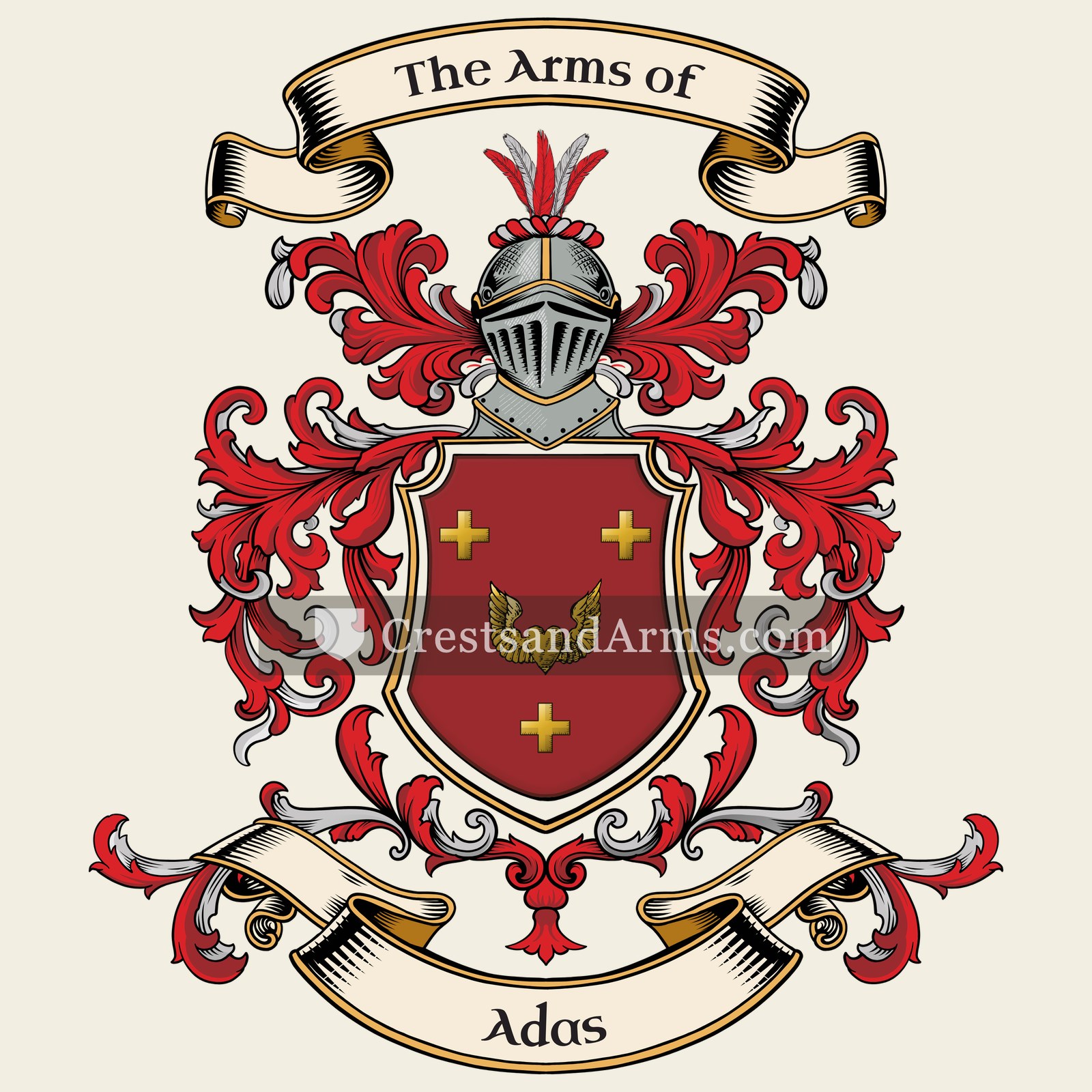
cross symbolChristian faith and service
heartSincerity, charity and true affection
Colours
Red (Gules)Means: Military strength
Gold (Or)Means: Generosity
Historical info
Source
Sir Bernard Burke, The General Armory of England, Scotland, Ireland and Wales, London: Harrison & Sons, 1884
Blazon (the actual original written record)
“Gu. a heart between three cross crosslets fitchée or”
CavanNorthlands · Cavan, c. 1645
Digital archive packCoat of arms PNG, gold border print PDF, vector SVG and the certificate of authenticity. Sent to your email in minutes.
Map of Ireland showing where the Adas arms are recorded
The Adas arms were recorded in Cavan, c. 1645.
Cavan was drumlin and lake country on the edge of Ulster, planted in the seventeenth century. The new landowners took formal grants, and formal grants were recorded with arms.
This is where the arms were entered in the register. Families often moved to other parts of the country, so the same name can turn up in more than one region.
The body that granted and recorded arms in Ireland in this period.
Charles I of England
Sovereign of the period
Charles I of England
1625–1649
Reigning in Wales when the Adas arms are first recorded.
How Arms Worked in Ireland
The Ulster King of Arms granted coats of arms to individuals who proved their social standing and good character. These symbols were typically inherited by all legitimate descendants of the original holder. If a family branch wanted a unique look, they could apply for a specific change to their design through the office to ensure their identity remained distinct.
Granting authority
The Ulster King of Arms acted as the official body that regulated and issued all coats of arms throughout Ireland.
How they got arms
Families obtained their arms through formal grants issued by the office after proving their eligibility and paying the required fees.
Where arms were recorded
All official grants were recorded in the registers held by the Ulster King of Arms starting from the year 1552.
The family's standing
Recorded among the armigerous families of Cavan.
Origin & History of the Adas Family in Ireland
The surname Adas, while rare, holds a distinct place in the historical landscape of County Cavan during the mid-seventeenth century. By 1645, records indicate that families bearing this name were already established in the region, a period defined by intense political upheaval and the shifting ownership of land across Ireland. During this era, families in Cavan often lived through the transition from traditional Gaelic social structures to the more rigid administrative systems imposed by the English Crown. Because the name appears in local records during this time, it suggests that the Adas family was likely involved in the agricultural life of the province, navigating the complex challenges of tenant farming and local community ties. Their presence in the historical record during the 1640s places them in the heart of a transformative time for Ireland, marking them as part of the long-standing population that helped shape the identity of the Cavan region.
Related Branches & Arms
Root word
Adam
Hebrew for man or of the earth
This name
AdasA patronymic surname derived from the biblical name meaning son of Adam
also spelled
Adamz
Adamson
Adames
Documented Sources
Sir Bernard Burke, The General Armory of England, Scotland, Ireland and Wales, London: Harrison & Sons, 1884
The National Archives, Pembrokeshire Ministers' Accounts, 1422
Charles, B. G., The Place-Names of Pembrokeshire, 1992
Howells, B. E., Pembrokeshire Life: 1572-1843, 1972
Digital archive packCoat of arms PNG, gold border print PDF, vector SVG and the certificate of authenticity. Sent to your email in minutes.


 bordureA difference between branches of one family
 martletA younger son, who must win his own land
 lionCourage, strength and royalty
 bordureA difference between branches of one family
 martletA younger son, who must win his own land
 lionCourage, strength and royalty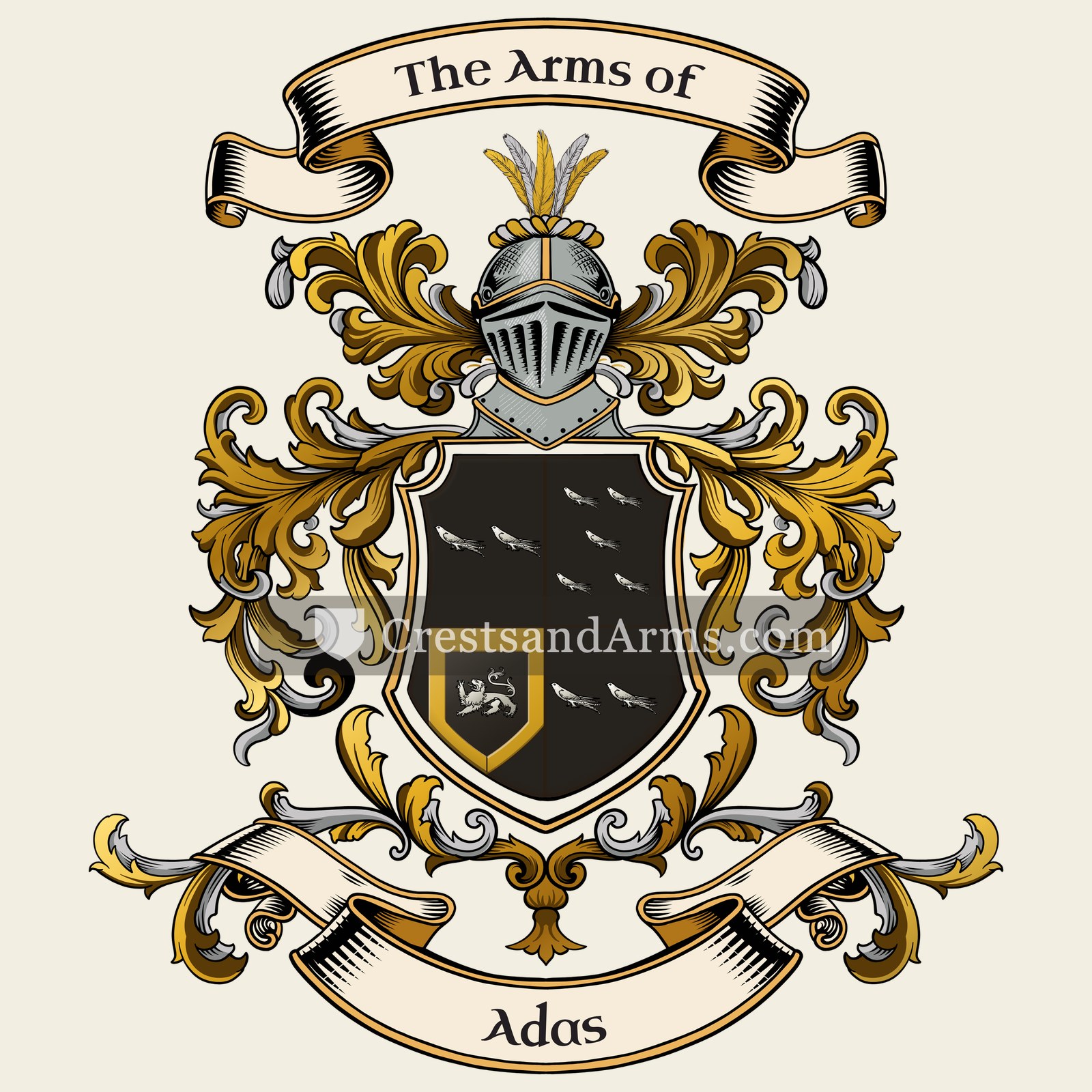



 cross symbolChristian faith and service
 heartSincerity, charity and true affection