Map of Netherlands showing where the Adriani arms are recorded
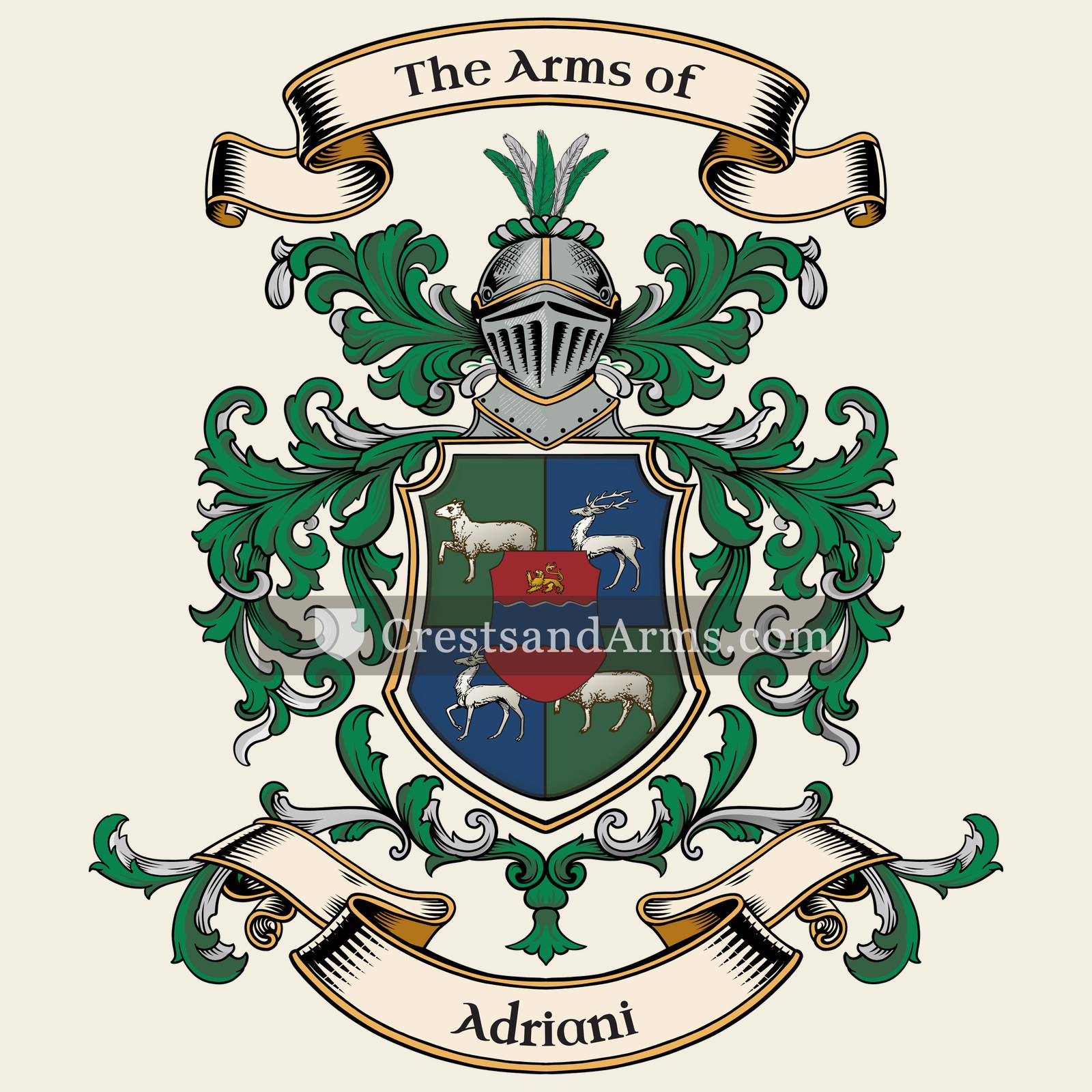
The Adriani arms were recorded in Friesland, c. 1815.
Friesland was low, wet country on the northern coast of the Netherlands, farmed by families who had held the same land for centuries. Free landholders were unusually common there, and a free landholder could carry arms.
This is where the arms were entered in the register. Families often moved to other parts of the country, so the same name can turn up in more than one region.
Region
Friesland
First recorded
1815
Granting Authority for the Adriani Arms
Hoge Raad van Adel
Photograph made by me · CC BY-SA 3.0
The body that granted and recorded arms in Netherlands in this period.
William I of the Netherlands
Sovereign of the period
William I of the Netherlands
1815–1840
Reigning in Netherlands when the Adriani arms are first recorded.
How Arms Worked in Netherlands
In the Netherlands, coats of arms were often used by noble families and those who held specific public offices. These arms were passed down through the generations to legitimate descendants. Younger branches of a family usually kept the original design without needing to add special marks. This system ensured that the family identity remained clear and consistent over many years.
Granting authority
The Hoge Raad van Adel is the official body that regulates and manages noble titles and coats of arms in the Netherlands.
How they got arms
Families typically obtained their coats of arms through official royal grants or by proving their long-standing historical use of the symbols.
Where arms were recorded
Coats of arms are officially recorded in the registers held by the Hoge Raad van Adel, which began its work in 1814.
The family's standing
Recorded among the armigerous families of Friesland.
Origin & History of the Adriani Family in Netherlands
The family name Adriani carries a distinct history within the Netherlands, particularly as it became established in the northern province of Friesland by the early nineteenth century. While the name itself is rooted in the Latin name Adrianus, its presence in Dutch records often reflects the influence of educated families who adopted Latinized surnames during the period of humanism and religious reform. By 1815, when the modern Dutch civil registration system began to solidify, members of the Adriani family were documented as active participants in Frisian society. These early ancestors were often integrated into the professional and administrative classes of the region, where they contributed to the local economy and community life. Their transition into the formal Dutch records of the time highlights a broader trend of families settling into permanent roles as the country moved toward a unified national identity following the Napoleonic era.
Coat of Arms & Family Crest Details
Symbols on this shield
fessThe military belt, and readiness to serve
lambGentleness, patience and faith
stagPeace and harmony, and one who will not fight unprovoked
lionCourage, strength and royalty
Colours
Green (Vert)Means: Hope
Blue (Azure)Means: Loyalty and truth
Red (Gules)Means: Military strength
Silver (Argent)Means: Peace and sincerity
Gold (Or)Means: Generosity
Historical info
Source
J. B. Rietstap, Armorial Général, Gouda: G. B. van Goor Zonen, 1884–87
Blazon (the actual original written record)
“Ec.: aux 1 et 4 de sin. à un agneau pass. d'arg.; aux 2 et 3 d'azur au cerf ramp. d'arg. Sur le tout de gu. au lion d'or, soutenu d'une fasce ondée d'azur en p. Deux cq. cour. C.: 1o un lion iss. et cont. d'or; 1. d'or et de gu.; 2o un cerf iss. d'arg.; 1. d'arg. et d'azur.”
HolsteinHolstein, c. 1752
Digital archive packCoat of arms PNG, gold border print PDF, vector SVG and the certificate of authenticity. Sent to your email in minutes.
Map of Germany showing where the Adriani arms are recorded
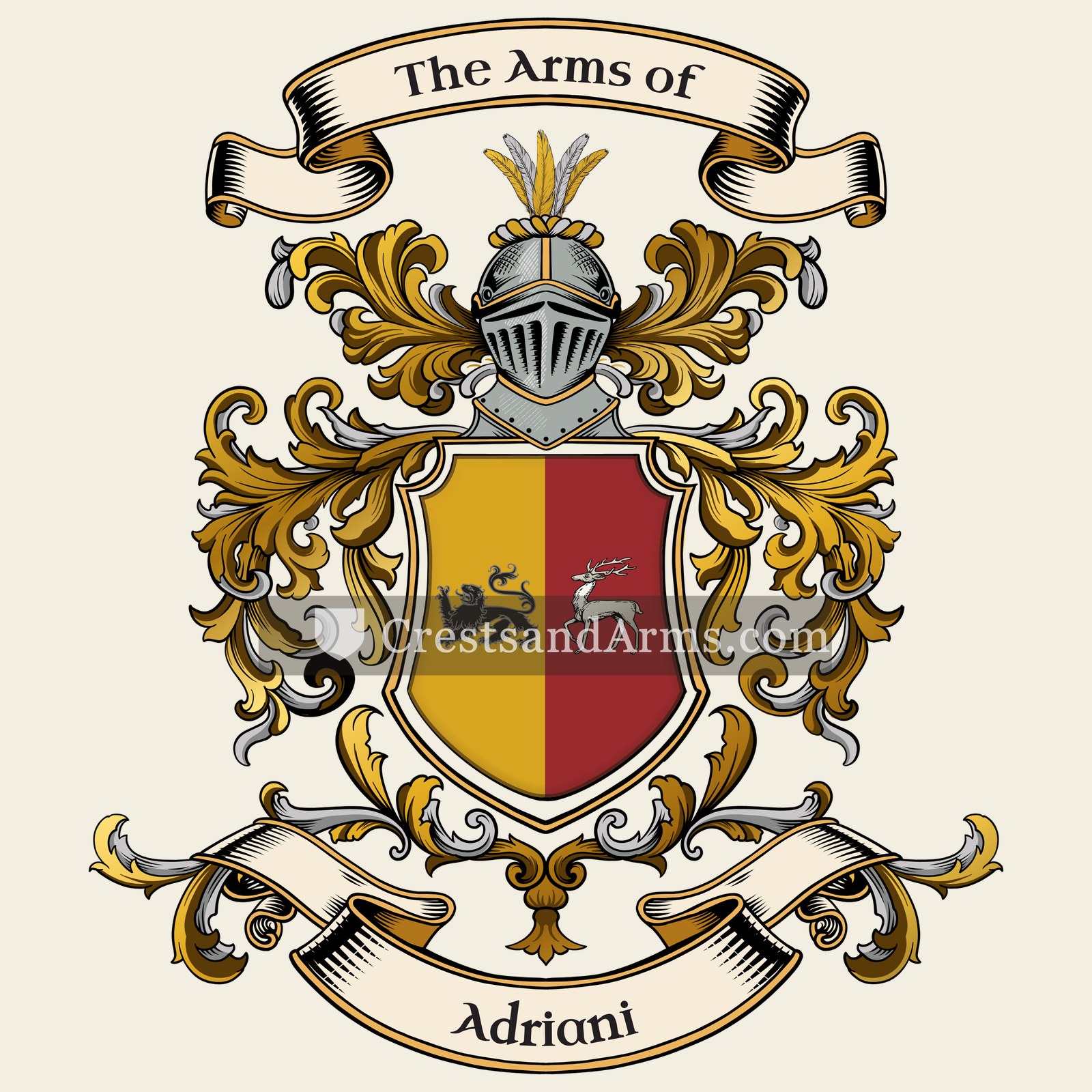
The Adriani arms were recorded in Holstein, c. 1752.
Holstein was farming country between the North Sea and the Baltic, held in large estates. The same families kept the same land for generations, and generations of holding is what fills a register.
This is where the arms were entered in the register. Families often moved to other parts of the country, so the same name can turn up in more than one region.
The body that granted and recorded arms in Germany in this period.
Francis I, Holy Roman Emperor
Sovereign of the period
Francis I, Holy Roman Emperor
1745–1765
Reigning in Netherlands when the Adriani arms are first recorded.
How Arms Worked in Germany
In the Holy Roman Empire, coats of arms were often granted to individuals by the Emperor or his representatives. These arms were then passed down through the generations to all legitimate descendants of the original holder. Younger branches of a family usually kept the same shield design without needing to change it, as the arms belonged to the entire lineage.
Granting authority
The Holy Roman Emperor held the sole power to grant new coats of arms throughout his vast imperial territories.
How they got arms
Families typically obtained their coats of arms through a formal imperial grant or by proving their noble status to the authorities.
Where arms were recorded
These grants were officially recorded in the Imperial Chancery registers, which began keeping formal records of such honors during the Middle Ages.
The family's standing
Recorded among the armigerous families of Holstein.
Origin & History of the Adriani Family in Germany
The family name Adriani carries a history deeply rooted in the cultural shifts of Northern Germany. By the mid-eighteenth century, the family was well-established in the region of Holstein, a territory known for its complex political ties to both the German states and the Danish crown. During this period, the name Adriani likely emerged as a Latinized variation of common given names, reflecting the influence of the church and scholarly traditions that were popular among the educated classes of the time. Families living in Holstein in 1752 often navigated a landscape defined by agricultural growth and the transition toward modern administrative record-keeping. As the family settled into this northern environment, they became part of a local social fabric that valued trade and community stability. This early presence in Holstein suggests that the ancestors of the Adriani line were integrated into the regional development of Northern Germany during a time of significant economic change.
Coat of Arms & Family Crest Details
Symbols on this shield
lionCourage, strength and royalty
stagPeace and harmony, and one who will not fight unprovoked
Colours
Gold (Or)Means: Generosity
Red (Gules)Means: Military strength
Historical info
Source
J. B. Rietstap, Armorial Général, Gouda: G. B. van Goor Zonen, 1884–87
Blazon (the actual original written record)
“d'or et de gu.; 2o un lion iss. d'or; 1. d'or et de gu.; 3o le cerf iss.; 1. d'arg. et d'azur. S.: deux griffons d'or.”
Italyc. 1752
Digital archive packCoat of arms PNG, gold border print PDF, vector SVG and the certificate of authenticity. Sent to your email in minutes.
Map of Italy showing where the Adriani arms are recorded
The Adriani arms were recorded in Italy, c. 1752.
Arms such as these were typically recorded in Venice.
Venice ran on trade, and its great families were merchants before they were anything else. The city kept a formal list of its noble houses, and a name on that list carried arms as a matter of record.
This is where the arms were entered in the register. Families often moved to other parts of the country, so the same name can turn up in more than one region.
The body that granted and recorded arms in Italy in this period.
Charles III of Spain
Sovereign of the period
Charles III of Spain
1734–1759
Reigning in Netherlands when the Adriani arms are first recorded.
How Arms Worked in Italy
In the Italian states, coats of arms were often used by noble families to show their status and history. These symbols were passed down through the generations to all legitimate male descendants. Younger branches of a family usually kept the original design but sometimes added small changes to distinguish their specific line from the main branch.
Granting authority
Various local rulers and city governments controlled the use of coats of arms across the different Italian states.
How they got arms
Families often assumed their own arms or received them as official grants from local lords, popes, or city councils.
Where arms were recorded
Arms were recorded in local city archives or private family books rather than in one single national register.
The family's standing
Recorded among the armigerous families of Italy.
Origin & History of the Adriani Family in Italy
The family name Adriani traces its roots to the rich cultural landscape of Italy, where it evolved from the Latin name Adrianus. This name was originally linked to the Adriatic Sea, suggesting that early ancestors may have lived near the coast or worked in maritime trade. By the middle of the eighteenth century, the family established a notable presence in Venice, a city famous for its bustling ports and international commerce. Records from 1752 confirm that members of the Adriani family were active participants in Venetian society during this period of transition. As the family moved through the Italian peninsula, they integrated into the local customs and economic life of their respective regions. Their history reflects the broader movement of families who helped shape the identity of Italian city-states through trade, craftsmanship, and civic participation.
Adriani Meaning & Related Branches
Root word
Hadrianus
A person originating from the ancient city of Hadria.
This name
AdrianiA patronymic surname indicating descent from someone named Adrian.
also spelled
Adriany
Adrian
Documented Sources
J. B. Rietstap, Armorial Général, Gouda: G. B. van Goor Zonen, 1884–87
Centraal Bureau voor Genealogie, Nederland's Patriciaat
Tresoar (Fries Historisch en Letterkundig Centrum), Burgerlijke Stand van Friesland
Van der Aa, A.J., Biographisch Woordenboek der Nederlanden, 1852
Digital archive packCoat of arms PNG, gold border print PDF, vector SVG and the certificate of authenticity. Sent to your email in minutes.


 eagleNobility, strength and a keen mind
 eagleNobility, strength and a keen mind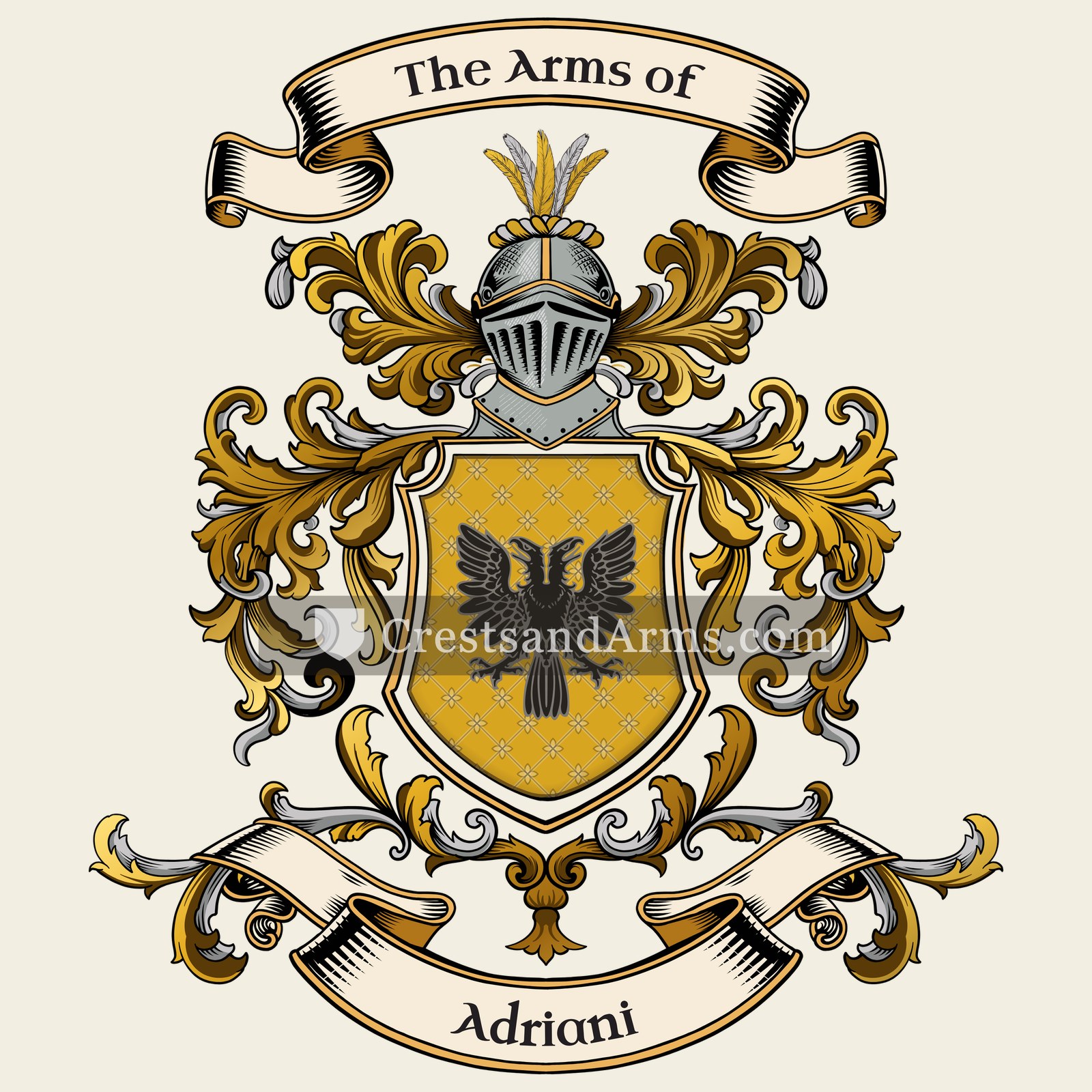


 fessThe military belt, and readiness to serve
 lambGentleness, patience and faith
 stagPeace and harmony, and one who will not fight unprovoked
 lionCourage, strength and royalty