Map of Britain showing where the Agonoy arms are recorded
The Agonoy arms were recorded in Britain, c. 1700.
Arms such as these were typically recorded in Kent.
Kent sits between London and the short crossing to Europe, and the trade passing through made it wealthy. Merchant families bought land with that money, and it was landowners who took coats of arms.
This is where the arms were entered in the register. Families often moved to other parts of the country, so the same name can turn up in more than one region.
The body that granted and recorded arms in Britain in this period.
William III of England
Sovereign of the period
William III of England
1694–1702
Reigning in Britain when the Agonoy arms are first recorded.
How Arms Worked in Britain
English heraldry allowed arms to be shared by all legitimate descendants of the original owner. These symbols were treated as personal property that moved through the generations to all children. While the eldest son kept the original design, other family members could use the same shield without needing to change it or register their own unique versions.
Granting authority
The College of Arms in London has regulated the use of coats of arms throughout England and Wales since 1484.
How they got arms
Families typically obtained their coats of arms through a formal grant from the Crown or by proving their ancient right to them.
Where arms were recorded
All official coats of arms are recorded in the registers kept at the College of Arms, which date back to the fifteenth century.
The family's standing
Recorded among the armigerous families of Britain.
Origin & History of the Agonoy Family in Britain
The family name Agonoy first appears in the historical record within the county of Kent during the early eighteenth century. At this time, Kent was a bustling region defined by its proximity to the English Channel and its role as a gateway for trade and travel between Britain and the continent. Families living in this area often found themselves at the center of shifting social and economic landscapes as the agricultural revolution began to change the way people worked the land. The presence of the Agonoy name in local parish registers from the 1700s suggests that these early members were integrated into the rural community, likely participating in the local trades or farming practices that sustained the region. While the origins of the name itself remain a subject of study, its early foothold in Kent highlights a history rooted in the quiet, steady life of the English countryside during the Georgian era.
Coat of Arms & Family Crest Details
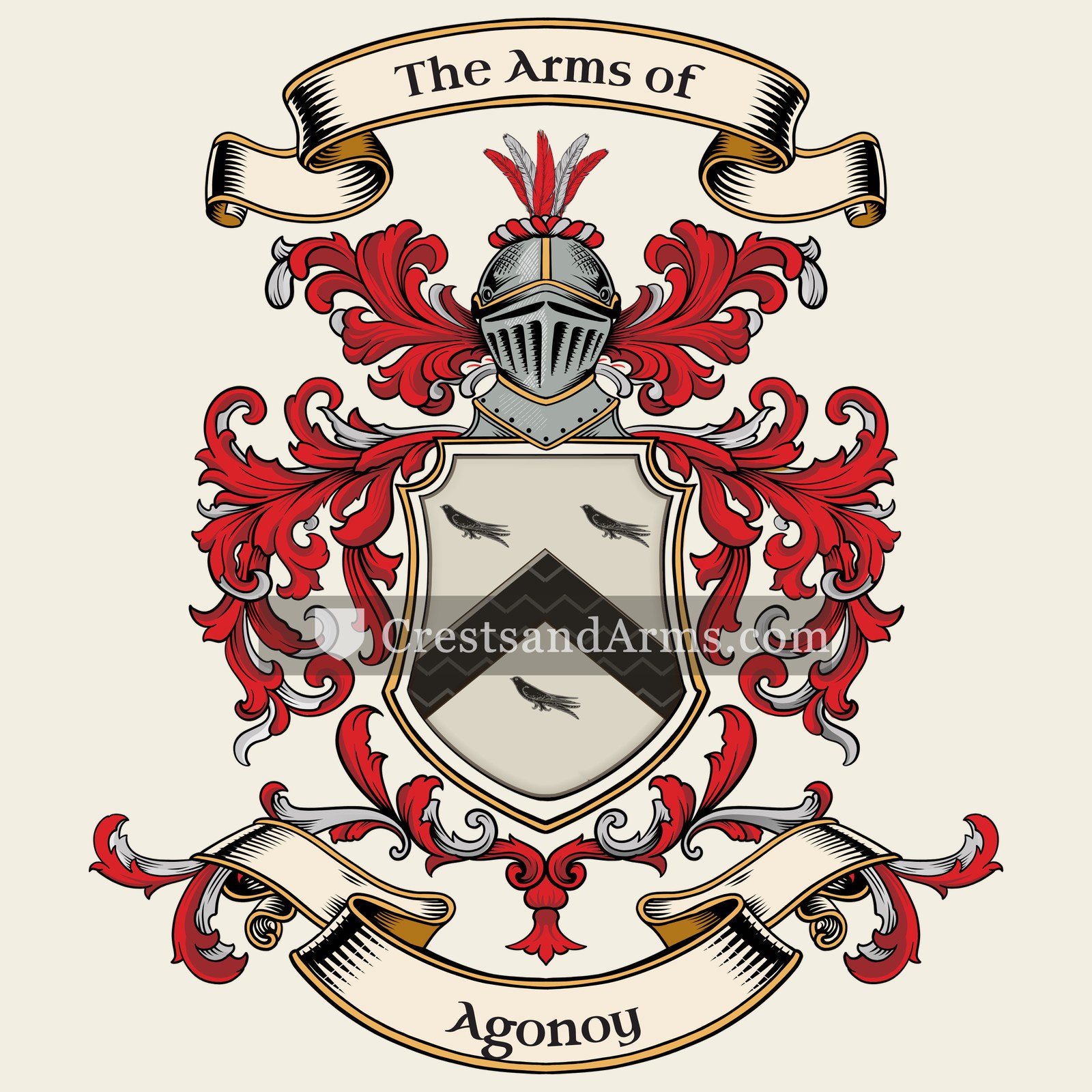
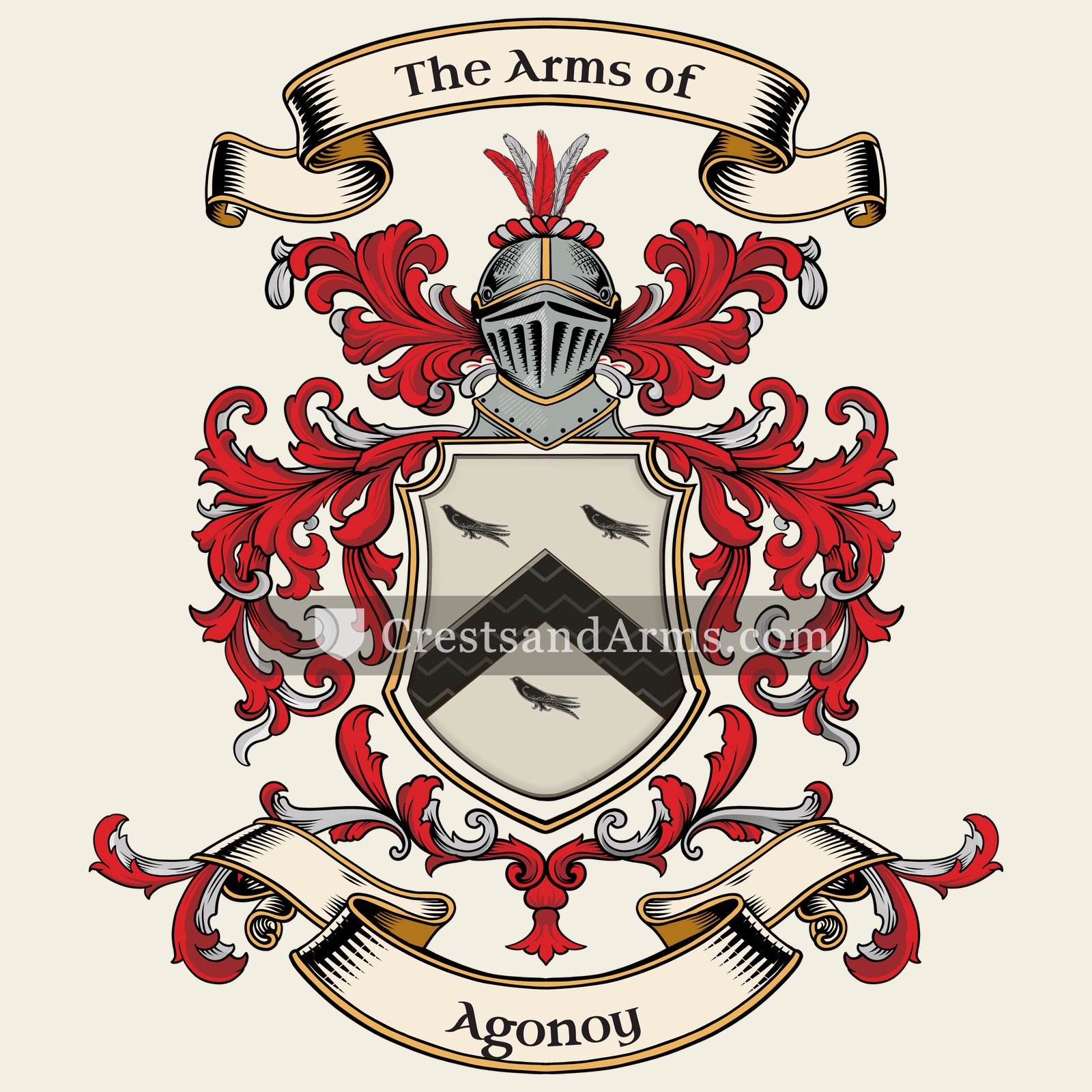
Symbols on this shield
chevronProtection, and faithful service completed
martletA younger son, who must win his own land
Colours
Silver (Argent)Means: Peace and sincerity
Black (Sable)Means: Constancy
Historical info
Source
Sir Bernard Burke, The General Armory of England, Scotland, Ireland and Wales, London: Harrison & Sons, 1884
Blazon (the actual original written record)
“Ar. a chev. between three martlets sa”
Englandc. 1620
Digital archive packCoat of arms PNG, gold border print PDF, vector SVG and the certificate of authenticity. Sent to your email in minutes.
Map of England showing where the Agonoy arms are recorded
The Agonoy arms were recorded in England, c. 1620.
Arms such as these were typically recorded in York.
Yorkshire is the largest of the English counties, and it held more gentry families than any other. Land there was split among a great many households rather than a few, so a great many of them carried arms.
This is where the arms were entered in the register. Families often moved to other parts of the country, so the same name can turn up in more than one region.
The body that granted and recorded arms in England in this period.
James VI and I
Sovereign of the period
James VI and I
1603–1625
Reigning in Britain when the Agonoy arms are first recorded.
How Arms Worked in England
English heraldry allowed arms to be shared by all legitimate descendants of the original owner. These symbols were treated as personal property that moved through the generations to all children. While the eldest son kept the original design, other family members could use the same shield without needing to change it or register their own unique versions.
Granting authority
The College of Arms in London has regulated the use of coats of arms throughout England and Wales since 1484.
How they got arms
Families typically obtained their coats of arms through a formal grant from the Crown or by proving their ancient right to them.
Where arms were recorded
All official coats of arms are recorded in the registers kept at the College of Arms, which date back to the fifteenth century.
The family's standing
Recorded among the armigerous families of England.
Origin & History of the Agonoy Family in England
The history of the Agonoy family in England begins with their documented presence in the historic city of York around 1620. During this period, York served as a vital northern hub for trade and administration, placing the family within a community shaped by the aftermath of the Reformation and the growing influence of the merchant class. While the name itself suggests origins outside of the British Isles, the family integrated into the local social fabric by participating in the daily life of the city. Records from this era indicate that families like the Agonoys often settled near the city walls or within the bustling parish districts, where they contributed to the local economy through skilled labor or small-scale commerce. By establishing roots in York during the early seventeenth century, the family became part of a long tradition of residents who helped define the character of one of England’s oldest urban centers.
Related Branches & Arms
Root word
Agon
Greek term referring to a struggle, contest, or gathering.
This name
AgonoyDerived from a locative or descriptive term implying one who participates in a struggle or competitive gathering.
also spelled
Agone
Agonn
Agont
Aggone
Agoun
Documented Sources
J. B. Rietstap, Armorial Général, Gouda: G. B. van Goor Zonen, 1884–87
Kent Archives, Parish Registers of Kent, 1700–1750
The National Archives, Census and Tax Records of the Eighteenth Century
Digital archive packCoat of arms PNG, gold border print PDF, vector SVG and the certificate of authenticity. Sent to your email in minutes.


 chevronProtection, and faithful service completed
 martletA younger son, who must win his own land
 chevronProtection, and faithful service completed
 martletA younger son, who must win his own land