Map of Portugal showing where the Agular arms are recorded
The Agular arms were recorded in Portugal, c. 1706.
Arms such as these were typically recorded in Lisboa.
Lisbon was the seat of the Portuguese crown and the port its wealth came through. Families made rich by trade and by service to the king took arms, and the crown's heralds recorded them there.
This is where the arms were entered in the register. Families often moved to other parts of the country, so the same name can turn up in more than one region.
The body that granted and recorded arms in Portugal in this period.
Peter II of Portugal
Sovereign of the period
Peter II of Portugal
1683–1706
Reigning in Portugal when the Agular arms are first recorded.
How Arms Worked in Portugal
In Portugal, a coat of arms was a family possession that passed from a father to his children. Every legitimate descendant had the right to use the family shield without needing to change it. Younger branches of the family kept the original design, though they sometimes added small symbols to distinguish their specific line from the main branch.
Granting authority
The Cartório da Nobreza acted as the official body that managed and regulated noble titles and coats of arms in Portugal.
How they got arms
Families typically inherited their arms through bloodline, though they could also receive new grants from the crown for distinguished service.
Where arms were recorded
Coats of arms were officially recorded in the books of the Cartório da Nobreza starting in the year 1512.
The family's standing
Recorded among the armigerous families of Portugal.
Origin & History of the Agular Family in Portugal
The family name Agular traces its roots to the vibrant cultural landscape of Portugal, with documented evidence confirming the presence of family members in Lisboa by the year 1706. During this period, Lisboa served as a bustling center of trade and intellectual exchange, placing the family at the heart of a rapidly changing European society. The name itself is often associated with regional linguistic shifts, reflecting the diverse influences that shaped Portuguese surnames during the early eighteenth century. As the family established itself in the capital, they became part of the urban fabric of a city recovering from the economic pressures of the era. Their presence in official records from this time suggests that they were integrated into the local community, likely contributing to the social and professional life of the city as it prepared for the significant transformations of the coming decades.
Agular Meaning & Related Branches
Root word
Aquila
Latin word meaning eagle.
This name
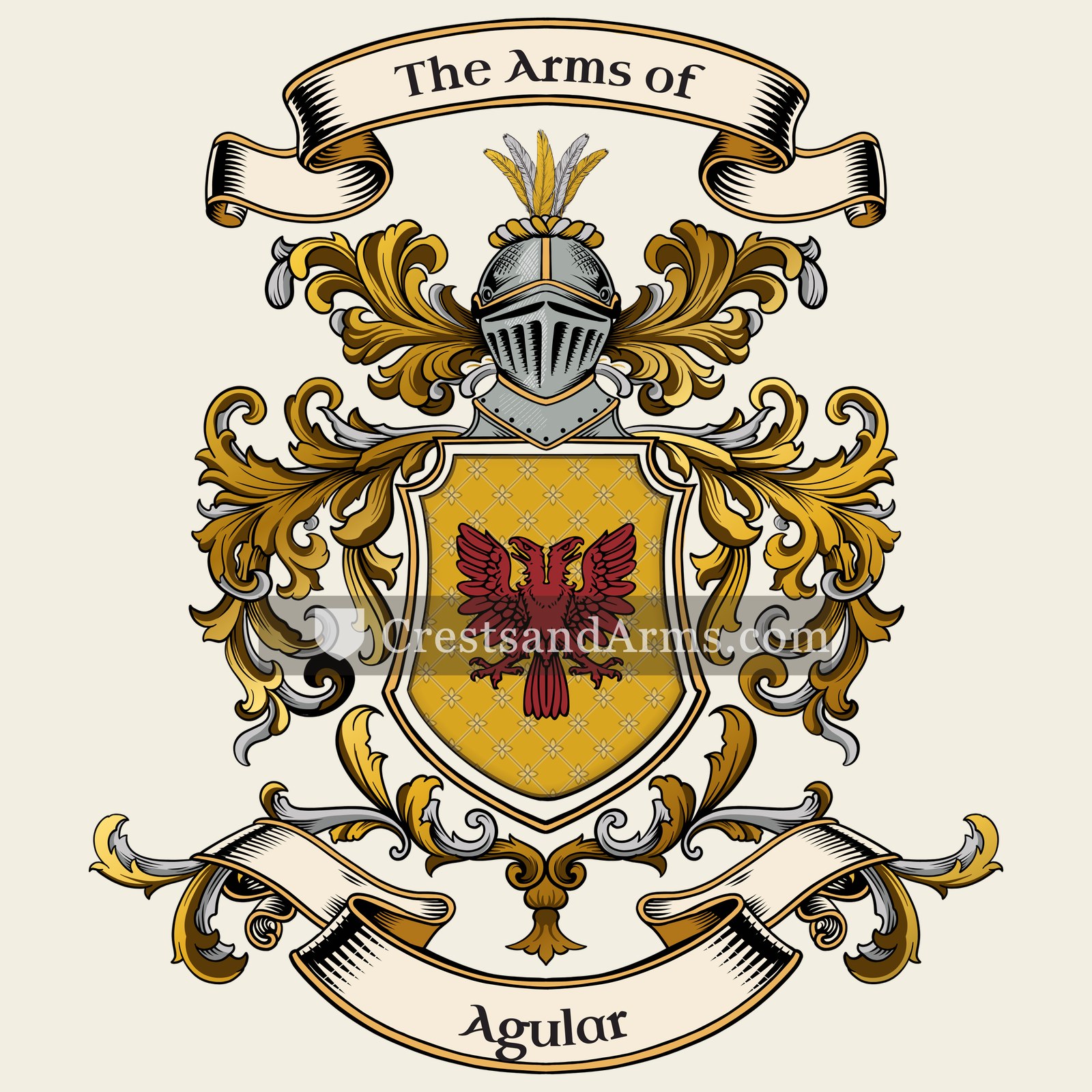
AgularA topographic surname referring to a place where eagles gather or nest.
also spelled
Agullar
Aguler
Related arms
Aguilar y Córdobavariant spelling
Documented Sources
J. B. Rietstap, Armorial Général, Gouda: G. B. van Goor Zonen, 1884–87
Arquivo Nacional da Torre do Tombo, Registos Paroquiais de Lisboa, 1706
Freitas, Judice, A Cidade de Lisboa no Século XVIII, 1908
Mattoso, José, A Identidade Nacional Portuguesa, 1998
Digital archive packCoat of arms PNG, gold border print PDF, vector SVG and the certificate of authenticity. Sent to your email in minutes.


 eagleNobility, strength and a keen mind
 eagleNobility, strength and a keen mind