Map of Spain showing where the Alagon arms are recorded
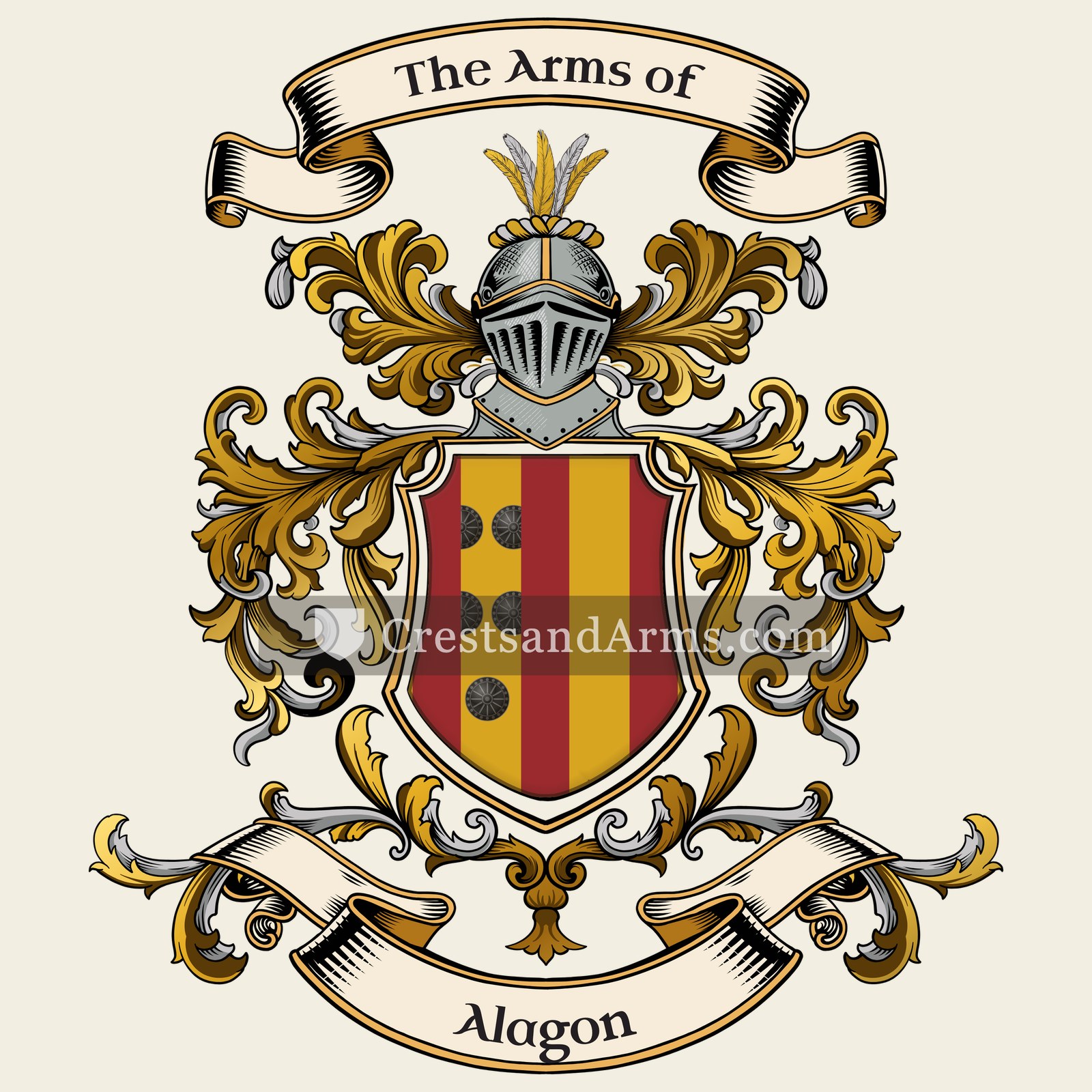
The Alagon arms were recorded in Aragon, c. 1722.
Aragon was mountain and river country in north-eastern Spain, with a strong tradition of small independent landholders. A great many families counted as gentry there, and each one needed a shield to be told apart.
This is where the arms were entered in the register. Families often moved to other parts of the country, so the same name can turn up in more than one region.
The body that granted and recorded arms in Spain in this period.
Philip V of Spain
Sovereign of the period
Philip V of Spain
1714–1724
Reigning in Spain when the Alagon arms are first recorded.
How Arms Worked in Spain
In Spain, a coat of arms was considered a form of property that belonged to the entire family line. These arms were passed down from a father to all his children equally. Younger branches of the family usually kept the original design without needing to add any special marks to distinguish their specific line.
Granting authority
The Cronista Rey de Armas was the official body that regulated and granted coats of arms throughout Spain.
How they got arms
Families often obtained their arms through royal grants or by proving their noble status to the official heraldic authority.
Where arms were recorded
Coats of arms were officially recorded in the registers of the Cronista Rey de Armas starting in 1496.
The family's standing
Recorded among the armigerous families of Aragon.
Origin & History of the Alagon Family in Spain
The surname Alagon is deeply rooted in the history of the northeastern region of Spain known as Aragon. The name itself is a geographic identifier, likely adopted by families who lived near or held lands along the Alagón River, a major tributary of the Tagus. By the early 18th century, records confirm that members of the family were well-established within the social and administrative structures of the region. During this period, families with this name were often involved in the agricultural and local governance systems that defined life in the Spanish countryside. As the family grew, they became part of the broader demographic shifts that shaped the Iberian Peninsula, moving through the towns and villages that relied on the river systems for trade and survival. This connection to the land remained a central part of their identity as they transitioned from the medieval era into the modern age.
Coat of Arms & Family Crest Details
Symbols on this shield
paleMilitary strength, and a fortified defence
roundelA coin, and one who has been to the crusades
Colours
Gold (Or)Means: Generosity
Red (Gules)Means: Military strength
Black (Sable)Means: Constancy
Historical info
Source
J. B. Rietstap, Armorial Général, Gouda: G. B. van Goor Zonen, 1884–87
Blazon (the actual original written record)
“Parti: au 1 d'or à cinq tourt. de sa., 2, 2 et 1; au 2 d'or à trois pals de gu. [V. Alagon.]”
BrabantBrabant, c. 1737
Digital archive packCoat of arms PNG, gold border print PDF, vector SVG and the certificate of authenticity. Sent to your email in minutes.
Map of Belgium showing where the Alagon arms are recorded
The Alagon arms were recorded in Brabant, c. 1737.
Brabant lay at the heart of the Low Countries, where the trade routes met. Its towns were wealthy and its landowners many, and both kinds of family kept arms, which is why the region is so heavily represented.
This is where the arms were entered in the register. Families often moved to other parts of the country, so the same name can turn up in more than one region.
The body that granted and recorded arms in Belgium in this period.
Charles VI, Holy Roman Emperor
Sovereign of the period
Charles VI, Holy Roman Emperor
1711–1740
Reigning in Spain when the Alagon arms are first recorded.
How Arms Worked in Belgium
In Belgium, a coat of arms is considered personal property that is passed down through the male line to legitimate descendants. Families often use the same shield design across generations to show their shared heritage. If a branch of the family wants to change the design, they must apply for an official update to their specific version of the arms.
Granting authority
The Conseil héraldique is the official body that regulates and approves all coats of arms in Belgium.
How they got arms
Families obtain their coats of arms through formal royal grants or by confirming their historical right to use existing designs.
Where arms were recorded
All approved coats of arms are officially recorded in the public registers of the Conseil héraldique since 1844.
The family's standing
Recorded among the armigerous families of Brabant.
Origin & History of the Alagon Family in Belgium
The history of the Alagon family in Belgium is rooted in the Duchy of Brabant, where members of the family were officially recorded as residents by 1737. During this period, the region was part of the Austrian Netherlands, a time characterized by a complex mix of local administration and imperial influence. The presence of the family in Brabant suggests they were likely integrated into the professional or merchant classes that thrived in the bustling urban centers of the era. As the family established themselves in this region, they navigated the shifting political landscape of the eighteenth century, which saw frequent changes in governance and social structure. By settling in Brabant, the early Alagon family members became part of the long-standing tradition of families who contributed to the local economy and social fabric of the Low Countries. Their documented presence in 1737 serves as a vital anchor point for understanding how this lineage adapted to life in a region known for its historical crossroads and cultural diversity.
Alagon Meaning & Related Branches
Root word
Alagón
Derived from the Latin alaudare meaning to praise or celebrate.
This name
AlagonA toponymic surname referring to the town of Alagón in Zaragoza, Spain.
also spelled
Alagone
Alagoun
Alagoon
Documented Sources
J. B. Rietstap, Armorial Général, Gouda: G. B. van Goor Zonen, 1884–87
Endika de Mogrobejo, Diccionario hispano de apellidos y blasones, 1995
Alberto García Carraffa and Arturo García Carraffa, Enciclopedia heráldica y genealógica hispano-americana, 1920
Archivo de la Corona de Aragón, Registro de la Cancillería Real
Archivo Histórico Nacional, Sección de Nobleza
Digital archive packCoat of arms PNG, gold border print PDF, vector SVG and the certificate of authenticity. Sent to your email in minutes.


 roundelA coin, and one who has been to the crusades
 roundelA coin, and one who has been to the crusades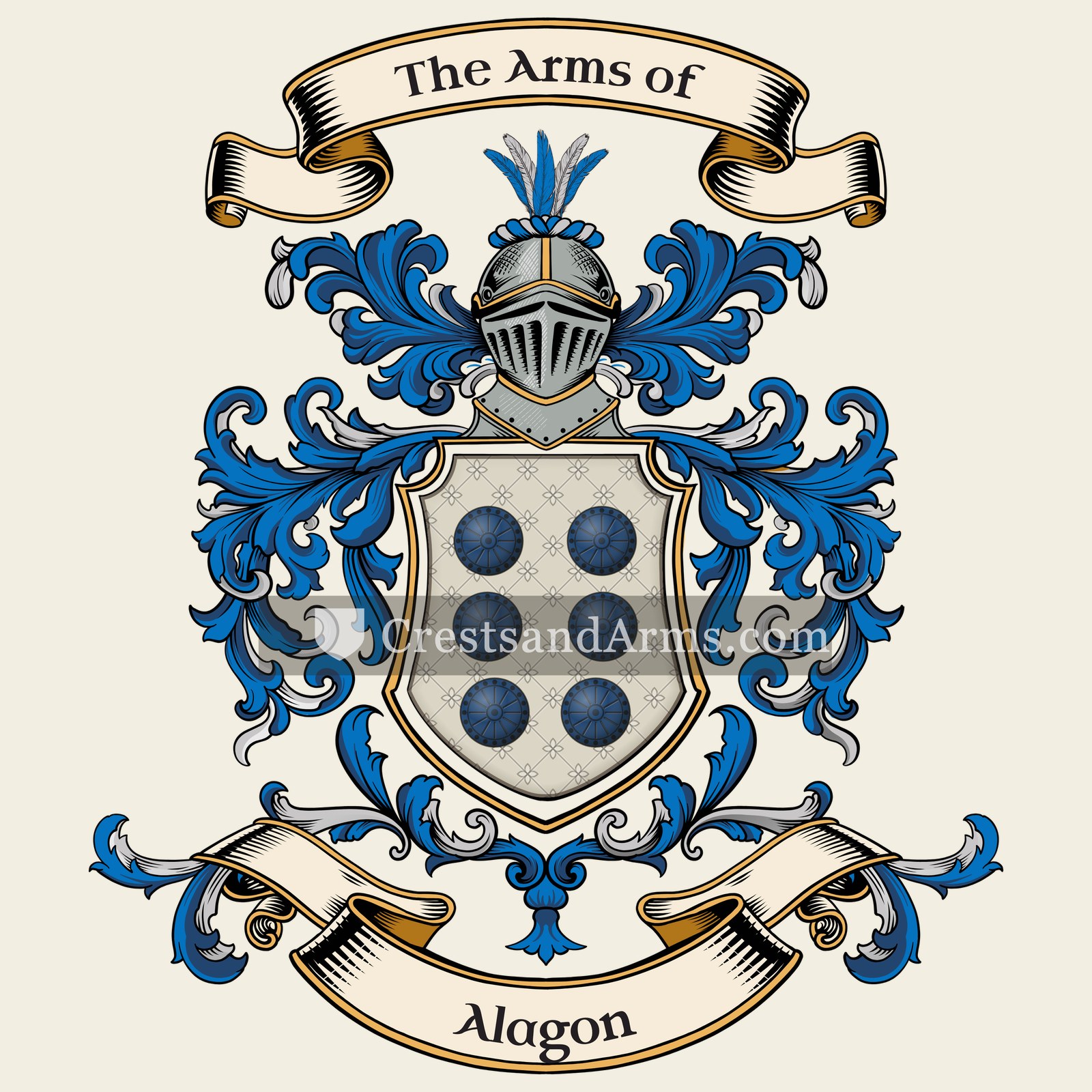


 paleMilitary strength, and a fortified defence