Map of Spain showing where the Alegre arms are recorded
The Alegre arms were recorded in Aragon, c. 1722.
Aragon was mountain and river country in north-eastern Spain, with a strong tradition of small independent landholders. A great many families counted as gentry there, and each one needed a shield to be told apart.
This is where the arms were entered in the register. Families often moved to other parts of the country, so the same name can turn up in more than one region.
The body that granted and recorded arms in Spain in this period.
Philip V of Spain
Sovereign of the period
Philip V of Spain
1714–1724
Reigning in Spain when the Alegre arms are first recorded.
How Arms Worked in Spain
In Spain, a coat of arms was considered a form of property that belonged to the entire family line. These arms were passed down from a father to all his children equally. Younger branches of the family usually kept the original design without needing to add any special marks to distinguish their specific line.
Granting authority
The Cronista Rey de Armas was the official body that regulated and granted coats of arms throughout Spain.
How they got arms
Families often obtained their arms through royal grants or by proving their noble status to the official heraldic authority.
Where arms were recorded
Coats of arms were officially recorded in the registers of the Cronista Rey de Armas starting in 1496.
The family's standing
Recorded among the armigerous families of Aragon.
Origin & History of the Alegre Family in Spain
The surname Alegre carries a long history rooted in the linguistic traditions of the Iberian Peninsula, where it emerged as a descriptive nickname for a person with a cheerful or lively disposition. By the early 18th century, the family had established a notable presence in the Kingdom of Aragon, a region known for its complex social structures and deep historical ties to the Spanish monarchy. During this era, families like the Alegres were often integrated into the local agricultural or merchant classes, contributing to the economic stability of their provincial towns. The name reflects a time when surnames were frequently adopted based on personal traits, serving as a permanent marker of a family’s character. As the family grew within Aragon, they became part of the regional fabric that helped define the cultural identity of northeastern Spain before the modern era.
Coat of Arms & Family Crest Details
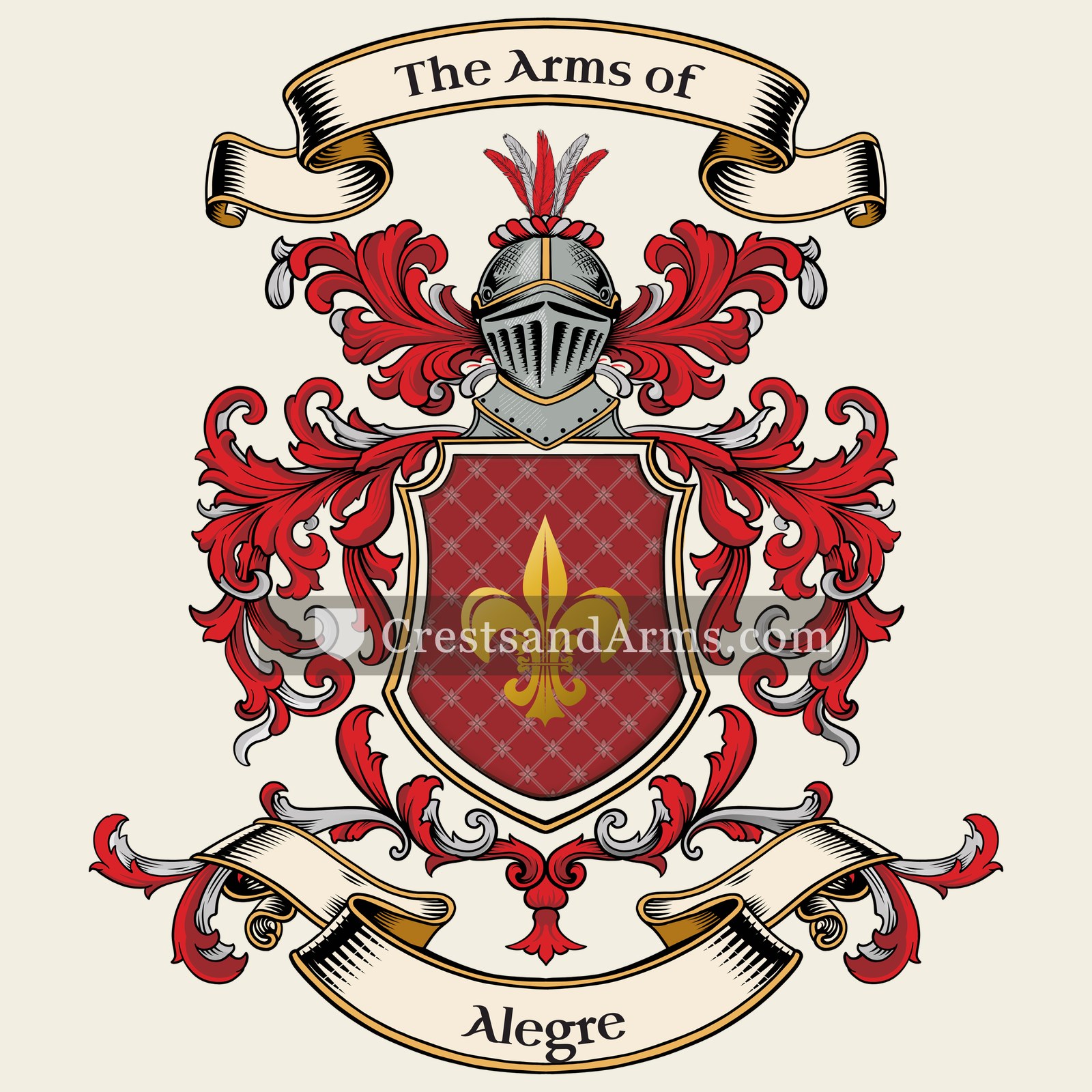
Symbols on this shield
fleur de lisPurity, light, and the sixth son
Colours
Red (Gules)Means: Military strength
Gold (Or)Means: Generosity
Historical info
Source
J. B. Rietstap, Armorial Général, Gouda: G. B. van Goor Zonen, 1884–87
Blazon (the actual original written record)
“De gu. semé de fleurs-de-lis d'or.”
Francec. 1576
Digital archive packCoat of arms PNG, gold border print PDF, vector SVG and the certificate of authenticity. Sent to your email in minutes.
Map of France showing where the Alegre arms are recorded
The Alegre arms were recorded in France, c. 1576.
Arms such as these were typically recorded in Bretagne.
More families held coats of arms in Bretagne than anywhere else in France. The land was divided into many small estates rather than a few large ones, so far more households counted as gentry, and each needed a shield of its own to be told apart.
This is where the arms were entered in the register. Families often moved to other parts of the country, so the same name can turn up in more than one region.
The body that granted and recorded arms in France in this period.
Henry III of France
Sovereign of the period
Henry III of France
1574–1589
Reigning in Spain when the Alegre arms are first recorded.
How Arms Worked in France
In France, a coat of arms was a mark of honor that passed down through the male line to all legitimate descendants. Families often used the same shield without changes to show their shared heritage. If a branch wanted to stand out, they could add a small mark to their shield to show their specific place in the family tree.
Granting authority
The Juge d'armes de France acted as the official authority that regulated and verified coats of arms across the country.
How they got arms
Families typically inherited their arms from ancestors, though they could also receive them through royal grants or by proving their noble status.
Where arms were recorded
Coats of arms were officially recorded in the Armorial Général de France, which began its main collection in the year 1696.
The family's standing
Recorded among the armigerous families of France.
Origin & History of the Alegre Family in France
The family name Alegre carries a rich history that traces back to the rugged landscapes of Brittany in the late sixteenth century. By the year 1576, records confirm that members of the family were already established within this region of France. The name itself is rooted in the Old French word alegre, which translates to cheerful or lively. This suggests that the name likely began as a descriptive nickname for an ancestor known for their bright personality or optimistic outlook on life. During this era, families often lived in small, tightly knit rural communities where such descriptive names helped neighbors distinguish between different households. As the family grew, they became part of the local social fabric, contributing to the agricultural and communal life that defined the Breton countryside during the Renaissance period.
Alegre Meaning & Related Branches
Root word
alacer
Latin term meaning brisk, lively, or eager.
This name
AlegreRefers to a cheerful, happy, or joyful person.
also spelled
Alegree
Alegreh
Alegger
Alegra
Documented Sources
J. B. Rietstap, Armorial Général, Gouda: G. B. van Goor Zonen, 1884–87
Albaigés, Josep M., Diccionario de nombres de personas, 1993
Moll, Francesc de B., Els llinatges catalans, 1959
Archivo de la Corona de Aragón, Registro General del Sello, 1722
Digital archive packCoat of arms PNG, gold border print PDF, vector SVG and the certificate of authenticity. Sent to your email in minutes.


 wingSwiftness, and protection under a raised wing
 wingSwiftness, and protection under a raised wing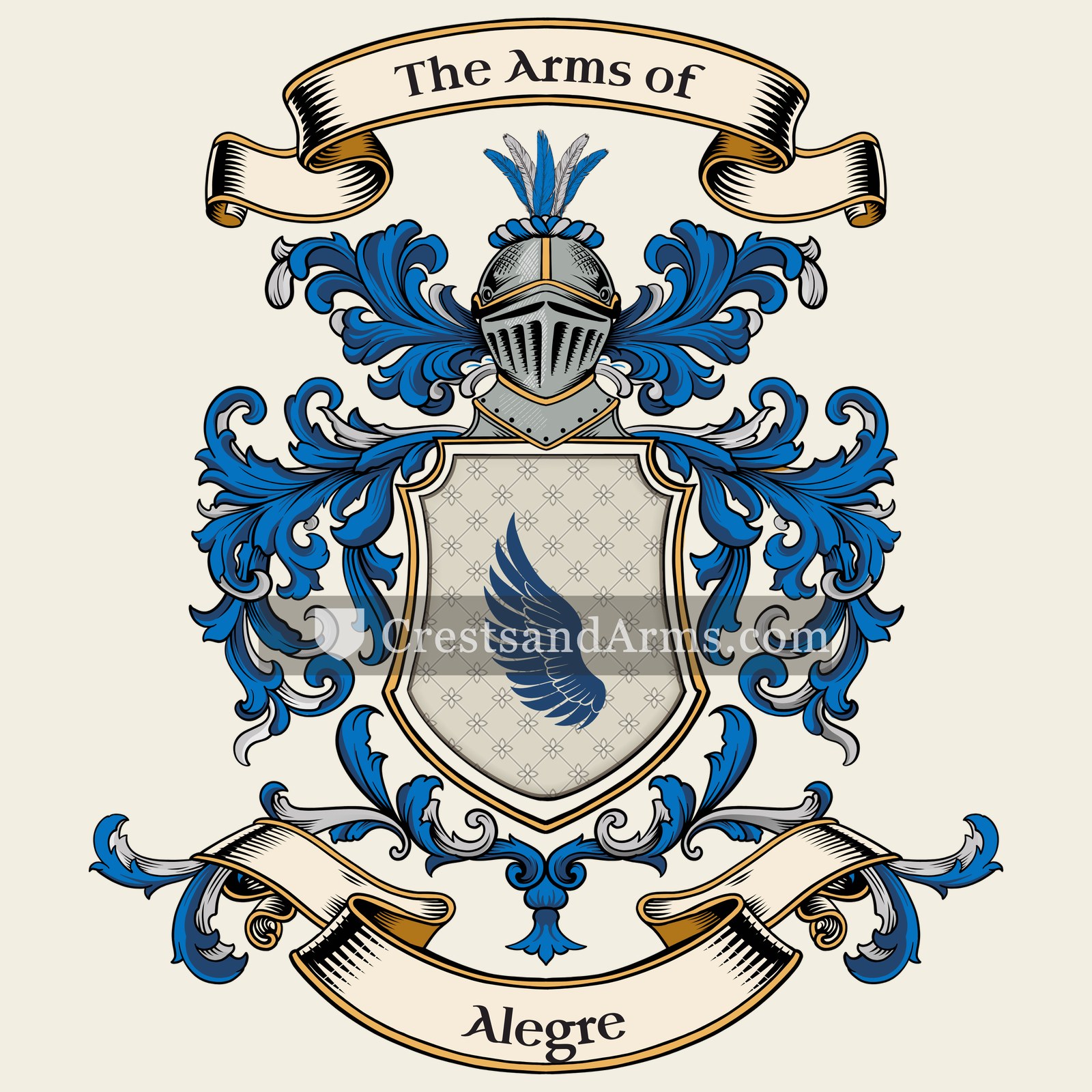


 fleur de lisPurity, light, and the sixth son