Map of France showing where the Allender arms are recorded
The Allender arms were recorded in France, c. 1663.
Arms such as these were typically recorded in Bretagne.
More families held coats of arms in Bretagne than anywhere else in France. The land was divided into many small estates rather than a few large ones, so far more households counted as gentry, and each needed a shield of its own to be told apart.
This is where the arms were entered in the register. Families often moved to other parts of the country, so the same name can turn up in more than one region.
The body that granted and recorded arms in France in this period.
Louis XIV of France
Sovereign of the period
Louis XIV of France
1643–1715
Reigning in France when the Allender arms are first recorded.
How Arms Worked in France
In France, a coat of arms was a mark of honor that passed down through the male line to all legitimate descendants. Families often used the same shield without changes to show their shared heritage. If a branch wanted to stand out, they could add a small mark to their shield to show their specific place in the family tree.
Granting authority
The Juge d'armes de France acted as the official authority that regulated and verified coats of arms across the country.
How they got arms
Families typically inherited their arms from ancestors, though they could also receive them through royal grants or by proving their noble status.
Where arms were recorded
Coats of arms were officially recorded in the Armorial Général de France, which began its main collection in the year 1696.
The family's standing
Recorded among the armigerous families of France.
Origin & History of the Allender Family in France
The roots of the Allender family in France are deeply connected to the rugged landscape of the Brittany region during the seventeenth century. By 1663, records confirm that members of the family were established within this coastal province, a time when Brittany functioned as a distinct cultural and linguistic stronghold within the French kingdom. Life for families in this area was often defined by the maritime economy and the strong influence of local parish communities. Because the region maintained unique traditions and a separate legal identity from the rest of France, the Allender family likely navigated a society that valued local land ownership and ancestral ties to the soil. These early ancestors lived through a period of significant transition as the French monarchy sought to centralize its power over the independent-minded people of the Breton peninsula. Their presence in the region suggests a life built upon the stability of rural village structures and the enduring social networks that defined life in western France during the reign of King Louis XIV.
Meaning of the Allender family crest colors & symbols
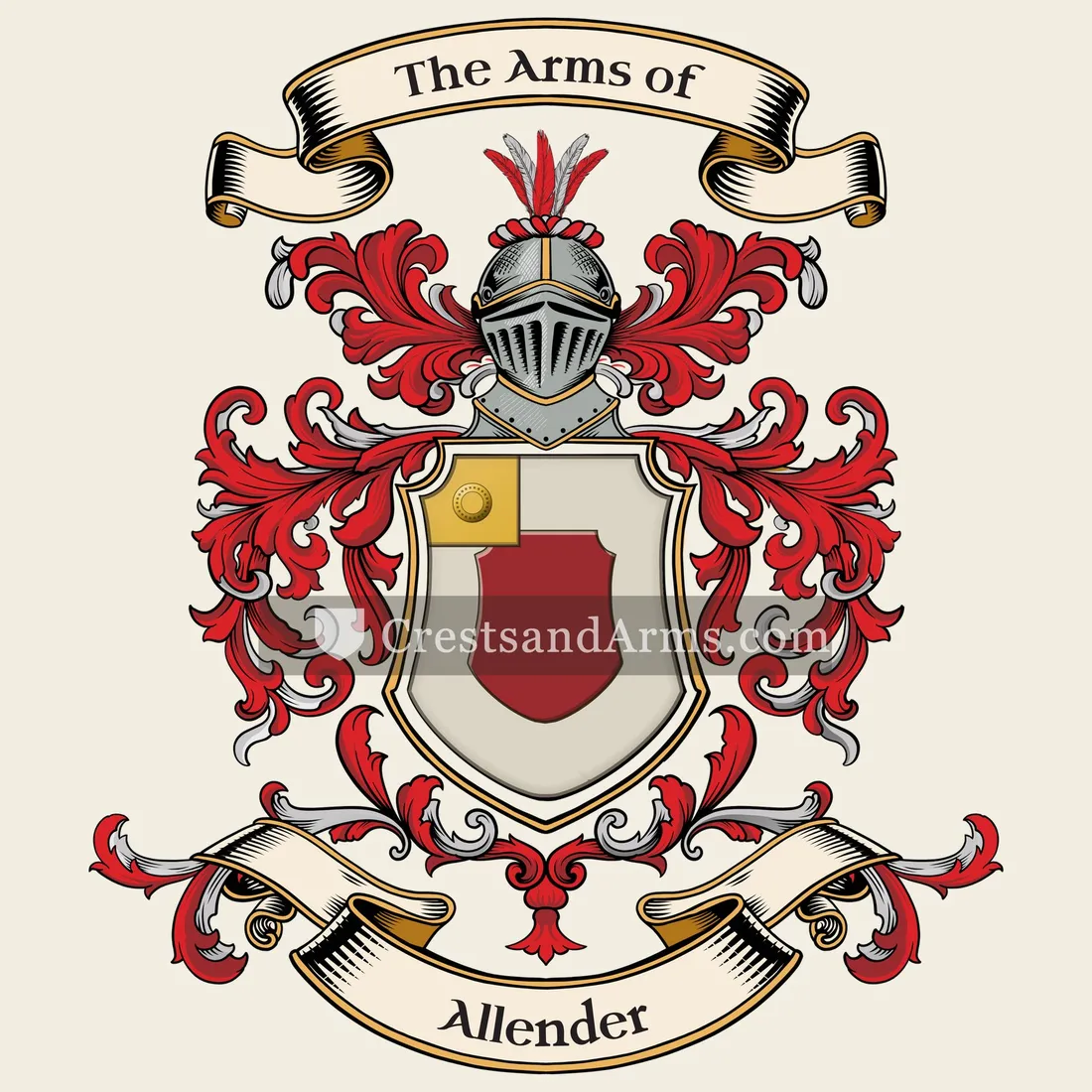
Symbols on this shield
cantonA mark of honour granted by the sovereign
ringFidelity, and a promise kept
Colours
Silver (Argent)Means: Peace and sincerity
Red (Gules)Means: Military strength
Gold (Or)Means: Generosity
Historical info
Source
J. B. Rietstap, Armorial Général, Gouda: G. B. van Goor Zonen, 1884–87
Blazon (the actual original written record)
“D'arg. à un écusson de gu. en abîme, acc. au canton dextre du chef d'un annelet d'or. C.: un bonnet d'or, accosté de deux oreilles d'âne de gu. (Arm. v. G.) (3, 3, 3 et 1.”
WestphaliaWestphalia, c. 1765
Digital archive packCoat of arms PNG, gold border print PDF, vector SVG and the certificate of authenticity. Sent to your email in minutes.
Map of Germany showing where the Allender arms are recorded
The Allender arms were recorded in Westphalia, c. 1765.
Westphalia was a land of small estates and fortified farmhouses in western Germany. Its families were numerous and not especially rich, but each held its own ground, and holding ground was what brought arms.
This is where the arms were entered in the register. Families often moved to other parts of the country, so the same name can turn up in more than one region.
The body that granted and recorded arms in Germany in this period.
Francis I, Holy Roman Emperor
Sovereign of the period
Francis I, Holy Roman Emperor
1745–1765
Reigning in France when the Allender arms are first recorded.
How Arms Worked in Germany
In the Holy Roman Empire, coats of arms were often granted to individuals by the Emperor or his representatives. These arms were then passed down through the generations to all legitimate descendants of the original holder. Younger branches of a family usually kept the same shield design without needing to change it, as the arms belonged to the entire lineage.
Granting authority
The Holy Roman Emperor held the sole power to grant new coats of arms throughout his vast imperial territories.
How they got arms
Families typically obtained their coats of arms through a formal imperial grant or by proving their noble status to the authorities.
Where arms were recorded
These grants were officially recorded in the Imperial Chancery registers, which began keeping formal records of such honors during the Middle Ages.
The family's standing
Recorded among the armigerous families of Westphalia.
Origin & History of the Allender Family in Germany
The Allender family name traces its roots to the historical region of Westphalia in western Germany. By the mid-18th century, records confirm that members of the family were established in this area, which was known for its dense forests and complex network of local farming communities. During the 1760s, Westphalia was part of the Kingdom of Prussia, a time when many families were deeply connected to the land and local parish life. The name likely developed as a topographical or locational identifier, reflecting the specific landscape or village where early ancestors resided. As the region experienced shifts in political power and economic growth, families like the Allenders often maintained strong ties to their ancestral villages before eventually participating in the broader migrations that moved people toward new opportunities in the 19th century.
Allender Meaning & Related Branches
Root word
Alain
Derived from the ancient Celtic tribe known as the Alani.
This name
AllenderA locational or patronymic surname indicating a descendant of someone named Alain or from a place named Alland.
also spelled
Allendorff
Allendorfh
Alendorf
Documented Sources
J. B. Rietstap, Armorial Général, Gouda: G. B. van Goor Zonen, 1884–87
Archives départementales d’Ille-et-Vilaine, Série B (Cours et juridictions)
Archives départementales du Finistère, Série E (Familles et seigneuries)
Le Moyne de La Borderie, Arthur, Histoire de Bretagne, 1896
Meyer, Jean, La noblesse bretonne au XVIIIe siècle, 1966
Digital archive packCoat of arms PNG, gold border print PDF, vector SVG and the certificate of authenticity. Sent to your email in minutes.


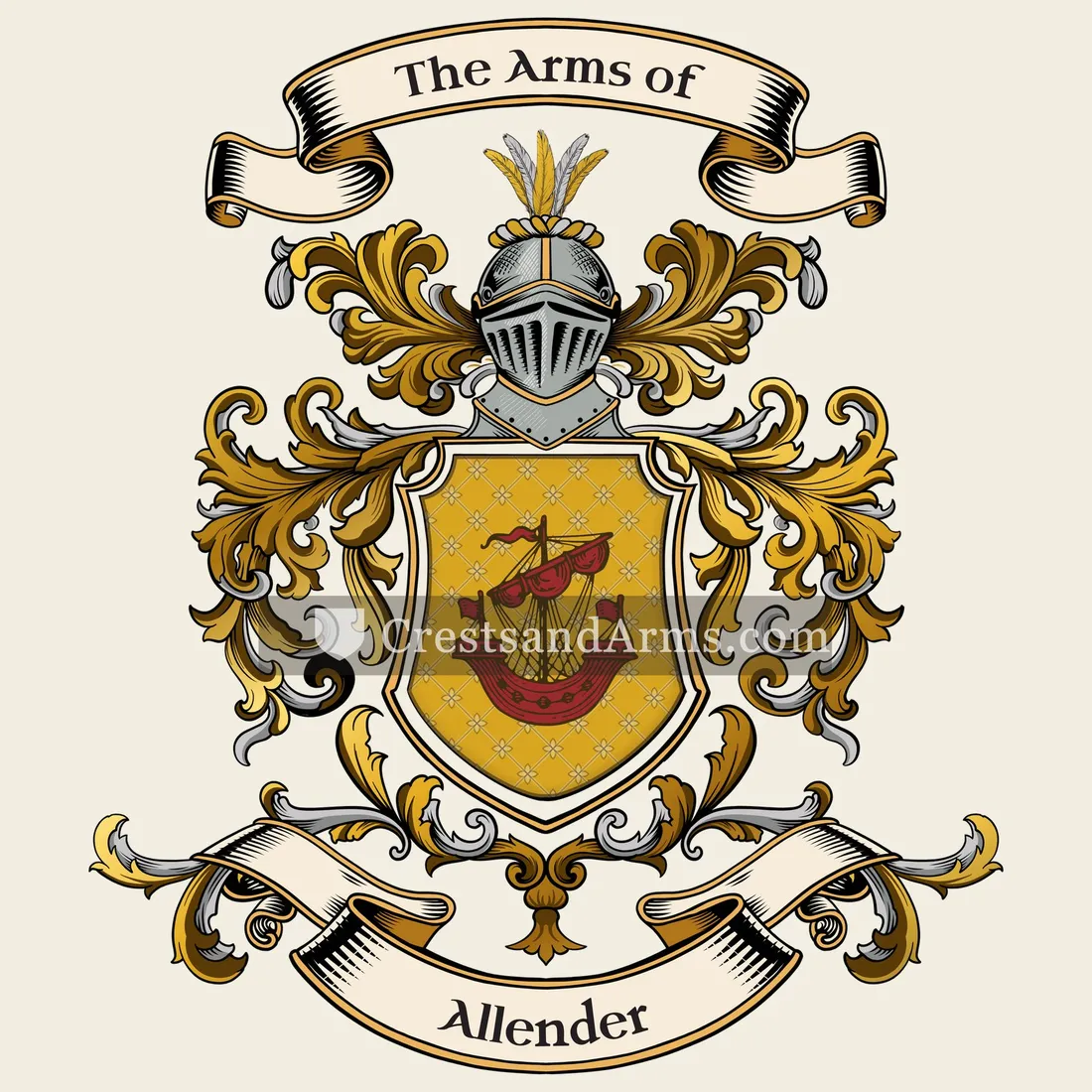
 shipEnterprise, and a great voyage undertaken
 shipEnterprise, and a great voyage undertaken


 cantonA mark of honour granted by the sovereign
 ringFidelity, and a promise kept