Map of Britain showing where the Alleyne arms are recorded
The Alleyne arms were recorded in Derbyshire, c. 1769.
This is where the arms were entered in the register. Families often moved to other parts of the country, so the same name can turn up in more than one region.
The body that granted and recorded arms in Britain in this period.
George III of Great Britain
Sovereign of the period
George III of Great Britain
1760–1801
Reigning in Britain when the Alleyne arms are first recorded.
How Arms Worked in Britain
English heraldry allowed arms to be shared by all legitimate descendants of the original owner. These symbols were treated as personal property that moved through the generations to all children. While the eldest son kept the original design, other family members could use the same shield without needing to change it or register their own unique versions.
Granting authority
The College of Arms in London has regulated the use of coats of arms throughout England and Wales since 1484.
How they got arms
Families typically obtained their coats of arms through a formal grant from the Crown or by proving their ancient right to them.
Where arms were recorded
All official coats of arms are recorded in the registers kept at the College of Arms, which date back to the fifteenth century.
The family's standing
Recorded among the armigerous families of Derbyshire.
Origin & History of the Alleyne Family in Britain
The surname Alleyne is a variant of the name Allen, which traces its linguistic roots to the ancient Celtic word for harmony or stone. While the name became widespread across the British Isles following the Norman Conquest, specific branches of the family established deep roots in the English Midlands by the eighteenth century. Records confirm that members of the Alleyne family were living in the county of Derbyshire by 1769, where they were likely integrated into the local agricultural or trade communities of the era. During this period, families in Derbyshire often lived in small parish settlements where they contributed to the local economy through farming or craftsmanship. The presence of the family in this region suggests a long history of stability and local connection, as families during the 1700s typically remained in the same geographic area for many generations. This regional history reflects the broader movement of English families who helped shape the social and economic landscape of the Midlands during the lead-up to the Industrial Revolution.
Coat of Arms & Family Crest Details
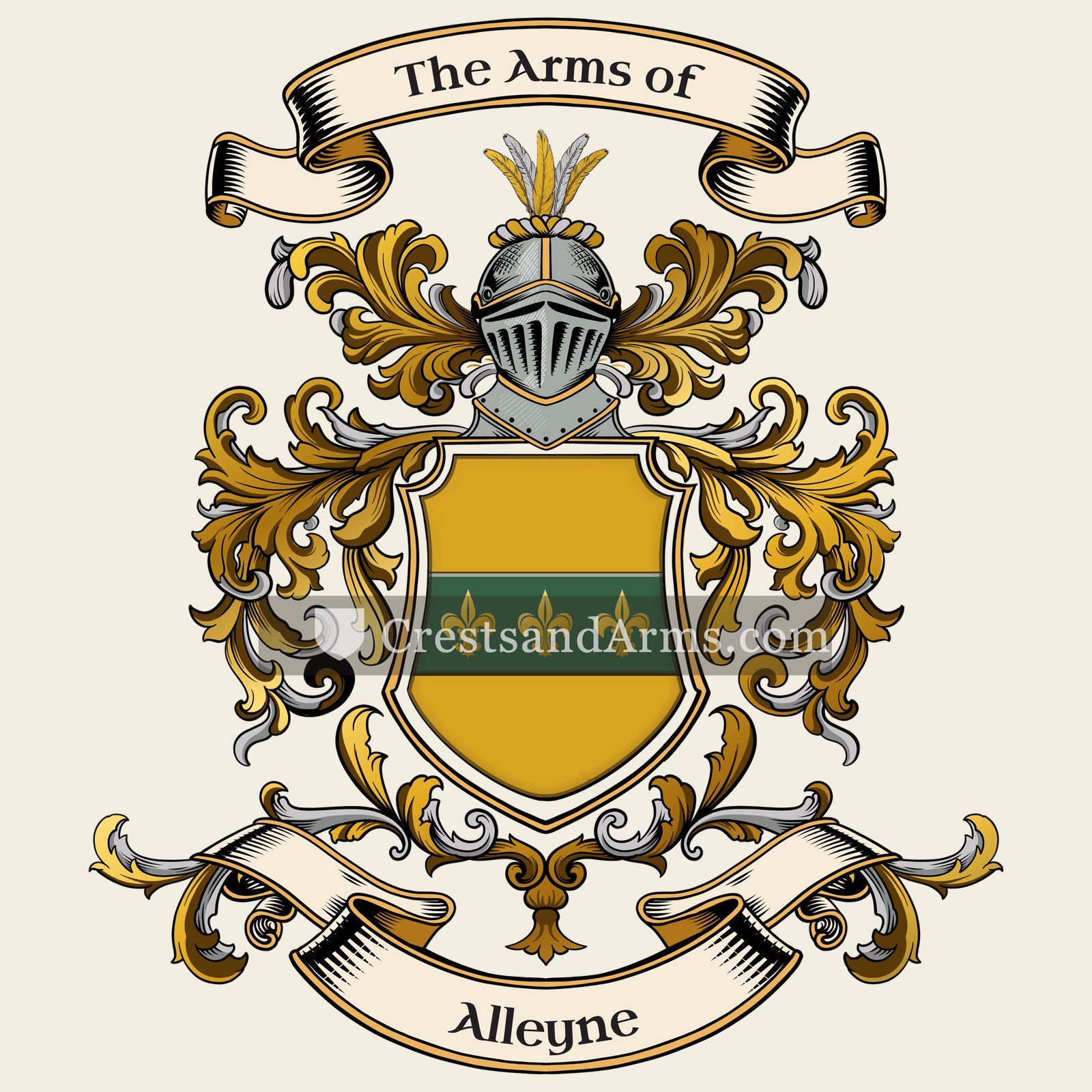
Symbols on this shield
fessThe military belt, and readiness to serve
fleur de lisPurity, light, and the sixth son
Colours
Gold (Or)Means: Generosity
Green (Vert)Means: Hope
Historical info
Source
Sir Bernard Burke, The General Armory of England, Scotland, Ireland and Wales, London: Harrison & Sons, 1884
Blazon (the actual original written record)
“Or, on a fess vert three fleurs-de-lis of the first”
EssexHayesleigh · Essex, c. 1620
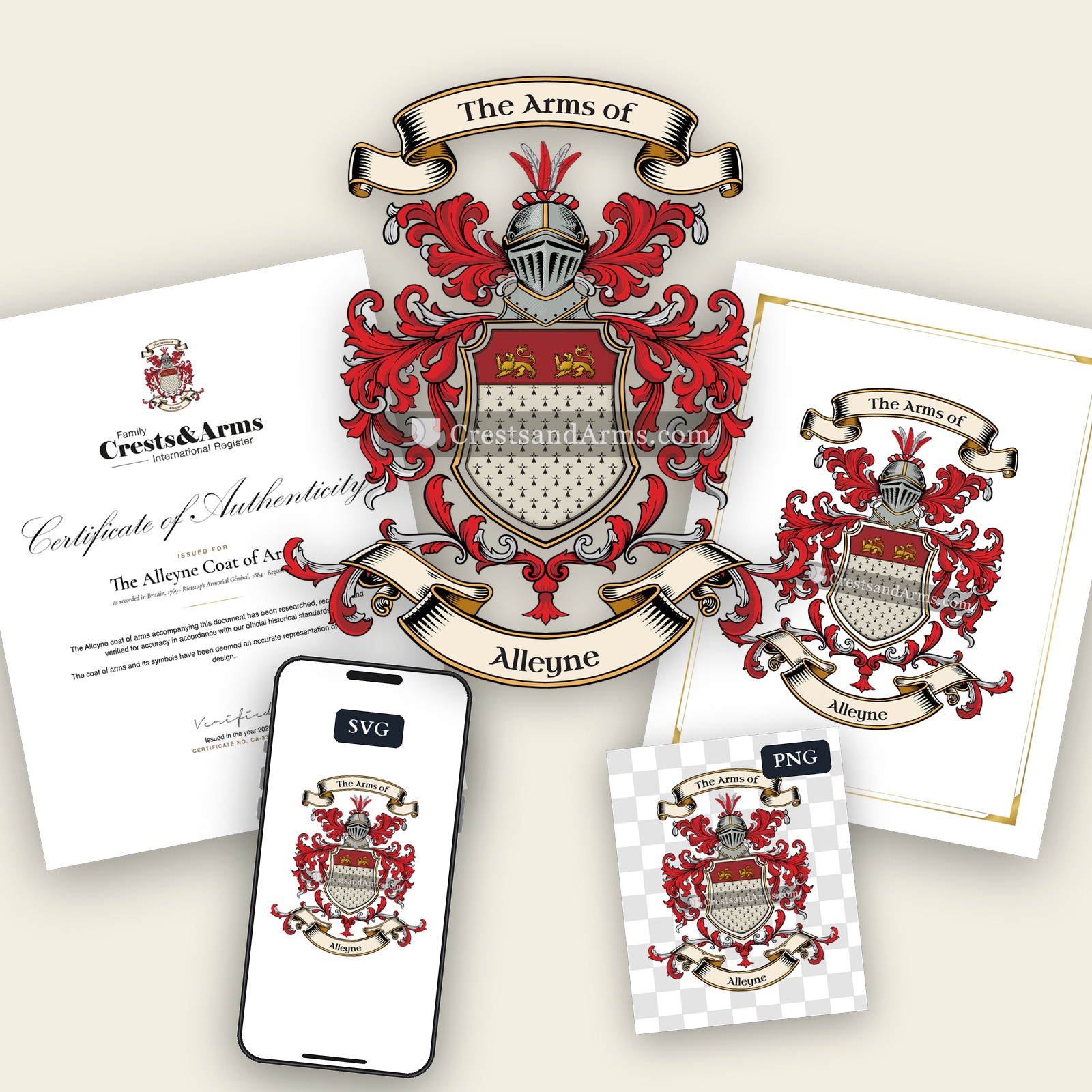
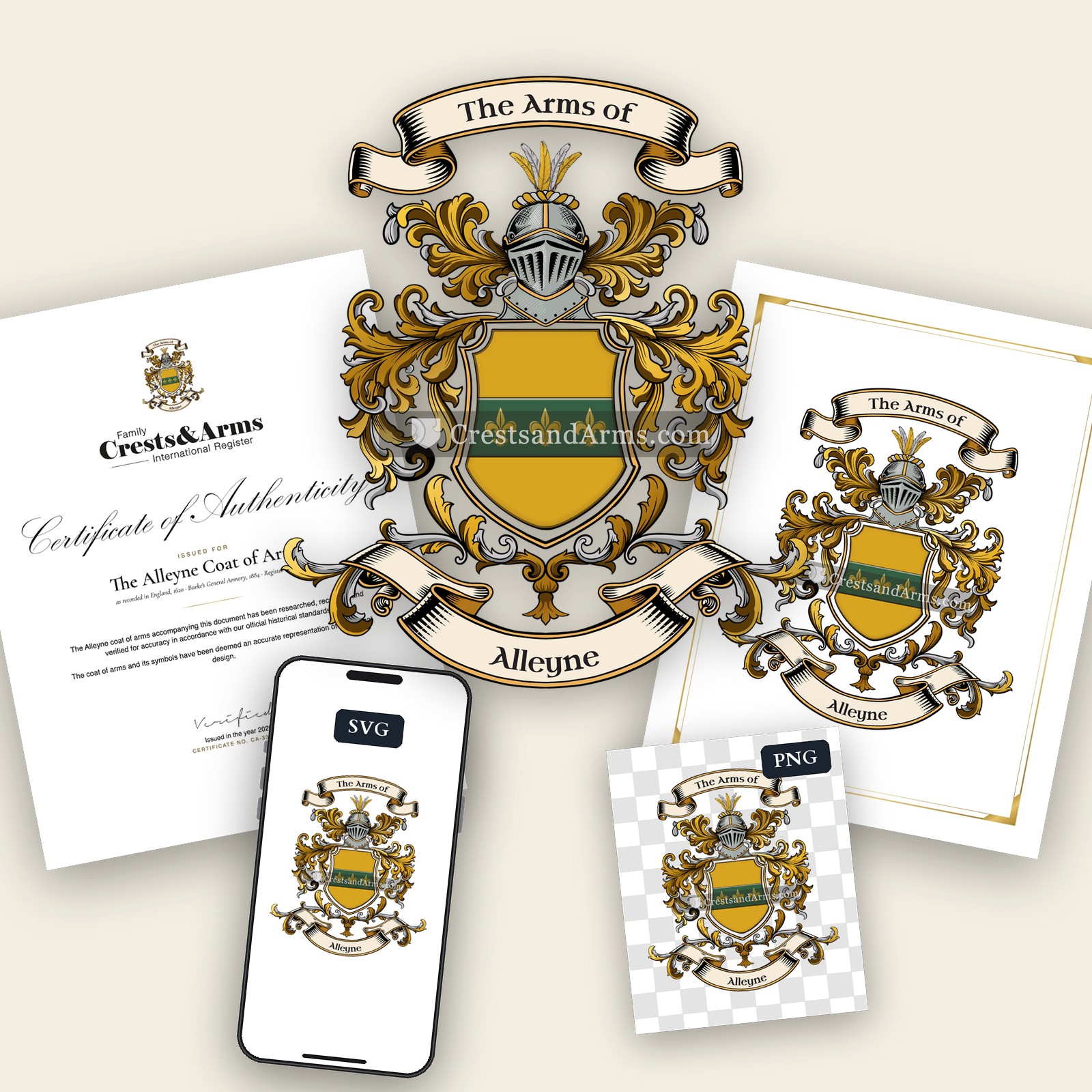
Digital archive packCoat of arms PNG, gold border print PDF, vector SVG and the certificate of authenticity. Sent to your email in minutes.
Map of England showing where the Alleyne arms are recorded
The Alleyne arms were recorded in Essex, c. 1620.
Essex lay close enough to London for City money to buy land there. Merchants who prospered moved out to estates within a day's ride, and a new landowner almost always wanted arms to go with the ground.
This is where the arms were entered in the register. Families often moved to other parts of the country, so the same name can turn up in more than one region.
The body that granted and recorded arms in England in this period.
James VI and I
Sovereign of the period
James VI and I
1603–1625
Reigning in Britain when the Alleyne arms are first recorded.
How Arms Worked in England
English heraldry allowed arms to be shared by all legitimate descendants of the original owner. These symbols were treated as personal property that moved through the generations to all children. While the eldest son kept the original design, other family members could use the same shield without needing to change it or register their own unique versions.
Granting authority
The College of Arms in London has regulated the use of coats of arms throughout England and Wales since 1484.
How they got arms
Families typically obtained their coats of arms through a formal grant from the Crown or by proving their ancient right to them.
Where arms were recorded
All official coats of arms are recorded in the registers kept at the College of Arms, which date back to the fifteenth century.
The family's standing
Recorded among the armigerous families of Essex.
Origin & History of the Alleyne Family in England
The surname Alleyne is a variant of the name Alan, which was introduced to England following the Norman Conquest. By the early 17th century, the family had established a notable presence in the county of Essex. Records from 1620 show that members of the family were settled in this region, where they were often involved in the agricultural and social life of the local parishes. During this period, the name was frequently spelled in various ways, such as Allen or Alleyn, depending on the preferences of the local clerks who recorded births and marriages. As the family grew, they integrated into the community structure of rural England, eventually branching out into trade and land management. This transition from local residents to established members of the gentry helped the family name persist through centuries of English history.
Alleyne Meaning & Related Branches
Root word
Alan
Derived from the Old Breton personal name meaning little rock or stone.
This name
AlleyneA patronymic surname indicating descent from a person bearing the name Alan.
also spelled
Alleynee
Alleyneh
Alen
Allyn
Allen
Related arms
Aleynvariant spelling
Allenvariant spelling
Allynvariant spelling
Documented Sources
J. B. Rietstap, Armorial Général, Gouda: G. B. van Goor Zonen, 1884–87
Reaney, P.H., A Dictionary of English Surnames, 1958
Derbyshire Record Office, Parish Registers of Derbyshire, 1769
Digital archive packCoat of arms PNG, gold border print PDF, vector SVG and the certificate of authenticity. Sent to your email in minutes.


 lionCourage, strength and royalty
 lionCourage, strength and royalty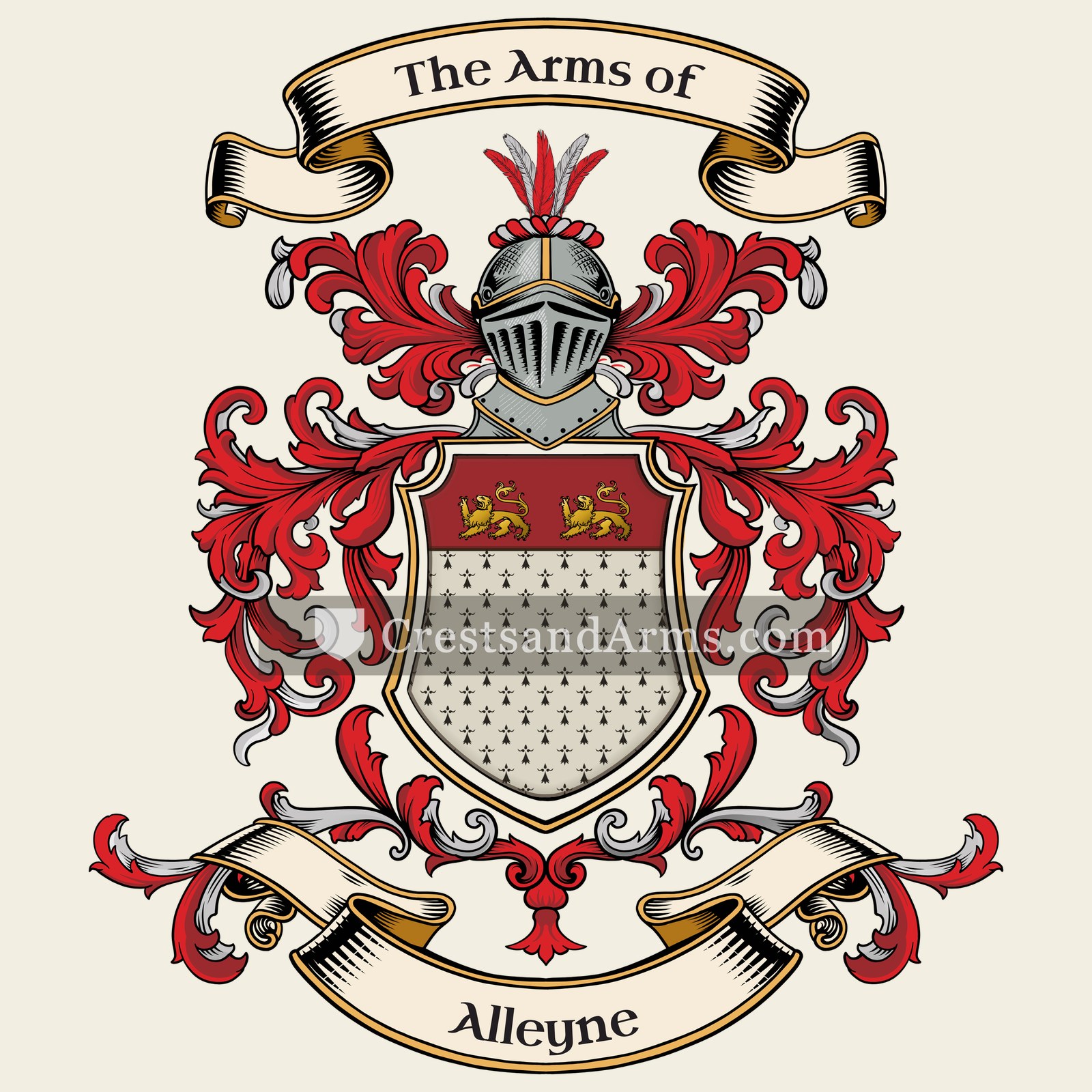


 fessThe military belt, and readiness to serve
 fleur de lisPurity, light, and the sixth son