A record of documented arms, meaning and origin, researched for the Alma family lines. Documented in 2 countries.
Reg. 5743 · Dutch, A–C
Coat of Arms & Family Crest Details
Symbols on this shield
eagleNobility, strength and a keen mind
crownSovereignty, authority and just reward
Colours
Gold (Or)Means: Generosity
Blue (Azure)Means: Loyalty and truth
Black (Sable)Means: Constancy
Historical info
Source
J. B. Rietstap, Armorial Général, Gouda: G. B. van Goor Zonen, 1884–87
Blazon (the actual original written record)
“Parti: au 1 d'or à la demi-aigle de sa., mouv. du parti; au 2 coupé: a. d'azur à une couronne à l'antique d'or; b. d'or à un A de sa. C.: une aigle iss. de sa. L.: d'or et d'azur.”
FrieslandFriesland, c. 1815
Digital archive packCoat of arms PNG, gold border print PDF, vector SVG and the certificate of authenticity. Sent to your email in minutes.
Map of Netherlands showing where the Alma arms are recorded
The Alma arms were recorded in Friesland, c. 1815.
Friesland was low, wet country on the northern coast of the Netherlands, farmed by families who had held the same land for centuries. Free landholders were unusually common there, and a free landholder could carry arms.
This is where the arms were entered in the register. Families often moved to other parts of the country, so the same name can turn up in more than one region.
Region
Friesland
First recorded
1815
Granting Authority for the Alma Arms
Hoge Raad van Adel
Photograph made by me · CC BY-SA 3.0
The body that granted and recorded arms in Netherlands in this period.
William I of the Netherlands
Sovereign of the period
William I of the Netherlands
1815–1840
Reigning in Netherlands when the Alma arms are first recorded.
How Arms Worked in Netherlands
In the Netherlands, coats of arms were often used by noble families and those who held specific public offices. These arms were passed down through the generations to legitimate descendants. Younger branches of a family usually kept the original design without needing to add special marks. This system ensured that the family identity remained clear and consistent over many years.
Granting authority
The Hoge Raad van Adel is the official body that regulates and manages noble titles and coats of arms in the Netherlands.
How they got arms
Families typically obtained their coats of arms through official royal grants or by proving their long-standing historical use of the symbols.
Where arms were recorded
Coats of arms are officially recorded in the registers held by the Hoge Raad van Adel, which began its work in 1814.
The family's standing
Recorded among the armigerous families of Friesland.
Origin & History of the Alma Family in Netherlands
The family name Alma has deep roots in the northern province of Friesland, where it was firmly established by the early 19th century. In the Dutch naming tradition, surnames often evolved from descriptions of a person’s home, their profession, or their father’s name. The name Alma is thought to be a topographic or habitational name, likely linked to specific farmsteads or locations within the Frisian landscape. By 1815, when the Netherlands introduced a formal civil registry to track all citizens, the Alma family was already well-documented as part of the local community. During this period, the family members were typically involved in agriculture and trade, which were the primary ways of life in the rural Frisian countryside. Over time, the name became a permanent identifier for these families, helping to distinguish them as they moved from small villages into the growing towns of the Netherlands.
Coat of Arms & Family Crest Details
Symbols on this shield
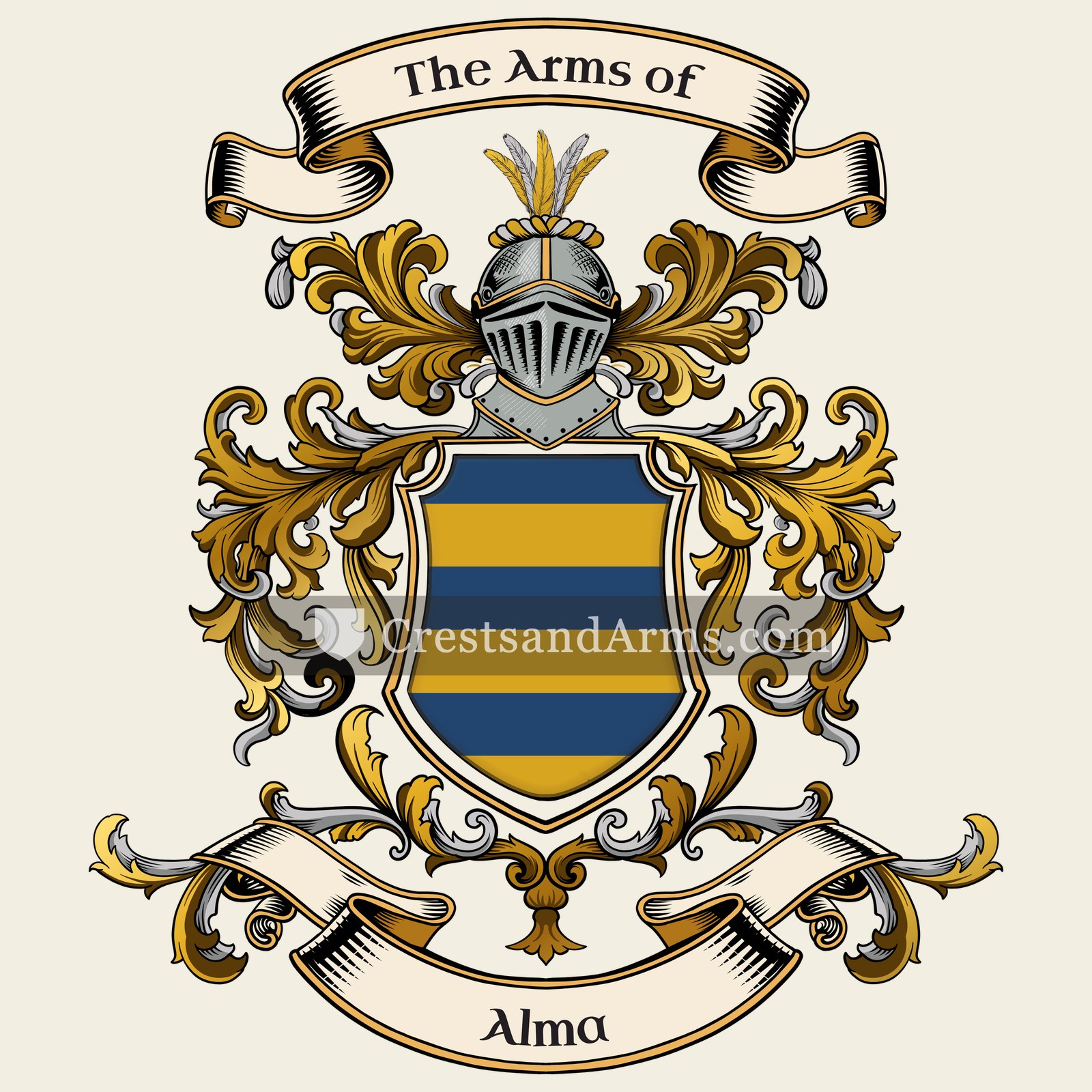
fessThe military belt, and readiness to serve
Colours
Gold (Or)Means: Generosity
Blue (Azure)Means: Loyalty and truth
Historical info
Source
J. B. Rietstap, Armorial Général, Gouda: G. B. van Goor Zonen, 1884–87
Blazon (the actual original written record)
“Fascé d'or et d'azur.”
Portugalc. 1706
Digital archive packCoat of arms PNG, gold border print PDF, vector SVG and the certificate of authenticity. Sent to your email in minutes.
Map of Portugal showing where the Alma arms are recorded
The Alma arms were recorded in Portugal, c. 1706.
Arms such as these were typically recorded in Lisboa.
Lisbon was the seat of the Portuguese crown and the port its wealth came through. Families made rich by trade and by service to the king took arms, and the crown's heralds recorded them there.
This is where the arms were entered in the register. Families often moved to other parts of the country, so the same name can turn up in more than one region.
The body that granted and recorded arms in Portugal in this period.
Peter II of Portugal
Sovereign of the period
Peter II of Portugal
1683–1706
Reigning in Netherlands when the Alma arms are first recorded.
How Arms Worked in Portugal
In Portugal, a coat of arms was a family possession that passed from a father to his children. Every legitimate descendant had the right to use the family shield without needing to change it. Younger branches of the family kept the original design, though they sometimes added small symbols to distinguish their specific line from the main branch.
Granting authority
The Cartório da Nobreza acted as the official body that managed and regulated noble titles and coats of arms in Portugal.
How they got arms
Families typically inherited their arms through bloodline, though they could also receive new grants from the crown for distinguished service.
Where arms were recorded
Coats of arms were officially recorded in the books of the Cartório da Nobreza starting in the year 1512.
The family's standing
Recorded among the armigerous families of Portugal.
Origin & History of the Alma Family in Portugal
The family name Alma carries a deep connection to the cultural and social fabric of Portugal, with documented roots reaching back to the city of Lisbon in 1706. During this period, Lisbon served as a bustling center of trade and intellectual activity, providing a unique environment for families to establish their presence within the urban landscape. The name itself is derived from the Portuguese word for soul, which suggests that the original bearers may have been associated with religious life or held a reputation for a compassionate nature. By the early eighteenth century, members of the Alma family were integrated into the daily life of the capital, likely participating in the diverse professional guilds that defined the city. Their presence in the historical records of Lisbon indicates that they were part of a growing middle class that helped shape the identity of the region during a time of significant transition for the Portuguese monarchy.
Alma Meaning & Related Branches
Root word
Al
A Germanic element meaning all or entirely.
This name
AlmaDerived from a Frisian name meaning all or noble, often associated with the Germanic word for all.
also spelled
Almaa
Almah
Documented Sources
J. B. Rietstap, Armorial Général, Gouda: G. B. van Goor Zonen, 1884–87
Tresoar, Nederlandse Familienamen Databank, 2024
Meertens Instituut, Nederlandse Familienamenbank, 2023
Tresoar (Fries Historisch en Letterkundig Centrum), Burgerlijke Stand van Friesland, 1811–1950
Digital archive packCoat of arms PNG, gold border print PDF, vector SVG and the certificate of authenticity. Sent to your email in minutes.


 eagleNobility, strength and a keen mind
 crownSovereignty, authority and just reward
 eagleNobility, strength and a keen mind
 crownSovereignty, authority and just reward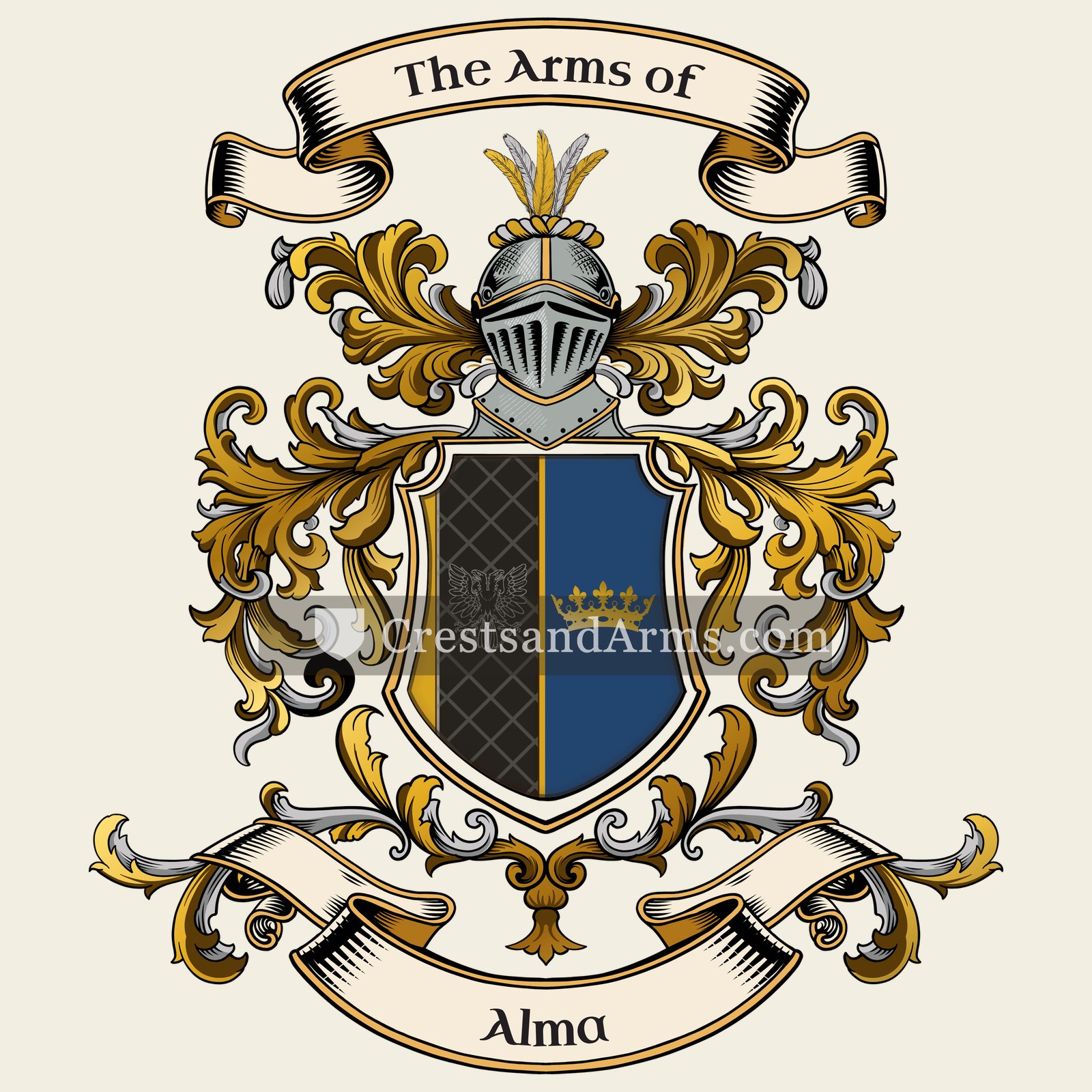


 fessThe military belt, and readiness to serve