Map of Italy showing where the Almeda arms are recorded
The Almeda arms were recorded in Sicily, c. 1775.
Sicily was ruled in turn by Normans, Germans, French and Spanish, and each left landed families behind. The island kept formal lists of its noble houses, which is why so many Sicilian names carry recorded arms.
This is where the arms were entered in the register. Families often moved to other parts of the country, so the same name can turn up in more than one region.
The body that granted and recorded arms in Italy in this period.
Alvise Giovanni Mocenigo
Sovereign of the period
Alvise Giovanni Mocenigo
1763–1778
Reigning in Italy when the Almeda arms are first recorded.
How Arms Worked in Italy
In the Italian states, coats of arms were often used by noble families to show their status and history. These symbols were passed down through the generations to all legitimate male descendants. Younger branches of a family usually kept the original design but sometimes added small changes to distinguish their specific line from the main branch.
Granting authority
Various local rulers and city governments controlled the use of coats of arms across the different Italian states.
How they got arms
Families often assumed their own arms or received them as official grants from local lords, popes, or city councils.
Where arms were recorded
Arms were recorded in local city archives or private family books rather than in one single national register.
The family's standing
Recorded among the armigerous families of Sicily.
Origin & History of the Almeda Family in Italy
The surname Almeda carries a deep connection to the Mediterranean landscape, particularly within the island of Sicily. By the year 1775, families bearing this name were already established members of Sicilian society, likely living in agricultural or coastal communities where they contributed to the local economy. The name itself is thought to be rooted in the Latin word *almeta*, which refers to a grove of elm trees, suggesting that the family’s earliest ancestors may have been identified by the specific land they cultivated or the geography of their home. During the late 18th century, Sicily was a crossroads of various cultures and traditions, and the Almeda family would have navigated a world shaped by shifting political powers and rural life. These early generations helped build the foundations of the family lineage, passing down their traditions and identity through the generations in the vibrant, sun-drenched environment of southern Italy.
Coat of Arms & Family Crest Details
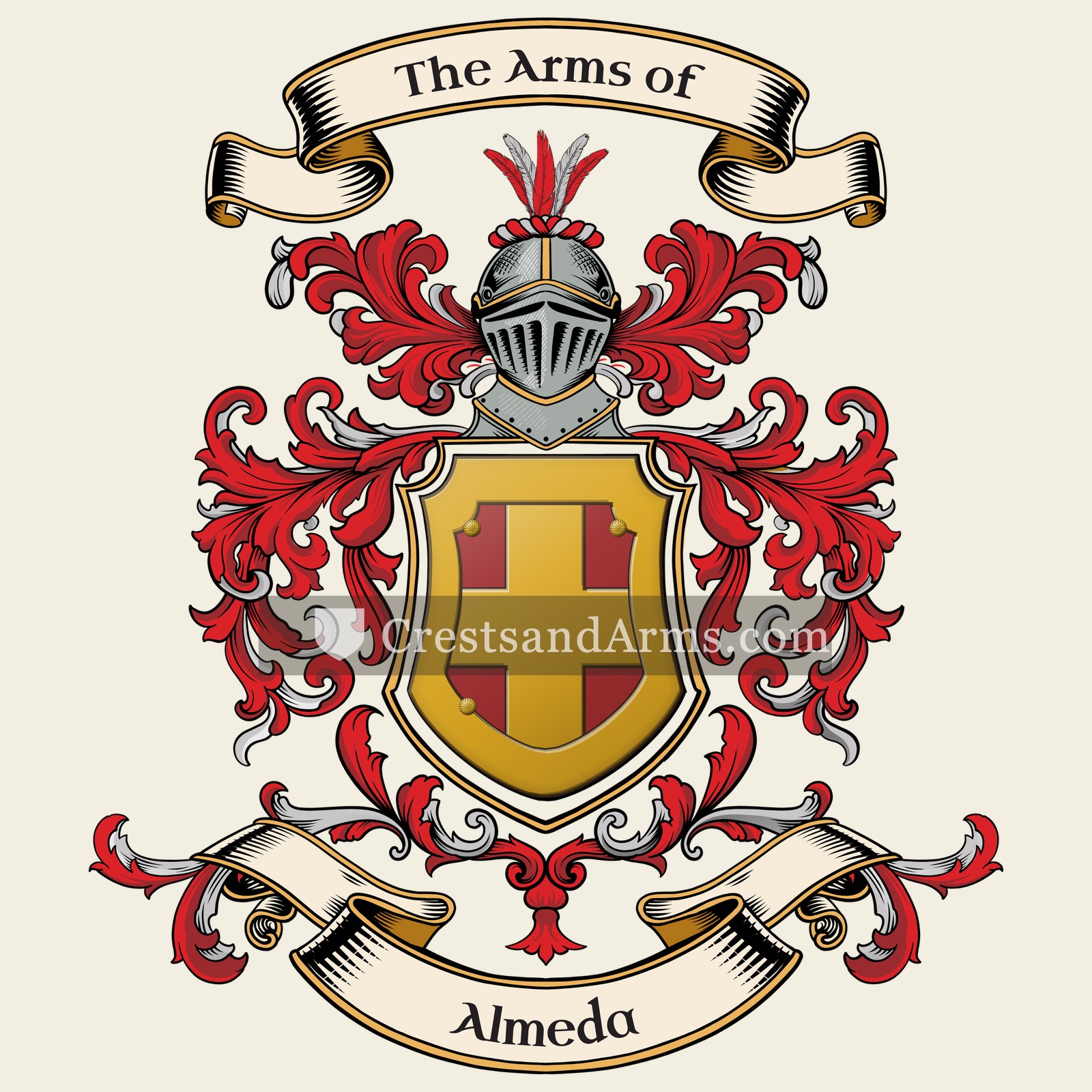
Symbols on this shield
cross symbolChristian faith and service
roundelA coin, and one who has been to the crusades
Colours
Red (Gules)Means: Military strength
Gold (Or)Means: Generosity
Historical info
Source
J. B. Rietstap, Armorial Général, Gouda: G. B. van Goor Zonen, 1884–87
Blazon (the actual original written record)
“De gu. à une croix recr. d'or, acc. de trois bes. du même; à la bord. aussi d'or.”
Portugalc. 1706
Digital archive packCoat of arms PNG, gold border print PDF, vector SVG and the certificate of authenticity. Sent to your email in minutes.
Map of Portugal showing where the Almeda arms are recorded
The Almeda arms were recorded in Portugal, c. 1706.
Arms such as these were typically recorded in Lisboa.
Lisbon was the seat of the Portuguese crown and the port its wealth came through. Families made rich by trade and by service to the king took arms, and the crown's heralds recorded them there.
This is where the arms were entered in the register. Families often moved to other parts of the country, so the same name can turn up in more than one region.
The body that granted and recorded arms in Portugal in this period.
Peter II of Portugal
Sovereign of the period
Peter II of Portugal
1683–1706
Reigning in Italy when the Almeda arms are first recorded.
How Arms Worked in Portugal
In Portugal, a coat of arms was a family possession that passed from a father to his children. Every legitimate descendant had the right to use the family shield without needing to change it. Younger branches of the family kept the original design, though they sometimes added small symbols to distinguish their specific line from the main branch.
Granting authority
The Cartório da Nobreza acted as the official body that managed and regulated noble titles and coats of arms in Portugal.
How they got arms
Families typically inherited their arms through bloodline, though they could also receive new grants from the crown for distinguished service.
Where arms were recorded
Coats of arms were officially recorded in the books of the Cartório da Nobreza starting in the year 1512.
The family's standing
Recorded among the armigerous families of Portugal.
Origin & History of the Almeda Family in Portugal
The name Almeda carries a deep connection to the geography and social evolution of Portugal. Etymologically, the name is linked to the Arabic term *al-meda*, which refers to a tableland or a flat, elevated area of land. This suggests that the earliest ancestors to hold the name likely lived on or managed such terrain within the Iberian Peninsula. By 1706, historical records confirm that members of the Almeda family were well-established residents of Lisboa. During this period, the city was a bustling center of trade and royal influence, placing the family at the heart of Portuguese urban life. As the family grew, they became part of the complex social fabric of the capital, likely participating in the commerce and administrative duties that defined the city during the eighteenth century. Their presence in Lisboa indicates that the family had successfully transitioned from their rural origins to become active participants in the development of Portugal’s most important metropolitan hub.
Related Branches & Arms
Root word
Almeda
Derived from the Arabic al-ma'ida meaning the table or the plateau.
This name
AlmedaRefers to a person who lived on or near a plateau or a tableland.
also spelled
Almeyda
Almeda
Documented Sources
J. B. Rietstap, Armorial Général, Gouda: G. B. van Goor Zonen, 1884–87
Archivio di Stato di Palermo, Stato Civile della Restaurazione
Cancila, Orazio, Storia della Sicilia, 2009
Trasselli, Carmelo, Da Ferdinando il Cattolico a Carlo V: L'esperienza siciliana, 1982
Digital archive packCoat of arms PNG, gold border print PDF, vector SVG and the certificate of authenticity. Sent to your email in minutes.


 roundelA coin, and one who has been to the crusades
 roundelA coin, and one who has been to the crusades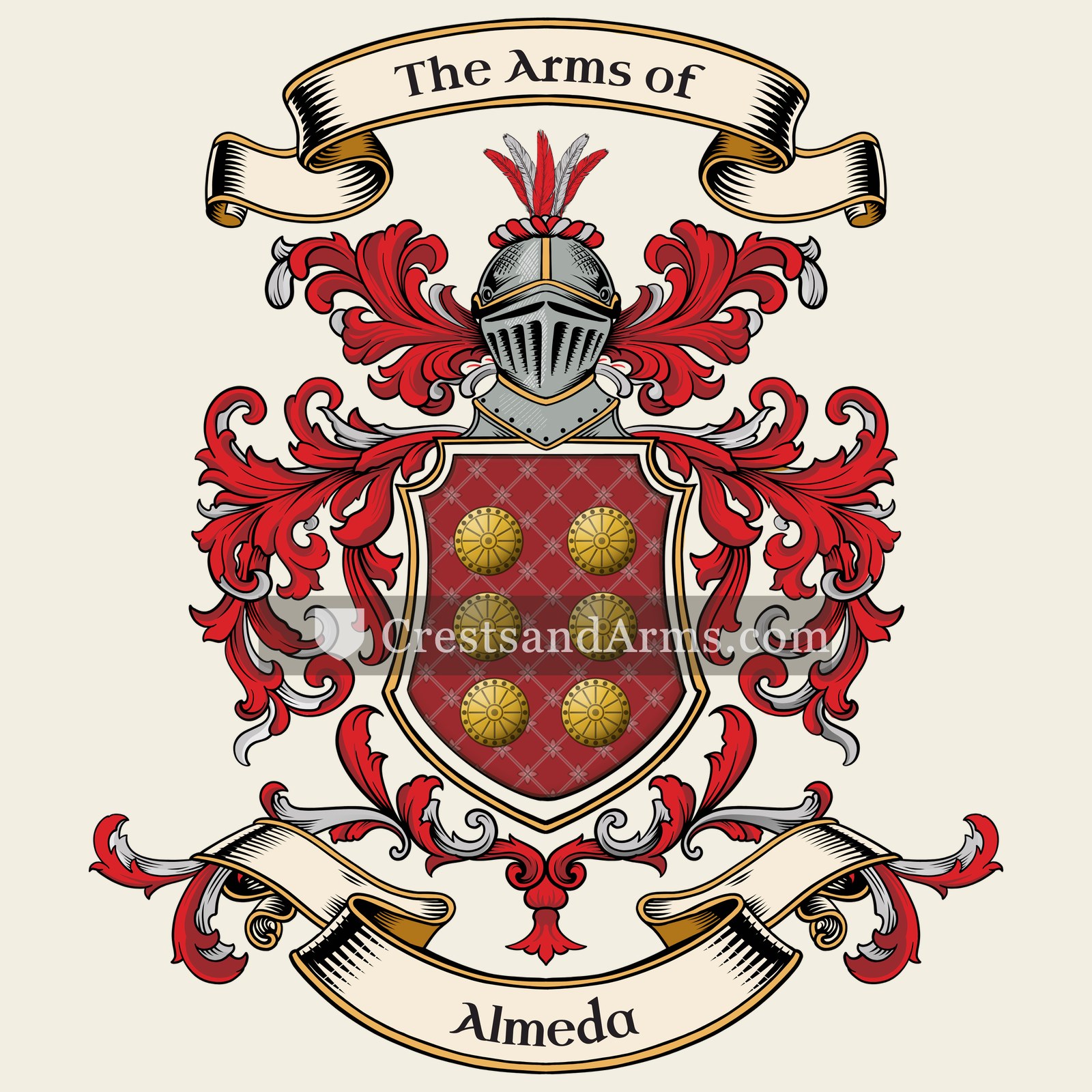


 cross symbolChristian faith and service