Map of France showing where the Amis arms are recorded
The Amis arms were recorded in Anjou, c. 1663.
Anjou was rich valley country along the Loire, with a dense scatter of small manors. Its gentry were numerous rather than wealthy, and even a modest holding was enough to justify a shield of one's own.
This is where the arms were entered in the register. Families often moved to other parts of the country, so the same name can turn up in more than one region.
The body that granted and recorded arms in France in this period.
Louis XIV of France
Sovereign of the period
Louis XIV of France
1643–1715
Reigning in France when the Amis arms are first recorded.
How Arms Worked in France
In France, a coat of arms was a mark of honor that passed down through the male line to all legitimate descendants. Families often used the same shield without changes to show their shared heritage. If a branch wanted to stand out, they could add a small mark to their shield to show their specific place in the family tree.
Granting authority
The Juge d'armes de France acted as the official authority that regulated and verified coats of arms across the country.
How they got arms
Families typically inherited their arms from ancestors, though they could also receive them through royal grants or by proving their noble status.
Where arms were recorded
Coats of arms were officially recorded in the Armorial Général de France, which began its main collection in the year 1696.
The family's standing
Recorded among the armigerous families of Anjou.
Origin & History of the Amis Family in France
The family name Amis finds its roots in the linguistic traditions of medieval France, where it originated as a descriptive term. The name is derived from the Old French word *amis*, which translates to friend or beloved companion. During the seventeenth century, the family established a notable presence in the province of Anjou. Records from 1663 confirm that members of the family were settled in this region, which was a center of agricultural wealth and political influence in western France. Living in Anjou allowed the family to participate in the local social structures of the time, often working as landholders or skilled tradespeople within the rural communities. As the name spread through the region, it remained tied to its original meaning of friendship, reflecting a time when surnames were often chosen to highlight the positive character traits or social standing of an individual within their village.
Coat of Arms & Family Crest Details
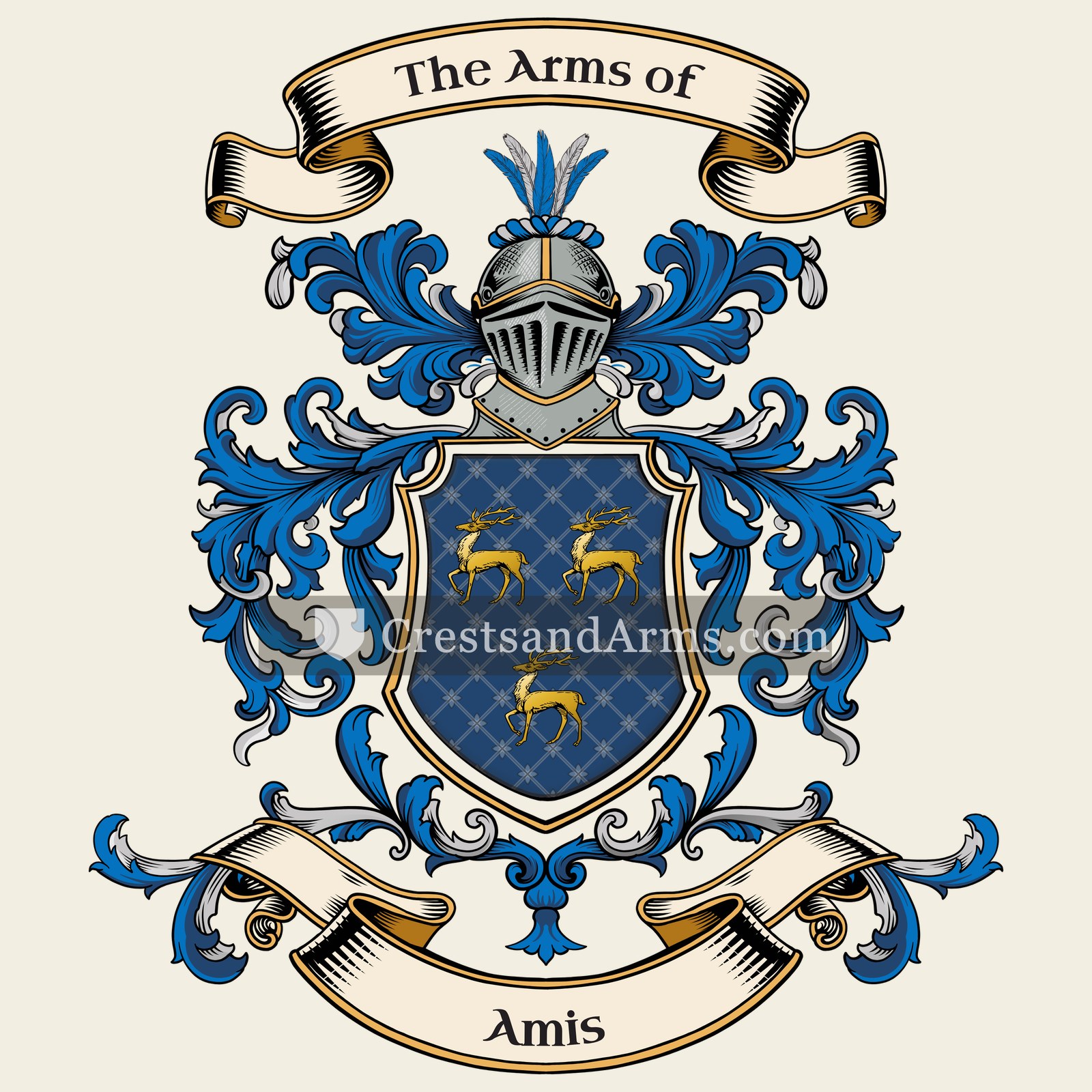
Symbols on this shield
stagPeace and harmony, and one who will not fight unprovoked
Colours
Blue (Azure)Means: Loyalty and truth
Gold (Or)Means: Generosity
Historical info
Source
J. B. Rietstap, Armorial Général, Gouda: G. B. van Goor Zonen, 1884–87
Blazon (the actual original written record)
“D'azur à trois têtes et cols de cerf d'or. C.: une tête et col de cerf d'or.”
BelgiumGand, c. 1737
Digital archive packCoat of arms PNG, gold border print PDF, vector SVG and the certificate of authenticity. Sent to your email in minutes.
Map of Belgium showing where the Amis arms are recorded
The Amis arms were recorded in Gand, c. 1737.
This is where the arms were entered in the register. Families often moved to other parts of the country, so the same name can turn up in more than one region.
The body that granted and recorded arms in Belgium in this period.
Charles VI, Holy Roman Emperor
Sovereign of the period
Charles VI, Holy Roman Emperor
1711–1740
Reigning in France when the Amis arms are first recorded.
How Arms Worked in Belgium
In Belgium, a coat of arms is considered personal property that is passed down through the male line to legitimate descendants. Families often use the same shield design across generations to show their shared heritage. If a branch of the family wants to change the design, they must apply for an official update to their specific version of the arms.
Granting authority
The Conseil héraldique is the official body that regulates and approves all coats of arms in Belgium.
How they got arms
Families obtain their coats of arms through formal royal grants or by confirming their historical right to use existing designs.
Where arms were recorded
All approved coats of arms are officially recorded in the public registers of the Conseil héraldique since 1844.
The family's standing
Recorded among the armigerous families of Belgium.
Origin & History of the Amis Family in Belgium
The history of the Amis family in Belgium is rooted in the vibrant urban landscape of the eighteenth century. By 1737, records confirm that members of the family were established in the city of Gand, which is known today as Ghent. During this period, Gand was a major center for trade and textile production in the Austrian Netherlands. Families like the Amis often integrated into the local economy by participating in the city’s guild systems or merchant networks. The name itself likely originated as a descriptive term or a nickname, reflecting the social connections or personal traits of early ancestors. As residents of a bustling port city, these early family members lived through a time of significant cultural and economic transition. Their presence in the city archives provides a clear link to the urban middle class that helped shape the development of modern Belgian society.
Related Branches & Arms
Root word
Amicus
Latin term meaning a friend or a loved one.
This name
AmisDerived from the Old French word for a friend or companion.
also spelled
Amis
Amyas
Amias
Documented Sources
J. B. Rietstap, Armorial Général, Gouda: G. B. van Goor Zonen, 1884–87
Dauzat, Albert. Dictionnaire étymologique des noms de famille et prénoms de France. 1951
Archives départementales de Maine-et-Loire. Registres paroissiaux et d'état civil de l'Anjou. 1663
Digital archive packCoat of arms PNG, gold border print PDF, vector SVG and the certificate of authenticity. Sent to your email in minutes.


 chevronProtection, and faithful service completed
 grapesPlenty, and the labour of the vine
 chevronProtection, and faithful service completed
 grapesPlenty, and the labour of the vine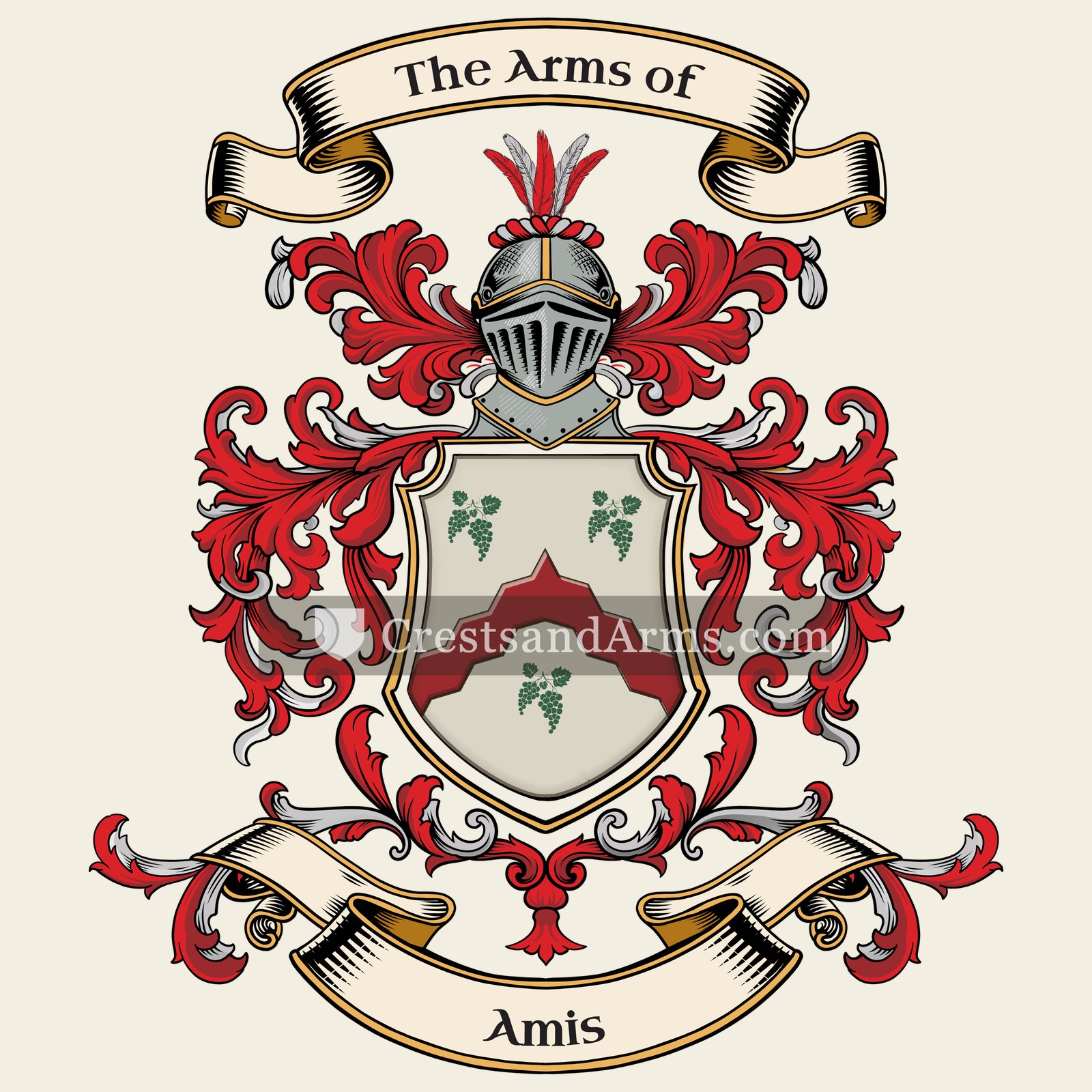


 stagPeace and harmony, and one who will not fight unprovoked