Map of Netherlands showing where the Ammon arms are recorded
The Ammon arms were recorded in Arnhem, c. 1815.
This is where the arms were entered in the register. Families often moved to other parts of the country, so the same name can turn up in more than one region.
Region
Arnhem
Town
Arnhem
First recorded
1815
Granting Authority for the Ammon Arms
Hoge Raad van Adel
Photograph made by me · CC BY-SA 3.0
The body that granted and recorded arms in Netherlands in this period.
William I of the Netherlands
Sovereign of the period
William I of the Netherlands
1815–1840
Reigning in Netherlands when the Ammon arms are first recorded.
How Arms Worked in Netherlands
In the Netherlands, coats of arms were often used by noble families and those who held specific public offices. These arms were passed down through the generations to legitimate descendants. Younger branches of a family usually kept the original design without needing to add special marks. This system ensured that the family identity remained clear and consistent over many years.
Granting authority
The Hoge Raad van Adel is the official body that regulates and manages noble titles and coats of arms in the Netherlands.
How they got arms
Families typically obtained their coats of arms through official royal grants or by proving their long-standing historical use of the symbols.
Where arms were recorded
Coats of arms are officially recorded in the registers held by the Hoge Raad van Adel, which began its work in 1814.
The family's standing
Recorded among the armigerous families of Netherlands.
Origin & History of the Ammon Family in Netherlands
The family name Ammon has deep roots in the city of Arnhem, where records confirm members of the family were established by 1815. During the early nineteenth century, Arnhem was a vital trade hub located along the Rhine River, which likely influenced the movement and settlement patterns of families in the region. The name itself is thought to have ancient origins, potentially linked to regional linguistic shifts or geographic identifiers that were common in the Low Countries during the transition into the modern era. As the Netherlands underwent significant political changes following the Napoleonic period, families like the Ammons became part of the growing urban middle class. By settling in a strategic city like Arnhem, these early ancestors were positioned to participate in the local economy and the civic life of a nation that was rapidly modernizing its administrative and population records.
Meaning of the Ammon family crest colors & symbols
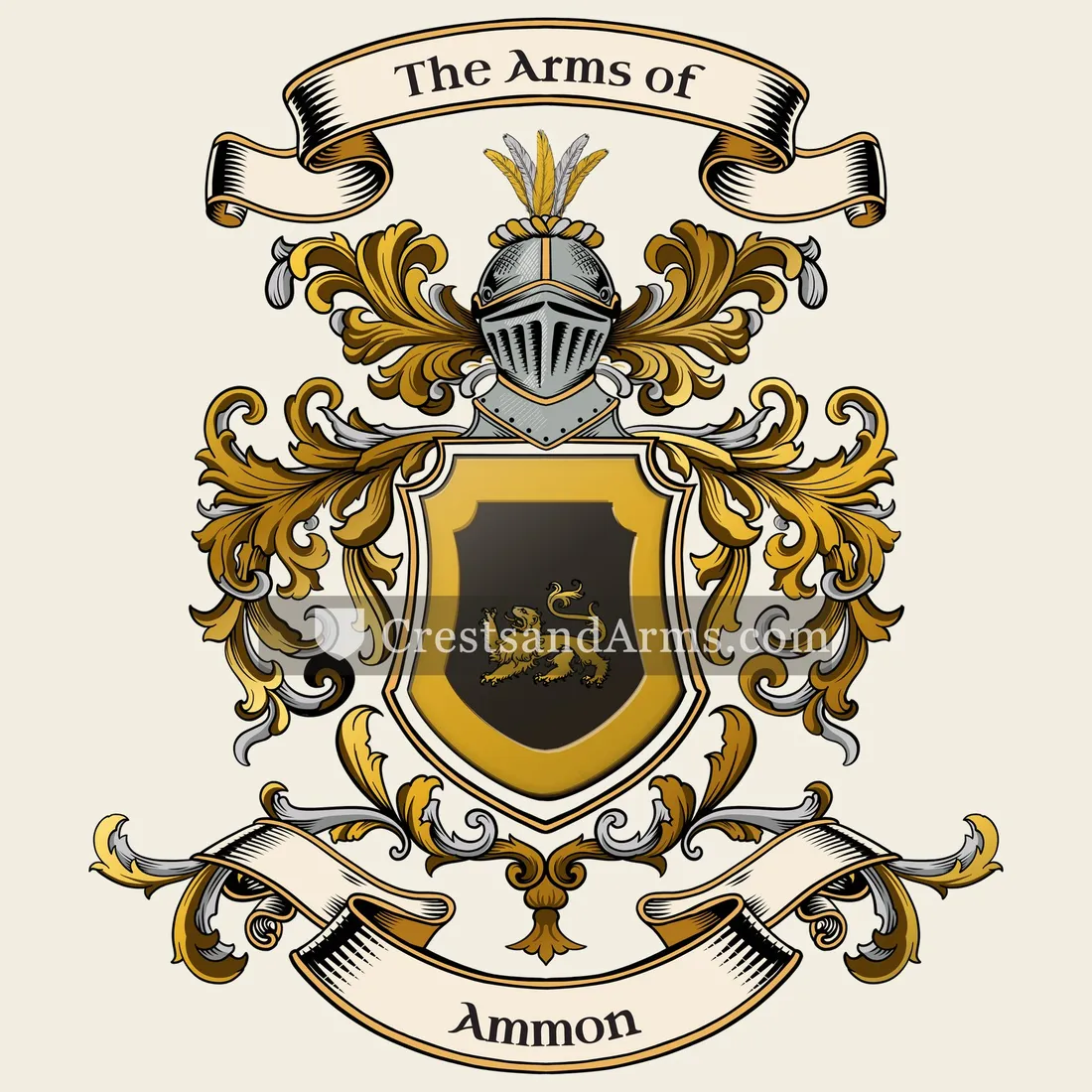
Symbols on this shield
lionCourage, strength and royalty
Colours
Black (Sable)Means: Constancy
Gold (Or)Means: Generosity
Historical info
Source
J. B. Rietstap, Armorial Général, Gouda: G. B. van Goor Zonen, 1884–87
Blazon (the actual original written record)
“De sa. au lion d'or; à la bord. du même. C.: un lion assis d'or, tenant de sa patte dextre une banderole de gu.”
GermanyAugsbourg, c. 1765
Digital archive packCoat of arms PNG, gold border print PDF, vector SVG and the certificate of authenticity. Sent to your email in minutes.
Map of Germany showing where the Ammon arms are recorded
The Ammon arms were recorded in Augsbourg, c. 1765.
This is where the arms were entered in the register. Families often moved to other parts of the country, so the same name can turn up in more than one region.
The body that granted and recorded arms in Germany in this period.
Francis I, Holy Roman Emperor
Sovereign of the period
Francis I, Holy Roman Emperor
1745–1765
Reigning in Netherlands when the Ammon arms are first recorded.
How Arms Worked in Germany
In the Holy Roman Empire, coats of arms were often granted to individuals by the Emperor or his representatives. These arms were then passed down through the generations to all legitimate descendants of the original holder. Younger branches of a family usually kept the same shield design without needing to change it, as the arms belonged to the entire lineage.
Granting authority
The Holy Roman Emperor held the sole power to grant new coats of arms throughout his vast imperial territories.
How they got arms
Families typically obtained their coats of arms through a formal imperial grant or by proving their noble status to the authorities.
Where arms were recorded
These grants were officially recorded in the Imperial Chancery registers, which began keeping formal records of such honors during the Middle Ages.
The family's standing
Recorded among the armigerous families of Germany.
Origin & History of the Ammon Family in Germany
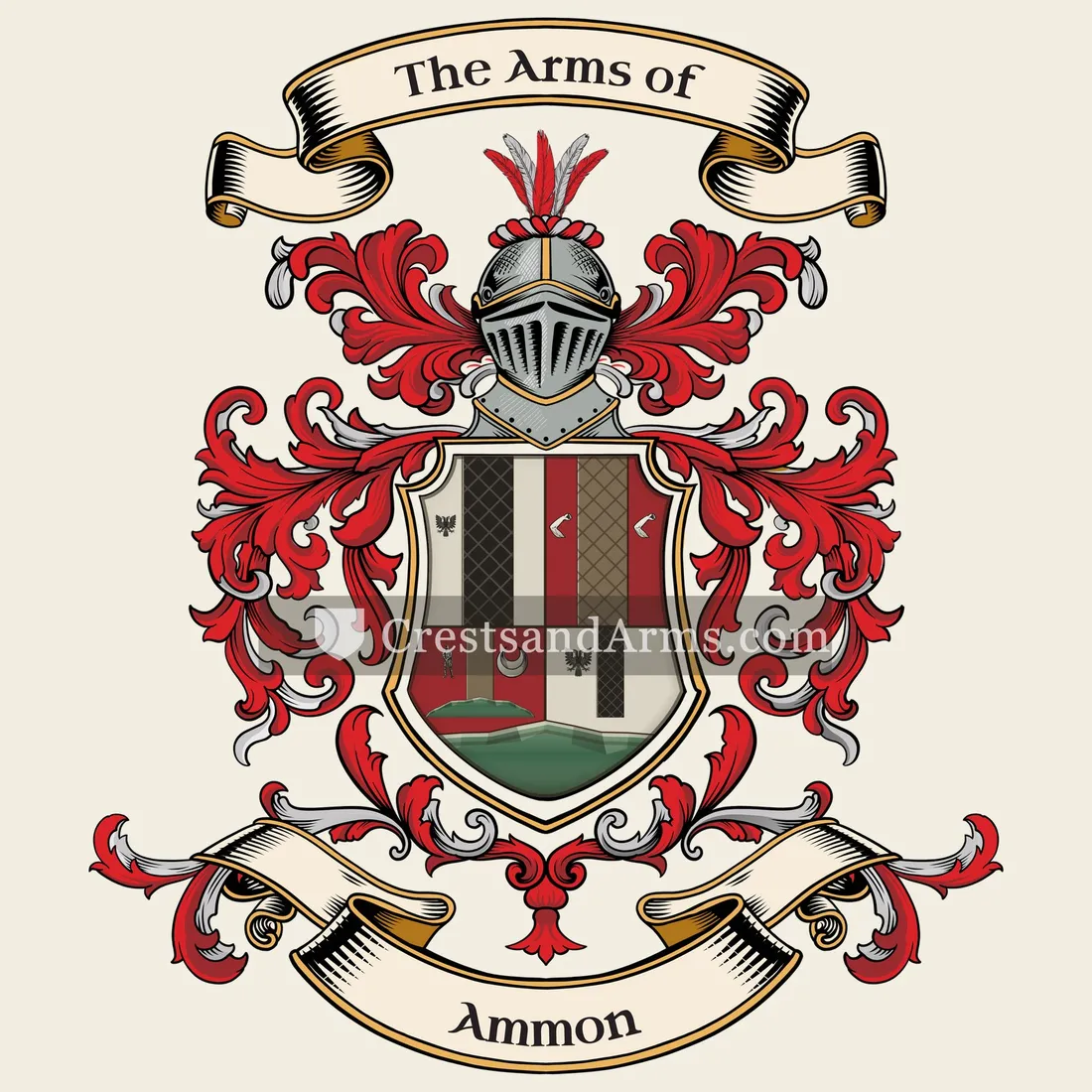
The family name Ammon has deep roots in the German-speaking regions of Europe, where it likely originated as a shortened form of names derived from the ancient Germanic word for eagle. By the middle of the eighteenth century, the family had established a notable presence in the city of Augsburg. During this period, Augsburg served as a major center for trade and craftsmanship, providing a stable environment for families to build their livelihoods. Members of the Ammon family living there in 1765 were part of a society that valued skilled labor and civic participation. As the family grew, they integrated into the local urban culture, contributing to the economic and social fabric of the city. Their history reflects the broader patterns of migration and settlement that defined many German families during the Enlightenment era.
Meaning of the Ammon family crest colors & symbols
Symbols on this shield
mountThe ground held, and steadfastness upon it
eagleNobility, strength and a keen mind
armA person of action, industrious and laborious
knightChivalry and service in arms
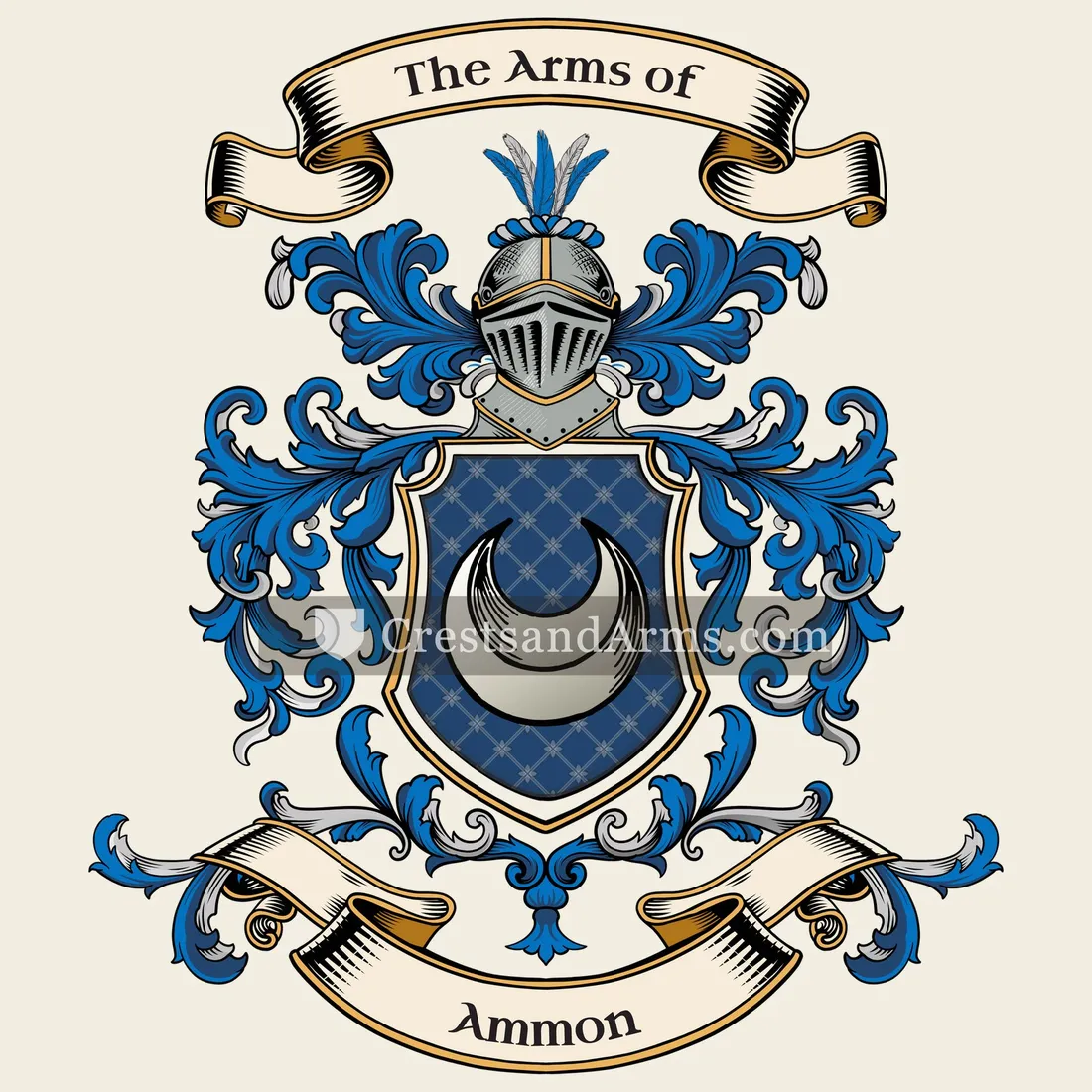
crescentHonour by the sovereign, and the second son
Colours
Silver (Argent)Means: Peace and sincerity
Red (Gules)Means: Military strength
Green (Vert)Means: Hope
Black (Sable)Means: Constancy
Historical info
Source
J. B. Rietstap, Armorial Général, Gouda: G. B. van Goor Zonen, 1884–87
Blazon (the actual original written record)
“Ec.: aux 1 et 4 d'arg. à la demi-aigle de sa., bq. et m. d'or, mouv. du parti: au 2 coupé de gu. sur azur à deux bras, arm. au nat., mouv. des flancs du quartier, posés sur l'azur, les mains de carn. supp. ensemble une couronne royale d'or, les mains et la couronne posées sur le gu.; au 3 coupé d'azur sur gu.; et un homme d'armes au nat., br. sur le coupé, posé sur un tertre de sin., supp. de sa main dextre levée un croiss. montant d'arg., la main sen. ap-”
Francec. 1742
Digital archive packCoat of arms PNG, gold border print PDF, vector SVG and the certificate of authenticity. Sent to your email in minutes.
Map of France showing where the Ammon arms are recorded
The Ammon arms were recorded in France, c. 1742.
Arms such as these were typically recorded in Bretagne.
More families held coats of arms in Bretagne than anywhere else in France. The land was divided into many small estates rather than a few large ones, so far more households counted as gentry, and each needed a shield of its own to be told apart.
This is where the arms were entered in the register. Families often moved to other parts of the country, so the same name can turn up in more than one region.
The body that granted and recorded arms in France in this period.
Louis XV of France
Sovereign of the period
Louis XV of France
1715–1774
Reigning in Netherlands when the Ammon arms are first recorded.
How Arms Worked in France
In France, a coat of arms was a mark of honor that passed down through the male line to all legitimate descendants. Families often used the same shield without changes to show their shared heritage. If a branch wanted to stand out, they could add a small mark to their shield to show their specific place in the family tree.
Granting authority
The Juge d'armes de France acted as the official authority that regulated and verified coats of arms across the country.
How they got arms
Families typically inherited their arms from ancestors, though they could also receive them through royal grants or by proving their noble status.
Where arms were recorded
Coats of arms were officially recorded in the Armorial Général de France, which began its main collection in the year 1696.
The family's standing
Recorded among the armigerous families of France.
Origin & History of the Ammon Family in France
The family name Ammon has deep roots in the historical landscape of France, particularly within the northwestern region of Brittany. By the middle of the eighteenth century, the family was well established in this coastal area, with documented records confirming their presence there as early as 1742. During this period, families in Brittany often lived in tight-knit rural communities where they relied on agriculture and maritime trade for their livelihoods. The name itself is thought to have ancient linguistic origins, potentially linking the family to broader European migration patterns that moved across the continent over many centuries. As the family settled into the Breton way of life, they became part of a unique cultural identity that blended local traditions with the evolving social structures of pre-revolutionary France. Through their presence in parish registers and local administrative documents, the Ammon family contributed to the long-standing history of the region during a time of significant social change.
Ammon Meaning & Related Branches
Root word
Ammonius
Derived from the Egyptian god Amun, meaning the hidden one.
This name
AmmonA patronymic or habitational name referring to a descendant of someone named Ammon.
also spelled
Amon
Related arms
Smiglianichsimilar arms
Xylandersimilar arms
Amonvariant spelling
Documented Sources
J. B. Rietstap, Armorial Général, Gouda: G. B. van Goor Zonen, 1884–87
Gelders Archief, Bevolkingsregister Arnhem, 1815
Van der Aa, A.J., Biographisch Woordenboek der Nederlanden, 1852
Centraal Bureau voor Genealogie, Nederland's Patriciaat, 1910
Digital archive packCoat of arms PNG, gold border print PDF, vector SVG and the certificate of authenticity. Sent to your email in minutes.


 crescentHonour by the sovereign, and the second son
 crescentHonour by the sovereign, and the second son


 lionCourage, strength and royalty


 mountThe ground held, and steadfastness upon it
 eagleNobility, strength and a keen mind
 armA person of action, industrious and laborious
 knightChivalry and service in arms