Map of Spain showing where the Amorin arms are recorded
The Amorin arms were recorded in Andalusia, c. 1722.
Andalusia was the last part of Spain taken back from the Moors, and the land was shared out among the men who took it. A grant of land came with a grant of arms, so the region produced a great many.
This is where the arms were entered in the register. Families often moved to other parts of the country, so the same name can turn up in more than one region.
The body that granted and recorded arms in Spain in this period.
Philip V of Spain
Sovereign of the period
Philip V of Spain
1714–1724
Reigning in Spain when the Amorin arms are first recorded.
How Arms Worked in Spain
In Spain, a coat of arms was considered a form of property that belonged to the entire family line. These arms were passed down from a father to all his children equally. Younger branches of the family usually kept the original design without needing to add any special marks to distinguish their specific line.
Granting authority
The Cronista Rey de Armas was the official body that regulated and granted coats of arms throughout Spain.
How they got arms
Families often obtained their arms through royal grants or by proving their noble status to the official heraldic authority.
Where arms were recorded
Coats of arms were officially recorded in the registers of the Cronista Rey de Armas starting in 1496.
The family's standing
Recorded among the armigerous families of Andalusia.
Origin & History of the Amorin Family in Spain
The family name Amorin finds its roots in the rich cultural landscape of the Iberian Peninsula, with documented evidence placing members of the family in the Andalusia region by the year 1722. During this era, Andalusia was a vibrant center of trade and agriculture, and families like the Amorins were often tied to the land or the growing urban centers of southern Spain. The name itself is thought to be a variation of the Portuguese and Spanish term *amor*, which signifies love, potentially serving as a descriptive nickname for a beloved ancestor or a name rooted in local poetic traditions. As the family established itself in the region, they became part of the complex social fabric of 18th-century Spain, navigating the shifts in local governance and the economic developments that defined the period. By settling in Andalusia, the early Amorins participated in a history defined by the unique blend of Mediterranean influences that shaped the southern Spanish identity.
Amorin Meaning & Related Branches
Root word
Amor
Derived from the Latin word for love or affection.
This name
AmorinA locative or descriptive surname likely referring to one who is beloved or affectionate.
also spelled
Amoryn
Amorine
Documented Sources
J. B. Rietstap, Armorial Général, Gouda: G. B. van Goor Zonen, 1884–87
Archivo General de Simancas, Registro del Sello de Corte, 1722
Archivo de la Real Chancillería de Granada, Pleitos de Hidalguía, 1722
Moll, Francesc de Borja, Els llinatges catalans, 1959
Pérez-Bustamante, Rogelio, El gobierno y la administración de los reinos de la Corona de Castilla, 1976
Digital archive packCoat of arms PNG, gold border print PDF, vector SVG and the certificate of authenticity. Sent to your email in minutes.


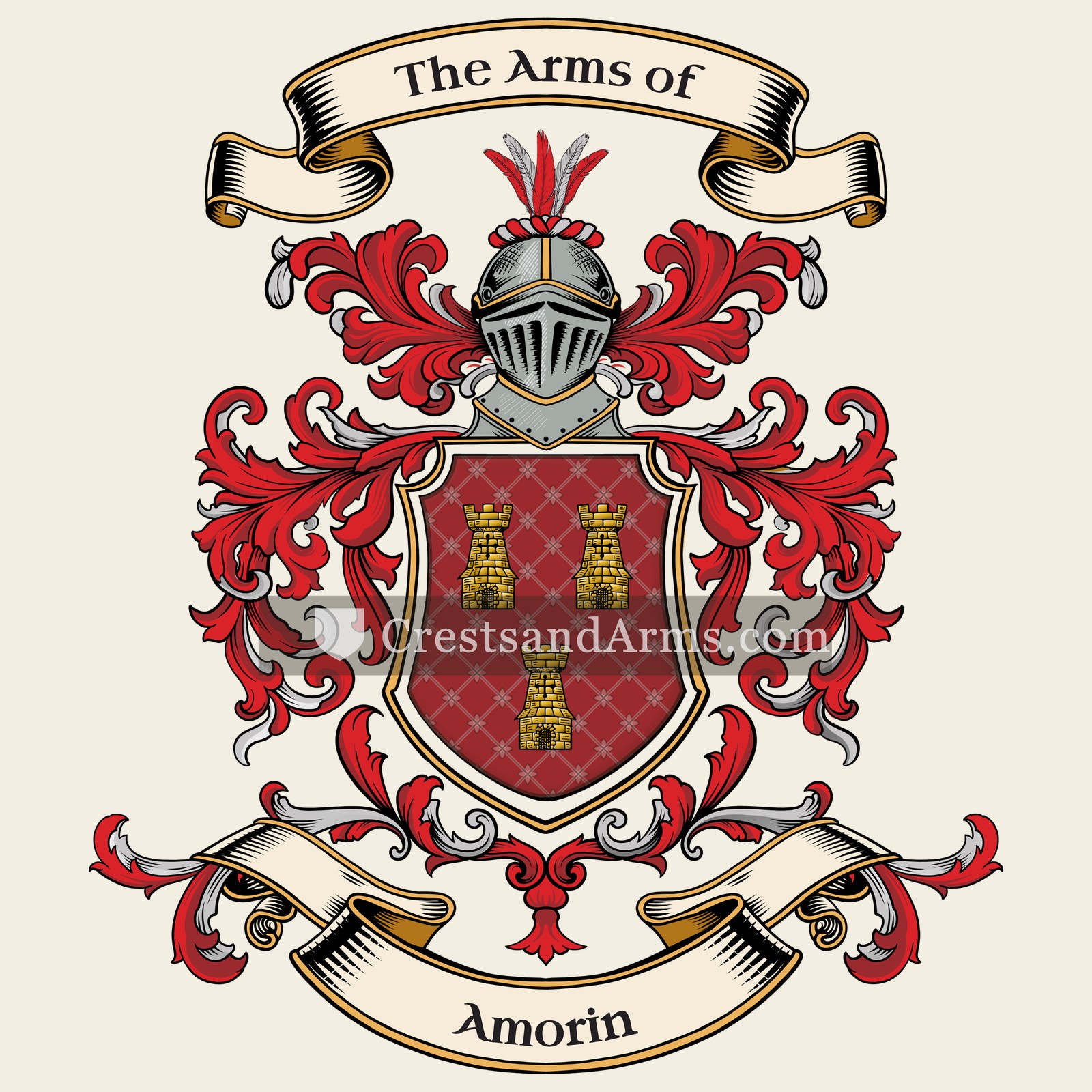
 towerGrandeur and solidity, and a stronghold defended
 towerGrandeur and solidity, and a stronghold defended