Map of Belgium showing where the Andrejko arms are recorded
The Andrejko arms were recorded in Tournai, c. 1737.
This is where the arms were entered in the register. Families often moved to other parts of the country, so the same name can turn up in more than one region.
The body that granted and recorded arms in Belgium in this period.
Charles VI, Holy Roman Emperor
Sovereign of the period
Charles VI, Holy Roman Emperor
1711–1740
Reigning in Belgium when the Andrejko arms are first recorded.
How Arms Worked in Belgium
In Belgium, a coat of arms is considered personal property that is passed down through the male line to legitimate descendants. Families often use the same shield design across generations to show their shared heritage. If a branch of the family wants to change the design, they must apply for an official update to their specific version of the arms.
Granting authority
The Conseil héraldique is the official body that regulates and approves all coats of arms in Belgium.
How they got arms
Families obtain their coats of arms through formal royal grants or by confirming their historical right to use existing designs.
Where arms were recorded
All approved coats of arms are officially recorded in the public registers of the Conseil héraldique since 1844.
The family's standing
Recorded among the armigerous families of Belgium.
Origin & History of the Andrejko Family in Belgium
The family name Andrejko first appears in the historical record of Tournai in 1737, marking a significant presence in this ancient Belgian city. During the eighteenth century, Tournai served as a vital crossroads for trade and movement within the Austrian Netherlands. Families like the Andrejkos likely settled in the region to participate in the local economy or to work within the city’s established craft guilds. Because the name suggests roots in Eastern or Central Europe, its arrival in a French-speaking city like Tournai implies a history of migration and adaptation. These early family members would have navigated the complex social structures of the city while maintaining their unique identity. By integrating into the local community, they contributed to the diverse cultural fabric that defined the urban life of the Low Countries during the Enlightenment era.
Meaning of the Andrejko family crest colors & symbols
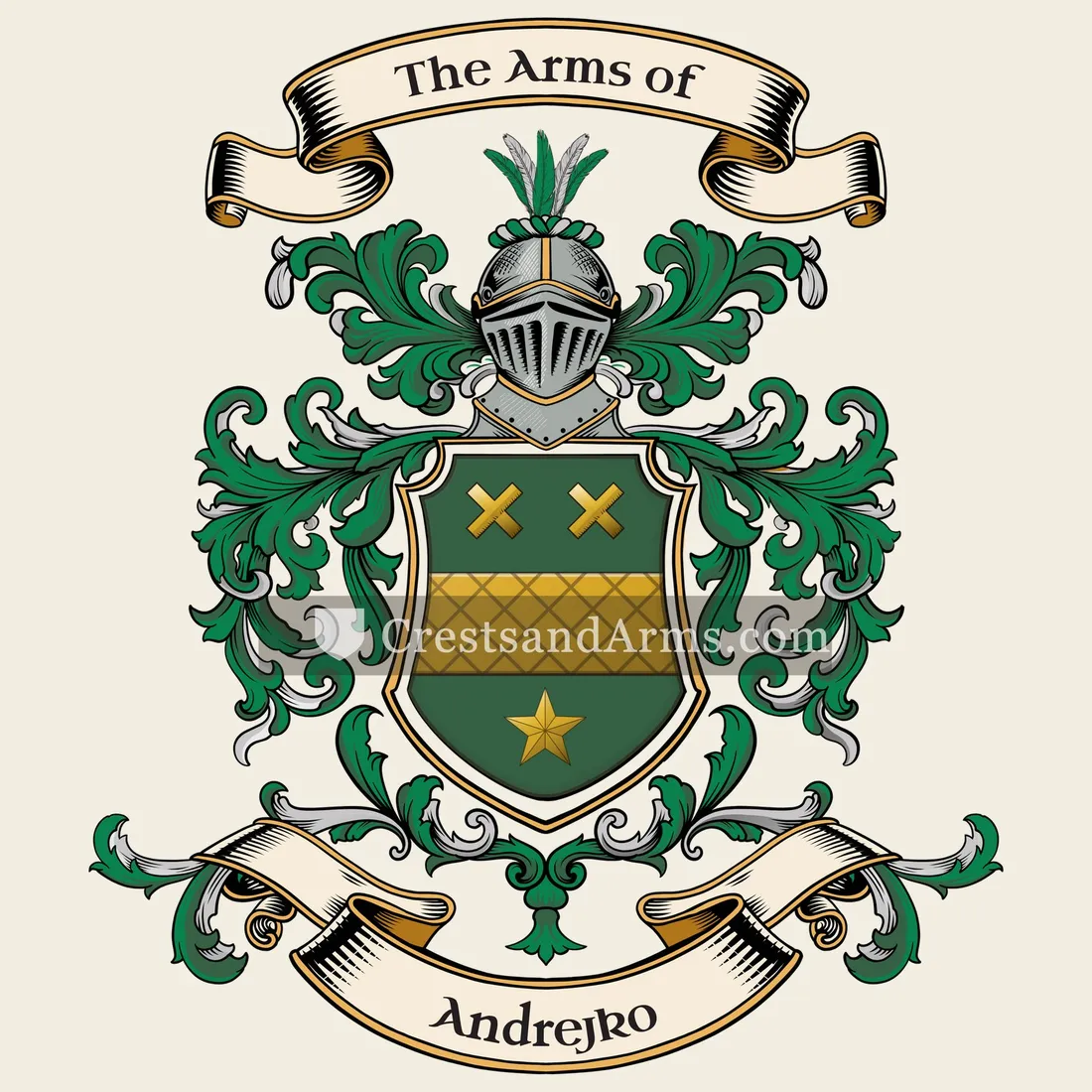
Symbols on this shield
fessThe military belt, and readiness to serve
saltire coupedResolution, and the cross of St Andrew
mulletThe third son, and a divine quality from above
Colours
Green (Vert)Means: Hope
Gold (Or)Means: Generosity
Historical info
Source
J. B. Rietstap, Armorial Général, Gouda: G. B. van Goor Zonen, 1884–87
Blazon (the actual original written record)
“De sin. à une fasce, acc. en chef de deux flanchis et en p. d'une molette, le tout d'or.”
NormandieNormandie, c. 1663
Digital archive packCoat of arms PNG, gold border print PDF, vector SVG and the certificate of authenticity. Sent to your email in minutes.
Map of France showing where the Andrejko arms are recorded
The Andrejko arms were recorded in Normandie, c. 1663.
Normandie held a dense crowd of knightly families on some of the best farmland in France. Its men had fought and settled abroad for generations, and a family that sent sons to war needed a shield they could be recognised by.
This is where the arms were entered in the register. Families often moved to other parts of the country, so the same name can turn up in more than one region.
The body that granted and recorded arms in France in this period.
Louis XIV of France
Sovereign of the period
Louis XIV of France
1643–1715
Reigning in Belgium when the Andrejko arms are first recorded.
How Arms Worked in France
In France, a coat of arms was a mark of honor that passed down through the male line to all legitimate descendants. Families often used the same shield without changes to show their shared heritage. If a branch wanted to stand out, they could add a small mark to their shield to show their specific place in the family tree.
Granting authority
The Juge d'armes de France acted as the official authority that regulated and verified coats of arms across the country.
How they got arms
Families typically inherited their arms from ancestors, though they could also receive them through royal grants or by proving their noble status.
Where arms were recorded
Coats of arms were officially recorded in the Armorial Général de France, which began its main collection in the year 1696.
The family's standing
Recorded among the armigerous families of Normandie.
Origin & History of the Andrejko Family in France
The surname Andrejko carries a unique history that traces back to the northern coastal region of Normandy by the year 1663. While the name itself possesses roots that suggest a connection to Slavic linguistic traditions, its presence in France during the seventeenth century points to the movement of individuals across European borders during a period of significant social and military transition. Families bearing this name likely integrated into the local Norman society by adapting to the agricultural and maritime lifestyle that defined the region at the time. By settling in Normandy, these early ancestors became part of a diverse population that helped shape the local culture through their labor and community involvement. Their transition into French life reflects the broader historical trend of migration that brought new names and traditions into the heart of France during the reign of King Louis XIV.
Meaning of the Andrejko family crest colors & symbols
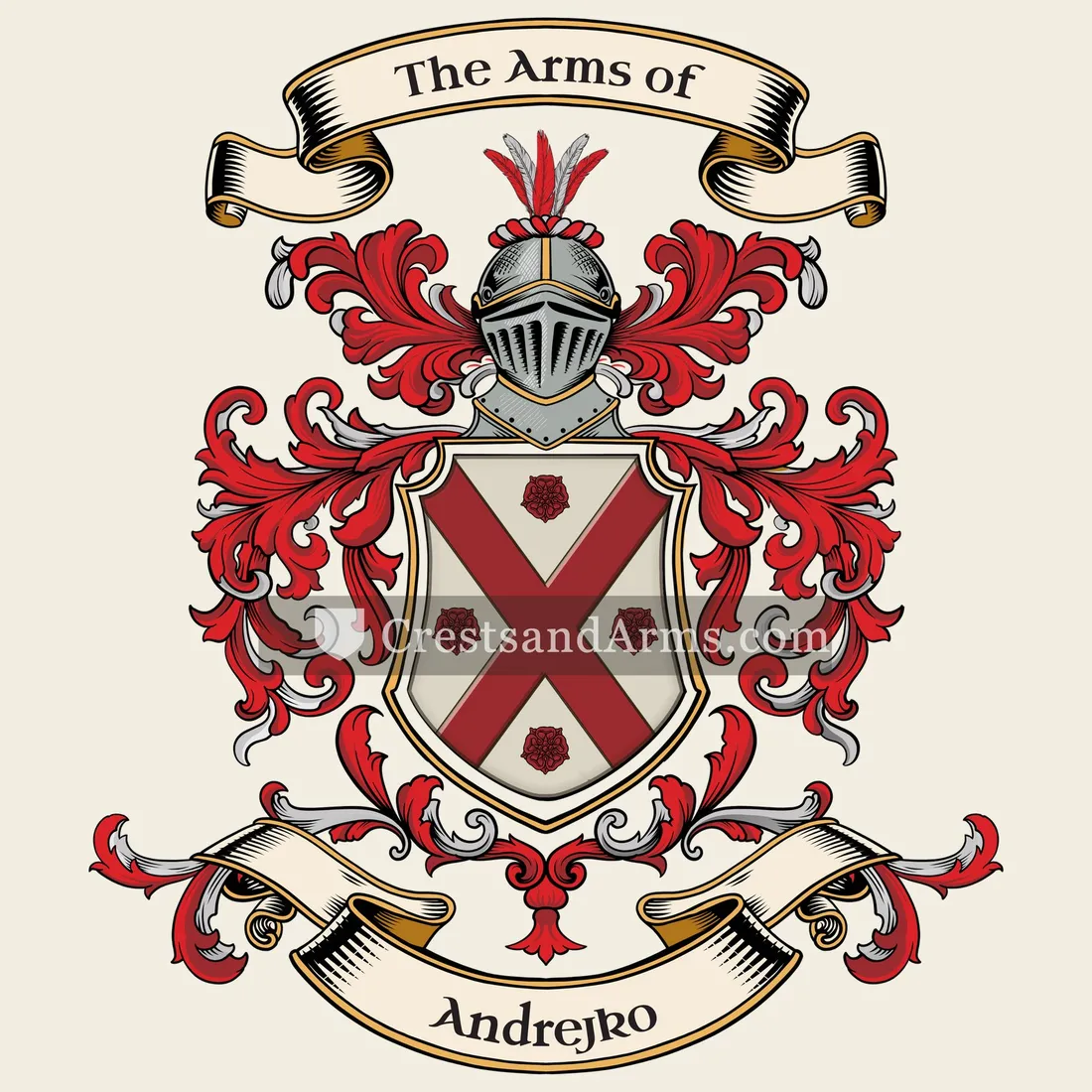
Symbols on this shield
saltireResolution, and St Andrew's cross
roseThe seventh son, and beauty with grace
Colours
Silver (Argent)Means: Peace and sincerity
Red (Gules)Means: Military strength
Historical info
Source
J. B. Rietstap, Armorial Général, Gouda: G. B. van Goor Zonen, 1884–87
Blazon (the actual original written record)
“D'arg. au saut. alésé de gu., cant. de quatre roses du même. C.: un vol, aux armes de l'écu.”
GermanyFrancfort s, c. 1551
Digital archive packCoat of arms PNG, gold border print PDF, vector SVG and the certificate of authenticity. Sent to your email in minutes.
Map of Germany showing where the Andrejko arms are recorded
The Andrejko arms were recorded in Francfort s, c. 1551.
This is where the arms were entered in the register. Families often moved to other parts of the country, so the same name can turn up in more than one region.
The body that granted and recorded arms in Germany in this period.
Charles V
Sovereign of the period
Charles V
1519–1556
Reigning in Belgium when the Andrejko arms are first recorded.
How Arms Worked in Germany
In the Holy Roman Empire, coats of arms were often granted to individuals by the Emperor or his representatives. These arms were then passed down through the generations to all legitimate descendants of the original holder. Younger branches of a family usually kept the same shield design without needing to change it, as the arms belonged to the entire lineage.
Granting authority
The Holy Roman Emperor held the sole power to grant new coats of arms throughout his vast imperial territories.
How they got arms
Families typically obtained their coats of arms through a formal imperial grant or by proving their noble status to the authorities.
Where arms were recorded
These grants were officially recorded in the Imperial Chancery registers, which began keeping formal records of such honors during the Middle Ages.
The family's standing
Recorded among the armigerous families of Germany.
Origin & History of the Andrejko Family in Germany
The family name Andrejko traces its roots to the shifting cultural landscapes of Central Europe, with documented evidence placing members of the family in Frankfurt as early as 1551. During this period, Frankfurt served as a vital hub for trade and migration, drawing individuals from Slavic-speaking regions toward the German territories. The name itself is a derivative of the name Andrew, functioning as a patronymic that signifies a connection to an ancestor of that name. As these early family members settled into the urban environment of Frankfurt, they likely integrated into the local merchant or artisan classes that defined the city’s economy. This transition marked the beginning of the family’s long-term presence in the region, reflecting the broader movement of people who sought new opportunities in the thriving commercial centers of the sixteenth-century Holy Roman Empire.
Andrejko Meaning & Related Branches
Root word
Andreas
Derived from the Greek word for man or manly.
This name
AndrejkoA Slavic diminutive form signifying a descendant or follower of Andrew.
also spelled
Andreae
Andrea
Andree
Andrey
Andrie
Documented Sources
J. B. Rietstap, Armorial Général, Gouda: G. B. van Goor Zonen, 1884–87
Archives: Archives de l'État à Tournai, Registres paroissiaux de Tournai (1737)
Books: Dumont, Georges-Henri, Histoire de la Belgique: des origines à nos jours, 1977
Books: Pirenne, Henri, Histoire de Belgique, 1929
Digital archive packCoat of arms PNG, gold border print PDF, vector SVG and the certificate of authenticity. Sent to your email in minutes.


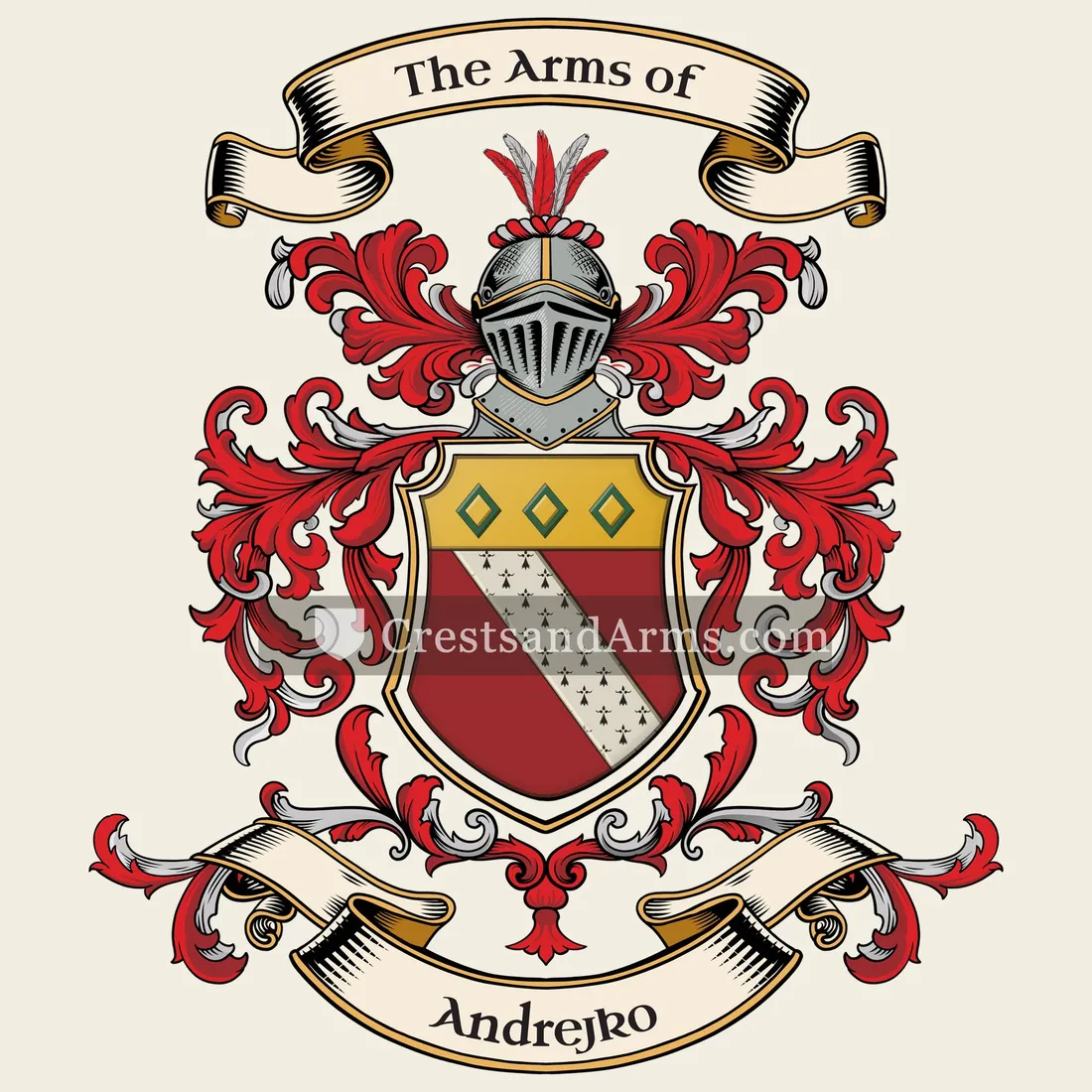
 bendDefence, and the scarf of a commander
 chiefAuthority, wisdom and dominion
 masclePersuasion and the mail of a knight's coat
 bendDefence, and the scarf of a commander
 chiefAuthority, wisdom and dominion
 masclePersuasion and the mail of a knight's coat


 fessThe military belt, and readiness to serve
 saltire coupedResolution, and the cross of St Andrew
 mulletThe third son, and a divine quality from above


 saltireResolution, and St Andrew's cross
 roseThe seventh son, and beauty with grace