Map of France showing where the Anich arms are recorded
The Anich arms were recorded in Cambr, c. 1663.
This is where the arms were entered in the register. Families often moved to other parts of the country, so the same name can turn up in more than one region.
The body that granted and recorded arms in France in this period.
Louis XIV of France
Sovereign of the period
Louis XIV of France
1643–1715
Reigning in France when the Anich arms are first recorded.
How Arms Worked in France
In France, a coat of arms was a mark of honor that passed down through the male line to all legitimate descendants. Families often used the same shield without changes to show their shared heritage. If a branch wanted to stand out, they could add a small mark to their shield to show their specific place in the family tree.
Granting authority
The Juge d'armes de France acted as the official authority that regulated and verified coats of arms across the country.
How they got arms
Families typically inherited their arms from ancestors, though they could also receive them through royal grants or by proving their noble status.
Where arms were recorded
Coats of arms were officially recorded in the Armorial Général de France, which began its main collection in the year 1696.
The family's standing
Recorded among the armigerous families of France.
Origin & History of the Anich Family in France
The family name Anich holds a distinct place in the historical records of the Cambrésis region in northern France. By the mid-seventeenth century, the family had established a notable presence in the area, specifically appearing in local documentation by 1663. During this period, the region was a complex landscape of shifting borders and agricultural development, which influenced the lives of families living in rural parishes. The name itself likely evolved from regional linguistic patterns common to the borderlands between France and the Low Countries. As the family integrated into the local community, they participated in the typical social and economic structures of the time, such as land tenure and parish administration. Their early presence in Cambrésis suggests a family deeply rooted in the local traditions of the seventeenth century, navigating the challenges of a region frequently affected by the political transitions of the era.
Coat of Arms & Family Crest Details
Symbols on this shield
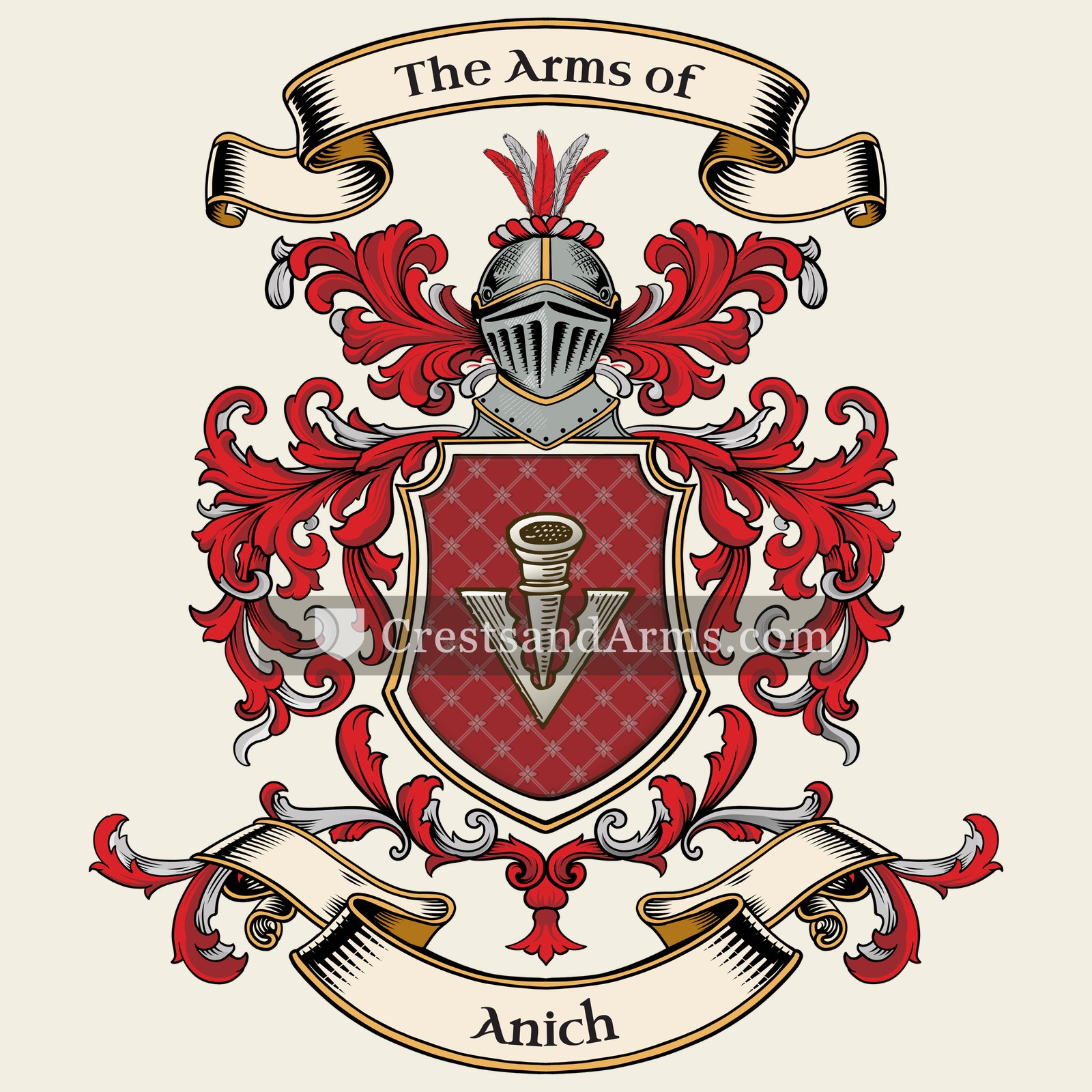
arms pheon arrowheadReadiness for battle, and the broad arrow of the sovereign
Colours
Red (Gules)Means: Military strength
Silver (Argent)Means: Peace and sincerity
Historical info
Source
J. B. Rietstap, Armorial Général, Gouda: G. B. van Goor Zonen, 1884–87
Blazon (the actual original written record)
“De gu. au fer de lance d'arg. (en forme de fleur-de-lis), posé en bande. C.: un chapeau de tournoi de gu., retr. d'arg., supp. deux fers de lance d'arg., posés en chev. renv.”
TyrolTyrol, c. 1772
Digital archive packCoat of arms PNG, gold border print PDF, vector SVG and the certificate of authenticity. Sent to your email in minutes.
Map of Austria showing where the Anich arms are recorded
The Anich arms were recorded in Tyrol, c. 1772.
Tyrol was mountain country in western Austria, where the valleys were held by families who had been there a very long time. Old tenure counted for more than money, and old families carried arms.
This is where the arms were entered in the register. Families often moved to other parts of the country, so the same name can turn up in more than one region.
Region
Tyrol
First recorded
1772
Granting Authority for the Anich Arms
Imperial and Royal chancery
Sodacan · CC BY-SA 3.0
The body that granted and recorded arms in Austria in this period.
Joseph II, Holy Roman Emperor
Sovereign of the period
Joseph II, Holy Roman Emperor
1765–1790
Reigning in France when the Anich arms are first recorded.
How Arms Worked in Austria
Austrian coats of arms were often linked directly to noble titles granted by the Emperor. These symbols belonged to the entire family line rather than just one individual. When a family grew, new branches kept the original design without needing to change it. This system allowed all members of a noble house to share the same identity across many generations.
Granting authority
The Imperial and Royal chancery managed all heraldic matters and controlled the official granting of arms throughout the Austrian lands.
How they got arms
Families typically received their arms through a formal imperial decree that often accompanied the elevation of a person to noble status.
Where arms were recorded
Official records of these grants were kept in the Imperial Register of Nobility which began its formal documentation process in 1453.
The family's standing
Recorded among the armigerous families of Tyrol.
Origin & History of the Anich Family in Austria
The history of the Anich family is deeply rooted in the rugged landscape of the Austrian Tyrol. By the mid-eighteenth century, the name was already well-established in this mountainous region, where families often lived in small, tight-knit alpine communities. The most famous early member of the family was Peter Anich, a brilliant cartographer and farmer who lived during this era. He gained fame for his incredible skill in mapping the complex terrain of the Tyrol mountains with great precision. His work helped the local people and the government understand the geography of the Alps much better than ever before. Because of his contributions to science and geography, the Anich name became associated with intellectual curiosity and a strong connection to the Tyrolean land. This legacy of hard work and local pride helped the family maintain a respected place in regional history for generations.
Anich Meaning & Related Branches
Root word
Anne
Derived from the Hebrew name Hannah meaning grace or favor.
This name
AnichA diminutive or patronymic form indicating a descendant of someone named Anne.
also spelled
Anick
Anik
Documented Sources
J. B. Rietstap, Armorial Général, Gouda: G. B. van Goor Zonen, 1884–87
Archives départementales du Nord, Série G: Clergé séculier, Registres paroissiaux de Cambrai, 1663
Lottin, Alain, Histoire de Cambrai, 2014
Digital archive packCoat of arms PNG, gold border print PDF, vector SVG and the certificate of authenticity. Sent to your email in minutes.


 crescentHonour by the sovereign, and the second son
 crescentHonour by the sovereign, and the second son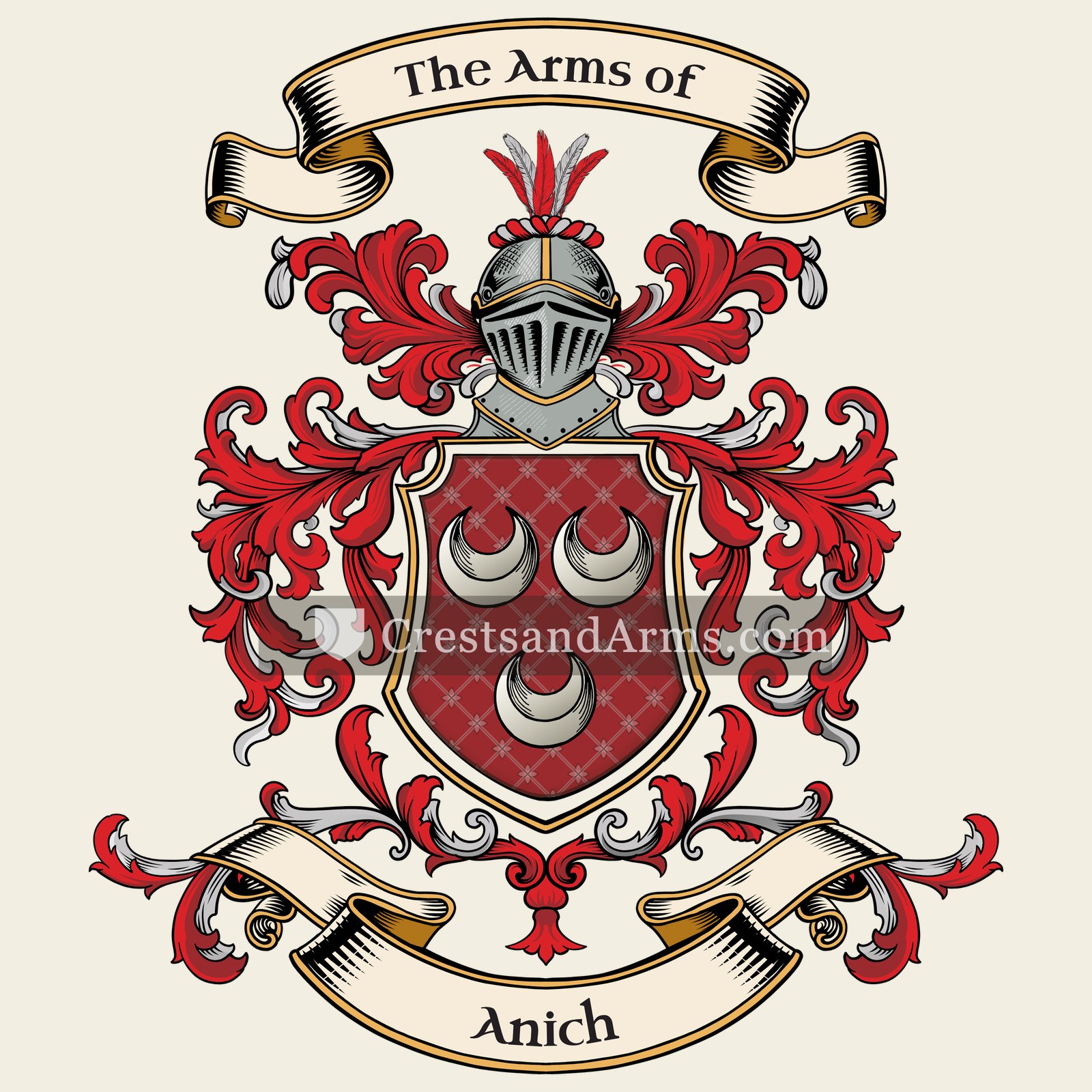


 arms pheon arrowheadReadiness for battle, and the broad arrow of the sovereign