A record of documented arms, meaning and origin, researched for the Anné family lines. Documented in 2 countries.
Reg. 2485 · Belgian, A–C
Coat of Arms & Family Crest Details
Symbols on this shield
wheelFortune's turning, and the carter's trade
Colours
Gold (Or)Means: Generosity
Green (Vert)Means: Hope
Black (Sable)Means: Constancy
Historical info
Source
J. B. Rietstap, Armorial Général, Gouda: G. B. van Goor Zonen, 1884–87
Blazon (the actual original written record)
“Coupé: au 1 d'or à une roue de dix rayons, sans jantes, de sa.: au 2 de sin. plein. C.: une tête et col de cheval d'arg. L. d'or, de sa. et de sin. D.: CELERITER ET FORTITER.”
BrabantBrabant, c. 1750
Digital archive packCoat of arms PNG, gold border print PDF, vector SVG and the certificate of authenticity. Sent to your email in minutes.
Map of Belgium showing where the Anné arms are recorded
The Anné arms were recorded in Brabant, c. 1750.
Brabant lay at the heart of the Low Countries, where the trade routes met. Its towns were wealthy and its landowners many, and both kinds of family kept arms, which is why the region is so heavily represented.
This is where the arms were entered in the register. Families often moved to other parts of the country, so the same name can turn up in more than one region.
The body that granted and recorded arms in Belgium in this period.
Francis I, Holy Roman Emperor
Sovereign of the period
Francis I, Holy Roman Emperor
1745–1765
Reigning in Belgium when the Anné arms are first recorded.
How Arms Worked in Belgium
In Belgium, a coat of arms is considered personal property that is passed down through the male line to legitimate descendants. Families often use the same shield design across generations to show their shared heritage. If a branch of the family wants to change the design, they must apply for an official update to their specific version of the arms.
Granting authority
The Conseil héraldique is the official body that regulates and approves all coats of arms in Belgium.
How they got arms
Families obtain their coats of arms through formal royal grants or by confirming their historical right to use existing designs.
Where arms were recorded
All approved coats of arms are officially recorded in the public registers of the Conseil héraldique since 1844.
The family's standing
Recorded among the armigerous families of Brabant.
Origin & History of the Anné Family in Belgium
The family name Anné has deep roots in the historical region of Brabant, where records confirm members of the family were living by the middle of the eighteenth century. During this era, the social landscape of the Low Countries was defined by a mix of agricultural traditions and the slow growth of local trade networks. Families like the Annés often lived in rural or semi-rural communities where surnames were frequently tied to local dialects or the specific geography of a village. As the name became established in the region, it moved through the shifting political borders of what would eventually become modern Belgium. By the late 1700s, the family was part of a society transitioning through significant changes, including the influence of French administration and the early stages of industrial development. These early ancestors helped build the foundation for the family name, maintaining their presence in Brabant even as the region faced decades of political upheaval and social reform.
Coat of Arms & Family Crest Details
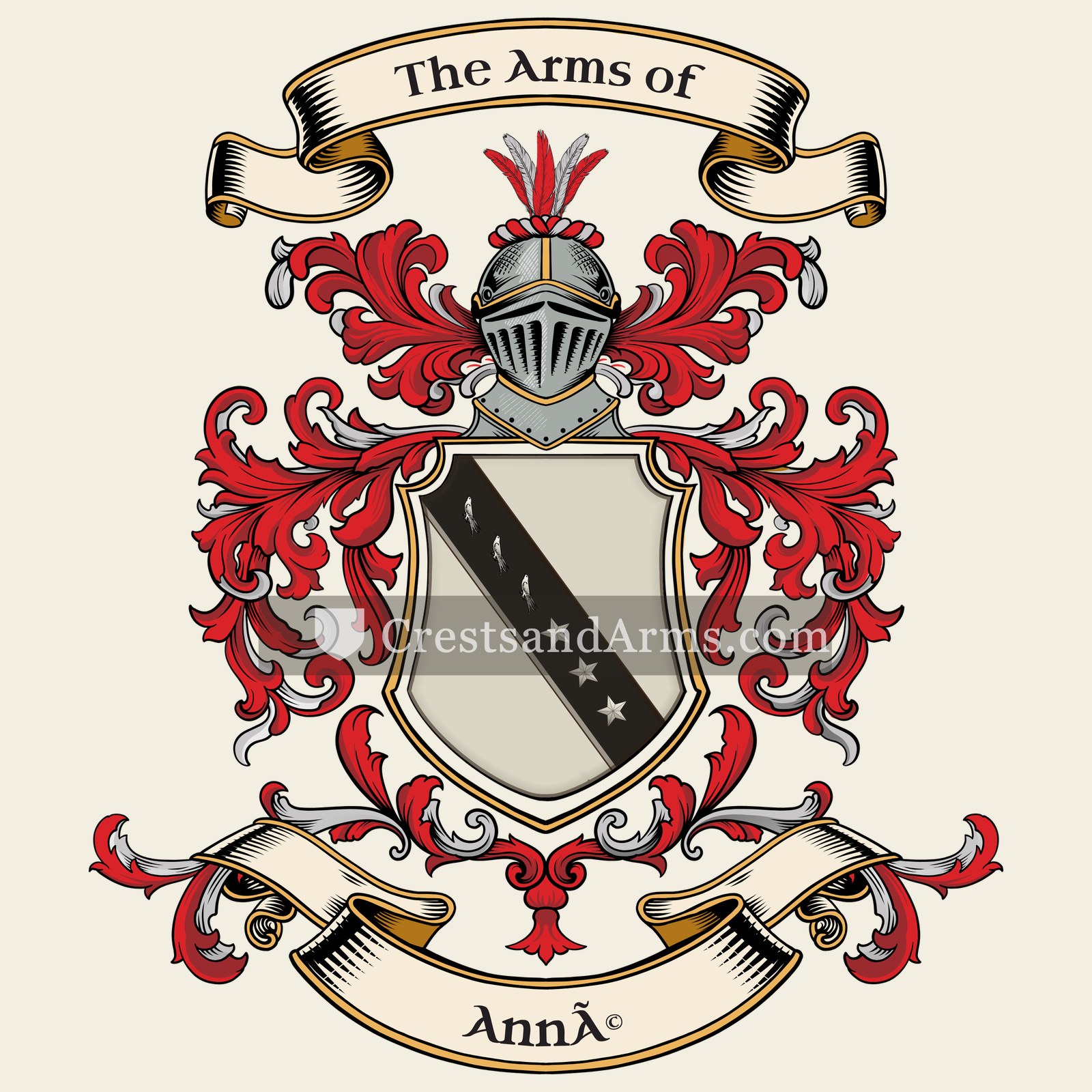
Symbols on this shield
bendDefence, and the scarf of a commander
martletA younger son, who must win his own land
mulletThe third son, and a divine quality from above
Colours
Silver (Argent)Means: Peace and sincerity
Black (Sable)Means: Constancy
Historical info
Source
Sir Bernard Burke, The General Armory of England, Scotland, Ireland and Wales, London: Harrison & Sons, 1884
Blazon (the actual original written record)
“Ar. on a bend sa. three martlets of the field (another, mullets)”
NorthamptonshireNorthamptonshire, c. 1620
Digital archive packCoat of arms PNG, gold border print PDF, vector SVG and the certificate of authenticity. Sent to your email in minutes.
Map of England showing where the Anné arms are recorded
The Anné arms were recorded in Northamptonshire, c. 1620.
This is where the arms were entered in the register. Families often moved to other parts of the country, so the same name can turn up in more than one region.
The body that granted and recorded arms in England in this period.
James VI and I
Sovereign of the period
James VI and I
1603–1625
Reigning in Belgium when the Anné arms are first recorded.
How Arms Worked in England
English heraldry allowed arms to be shared by all legitimate descendants of the original owner. These symbols were treated as personal property that moved through the generations to all children. While the eldest son kept the original design, other family members could use the same shield without needing to change it or register their own unique versions.
Granting authority
The College of Arms in London has regulated the use of coats of arms throughout England and Wales since 1484.
How they got arms
Families typically obtained their coats of arms through a formal grant from the Crown or by proving their ancient right to them.
Where arms were recorded
All official coats of arms are recorded in the registers kept at the College of Arms, which date back to the fifteenth century.
The family's standing
Recorded among the armigerous families of Northamptonshire.
Origin & History of the Anné Family in England
The history of the Anné family in England is rooted in the social landscape of the early seventeenth century, specifically within the rural communities of Northamptonshire. By 1620, members of the family were already established in this region, which was then a center for agricultural production and local trade. During this period, the name likely functioned as a way to identify individuals within a tight-knit parish system where record-keeping was becoming more standardized. Families like the Annés often lived as tenant farmers or local tradespeople, contributing to the growth of village life during the reign of King James I. Their presence in the historical record at this time suggests they were part of the stable, land-working population that formed the backbone of English society before the onset of the Civil War. As the family settled into the Northamptonshire countryside, they helped define the local identity of their parish through their participation in community life and their ties to the land.
Anné Meaning & Related Branches
Root word
Anna
Derived from the Hebrew name Hannah meaning grace or favor.
This name
AnnéA diminutive or variant form indicating grace, often associated with the mother of the Virgin Mary.
also spelled
Annee
Anney
Anay
An
Anness
Related arms
Anna Devariant spelling
Annsvariant spelling
Harringwellrecorded with Anné, same area
Documented Sources
J. B. Rietstap, Armorial Général, Gouda: G. B. van Goor Zonen, 1884–87
State Archives in Belgium (Rijksarchief), Parochieregisters van Brabant
State Archives in Belgium (Rijksarchief), Burgerlijke Stand van de provincie Brabant
Debrabandere, Frans, Woordenboek van de familienamen in België en Noord-Frankrijk, 2003
Leys, O., De familienamen in de Zuidelijke Nederlanden, 1970
Digital archive packCoat of arms PNG, gold border print PDF, vector SVG and the certificate of authenticity. Sent to your email in minutes.


 wheelFortune's turning, and the carter's trade
 wheelFortune's turning, and the carter's trade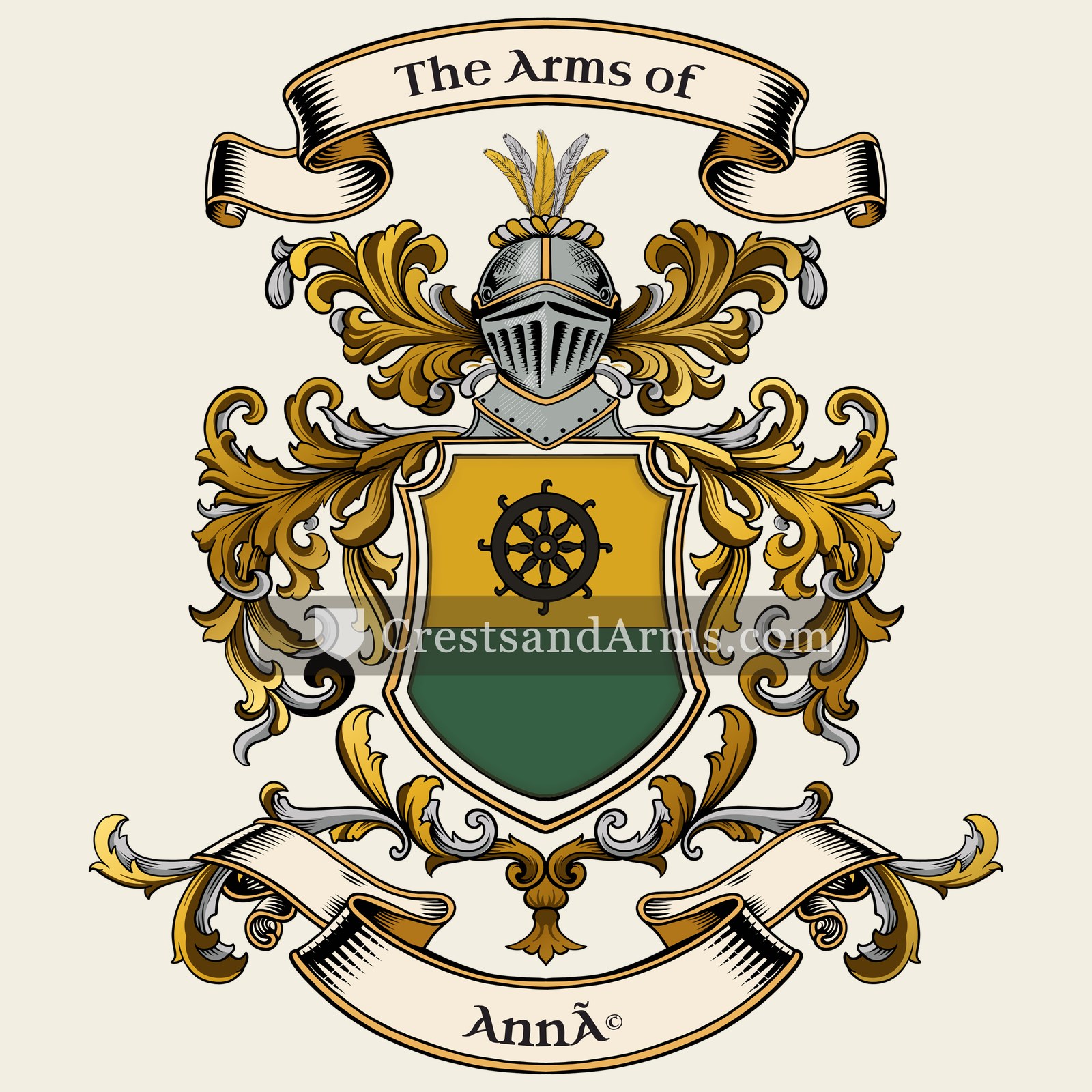


 bendDefence, and the scarf of a commander
 martletA younger son, who must win his own land
 mulletThe third son, and a divine quality from above