Map of Germany showing where the Annesley arms are recorded
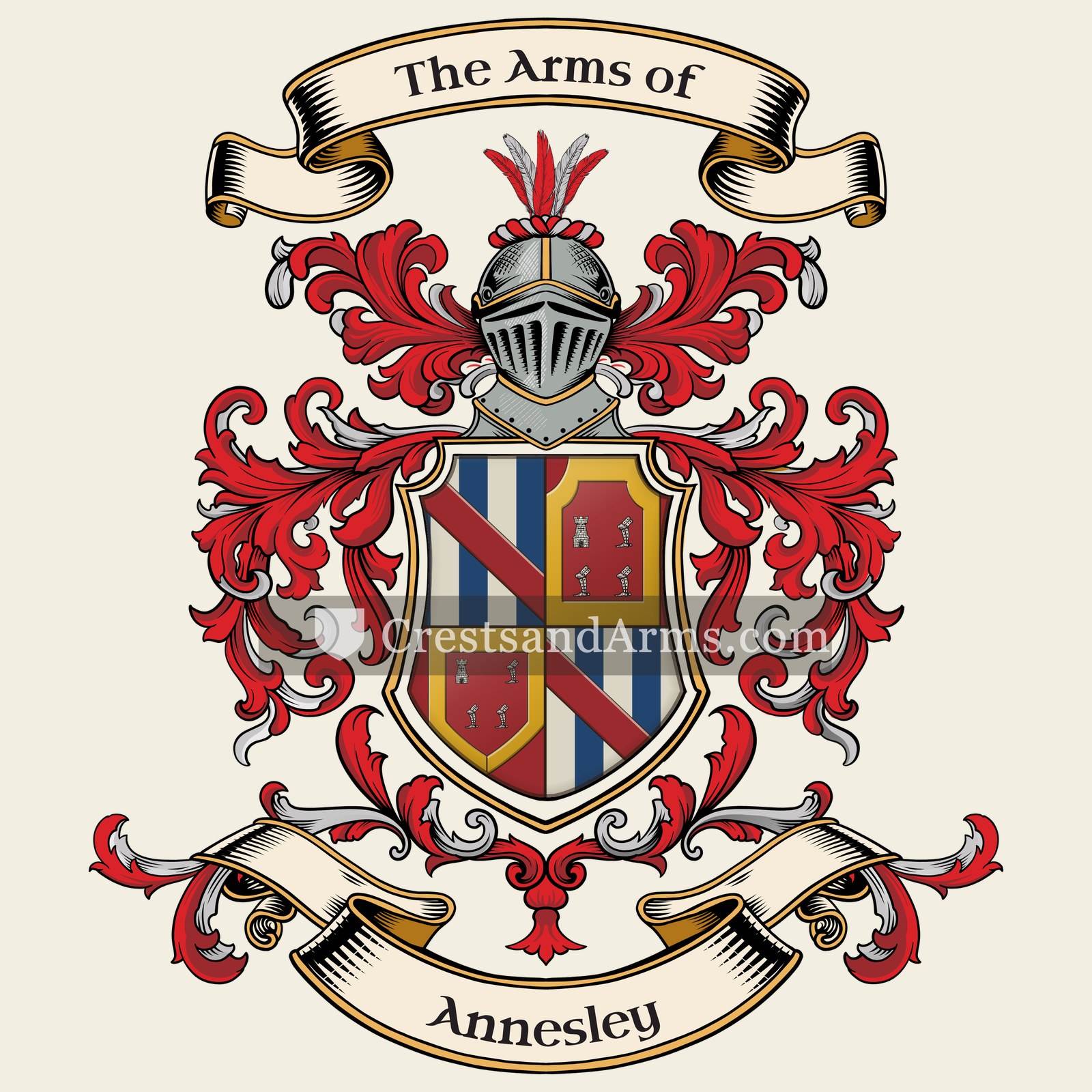
The Annesley arms were recorded in Germany, c. 1758.
Arms such as these were typically recorded in Bavaria.
Bavaria was a country of old landed families and walled market towns. Estates passed down the same line for centuries, and both the landowners and the leading townsmen kept arms, which is why so many Bavarian names sit in the registers.
This is where the arms were entered in the register. Families often moved to other parts of the country, so the same name can turn up in more than one region.
The body that granted and recorded arms in Germany in this period.
Francis I, Holy Roman Emperor
Sovereign of the period
Francis I, Holy Roman Emperor
1745–1765
Reigning in Germany when the Annesley arms are first recorded.
How Arms Worked in Germany
In the Holy Roman Empire, coats of arms were often granted to individuals by the Emperor or his representatives. These arms were then passed down through the generations to all legitimate descendants of the original holder. Younger branches of a family usually kept the same shield design without needing to change it, as the arms belonged to the entire lineage.
Granting authority
The Holy Roman Emperor held the sole power to grant new coats of arms throughout his vast imperial territories.
How they got arms
Families typically obtained their coats of arms through a formal imperial grant or by proving their noble status to the authorities.
Where arms were recorded
These grants were officially recorded in the Imperial Chancery registers, which began keeping formal records of such honors during the Middle Ages.
The family's standing
Recorded among the armigerous families of Germany.
Origin & History of the Annesley Family in Germany
The history of the Annesley name in Germany begins with the migration of family members into the region of Bavaria during the mid-eighteenth century. By 1758, records indicate that individuals bearing this surname were established within the local social structure, likely drawn to the area by the opportunities present in the Holy Roman Empire. While the name itself is often associated with English origins, its presence in Bavaria suggests a period of movement across European borders during a time of significant political and economic change. These early settlers integrated into the German-speaking population, adapting their lives to the customs and administrative systems of the Bavarian state. Their presence serves as a testament to the mobility of families during the Enlightenment era, reflecting how people navigated the complex landscape of eighteenth-century Europe to build new lives in unfamiliar territories.
Coat of Arms & Family Crest Details
Symbols on this shield
bendDefence, and the scarf of a commander
Colours
Silver (Argent)Means: Peace and sincerity
Blue (Azure)Means: Loyalty and truth
Historical info
Source
Sir Bernard Burke, The General Armory of England, Scotland, Ireland and Wales, London: Harrison & Sons, 1884
Blazon (the actual original written record)
“Paly of six ar. and az. a bend gobonated gu. and or”
Englandc. 1620
Digital archive packCoat of arms PNG, gold border print PDF, vector SVG and the certificate of authenticity. Sent to your email in minutes.
Map of England showing where the Annesley arms are recorded
The Annesley arms were recorded in England, c. 1620.
Arms such as these were typically recorded in York.
Yorkshire is the largest of the English counties, and it held more gentry families than any other. Land there was split among a great many households rather than a few, so a great many of them carried arms.
This is where the arms were entered in the register. Families often moved to other parts of the country, so the same name can turn up in more than one region.
The body that granted and recorded arms in England in this period.
James VI and I
Sovereign of the period
James VI and I
1603–1625
Reigning in Germany when the Annesley arms are first recorded.
How Arms Worked in England
English heraldry allowed arms to be shared by all legitimate descendants of the original owner. These symbols were treated as personal property that moved through the generations to all children. While the eldest son kept the original design, other family members could use the same shield without needing to change it or register their own unique versions.
Granting authority
The College of Arms in London has regulated the use of coats of arms throughout England and Wales since 1484.
How they got arms
Families typically obtained their coats of arms through a formal grant from the Crown or by proving their ancient right to them.
Where arms were recorded
All official coats of arms are recorded in the registers kept at the College of Arms, which date back to the fifteenth century.
The family's standing
Recorded among the armigerous families of England.
Origin & History of the Annesley Family in England
The surname Annesley originates from a place name in Nottinghamshire, derived from the Old English words for a clearing and a woodland grove. While the name is tied to this specific English village, members of the family expanded their reach across the country over several centuries. By the early 17th century, records confirm that the family had established a notable presence in the city of York. This move to a major northern hub suggests that the family was involved in the active trade and social life of the region during the reign of King James I. As the family settled into York by 1620, they became part of the local fabric of the city, transitioning from their rural roots into the urban professional and merchant classes that defined the era.
Coat of Arms & Family Crest Details
Symbols on this shield
bendDefence, and the scarf of a commander
bordureA difference between branches of one family
towerGrandeur and solidity, and a stronghold defended
legStrength and swiftness
Colours
Silver (Argent)Means: Peace and sincerity
Red (Gules)Means: Military strength
Gold (Or)Means: Generosity
Historical info
Source
Sir Bernard Burke, The General Armory of England, Scotland, Ireland and Wales, London: Harrison & Sons, 1884
Blazon (the actual original written record)
“1st and 4th, paly of six ar. and az. a bend gu.; 2nd and 3rd, gu. a castle towered and embattled ar. masoned sa. windows and porch gu.; 2nd and 3rd, gu. three legs armed ppr. conjoined in the centre at the upper parts of the thighs flexed, in triangle, spurred and garnished or, all within a bordure embattled of the last”
Irelandc. 1645
Digital archive packCoat of arms PNG, gold border print PDF, vector SVG and the certificate of authenticity. Sent to your email in minutes.
Map of Ireland showing where the Annesley arms are recorded
The Annesley arms were recorded in Ireland, c. 1645.
Arms such as these were typically recorded in Dublin.
Dublin was the seat of government in Ireland and the place where grants were sought and recorded. Families with business at the castle or the courts settled nearby, and settling there put their arms on record.
This is where the arms were entered in the register. Families often moved to other parts of the country, so the same name can turn up in more than one region.
The body that granted and recorded arms in Ireland in this period.
Charles I of England
Sovereign of the period
Charles I of England
1625–1649
Reigning in Germany when the Annesley arms are first recorded.
How Arms Worked in Ireland
The Ulster King of Arms granted coats of arms to individuals who proved their social standing and good character. These symbols were typically inherited by all legitimate descendants of the original holder. If a family branch wanted a unique look, they could apply for a specific change to their design through the office to ensure their identity remained distinct.
Granting authority
The Ulster King of Arms acted as the official body that regulated and issued all coats of arms throughout Ireland.
How they got arms
Families obtained their arms through formal grants issued by the office after proving their eligibility and paying the required fees.
Where arms were recorded
All official grants were recorded in the registers held by the Ulster King of Arms starting from the year 1552.
The family's standing
Recorded among the armigerous families of Ireland.
Origin & History of the Annesley Family in Ireland
The Annesley family established a significant presence in Ireland during the mid-seventeenth century, a period marked by intense political and social transformation. By 1645, members of the family were already active in Dublin, positioning themselves within the administrative and landholding structures of the time. Their rise to prominence was closely linked to the complex shifts in Irish land ownership and government service that followed the turbulent events of the 1640s. As they integrated into the local landscape, the Annesleys became influential figures in the governance of the region, often serving in high-ranking official roles. Their history reflects the broader experience of families who moved to Ireland during this era to manage estates and participate in the evolving political life of the capital city. Through strategic marriages and government appointments, the family secured a lasting legacy that influenced the development of their estates and their standing within Irish society for generations.
Annesley Meaning & Related Branches
Root word
Annes
A diminutive form of the name Agnes meaning pure or holy.
This name
AnnesleyA locational surname derived from a clearing or meadow associated with a person named Agnes.
also spelled
Anesley
Ansley
Anneslie
Annesly
Related arms
Ainslievariant spelling
Annyslayvariant spelling
Ansleyvariant spelling
Macleodrecorded with Annesley, same area
Documented Sources
J. B. Rietstap, Armorial Général, Gouda: G. B. van Goor Zonen, 1884–87


 paleMilitary strength, and a fortified defence
 paleMilitary strength, and a fortified defence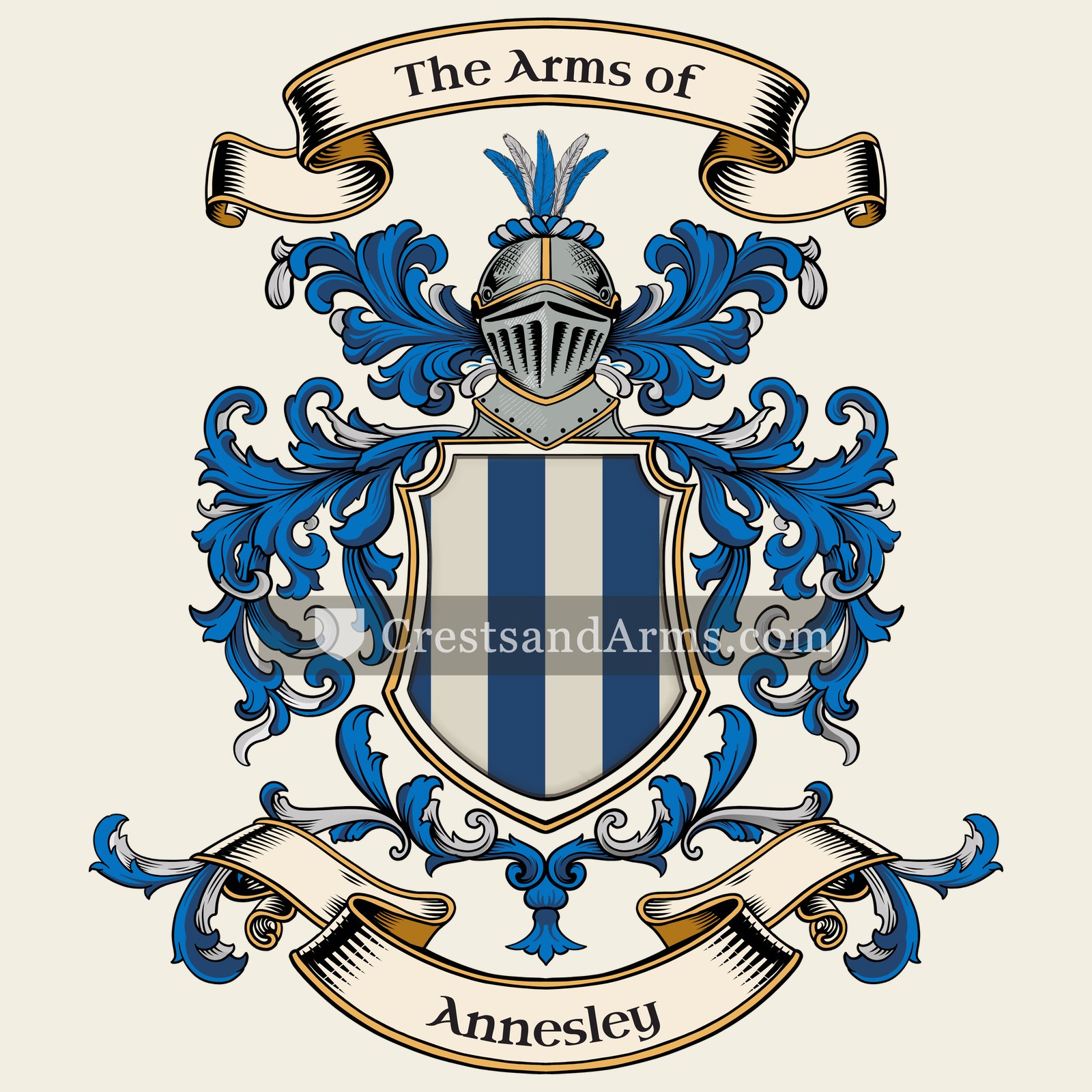


 bendDefence, and the scarf of a commander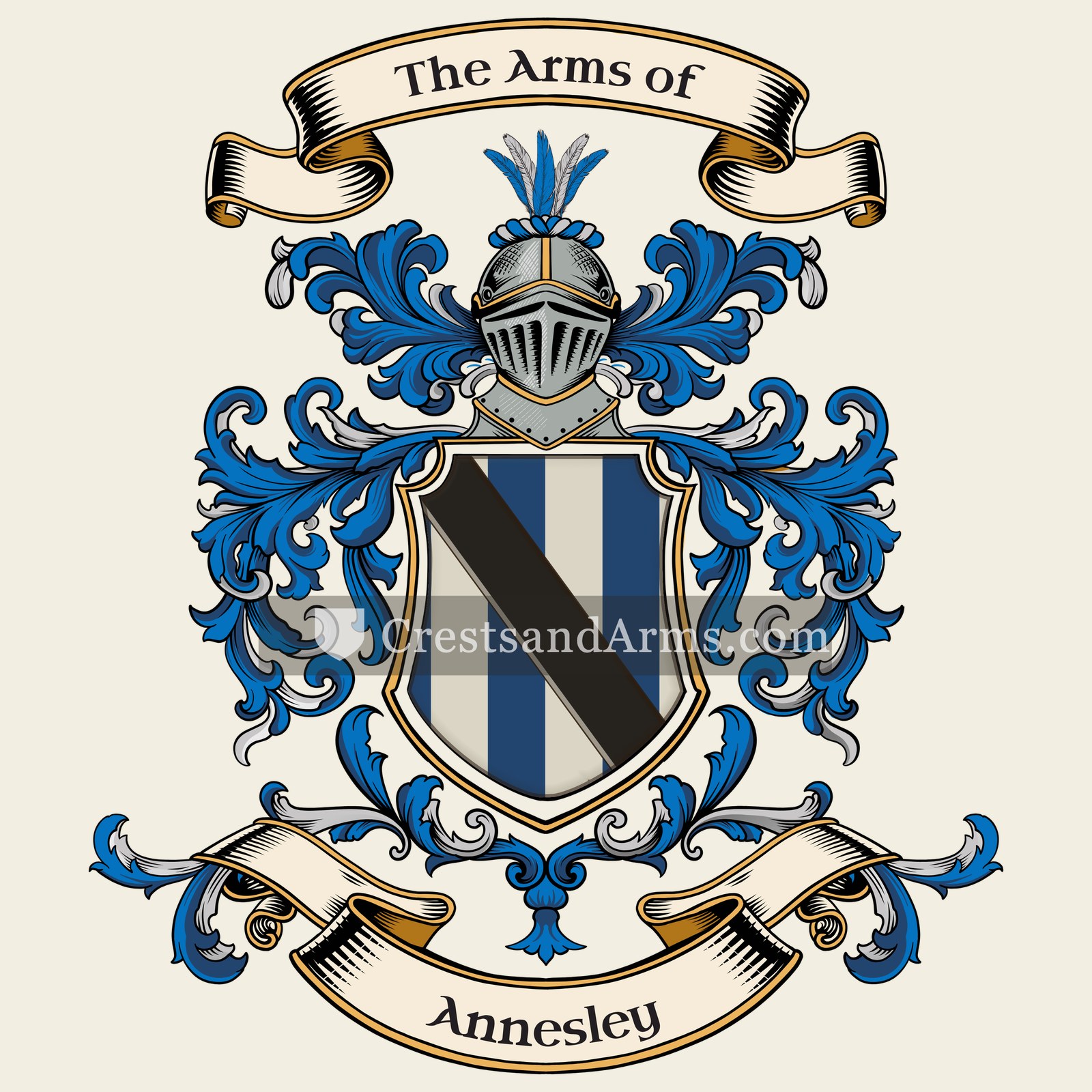


 bordureA difference between branches of one family
 towerGrandeur and solidity, and a stronghold defended
 legStrength and swiftness