Map of Belgium showing where the Arace arms are recorded
The Arace arms were recorded in Brabant, c. 1737.
Brabant lay at the heart of the Low Countries, where the trade routes met. Its towns were wealthy and its landowners many, and both kinds of family kept arms, which is why the region is so heavily represented.
This is where the arms were entered in the register. Families often moved to other parts of the country, so the same name can turn up in more than one region.
The body that granted and recorded arms in Belgium in this period.
Charles VI, Holy Roman Emperor
Sovereign of the period
Charles VI, Holy Roman Emperor
1711–1740
Reigning in Belgium when the Arace arms are first recorded.
How Arms Worked in Belgium
In Belgium, a coat of arms is considered personal property that is passed down through the male line to legitimate descendants. Families often use the same shield design across generations to show their shared heritage. If a branch of the family wants to change the design, they must apply for an official update to their specific version of the arms.
Granting authority
The Conseil héraldique is the official body that regulates and approves all coats of arms in Belgium.
How they got arms
Families obtain their coats of arms through formal royal grants or by confirming their historical right to use existing designs.
Where arms were recorded
All approved coats of arms are officially recorded in the public registers of the Conseil héraldique since 1844.
The family's standing
Recorded among the armigerous families of Brabant.
Origin & History of the Arace Family in Belgium
The history of the Arace family in Belgium is rooted in the fertile region of Brabant, where records confirm their presence as early as 1737. During the eighteenth century, Brabant was a central hub for trade and agriculture under the rule of the Austrian Netherlands. Families living in this area often navigated a complex landscape of local customs and shifting political borders. The Arace name likely emerged within these tight-knit rural communities, where individuals were often identified by their trade or their specific village of origin. As the family established their roots in the region, they became part of the local social fabric, participating in the daily life and economic activities that defined the Belgian countryside during the Enlightenment era. This early period marked the beginning of a long-standing connection to the province, setting the stage for the family to grow alongside the evolving history of the Low Countries.
Meaning of the Arace family crest colors & symbols
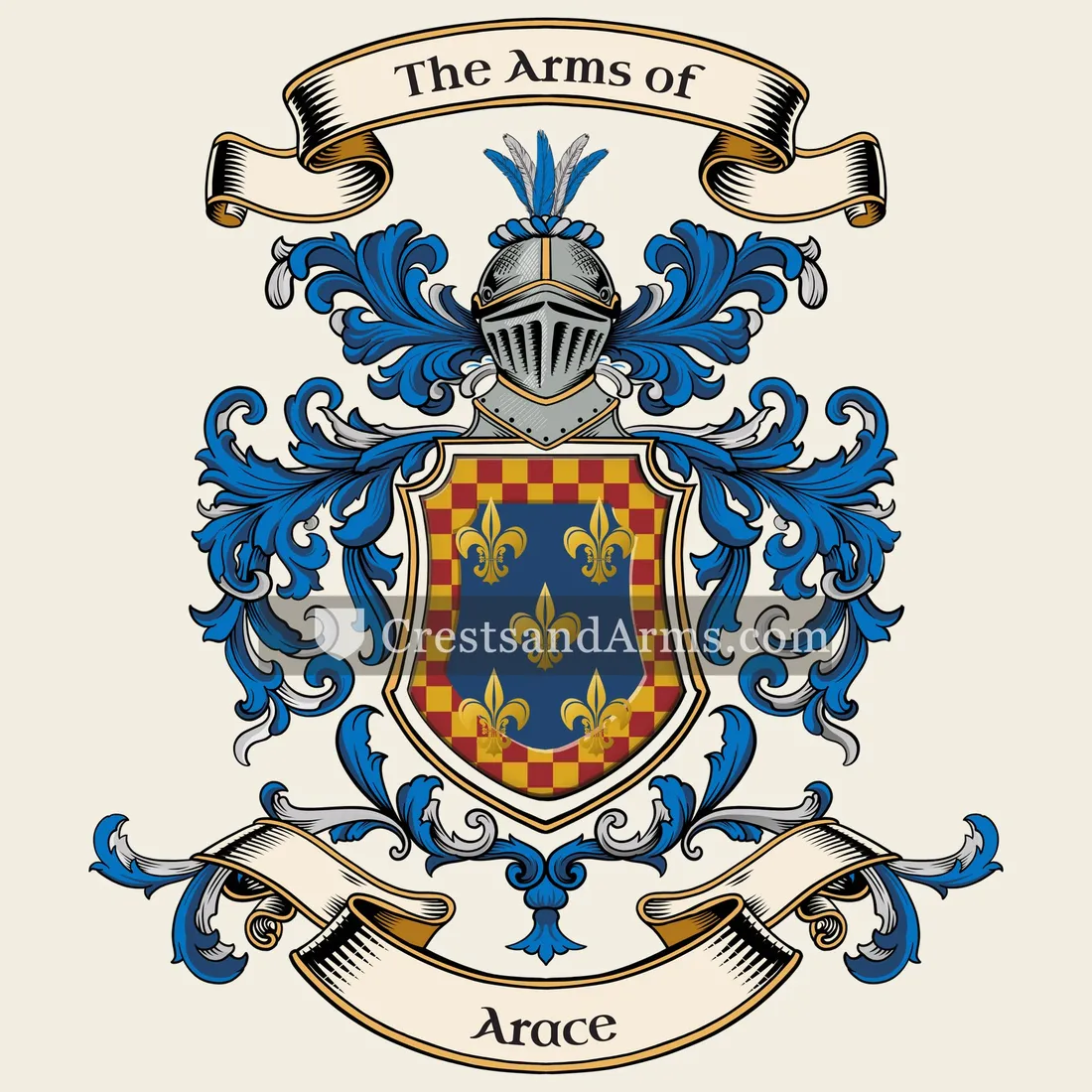
Symbols on this shield
chequyConstancy, and the counting-board
fleur de lisPurity, light, and the sixth son
Colours
Blue (Azure)Means: Loyalty and truth
Gold (Or)Means: Generosity
Historical info
Source
J. B. Rietstap, Armorial Général, Gouda: G. B. van Goor Zonen, 1884–87
Blazon (the actual original written record)
“D'azur à cinq fleurs-de-lis d'or, 2, 1 et 2, chacune br. sur un flanchis de gu.; à la bord. échiq. de gu. et d'or.”
SpainAsturies, c. 1722
Digital archive packCoat of arms PNG, gold border print PDF, vector SVG and the certificate of authenticity. Sent to your email in minutes.
Map of Spain showing where the Arace arms are recorded
The Arace arms were recorded in Asturies, c. 1722.
This is where the arms were entered in the register. Families often moved to other parts of the country, so the same name can turn up in more than one region.
The body that granted and recorded arms in Spain in this period.
Philip V of Spain
Sovereign of the period
Philip V of Spain
1714–1724
Reigning in Belgium when the Arace arms are first recorded.
How Arms Worked in Spain
In Spain, a coat of arms was considered a form of property that belonged to the entire family line. These arms were passed down from a father to all his children equally. Younger branches of the family usually kept the original design without needing to add any special marks to distinguish their specific line.
Granting authority
The Cronista Rey de Armas was the official body that regulated and granted coats of arms throughout Spain.
How they got arms
Families often obtained their arms through royal grants or by proving their noble status to the official heraldic authority.
Where arms were recorded
Coats of arms were officially recorded in the registers of the Cronista Rey de Armas starting in 1496.
The family's standing
Recorded among the armigerous families of Spain.
Origin & History of the Arace Family in Spain
The family name Arace traces its roots to the rugged landscape of Asturias in northern Spain, a region defined by its mountainous terrain and deep historical ties to the early medieval kingdoms. By the year 1722, records confirm that members of the family were established within this area, living among communities that had long resisted outside conquest. The name likely evolved from the local linguistic patterns of the region, reflecting the way families were identified by their specific place of origin or their connection to the land. During this period, the people of Asturias were known for their resilience and their role in maintaining unique cultural traditions that were distinct from the rest of the Iberian Peninsula. As the family grew, they became part of the social fabric of the Asturian countryside, participating in the agricultural and community life that shaped the identity of the region for centuries.
Arace Meaning & Related Branches
Root word
Aratius
Derived from the Latin name Aratius, meaning belonging to the altar.
This name
AraceA locative or patronymic surname likely originating from a place name or a derivative of the Latin Aratius.
also spelled
Arcee
Arces
Arcey
Arsay
Documented Sources
J. B. Rietstap, Armorial Général, Gouda: G. B. van Goor Zonen, 1884–87
Archives: State Archives in Belgium (Rijksarchief), Parochieregisters van Brabant
Book: De Smet, A., Geschiedenis van Brabant, 1974
Digital archive packCoat of arms PNG, gold border print PDF, vector SVG and the certificate of authenticity. Sent to your email in minutes.


 fleur de lisPurity, light, and the sixth son
 fleur de lisPurity, light, and the sixth son
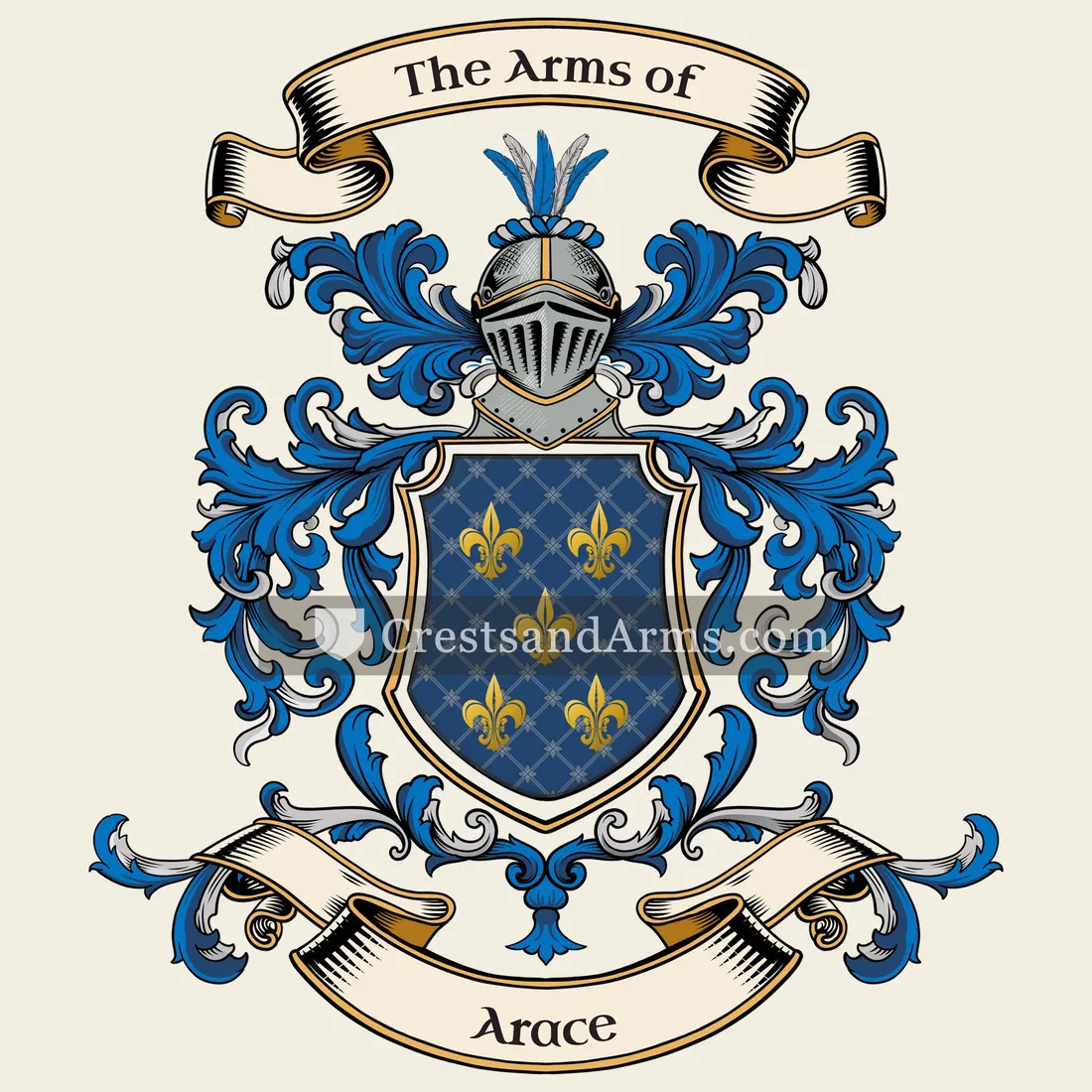


 chequyConstancy, and the counting-board