Map of Switzerland showing where the Archer arms are recorded
The Archer arms were recorded in Switzerland, c. 1745.
Arms such as these were typically recorded in Bern.
Bern was the largest of the Swiss cantons and ran itself, with its own council and its own courts. Its governing families held office for generations, and office of that kind carried a shield with it.
This is where the arms were entered in the register. Families often moved to other parts of the country, so the same name can turn up in more than one region.
The body that granted and recorded arms in Switzerland in this period.
How Arms Worked in Switzerland
In Switzerland, coats of arms were not restricted to the nobility and were often adopted by common citizens and families. These symbols were passed down through generations to show family identity. When branches of a family grew, they often changed small details of the design to distinguish their own line from the original group.
Granting authority
Cantonal and civic authorities managed the use of coats of arms within their specific regions and local jurisdictions.
How they got arms
Families typically assumed their own coats of arms based on local custom rather than receiving them from a central monarch.
Where arms were recorded
Arms were recorded in various cantonal and civic registers starting from the fourteenth century throughout the Swiss region.
The family's standing
Recorded among the armigerous families of Switzerland.
Origin & History of the Archer Family in Switzerland
The history of the Archer name in Switzerland is deeply connected to the social and professional landscape of the eighteenth century. While the name is often associated with English origins, records confirm that families bearing this name were established in the city of Bern by 1745. During this period, Bern was a powerful city-state governed by a strict hierarchy, and families living within its walls were often integrated into the local craft guilds or administrative systems. The presence of the Archer name in these Swiss archives suggests that these individuals were likely part of the skilled artisan or merchant classes who helped maintain the city's economic stability. By settling in Bern, these early family members became part of a tradition of civic participation that defined life in the Swiss Confederacy. Their integration into the local community reflects the broader movement of families across European borders during the Enlightenment, where professional opportunities often dictated where a family would put down its roots.
Meaning of the Archer family crest colors & symbols
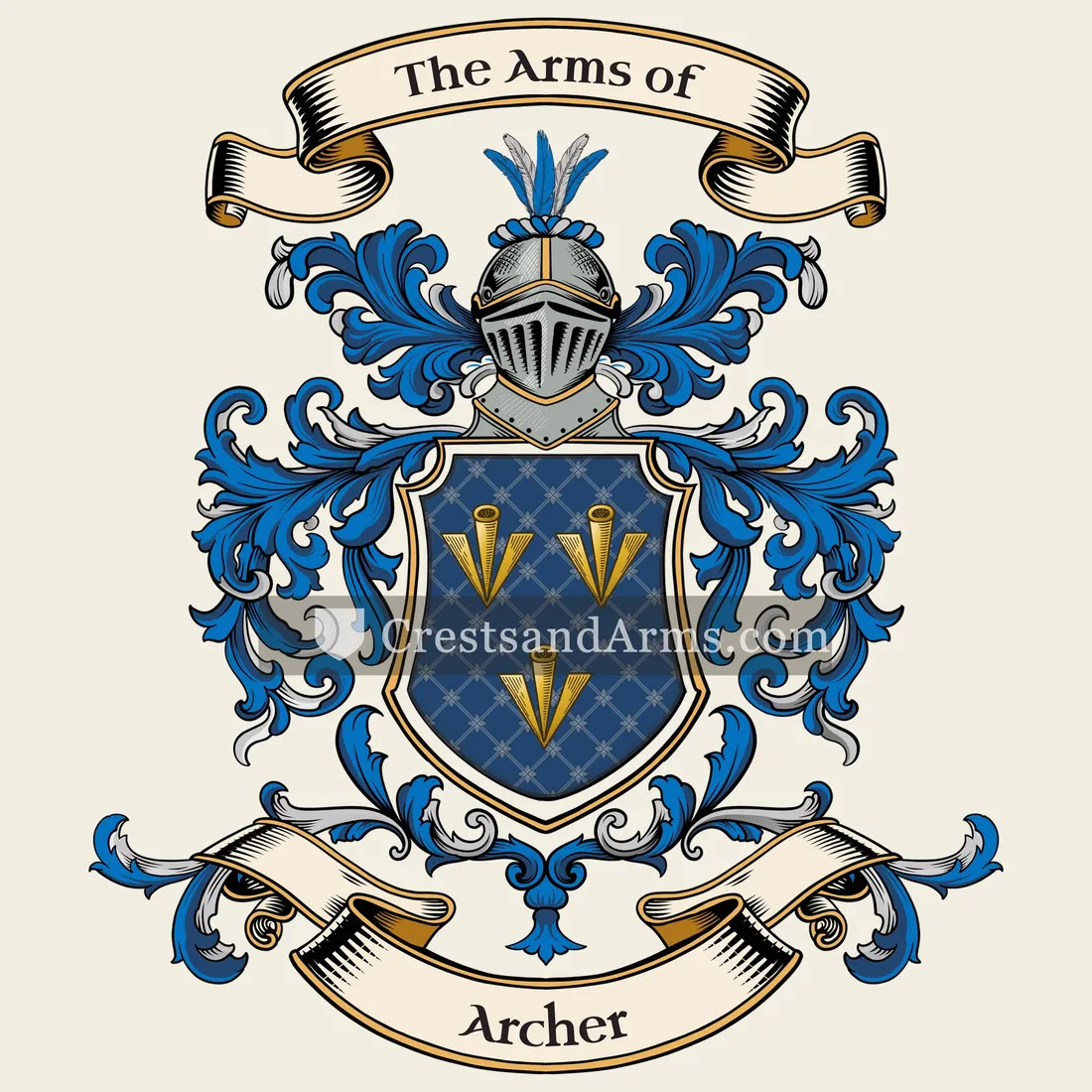
Symbols on this shield
cross symbolChristian faith and service
crescentHonour by the sovereign, and the second son
Colours
ErmineMeans: Dignity
Black (Sable)Means: Constancy
Silver (Argent)Means: Peace and sincerity
Historical info
Source
Sir Bernard Burke, The General Armory of England, Scotland, Ireland and Wales, London: Harrison & Sons, 1884
Blazon (the actual original written record)
“Erm. a cross sa. a crescent ar. for difference”
EssexTheydon · Essex, c. 1574
Digital archive packCoat of arms PNG, gold border print PDF, vector SVG and the certificate of authenticity. Sent to your email in minutes.
Map of England showing where the Archer arms are recorded
The Archer arms were recorded in Essex, c. 1574.
Essex lay close enough to London for City money to buy land there. Merchants who prospered moved out to estates within a day's ride, and a new landowner almost always wanted arms to go with the ground.
This is where the arms were entered in the register. Families often moved to other parts of the country, so the same name can turn up in more than one region.
The body that granted and recorded arms in England in this period.
Elizabeth I of England
Sovereign of the period
Elizabeth I of England
1558–1603
Reigning in Switzerland when the Archer arms are first recorded.
How Arms Worked in England
English heraldry allowed arms to be shared by all legitimate descendants of the original owner. These symbols were treated as personal property that moved through the generations to all children. While the eldest son kept the original design, other family members could use the same shield without needing to change it or register their own unique versions.
Granting authority
The College of Arms in London has regulated the use of coats of arms throughout England and Wales since 1484.
How they got arms
Families typically obtained their coats of arms through a formal grant from the Crown or by proving their ancient right to them.
Where arms were recorded
All official coats of arms are recorded in the registers kept at the College of Arms, which date back to the fifteenth century.
The family's standing
Recorded among the armigerous families of Essex.
Origin & History of the Archer Family in England
The surname Archer originated as an occupational name, identifying individuals who were skilled in the craft of bow-making or served as professional soldiers using the longbow. In medieval England, these men held a vital role in local defense and military service, which helped the name spread across various regions. By the late sixteenth century, the family had established a notable presence in the county of Essex. Records from 1574 confirm that members of the Archer family were living and working within this area during the reign of Queen Elizabeth I. As the need for traditional archery declined with the invention of firearms, the name transitioned from a description of a person's trade to a permanent family identifier passed down through generations. This shift reflects the broader social changes in England, where surnames became fixed markers of identity rather than just labels for a person's daily work.
Meaning of the Archer family crest colors & symbols
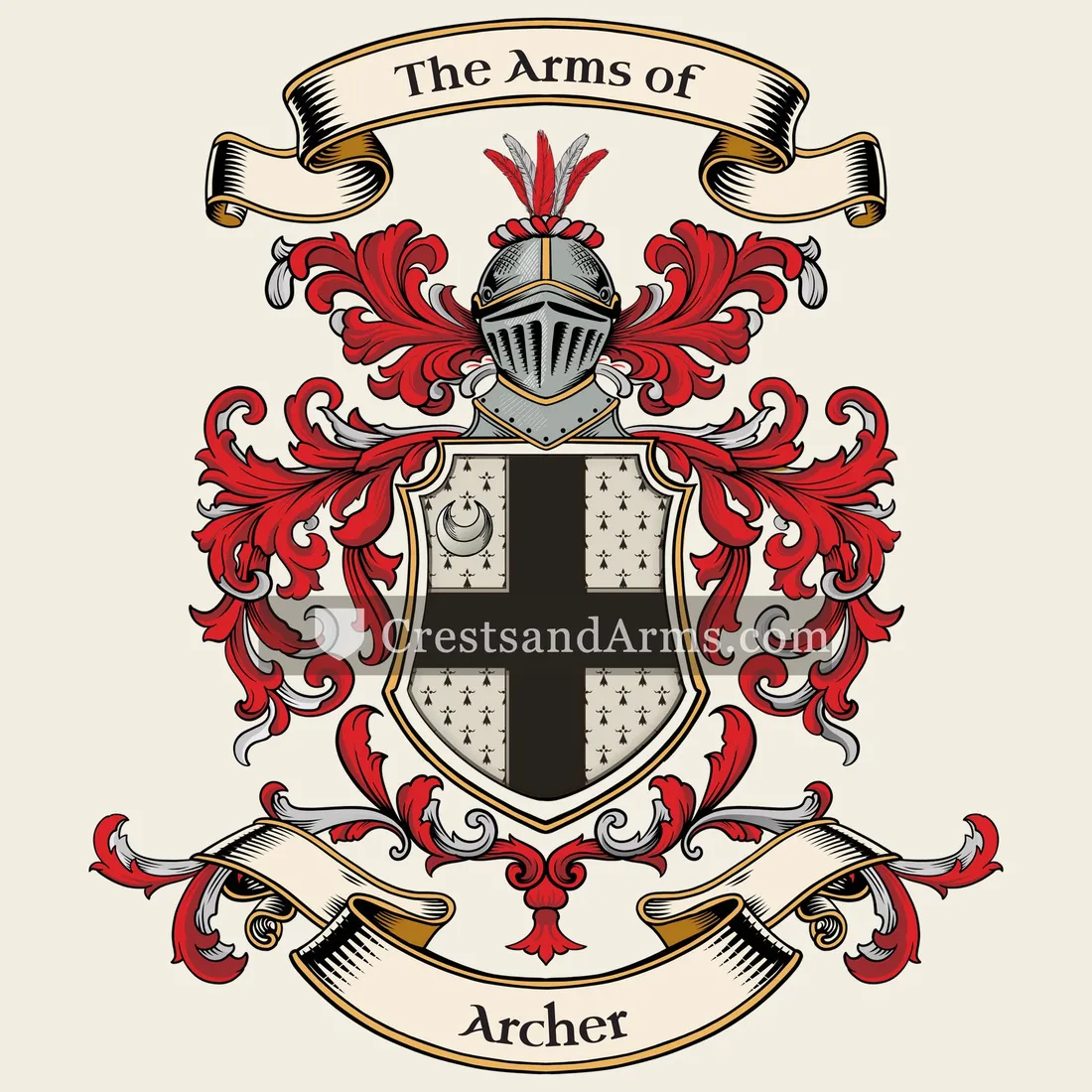
Symbols on this shield
chevronProtection, and faithful service completed
arms pheon arrowheadReadiness for battle, and the broad arrow of the sovereign
mulletThe third son, and a divine quality from above
Colours
Silver (Argent)Means: Peace and sincerity
Red (Gules)Means: Military strength
Black (Sable)Means: Constancy
Gold (Or)Means: Generosity
Historical info
Source
Sir Bernard Burke, The General Armory of England, Scotland, Ireland and Wales, London: Harrison & Sons, 1884
Blazon (the actual original written record)
“Ar. on a chev. gu. betw. three pheons sa. three mullets or”
KilkennyKilkenny, c. 1645
Digital archive packCoat of arms PNG, gold border print PDF, vector SVG and the certificate of authenticity. Sent to your email in minutes.
Map of Ireland showing where the Archer arms are recorded
The Archer arms were recorded in Kilkenny, c. 1645.
Kilkenny was rich farming country in south-eastern Ireland, held by Norman families who settled early and stayed. Long holding of good land is exactly what puts a name into the heraldic records.
This is where the arms were entered in the register. Families often moved to other parts of the country, so the same name can turn up in more than one region.
The body that granted and recorded arms in Ireland in this period.
Charles I of England
Sovereign of the period
Charles I of England
1625–1649
Reigning in Switzerland when the Archer arms are first recorded.
How Arms Worked in Ireland
The Ulster King of Arms granted coats of arms to individuals who proved their social standing and good character. These symbols were typically inherited by all legitimate descendants of the original holder. If a family branch wanted a unique look, they could apply for a specific change to their design through the office to ensure their identity remained distinct.
Granting authority
The Ulster King of Arms acted as the official body that regulated and issued all coats of arms throughout Ireland.
How they got arms
Families obtained their arms through formal grants issued by the office after proving their eligibility and paying the required fees.
Where arms were recorded
All official grants were recorded in the registers held by the Ulster King of Arms starting from the year 1552.
The family's standing
Recorded among the armigerous families of Kilkenny.
Origin & History of the Archer Family in Ireland
The Archer family established a significant presence in County Kilkenny by the mid-seventeenth century, where they became prominent figures in the social and political life of the city. While the name originated as an occupational surname for those skilled in archery, the Archers of Kilkenny were primarily known as wealthy merchants and civic leaders who played a central role in the administration of the town. By 1645, members of the family held influential positions within the Kilkenny Corporation and were deeply involved in the complex political landscape of the Irish Confederate Wars. Their status allowed them to build substantial stone houses and maintain strong connections with other powerful merchant families in the region. Through their involvement in trade and local government, the Archers helped shape the urban development of Kilkenny during a time of great transition in Irish history.
Archer Meaning & Related Branches
Root word
arcus
Latin term referring to a curved shape or a bow.
This name
ArcherAn occupational surname for a person who made or used a bow and arrow.
also spelled
Archere
Archerr
Arch
Archier
Archur
Related arms
Archvariant spelling
Bunburyrecorded with Archer, same area
Kelseyrecorded with Archer, same area
Knightbridgerecorded with Archer, same area
Documented Sources
J. B. Rietstap, Armorial Général, Gouda: G. B. van Goor Zonen, 1884–87
Staatsarchiv des Kantons Bern, Bürgerrodel der Stadt Bern
Historisches Lexikon der Schweiz, Die Stadt Bern im 18. Jahrhundert, 2002
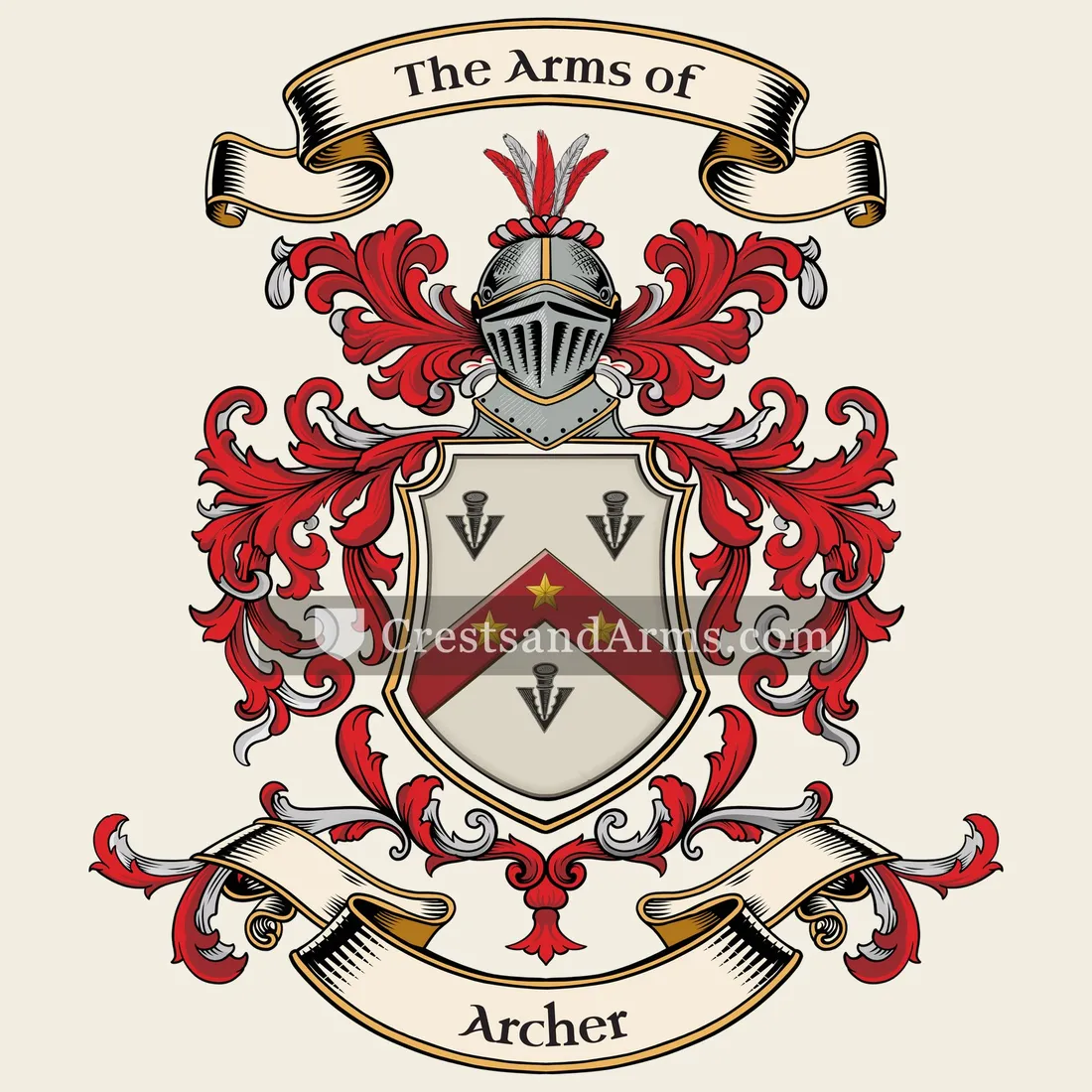
Digital archive packCoat of arms PNG, gold border print PDF, vector SVG and the certificate of authenticity. Sent to your email in minutes.


 arrowReadiness for battle, and affliction endured
 arrowReadiness for battle, and affliction endured

 cross symbolChristian faith and service
 crescentHonour by the sovereign, and the second son


 chevronProtection, and faithful service completed
 arms pheon arrowheadReadiness for battle, and the broad arrow of the sovereign
 mulletThe third son, and a divine quality from above