Map of Switzerland showing where the Ardo arms are recorded
The Ardo arms were recorded in Valais, c. 1745.
This is where the arms were entered in the register. Families often moved to other parts of the country, so the same name can turn up in more than one region.
The body that granted and recorded arms in Switzerland in this period.
How Arms Worked in Switzerland
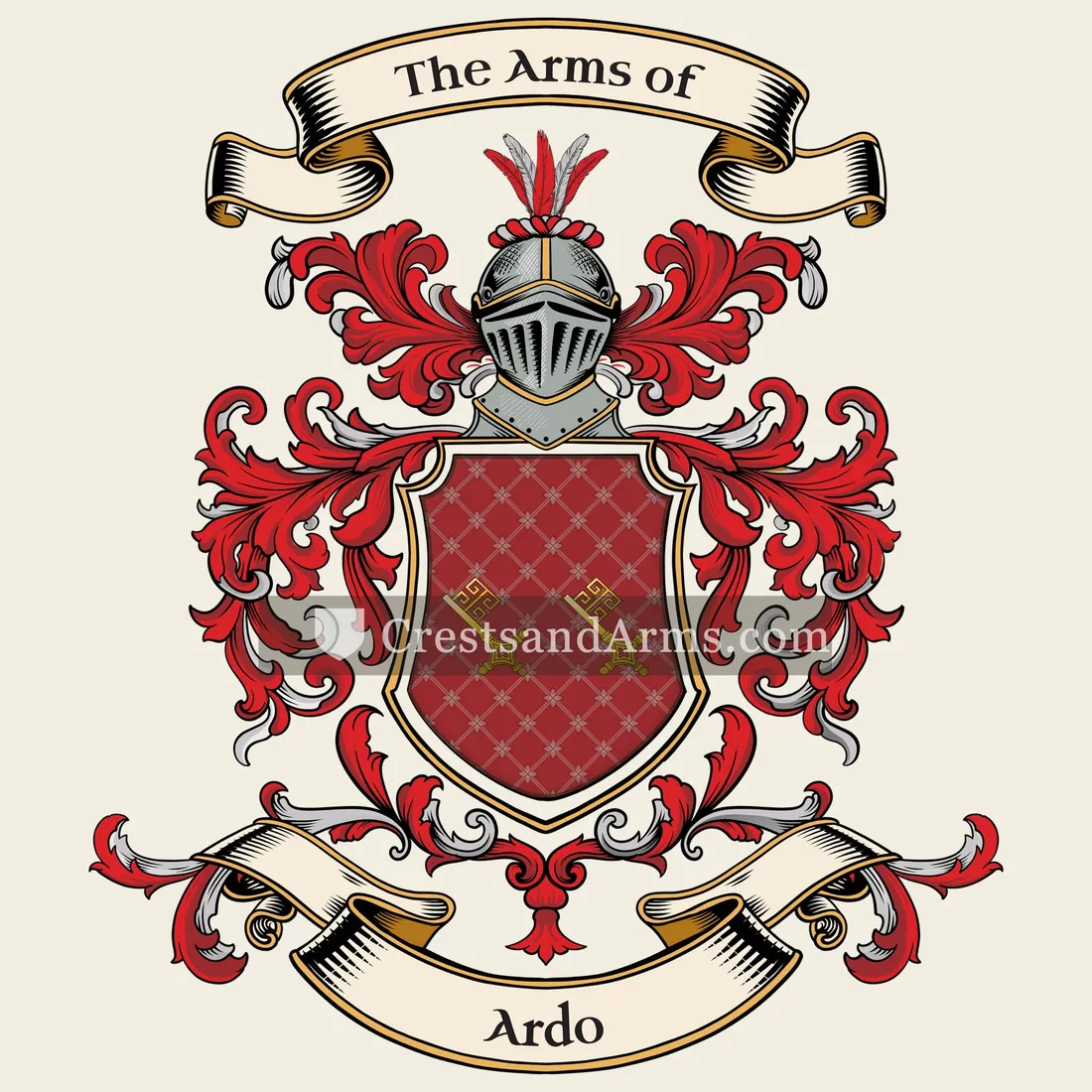
In Switzerland, coats of arms were not restricted to the nobility and were often adopted by common citizens and families. These symbols were passed down through generations to show family identity. When branches of a family grew, they often changed small details of the design to distinguish their own line from the original group.
Granting authority
Cantonal and civic authorities managed the use of coats of arms within their specific regions and local jurisdictions.
How they got arms
Families typically assumed their own coats of arms based on local custom rather than receiving them from a central monarch.
Where arms were recorded
Arms were recorded in various cantonal and civic registers starting from the fourteenth century throughout the Swiss region.
The family's standing
Recorded among the armigerous families of Switzerland.
Origin & History of the Ardo Family in Switzerland
The Ardo family name has deep roots in the rugged landscape of the Valais region in Switzerland. By the year 1745, records confirm that members of the family were already established residents within these alpine communities. During this era, families in the Valais were often defined by their close connection to the land and the specific mountain valleys they inhabited. Because the region was historically isolated by high mountain passes, the Ardo name likely developed within a tight-knit social structure where families worked together to manage livestock and local agriculture. This environment encouraged stability, allowing the family to maintain a consistent presence in the area for generations. Over time, the name became a part of the local identity, reflecting the resilience required to thrive in the challenging climate of the Swiss Alps.
Ardo Meaning & Related Branches
Root word
Hard
Germanic element meaning brave, hardy, strong, or courageous.
This name
ArdoA diminutive form representing a brave or courageous individual.
also spelled
Ardone
Ardonn
Ardo
Arden
Ardyn
Documented Sources
J. B. Rietstap, Armorial Général, Gouda: G. B. van Goor Zonen, 1884–87
Archives: Archives de l'État du Valais, Registres paroissiaux (Parish registers)
Books: Altermatt, Urs, Historisches Lexikon der Schweiz, 2002
Books: Mottier, Jean-Pierre, Dictionnaire historique et généalogique des familles valaisannes, 1995
Digital archive packCoat of arms PNG, gold border print PDF, vector SVG and the certificate of authenticity. Sent to your email in minutes.


 keyGuardianship, and the office of a steward
 keyGuardianship, and the office of a steward