Map of Netherlands showing where the Arends arms are recorded
The Arends arms were recorded in Amsterdam, c. 1815.
This is where the arms were entered in the register. Families often moved to other parts of the country, so the same name can turn up in more than one region.
Region
Amsterdam
Town
Amsterdam
First recorded
1815
Granting Authority for the Arends Arms
Hoge Raad van Adel
Photograph made by me · CC BY-SA 3.0
The body that granted and recorded arms in Netherlands in this period.
William I of the Netherlands
Sovereign of the period
William I of the Netherlands
1815–1840
Reigning in Netherlands when the Arends arms are first recorded.
How Arms Worked in Netherlands
In the Netherlands, coats of arms were often used by noble families and those who held specific public offices. These arms were passed down through the generations to legitimate descendants. Younger branches of a family usually kept the original design without needing to add special marks. This system ensured that the family identity remained clear and consistent over many years.
Granting authority
The Hoge Raad van Adel is the official body that regulates and manages noble titles and coats of arms in the Netherlands.
How they got arms
Families typically obtained their coats of arms through official royal grants or by proving their long-standing historical use of the symbols.
Where arms were recorded
Coats of arms are officially recorded in the registers held by the Hoge Raad van Adel, which began its work in 1814.
The family's standing
Recorded among the armigerous families of Netherlands.
Origin & History of the Arends Family in Netherlands
The surname Arends is a patronymic name, which means it originated as a way to identify a person as the son of someone named Arend. The name Arend itself is a shortened version of the Germanic name Arnold, which carries the meaning of an eagle ruler. By the time the family was firmly established in Amsterdam in 1815, the Netherlands had recently transitioned from the Napoleonic era into the United Kingdom of the Netherlands. During this period, the government required citizens to adopt permanent, fixed surnames for official civil registration. Families like the Arends were part of a growing urban population in Amsterdam that was increasingly documented through formal birth, marriage, and death records. This transition helped solidify the name as a hereditary family identifier rather than just a descriptive label for a father’s son. As the city expanded during the nineteenth century, the Arends family became part of the diverse social fabric of the Dutch capital, contributing to the professional and economic life of a nation that was rapidly modernizing.
Coat of Arms & Family Crest Details
Symbols on this shield
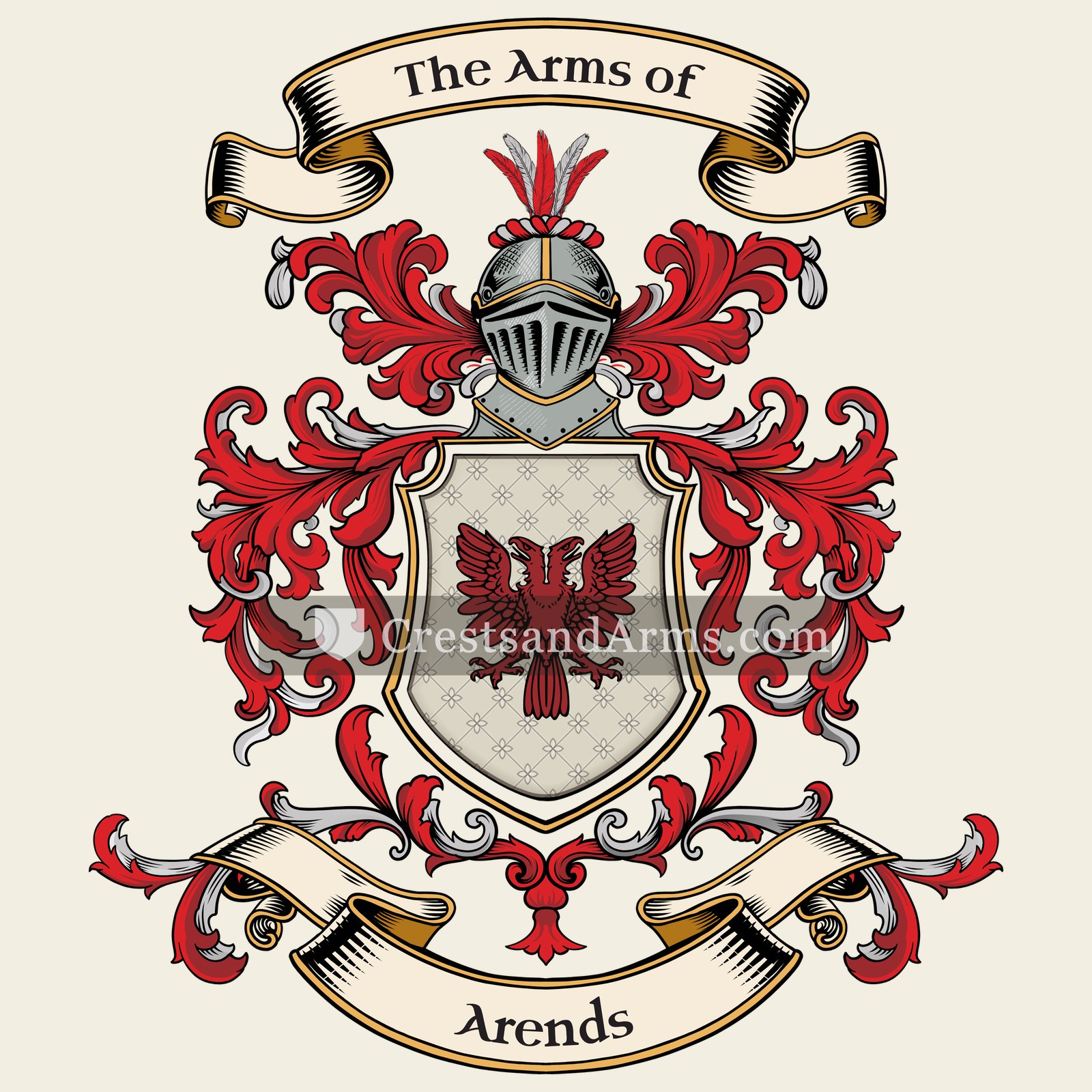
eagleNobility, strength and a keen mind
Colours
Silver (Argent)Means: Peace and sincerity
Red (Gules)Means: Military strength
Historical info
Source
J. B. Rietstap, Armorial Général, Gouda: G. B. van Goor Zonen, 1884–87
Blazon (the actual original written record)
“D'arg. à une tête et col d'aigle de gu. C.: le meuble de l'écu.”
GermanyHambourg, c. 1765
Digital archive packCoat of arms PNG, gold border print PDF, vector SVG and the certificate of authenticity. Sent to your email in minutes.
Map of Germany showing where the Arends arms are recorded
The Arends arms were recorded in Hambourg, c. 1765.
This is where the arms were entered in the register. Families often moved to other parts of the country, so the same name can turn up in more than one region.
The body that granted and recorded arms in Germany in this period.
Francis I, Holy Roman Emperor
Sovereign of the period
Francis I, Holy Roman Emperor
1745–1765
Reigning in Netherlands when the Arends arms are first recorded.
How Arms Worked in Germany
In the Holy Roman Empire, coats of arms were often granted to individuals by the Emperor or his representatives. These arms were then passed down through the generations to all legitimate descendants of the original holder. Younger branches of a family usually kept the same shield design without needing to change it, as the arms belonged to the entire lineage.
Granting authority
The Holy Roman Emperor held the sole power to grant new coats of arms throughout his vast imperial territories.
How they got arms
Families typically obtained their coats of arms through a formal imperial grant or by proving their noble status to the authorities.
Where arms were recorded
These grants were officially recorded in the Imperial Chancery registers, which began keeping formal records of such honors during the Middle Ages.
The family's standing
Recorded among the armigerous families of Germany.
Origin & History of the Arends Family in Germany
The surname Arends is a patronymic name, which means it originated as a way to identify a person as the son of someone named Arend. The name Arend itself is a Low German variation of the name Arnold, which carries the traditional meaning of an eagle ruler. By the mid-18th century, families carrying this name were well-established in the bustling port city of Hamburg. During this period, Hamburg served as a vital center for trade and commerce, attracting many families who worked as merchants, craftsmen, or maritime laborers. Because the city was a hub for international travel, the Arends family likely benefited from the economic growth and social mobility that defined life in a major German trading port. The presence of the family in official records by 1765 suggests they were integrated into the urban fabric of the city, participating in the daily civic and professional life that allowed such surnames to persist and spread across the region.
Arends Meaning & Related Branches
Root word
Arn
Derived from the Germanic word for eagle.
This name
ArendsPatronymic form meaning son of Arnold, signifying strength and power like an eagle.
also spelled
Arendse
Arendss
Arend
Documented Sources
J. B. Rietstap, Armorial Général, Gouda: G. B. van Goor Zonen, 1884–87
Meertens, P.J., Voornamen in Nederland, 1956
Van Berkel, G. and Samplonius, K., Nederlandse Familienamenbank, 2010
Stadsarchief Amsterdam, Bevolkingsregister 1815
Digital archive packCoat of arms PNG, gold border print PDF, vector SVG and the certificate of authenticity. Sent to your email in minutes.


 horseshoeGood fortune and protection from harm
 mulletThe third son, and a divine quality from above
 horseshoeGood fortune and protection from harm
 mulletThe third son, and a divine quality from above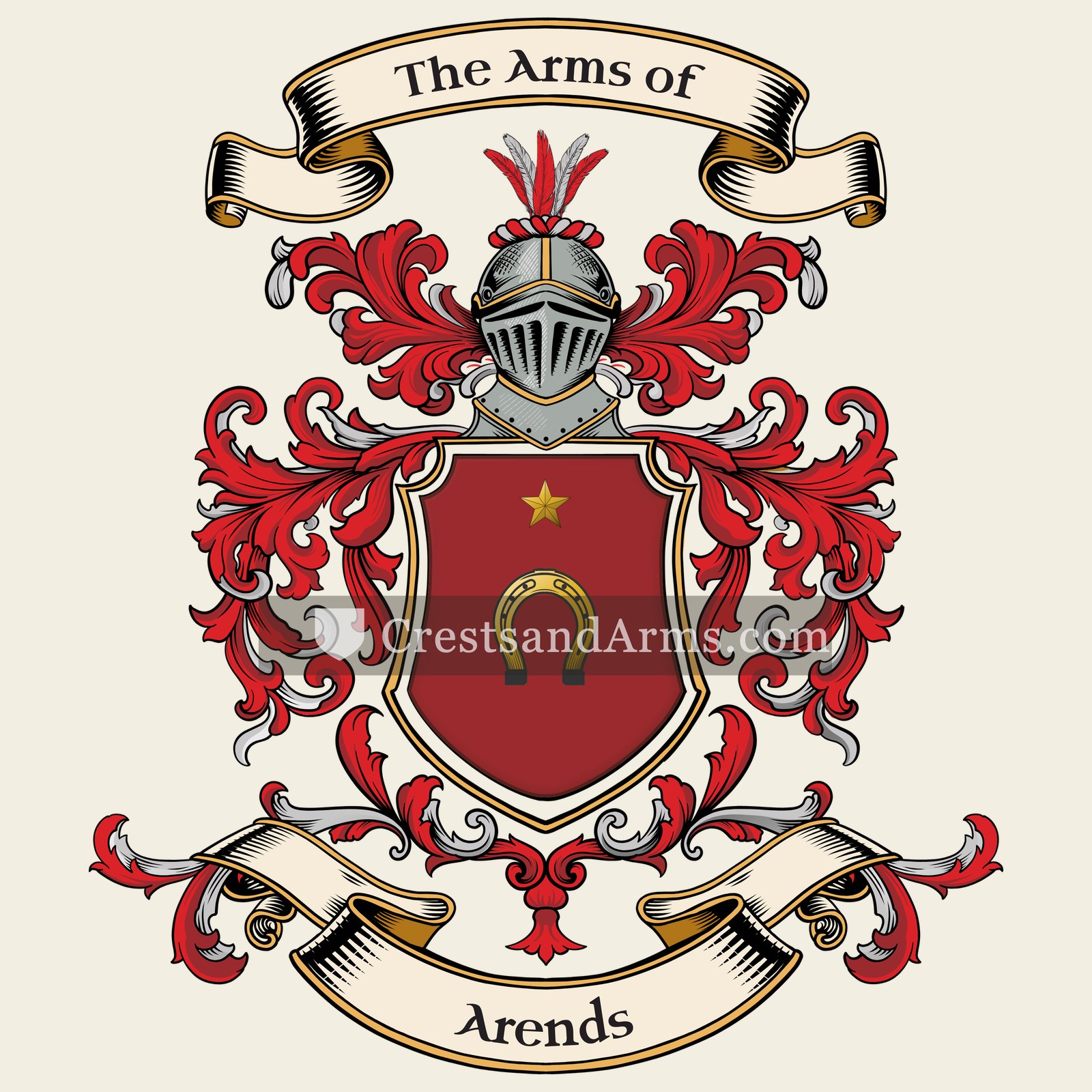


 eagleNobility, strength and a keen mind