Map of Italy showing where the Argenti arms are recorded
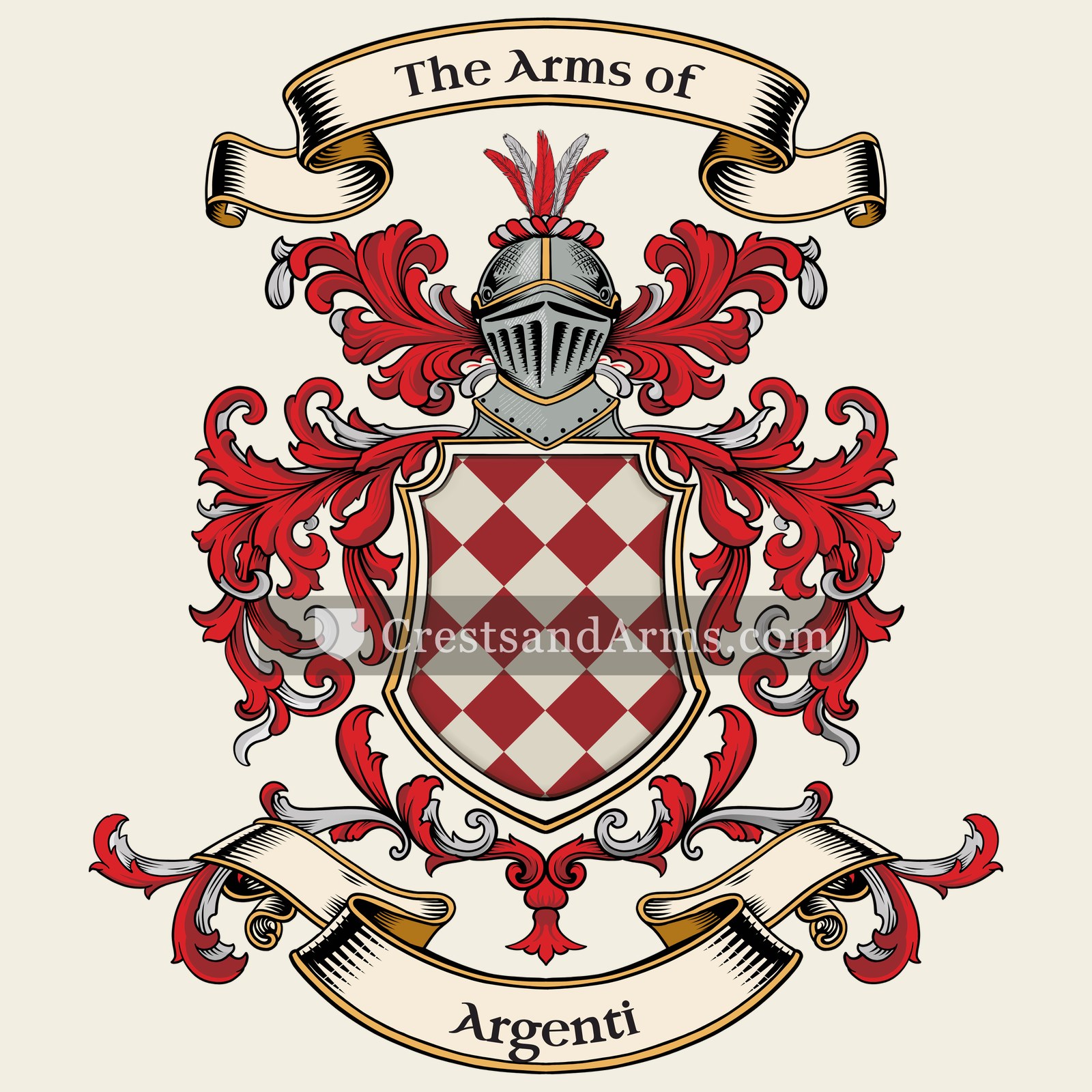
The Argenti arms were recorded in Trieste, c. 1820.
This is where the arms were entered in the register. Families often moved to other parts of the country, so the same name can turn up in more than one region.
The body that granted and recorded arms in Italy in this period.
How Arms Worked in Italy
In the Italian states, coats of arms were often used by noble families to show their status and history. These symbols were passed down through the generations to all legitimate male descendants. Younger branches of a family usually kept the original design but sometimes added small changes to distinguish their specific line from the main branch.
Granting authority
Various local rulers and city governments controlled the use of coats of arms across the different Italian states.
How they got arms
Families often assumed their own arms or received them as official grants from local lords, popes, or city councils.
Where arms were recorded
Arms were recorded in local city archives or private family books rather than in one single national register.
The family's standing
Recorded among the armigerous families of Italy.
Origin & History of the Argenti Family in Italy
The surname Argenti originates from the Italian word for silver, which suggests that early ancestors may have been skilled silversmiths, coin minters, or merchants dealing in precious metals. By the early 19th century, the family established a notable presence in the bustling port city of Trieste. During this period, Trieste served as a vital maritime gateway for the Austrian Empire, attracting ambitious families who thrived in international trade and finance. Living in such a cosmopolitan environment, the Argenti family likely played a role in the city’s economic growth as it transformed into a major hub for Mediterranean commerce. Their residence in this region reflects a history of mobility and integration into the professional classes of the Austro-Hungarian era.
Argenti Meaning & Related Branches
Root word
Argentum
Latin word for the precious metal silver.
This name
ArgentiDerived from a nickname for someone who worked with silver or possessed a silvery appearance.
also spelled
Argenty
Arzhenti
Related arms
Bonorrecorded with Argenti, same area
Burgstaller Edle von Bidischinirecorded with Argenti, same area
Burlorecorded with Argenti, same area
Call (von) zu Rosenburg und Kulmbachrecorded with Argenti, same area
Documented Sources
J. B. Rietstap, Armorial Général, Gouda: G. B. van Goor Zonen, 1884–87
Cattaruzza, Marina. L'Italia e il confine orientale. 2007
Panjek, Aleksander. Il sistema portuale di Trieste nel XVIII e XIX secolo. 2005
Archivio di Stato di Trieste, Stato Civile della città di Trieste
Archivio di Stato di Trieste, Fondo del Magistrato Civico
Digital archive packCoat of arms PNG, gold border print PDF, vector SVG and the certificate of authenticity. Sent to your email in minutes.