Map of Spain showing where the Arhin arms are recorded
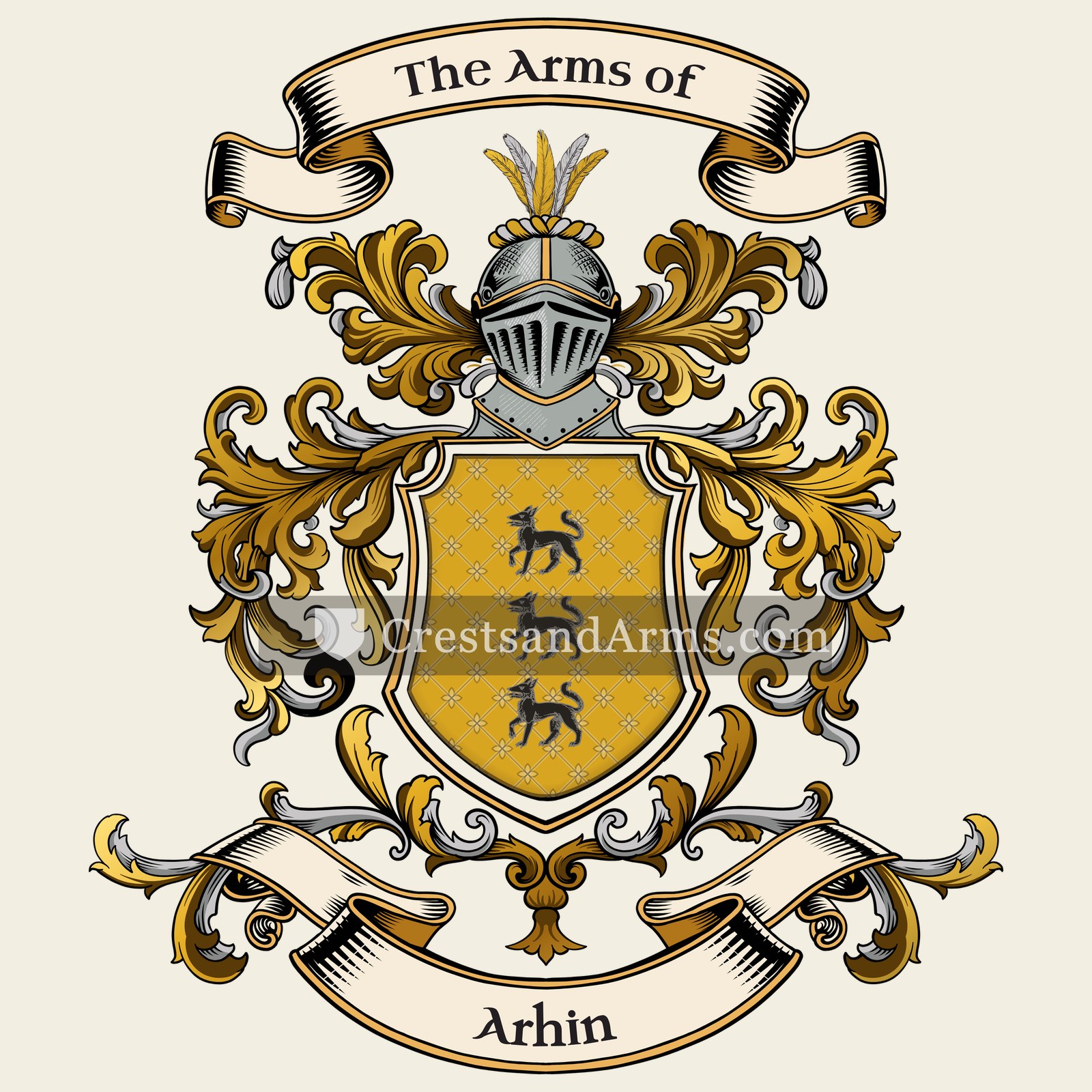
The Arhin arms were recorded in Aragon, c. 1722.
Aragon was mountain and river country in north-eastern Spain, with a strong tradition of small independent landholders. A great many families counted as gentry there, and each one needed a shield to be told apart.
This is where the arms were entered in the register. Families often moved to other parts of the country, so the same name can turn up in more than one region.
The body that granted and recorded arms in Spain in this period.
Philip V of Spain
Sovereign of the period
Philip V of Spain
1714–1724
Reigning in Spain when the Arhin arms are first recorded.
How Arms Worked in Spain
In Spain, a coat of arms was considered a form of property that belonged to the entire family line. These arms were passed down from a father to all his children equally. Younger branches of the family usually kept the original design without needing to add any special marks to distinguish their specific line.
Granting authority
The Cronista Rey de Armas was the official body that regulated and granted coats of arms throughout Spain.
How they got arms
Families often obtained their arms through royal grants or by proving their noble status to the official heraldic authority.
Where arms were recorded
Coats of arms were officially recorded in the registers of the Cronista Rey de Armas starting in 1496.
The family's standing
Recorded among the armigerous families of Aragon.
Origin & History of the Arhin Family in Spain
The family name Arhin carries a history deeply rooted in the rugged landscapes of the Aragon region in northeastern Spain. By the year 1722, records confirm that members of this family were established residents within the kingdom, living during a time when the area was transitioning through significant political and social shifts. The name likely evolved from local linguistic patterns common to the Aragonese people, reflecting the unique cultural blend of the Iberian Peninsula. Families in this region during the early eighteenth century were often tied to the land and local trade, contributing to the development of rural communities that defined the identity of the province. As the family grew, they became part of the long-standing tradition of Aragonese society, which placed a high value on ancestral roots and regional loyalty.
Related Branches & Arms
Root word
Arin
Derived from the Basque word for light or agile.
This name
ArhinA surname of Basque origin often associated with lightness, swiftness, or a specific geographic location.
also spelled
Arinno
Arin
Arinyo
Documented Sources
J. B. Rietstap, Armorial Général, Gouda: G. B. van Goor Zonen, 1884–87
Archivo de la Corona de Aragón, Censo de población de 1722
Ladero Quesada, Miguel Ángel, La población de la Corona de Aragón en la Edad Moderna, 2005
Digital archive packCoat of arms PNG, gold border print PDF, vector SVG and the certificate of authenticity. Sent to your email in minutes.


 wolfReward from long service and hard work
 wolfReward from long service and hard work