Map of France showing where the Arle arms are recorded
The Arle arms were recorded in Provence, c. 1663.
Provence was old country, with towns dating to the Romans and families who traced their land back nearly as far. Its gentry were many and long-settled, and long settlement is what fills a register.
This is where the arms were entered in the register. Families often moved to other parts of the country, so the same name can turn up in more than one region.
The body that granted and recorded arms in France in this period.
Louis XIV of France
Sovereign of the period
Louis XIV of France
1643–1715
Reigning in France when the Arle arms are first recorded.
How Arms Worked in France
In France, a coat of arms was a mark of honor that passed down through the male line to all legitimate descendants. Families often used the same shield without changes to show their shared heritage. If a branch wanted to stand out, they could add a small mark to their shield to show their specific place in the family tree.
Granting authority
The Juge d'armes de France acted as the official authority that regulated and verified coats of arms across the country.
How they got arms
Families typically inherited their arms from ancestors, though they could also receive them through royal grants or by proving their noble status.
Where arms were recorded
Coats of arms were officially recorded in the Armorial Général de France, which began its main collection in the year 1696.
The family's standing
Recorded among the armigerous families of Provence.
Origin & History of the Arle Family in France
The Arle family name is deeply rooted in the historical landscape of Provence, a region in southeastern France known for its distinct cultural identity and long-standing traditions. By the mid-seventeenth century, the family was firmly established in this area, living through a period marked by the consolidation of royal power under King Louis XIV. During this era, families in Provence often played vital roles in local agricultural management or trade, as the region served as a crucial gateway for commerce between the Mediterranean coast and the rest of France. The name itself likely evolved from the local dialect, reflecting the unique linguistic blend of Occitan and French that defined the speech of the Provençal people. As the family navigated the social structures of the 1660s, they were part of a resilient community that maintained strong ties to the land and local parish life, which served as the primary record-keeping institutions of the time.
Meaning of the Arle family crest colors & symbols
Symbols on this shield
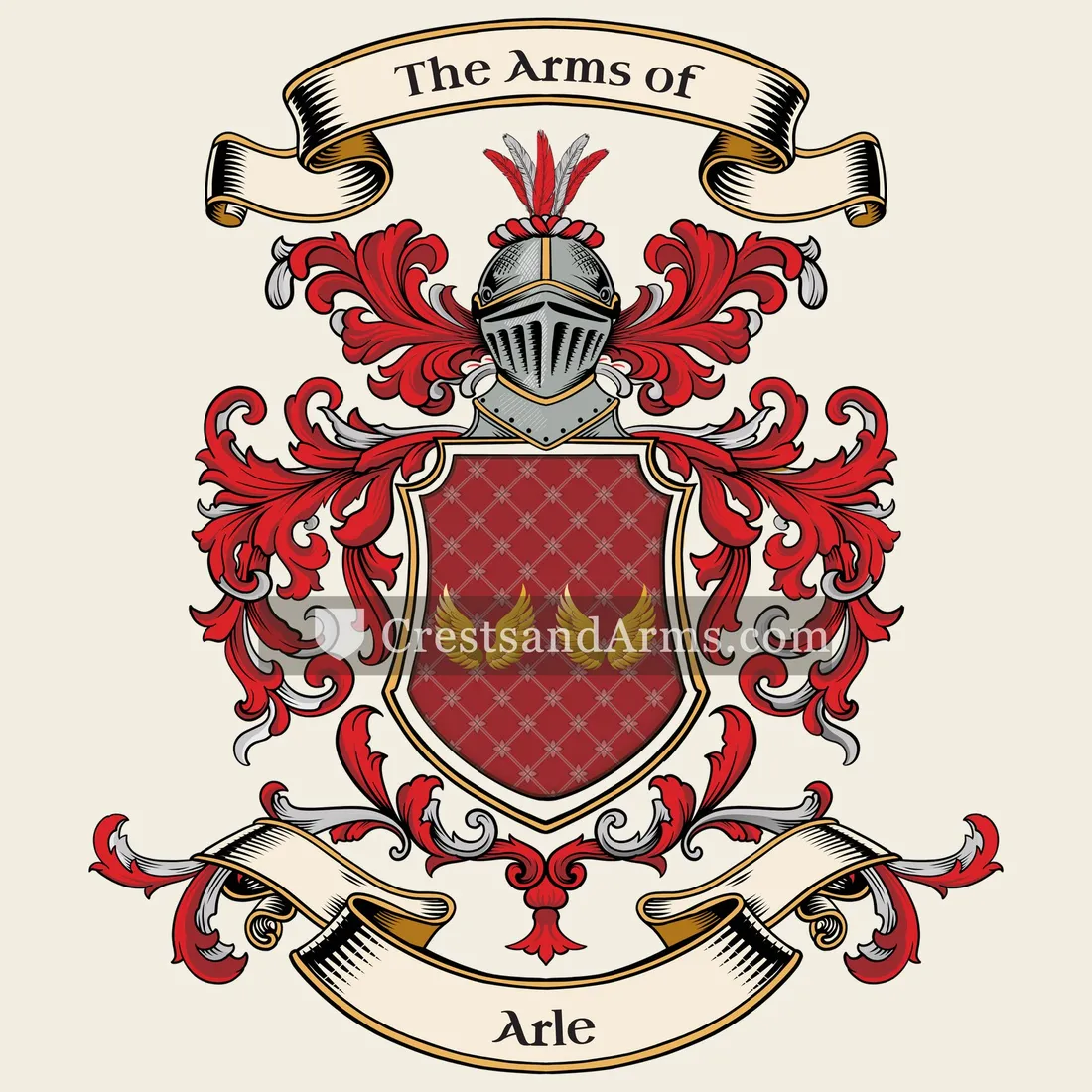
vol / wingsSwiftness and protection
Colours
Red (Gules)Means: Military strength
Gold (Or)Means: Generosity
Historical info
Source
J. B. Rietstap, Armorial Général, Gouda: G. B. van Goor Zonen, 1884–87
Blazon (the actual original written record)
“De gu. à deux vols abaissés d'or.”
Spainc. 1722
Digital archive packCoat of arms PNG, gold border print PDF, vector SVG and the certificate of authenticity. Sent to your email in minutes.
Map of Spain showing where the Arle arms are recorded
The Arle arms were recorded in Spain, c. 1722.
Arms such as these were typically recorded in Castile.
Castile was the heart of Spain and the source of most of its noble families. Land won in the long wars against the Moors was granted out to fighting men, and a man granted land was granted arms along with it.
This is where the arms were entered in the register. Families often moved to other parts of the country, so the same name can turn up in more than one region.
The body that granted and recorded arms in Spain in this period.
Philip V of Spain
Sovereign of the period
Philip V of Spain
1714–1724
Reigning in France when the Arle arms are first recorded.
How Arms Worked in Spain
In Spain, a coat of arms was considered a form of property that belonged to the entire family line. These arms were passed down from a father to all his children equally. Younger branches of the family usually kept the original design without needing to add any special marks to distinguish their specific line.
Granting authority
The Cronista Rey de Armas was the official body that regulated and granted coats of arms throughout Spain.
How they got arms
Families often obtained their arms through royal grants or by proving their noble status to the official heraldic authority.
Where arms were recorded
Coats of arms were officially recorded in the registers of the Cronista Rey de Armas starting in 1496.
The family's standing
Recorded among the armigerous families of Spain.
Origin & History of the Arle Family in Spain
The family name Arle has roots that trace back to the rugged landscapes of Castile during the early eighteenth century. By 1722, records confirm that members of the Arle family were already established within this central region of Spain. During this period, Castile was the heart of the Spanish kingdom, serving as a hub for agriculture, trade, and local governance. Families living there were often deeply connected to the land and the shifting social structures of the time. While the name itself may have evolved from older linguistic roots, its presence in the Castilian archives highlights a family that was part of the foundational fabric of Spanish provincial life. As they navigated the challenges of the 1700s, these early ancestors helped shape the history of their local communities through their daily work and civic participation.
Arle Meaning & Related Branches
Root word
Arles
Derived from the ancient Celtic word for a place near a marsh.
This name
ArleA habitational name referring to someone who originated from the city of Arles in Provence.
also spelled
Arle
Arlis
Arlez
Arls
Arlay
Documented Sources
J. B. Rietstap, Armorial Général, Gouda: G. B. van Goor Zonen, 1884–87
Benoît, Fernand, La Provence et le Comtat Venaissin, 1949
Papon, Jean-Pierre, Histoire générale de Provence, 1777
Archives départementales des Bouches-du-Rhône, Série E (Familles et notaires)
Archives départementales du Vaucluse, État civil et registres paroissiaux
Digital archive packCoat of arms PNG, gold border print PDF, vector SVG and the certificate of authenticity. Sent to your email in minutes.


 bendDefence, and the scarf of a commander
 mulletThe third son, and a divine quality from above
 bendDefence, and the scarf of a commander
 mulletThe third son, and a divine quality from above
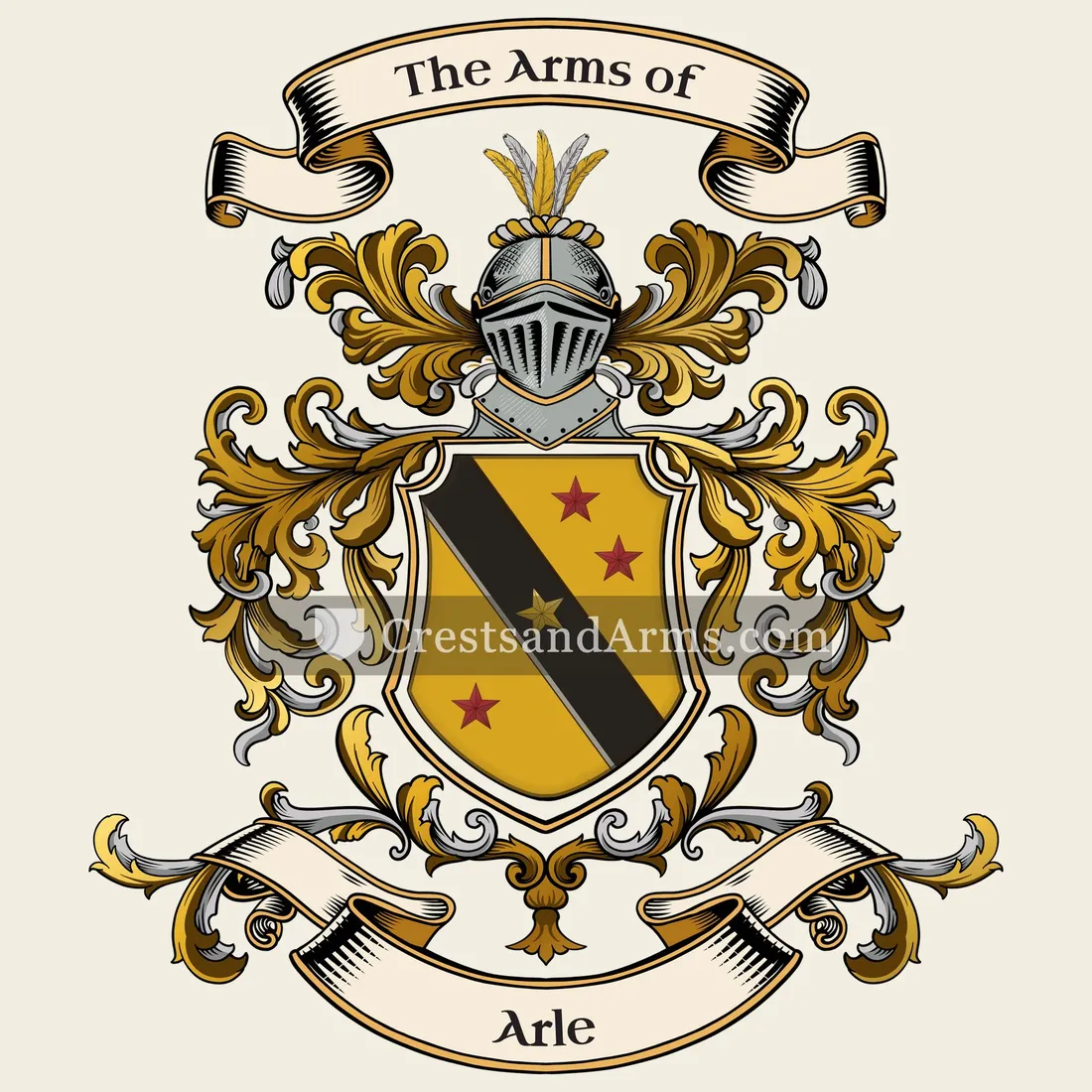


 vol / wingsSwiftness and protection