Map of Germany showing where the Arnold arms are recorded
The Arnold arms were recorded in Germany, c. 1765.
Arms such as these were typically recorded in Bavaria.
Bavaria was a country of old landed families and walled market towns. Estates passed down the same line for centuries, and both the landowners and the leading townsmen kept arms, which is why so many Bavarian names sit in the registers.
This is where the arms were entered in the register. Families often moved to other parts of the country, so the same name can turn up in more than one region.
The body that granted and recorded arms in Germany in this period.
Francis I, Holy Roman Emperor
Sovereign of the period
Francis I, Holy Roman Emperor
1745–1765
Reigning in Germany when the Arnold arms are first recorded.
How Arms Worked in Germany
In the Holy Roman Empire, coats of arms were often granted to individuals by the Emperor or his representatives. These arms were then passed down through the generations to all legitimate descendants of the original holder. Younger branches of a family usually kept the same shield design without needing to change it, as the arms belonged to the entire lineage.
Granting authority
The Holy Roman Emperor held the sole power to grant new coats of arms throughout his vast imperial territories.
How they got arms
Families typically obtained their coats of arms through a formal imperial grant or by proving their noble status to the authorities.
Where arms were recorded
These grants were officially recorded in the Imperial Chancery registers, which began keeping formal records of such honors during the Middle Ages.
The family's standing
Recorded among the armigerous families of Germany.
Origin & History of the Arnold Family in Germany
The surname Arnold has deep roots in the Germanic regions of Europe, where it originated as a given name composed of the Old High German elements *arn*, meaning eagle, and *wald*, meaning power or ruler. By the time the family was documented in Bavaria in 1765, the name had long transitioned from a personal title into a hereditary surname used to identify specific family lineages. During this era, many families in the Bavarian region were deeply tied to the land and local trade guilds, which helped stabilize the use of fixed surnames for tax and census purposes. Because the name was associated with the strength of the eagle, it was a popular choice among families who valued leadership and resilience. As the family established itself in 18th-century Bavaria, they became part of a larger social shift where surnames became essential for tracking property rights and legal standing within the Holy Roman Empire.
Meaning of the Arnold family crest colors & symbols
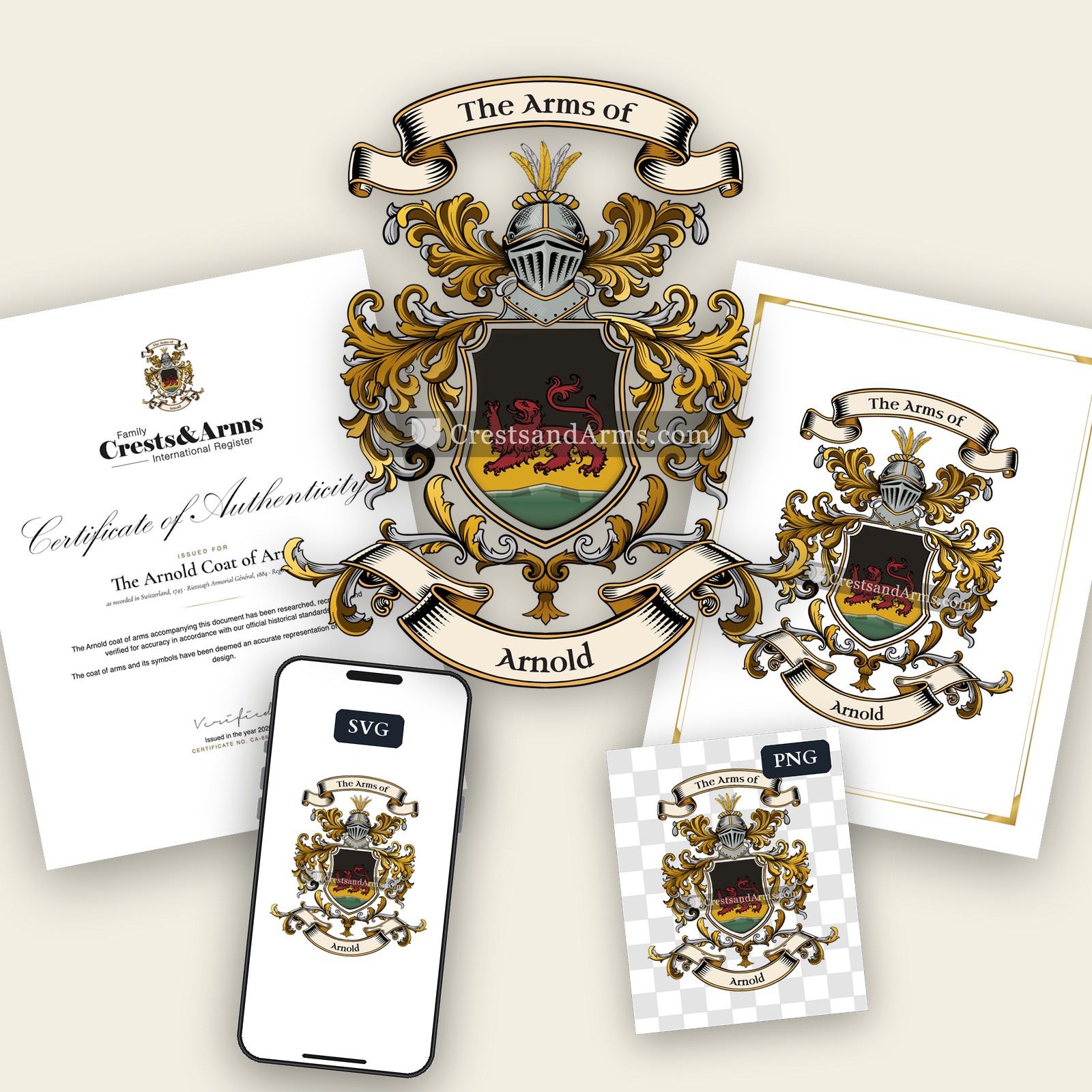
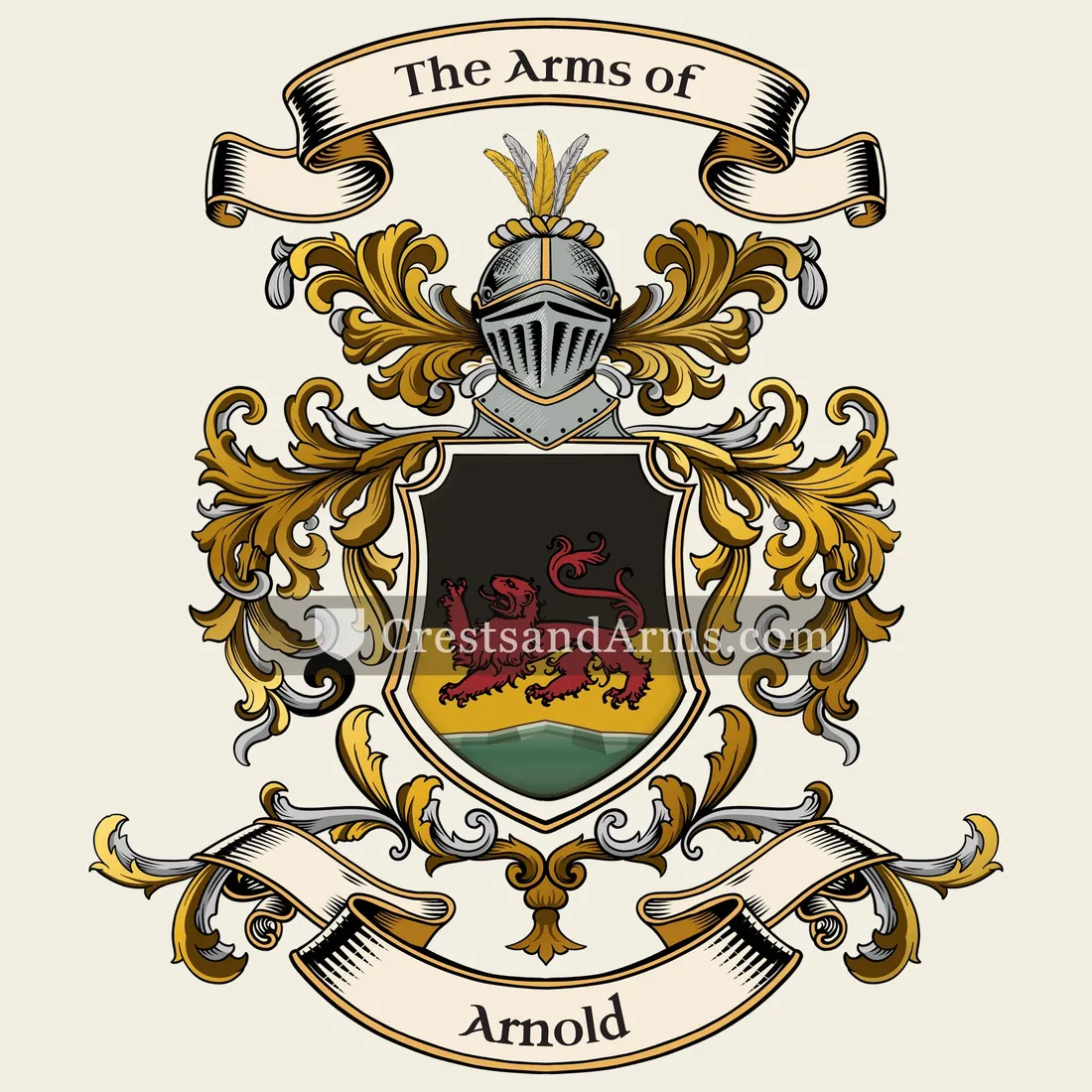
Symbols on this shield
mountThe ground held, and steadfastness upon it
lionCourage, strength and royalty
Colours
Black (Sable)Means: Constancy
Gold (Or)Means: Generosity
Green (Vert)Means: Hope
Red (Gules)Means: Military strength
Historical info
Source
J. B. Rietstap, Armorial Général, Gouda: G. B. van Goor Zonen, 1884–87
Blazon (the actual original written record)
“Coupé de sa. sur or; au lion de gu., br. sur le coupé, soutenu d'un tertre de sin., en p., et tenant de ses pattes un caducée d'arg. Brl. de sa. et d'or. C.: le lion, iss. L. d'or et de sa.”
SwitzerlandBâle, c. 1745
Digital archive packCoat of arms PNG, gold border print PDF, vector SVG and the certificate of authenticity. Sent to your email in minutes.
Map of Switzerland showing where the Arnold arms are recorded
The Arnold arms were recorded in Bâle, c. 1745.
This is where the arms were entered in the register. Families often moved to other parts of the country, so the same name can turn up in more than one region.
The body that granted and recorded arms in Switzerland in this period.
How Arms Worked in Switzerland
In Switzerland, coats of arms were not restricted to the nobility and were often adopted by common citizens and families. These symbols were passed down through generations to show family identity. When branches of a family grew, they often changed small details of the design to distinguish their own line from the original group.
Granting authority
Cantonal and civic authorities managed the use of coats of arms within their specific regions and local jurisdictions.
How they got arms
Families typically assumed their own coats of arms based on local custom rather than receiving them from a central monarch.
Where arms were recorded
Arms were recorded in various cantonal and civic registers starting from the fourteenth century throughout the Swiss region.
The family's standing
Recorded among the armigerous families of Switzerland.
Origin & History of the Arnold Family in Switzerland
The surname Arnold has deep roots in the Germanic regions of Europe, functioning as a patronymic name that signifies strength and power. The name is derived from the Old High German words for eagle and ruler, suggesting that early ancestors were viewed as leaders or protectors within their communities. By the time members of the family were documented in Basel in 1745, the name had already been established in Swiss society for several centuries. During this period, families in Basel often played active roles in the city's growing trade networks and guild systems. Because Basel served as a major crossroads for commerce and culture along the Rhine River, the Arnold family likely integrated into the urban economy as skilled craftspeople or merchants. This transition from rural life to city living helped the family establish a lasting presence in the region, allowing them to contribute to the civic and social development of the Swiss Confederation throughout the eighteenth century.
Meaning of the Arnold family crest colors & symbols
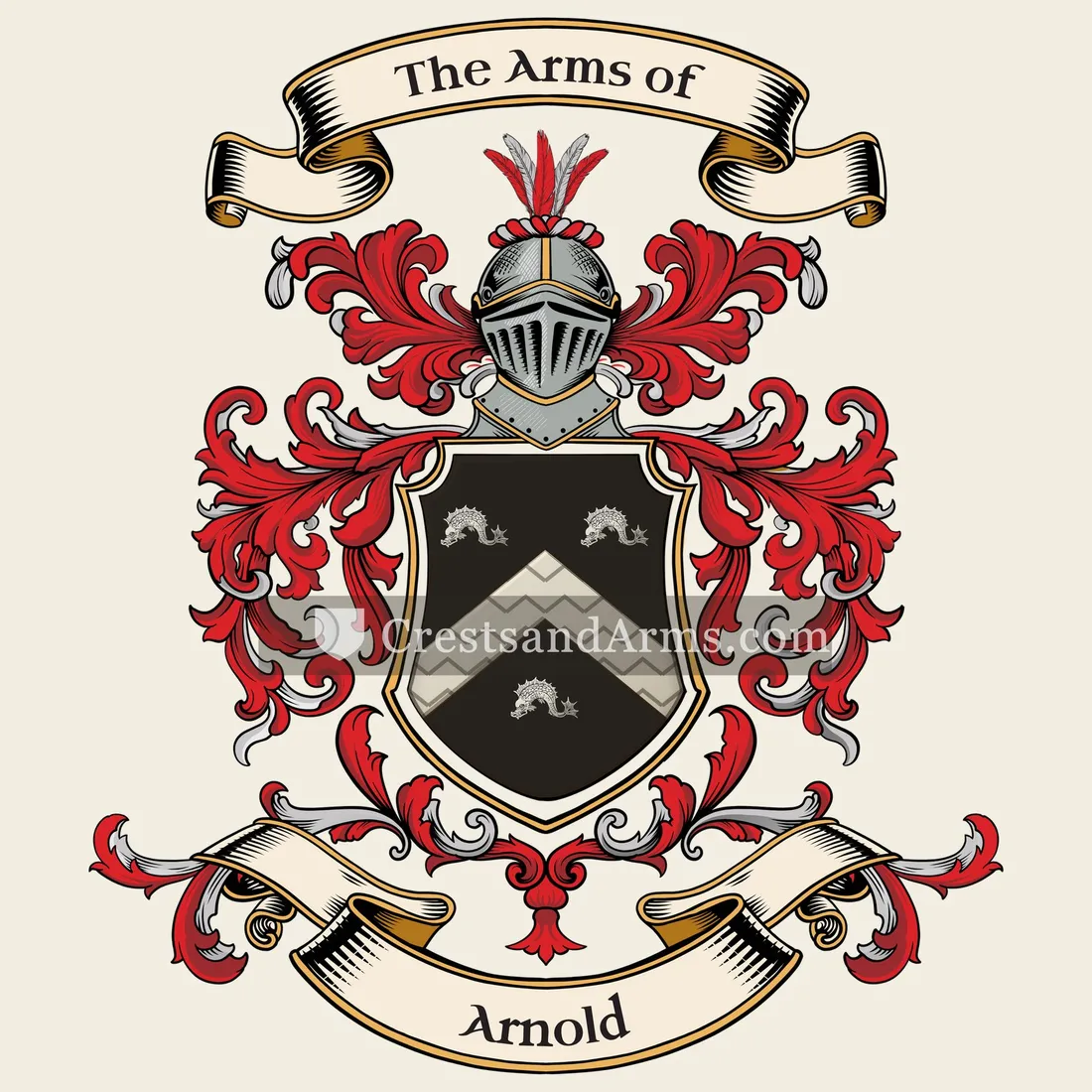
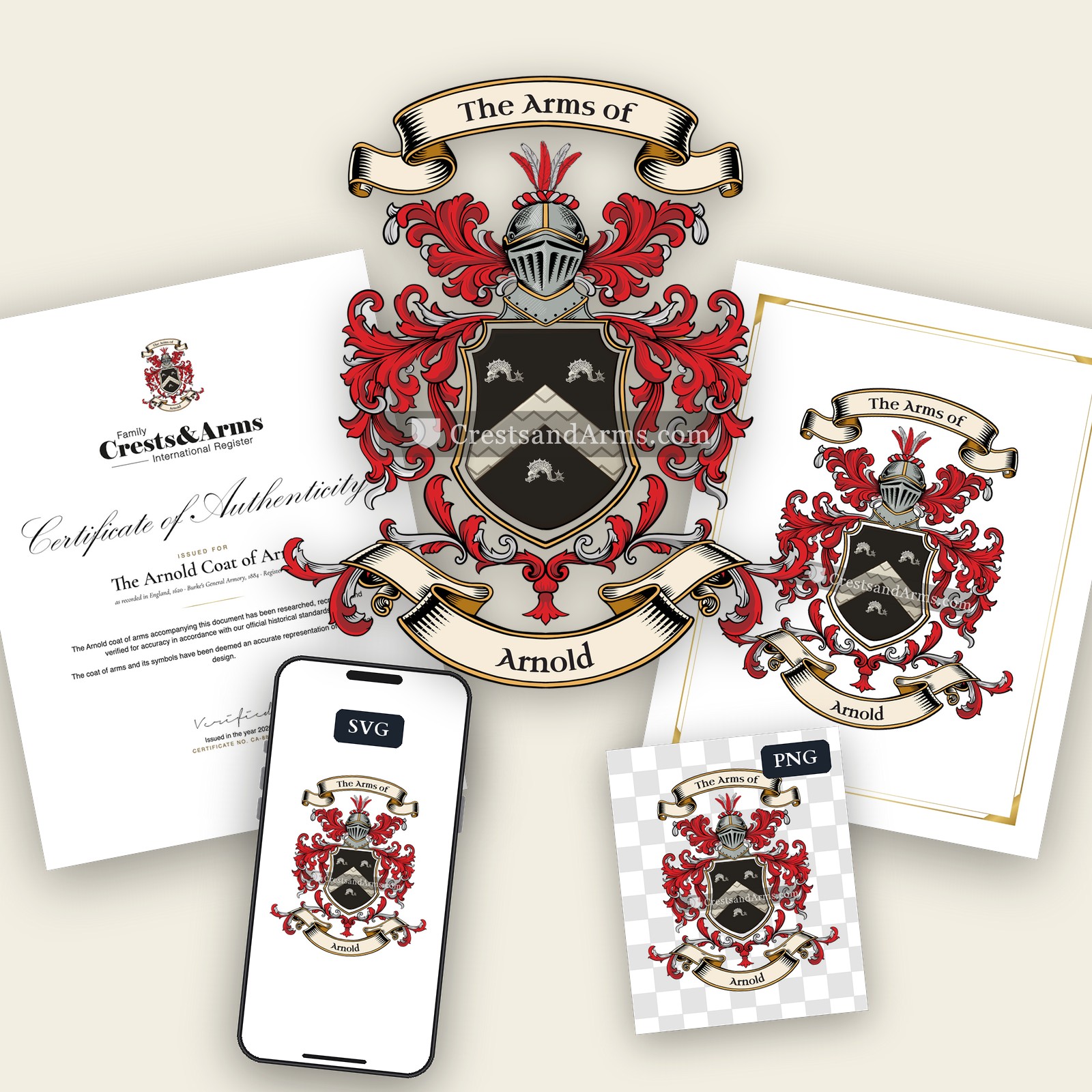
Symbols on this shield
chevronProtection, and faithful service completed
dolphinSwiftness, charity and love
Colours
Black (Sable)Means: Constancy
Silver (Argent)Means: Peace and sincerity
Historical info
Source
Sir Bernard Burke, The General Armory of England, Scotland, Ireland and Wales, London: Harrison & Sons, 1884
Blazon (the actual original written record)
“Sa. a chev. betw. three dolphins embowed ar”
DevonshireDevonshire, c. 1620
Digital archive packCoat of arms PNG, gold border print PDF, vector SVG and the certificate of authenticity. Sent to your email in minutes.
Map of England showing where the Arnold arms are recorded
The Arnold arms were recorded in Devonshire, c. 1620.
This is where the arms were entered in the register. Families often moved to other parts of the country, so the same name can turn up in more than one region.
The body that granted and recorded arms in England in this period.
James VI and I
Sovereign of the period
James VI and I
1603–1625
Reigning in Germany when the Arnold arms are first recorded.
How Arms Worked in England
English heraldry allowed arms to be shared by all legitimate descendants of the original owner. These symbols were treated as personal property that moved through the generations to all children. While the eldest son kept the original design, other family members could use the same shield without needing to change it or register their own unique versions.
Granting authority
The College of Arms in London has regulated the use of coats of arms throughout England and Wales since 1484.
How they got arms
Families typically obtained their coats of arms through a formal grant from the Crown or by proving their ancient right to them.
Where arms were recorded
All official coats of arms are recorded in the registers kept at the College of Arms, which date back to the fifteenth century.
The family's standing
Recorded among the armigerous families of Devonshire.
Origin & History of the Arnold Family in England
The surname Arnold traces its roots back to the Germanic personal name Arnwald, which combines the words for eagle and power. After the Norman Conquest of 1066, this name became popular among the ruling classes in England and eventually evolved into a hereditary surname. By the early 17th century, the family had established a notable presence in the southwestern county of Devonshire. Records from 1620 confirm that members of the Arnold family were living in this region, where they likely worked as farmers or tradespeople during a time of significant social change. These early ancestors were part of a growing class of English families who were beginning to settle into permanent communities, helping to shape the local culture and economy of the West Country long before many of their descendants eventually looked toward the Americas.
Arnold Meaning & Related Branches
Root word
Arnwald
Derived from Germanic elements meaning eagle and power or ruler.
This name
ArnoldAn ancient name signifying the strength and dominance of an eagle.
also spelled
Arnald
Arnauld
Arnoll
Related arms
Cappellensimilar arms
van Merendrésimilar arms
Arnald, or Arnauldvariant spelling
Normanrecorded with Arnold, same area
Documented Sources
J. B. Rietstap, Armorial Général, Gouda: G. B. van Goor Zonen, 1884–87
Bahlow, Hans, Deutsches Namenlexikon: Familien- und Vornamen nach Ursprung und Sinn erklärt, 1967
Heintze, Albert, Die deutschen Familiennamen: geschichtlich, geographisch, sprachlich, 1903
Bayerisches Hauptstaatsarchiv, General-Landes-Direktion, Steuer- und Katasterunterlagen, 1765
Digital archive packCoat of arms PNG, gold border print PDF, vector SVG and the certificate of authenticity. Sent to your email in minutes.


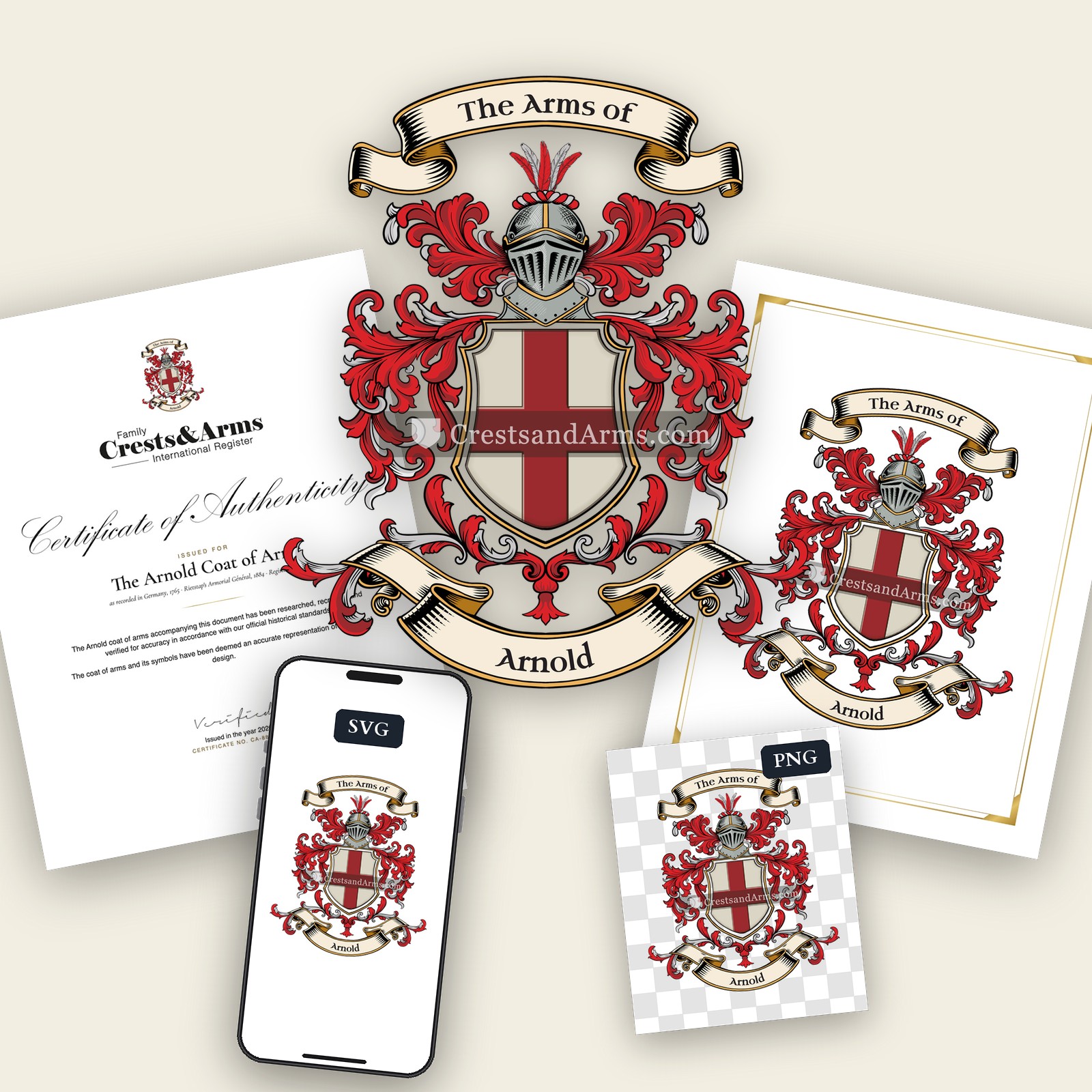
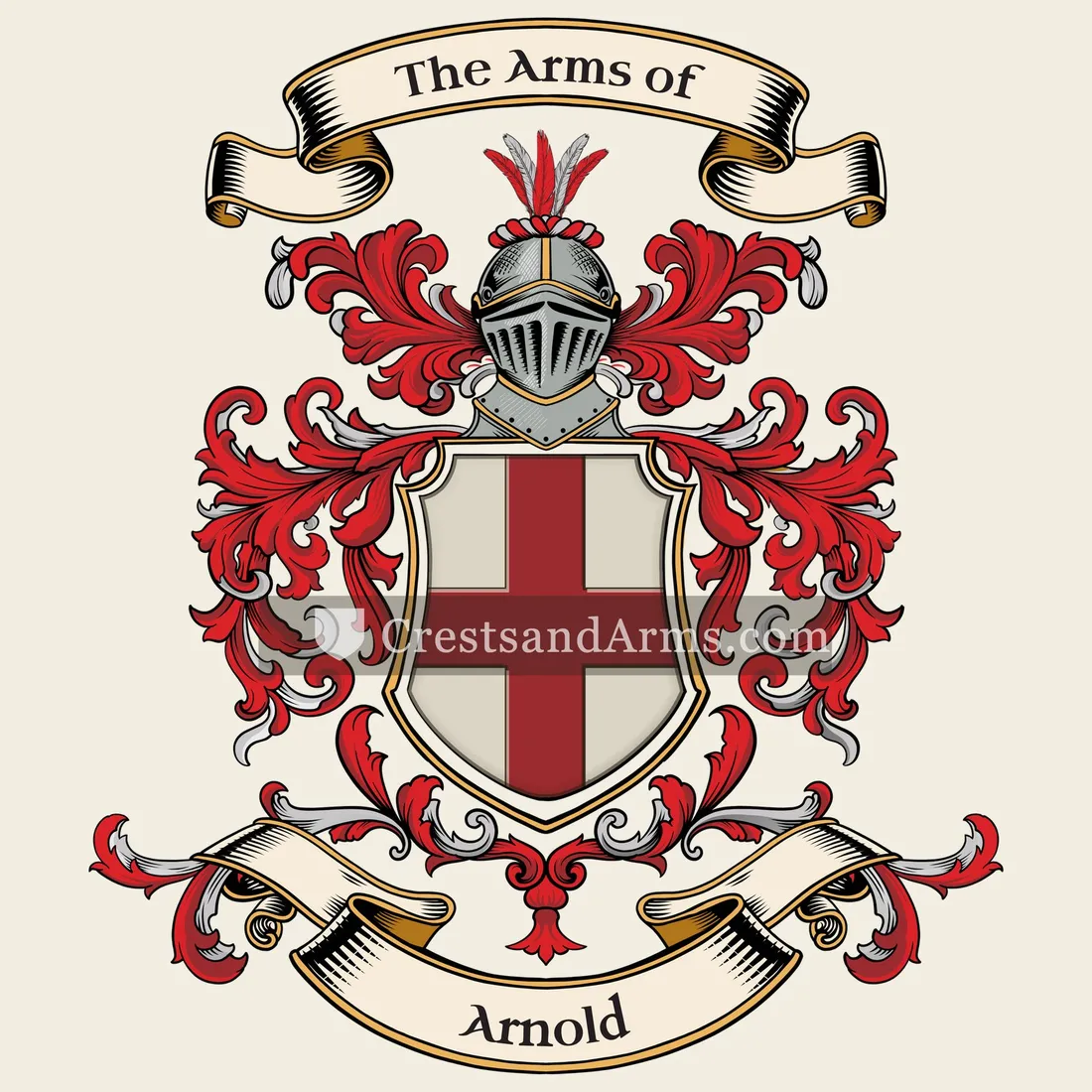
 cross symbolChristian faith and service
 cross symbolChristian faith and service


 mountThe ground held, and steadfastness upon it
 lionCourage, strength and royalty

 chevronProtection, and faithful service completed
 dolphinSwiftness, charity and love