Map of Britain showing where the Atom arms are recorded
The Atom arms were recorded in Lincolnshire, c. 1700.
This is where the arms were entered in the register. Families often moved to other parts of the country, so the same name can turn up in more than one region.
The body that granted and recorded arms in Britain in this period.
William III of England
Sovereign of the period
William III of England
1694–1702
Reigning in Britain when the Atom arms are first recorded.
How Arms Worked in Britain
English heraldry allowed arms to be shared by all legitimate descendants of the original owner. These symbols were treated as personal property that moved through the generations to all children. While the eldest son kept the original design, other family members could use the same shield without needing to change it or register their own unique versions.
Granting authority
The College of Arms in London has regulated the use of coats of arms throughout England and Wales since 1484.
How they got arms
Families typically obtained their coats of arms through a formal grant from the Crown or by proving their ancient right to them.
Where arms were recorded
All official coats of arms are recorded in the registers kept at the College of Arms, which date back to the fifteenth century.
The family's standing
Recorded among the armigerous families of Lincolnshire.
Origin & History of the Atom Family in Britain
The family name Atom appears in the historical records of Lincolnshire during the early 18th century, a time when the region was defined by its vast agricultural landscapes and market towns. During this period, the name likely emerged as a localized variant or a phonetic spelling of older English surnames, reflecting the way names were often recorded by clerks based on how they sounded in local dialects. Families living in Lincolnshire in 1700 were often tied to the land, working as tenant farmers or tradespeople in the bustling wool trade that dominated the county. As the family established its roots in this rural setting, they became part of the social fabric of the East Midlands, contributing to the growth of local parish communities. While the name remains rare, its presence in early church registers and tax records provides a glimpse into the lives of ordinary people who helped shape the history of the English countryside.
Meaning of the Atom family crest colors & symbols
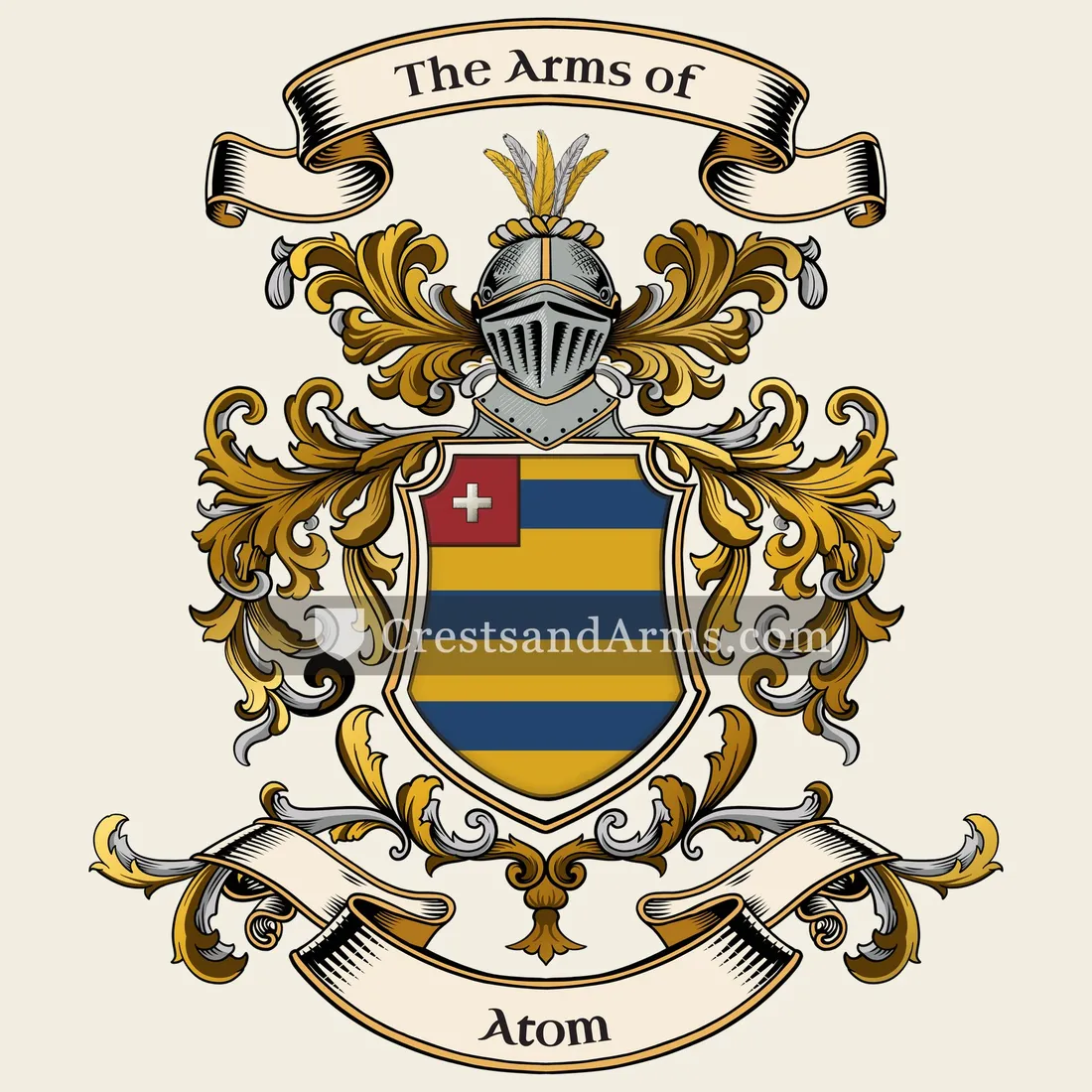
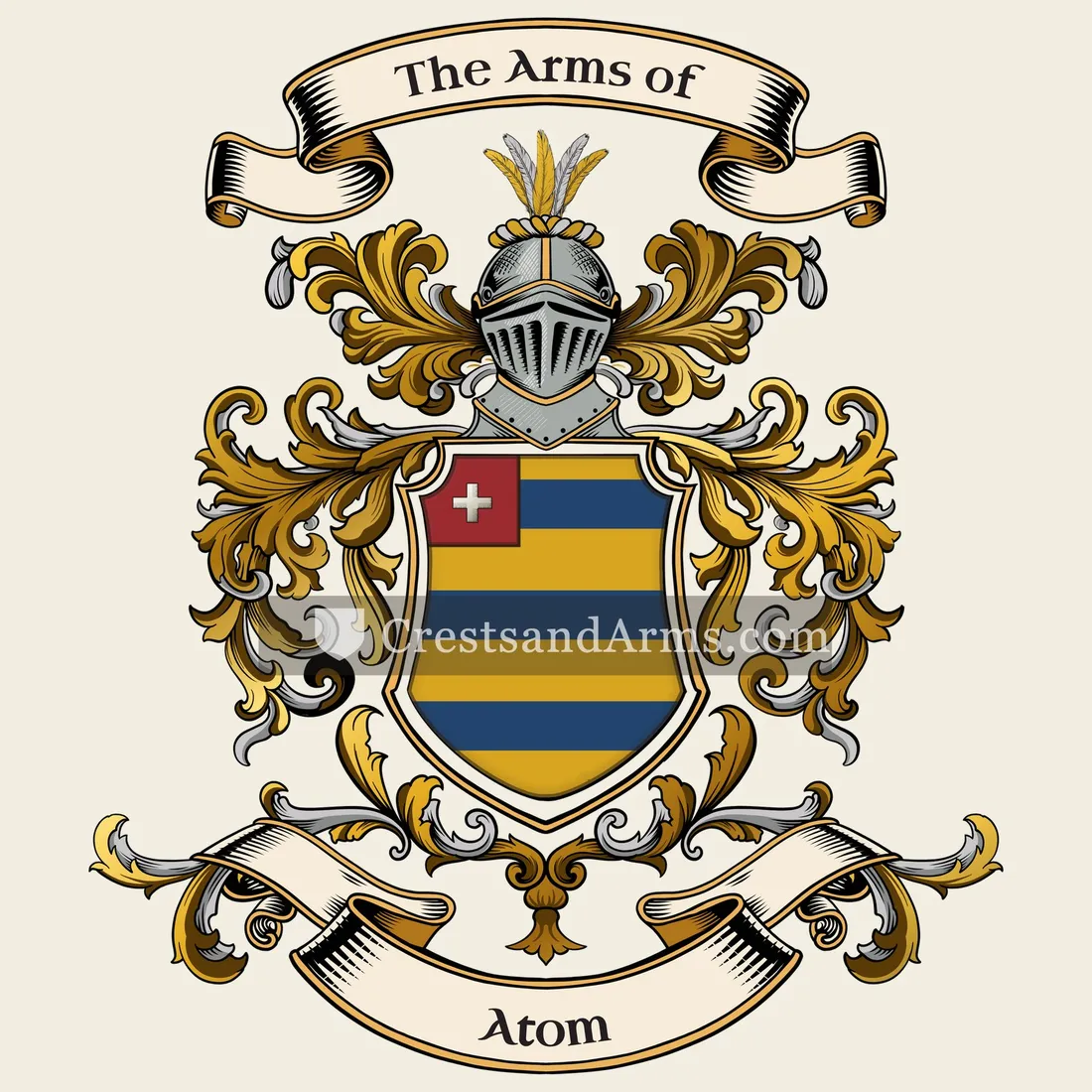
Symbols on this shield
cantonA mark of honour granted by the sovereign
cross symbolChristian faith and service
Colours
Gold (Or)Means: Generosity
Blue (Azure)Means: Loyalty and truth
Red (Gules)Means: Military strength
Silver (Argent)Means: Peace and sincerity
Historical info
Source
Sir Bernard Burke, The General Armory of England, Scotland, Ireland and Wales, London: Harrison & Sons, 1884
Blazon (the actual original written record)
“Or, three bars az. on a canton gu. a cross patonce ar”
Englandc. 1324
Digital archive packCoat of arms PNG, gold border print PDF, vector SVG and the certificate of authenticity. Sent to your email in minutes.
Map of England showing where the Atom arms are recorded
The Atom arms were recorded in England, c. 1324.
Arms such as these were typically recorded in York.
Yorkshire is the largest of the English counties, and it held more gentry families than any other. Land there was split among a great many households rather than a few, so a great many of them carried arms.
This is where the arms were entered in the register. Families often moved to other parts of the country, so the same name can turn up in more than one region.
The body that granted and recorded arms in England in this period.
Edward II of England
Sovereign of the period
Edward II of England
1307–1327
Reigning in Britain when the Atom arms are first recorded.
How Arms Worked in England
English heraldry allowed arms to be shared by all legitimate descendants of the original owner. These symbols were treated as personal property that moved through the generations to all children. While the eldest son kept the original design, other family members could use the same shield without needing to change it or register their own unique versions.
Granting authority
The College of Arms in London has regulated the use of coats of arms throughout England and Wales since 1484.
How they got arms
Families typically obtained their coats of arms through a formal grant from the Crown or by proving their ancient right to them.
Where arms were recorded
All official coats of arms are recorded in the registers kept at the College of Arms, which date back to the fifteenth century.
The family's standing
Recorded among the armigerous families of England.
Origin & History of the Atom Family in England
The family name Atom appears in the historical record of Northern England during the early fourteenth century, specifically appearing in documents from York in 1324. During this period, surnames were often adopted based on a person’s occupation, a specific physical trait, or the place where they lived. In the medieval era, the city of York served as a vital center for trade and administration, making it a likely place for a family to establish roots and appear in official tax or legal rolls. While the name is rare, its presence in such a prominent northern city suggests that the early members of the family were integrated into the local economy of the Middle Ages. These early individuals likely lived through the social shifts of the fourteenth century, including the expansion of urban life and the gradual transition from a feudal system to a more complex society of merchants and craftsmen.
Atom Meaning & Related Branches
Root word
Adam
Hebrew for man or earth
This name
AtomA patronymic surname derived from the biblical name meaning son of Adam
also spelled
Attone
Documented Sources
J. B. Rietstap, Armorial Général, Gouda: G. B. van Goor Zonen, 1884–87
Hey, David. Family Names and Family History. 2000
Reaney, P.H. A Dictionary of British Surnames. 1958
Lincolnshire Archives, Bishop's Transcripts of Parish Registers
The National Archives, Land Tax Assessments for Lincolnshire
Digital archive packCoat of arms PNG, gold border print PDF, vector SVG and the certificate of authenticity. Sent to your email in minutes.


 fessThe military belt, and readiness to serve
 cantonA mark of honour granted by the sovereign
 cross symbolChristian faith and service
 fessThe military belt, and readiness to serve
 cantonA mark of honour granted by the sovereign
 cross symbolChristian faith and service