Map of France showing where the Aveiro arms are recorded
The Aveiro arms were recorded in Lorraine, c. 1536.
Lorraine sat on the border between France and the German lands, and border country bred soldiers. Families here held small estates and served in arms, and a fighting man was exactly the sort who carried a shield of his own.
This is where the arms were entered in the register. Families often moved to other parts of the country, so the same name can turn up in more than one region.
The body that granted and recorded arms in France in this period.
Francis I of France
Sovereign of the period
Francis I of France
1515–1547
Reigning in France when the Aveiro arms are first recorded.
How Arms Worked in France
In France, a coat of arms was a mark of honor that passed down through the male line to all legitimate descendants. Families often used the same shield without changes to show their shared heritage. If a branch wanted to stand out, they could add a small mark to their shield to show their specific place in the family tree.
Granting authority
The Juge d'armes de France acted as the official authority that regulated and verified coats of arms across the country.
How they got arms
Families typically inherited their arms from ancestors, though they could also receive them through royal grants or by proving their noble status.
Where arms were recorded
Coats of arms were officially recorded in the Armorial Général de France, which began its main collection in the year 1696.
The family's standing
Recorded among the armigerous families of Lorraine.
Origin & History of the Aveiro Family in France
The family name Aveiro carries a rich history that traces back to the sixteenth century in the region of Lorraine. By 1536, records confirm that members of the family were already established within this territory, which sat at a busy crossroads of European culture and trade. The name itself is often associated with geographical roots, as it shares a title with a prominent coastal city in Portugal. Historians suggest that families during this era frequently adopted names based on their ancestral homes or the specific lands they managed. As the family lived in Lorraine, they likely participated in the local customs and social structures of the period, helping to shape the community through their work and daily interactions. Over time, the name became a marker of their specific lineage, preserving their identity as they moved through the changing political landscape of early modern Europe.
Aveiro Meaning & Related Branches
Root word
Avis
Latin term for a bird.
This name
AveiroA habitational name derived from a place name meaning a location frequented by birds.
also spelled
Avire
Avirs
Avirr
Documented Sources
J. B. Rietstap, Armorial Général, Gouda: G. B. van Goor Zonen, 1884–87
Archives départementales de Meurthe-et-Moselle, Série B: Cours et juridictions (1536)
Bastien, Michel, Histoire de la Lorraine: Des origines à nos jours, 1998
Lepage, Henri, Les communes de la Meurthe: Journal historique des villes, bourgs, villages, hameaux et censes, 1853
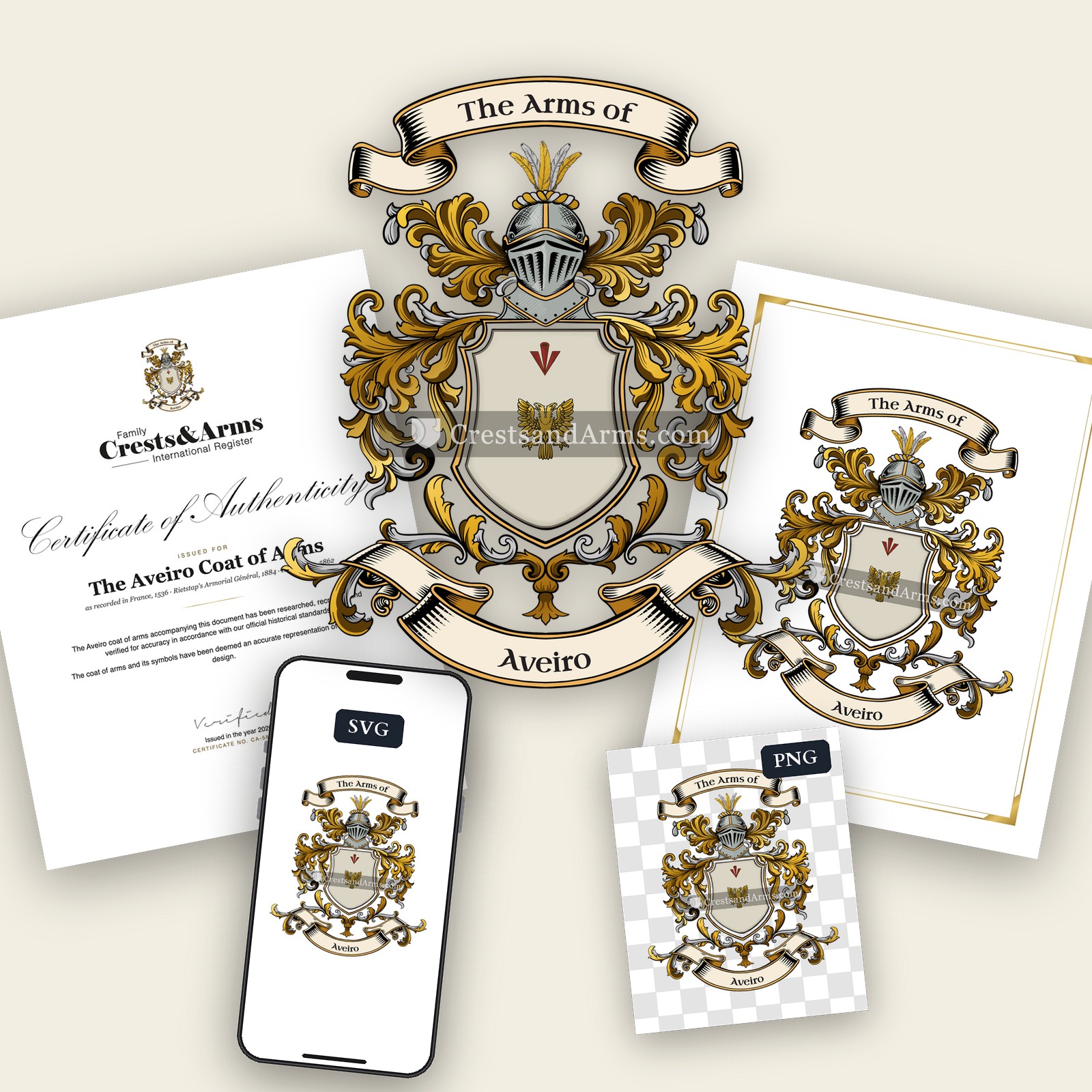
Digital archive packCoat of arms PNG, gold border print PDF, vector SVG and the certificate of authenticity. Sent to your email in minutes.


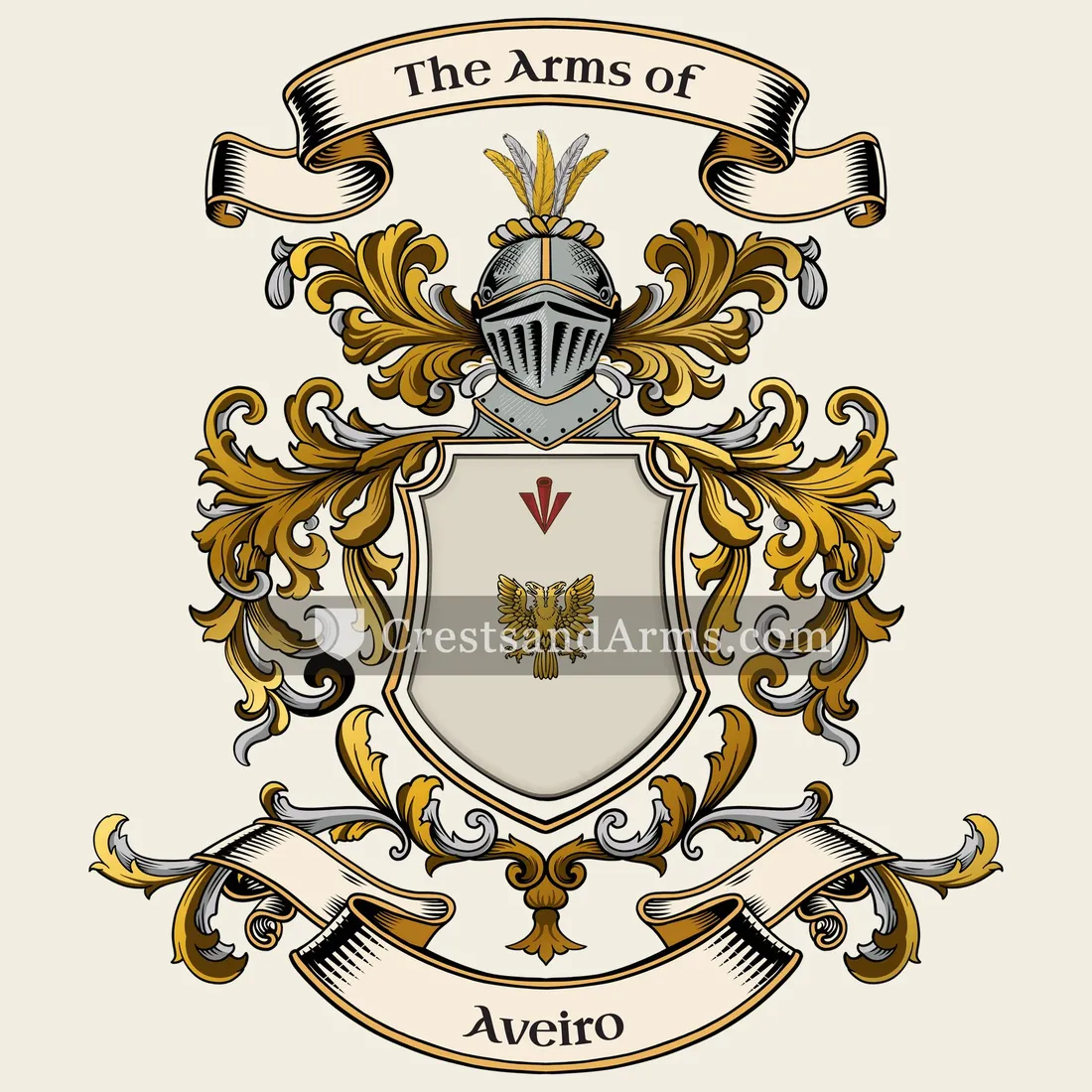
 eagleNobility, strength and a keen mind
 arrowReadiness for battle, and affliction endured
 eagleNobility, strength and a keen mind
 arrowReadiness for battle, and affliction endured