Map of Spain showing where the Avellaneda arms are recorded
The Avellaneda arms were recorded in Catalonia, c. 1722.
Catalonia lived by sea trade, and its merchant houses were as powerful as its landowners. Both sorts of family took arms, and Barcelona kept records of the houses entitled to bear them.
This is where the arms were entered in the register. Families often moved to other parts of the country, so the same name can turn up in more than one region.
The body that granted and recorded arms in Spain in this period.
Philip V of Spain
Sovereign of the period
Philip V of Spain
1714–1724
Reigning in Spain when the Avellaneda arms are first recorded.
How Arms Worked in Spain
In Spain, a coat of arms was considered a form of property that belonged to the entire family line. These arms were passed down from a father to all his children equally. Younger branches of the family usually kept the original design without needing to add any special marks to distinguish their specific line.
Granting authority
The Cronista Rey de Armas was the official body that regulated and granted coats of arms throughout Spain.
How they got arms
Families often obtained their arms through royal grants or by proving their noble status to the official heraldic authority.
Where arms were recorded
Coats of arms were officially recorded in the registers of the Cronista Rey de Armas starting in 1496.
The family's standing
Recorded among the armigerous families of Catalonia.
Origin & History of the Avellaneda Family in Spain
The surname Avellaneda finds its roots in the rugged landscape of northern Spain, specifically originating from the Basque Country and the province of Álava. The name is topographic in nature, derived from the Spanish word "avellano," which refers to a hazelnut tree. Historically, this suggests that the earliest families to adopt the name likely lived near a prominent grove or a specific hazelnut orchard that served as a local landmark. By the early 18th century, members of the family had migrated eastward into the Catalonia region, where records confirm their presence by 1722. During this era, the family moved through a Spain defined by shifting political borders and the transition between different royal dynasties. Their movement from the northern mountains toward the Mediterranean coast reflects the broader patterns of internal migration and social mobility that characterized Spanish life during the Enlightenment period.
Coat of Arms & Family Crest Details
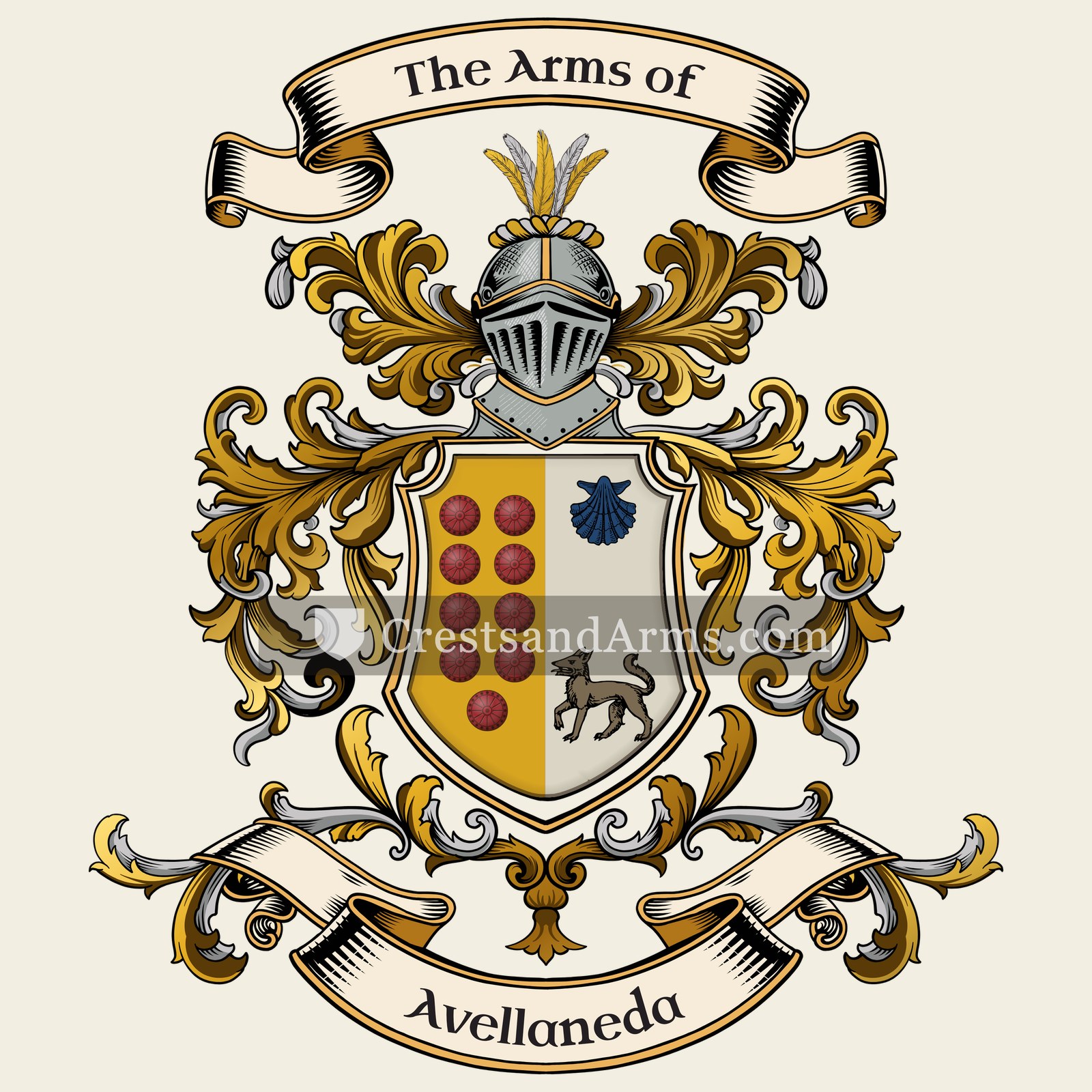
Symbols on this shield
roundelA coin, and one who has been to the crusades
escallopThe pilgrim's shell, and a long journey made
wolfReward from long service and hard work
Colours
Gold (Or)Means: Generosity
Silver (Argent)Means: Peace and sincerity
Red (Gules)Means: Military strength
Blue (Azure)Means: Loyalty and truth
Historical info
Source
J. B. Rietstap, Armorial Général, Gouda: G. B. van Goor Zonen, 1884–87
Blazon (the actual original written record)
“Parti: au 1 d'or à neuf tourt. de gu., 2, 2, 2, 2 et 1; au 2 d'arg. à une coquille d'azur en chef et un loup pass. au nat., en p., ravissant un mouton.”
Austriac. 1772
Digital archive packCoat of arms PNG, gold border print PDF, vector SVG and the certificate of authenticity. Sent to your email in minutes.
Map of Austria showing where the Avellaneda arms are recorded
The Avellaneda arms were recorded in Austria, c. 1772.
Arms such as these were typically recorded in Tyrol.
Tyrol was mountain country in western Austria, where the valleys were held by families who had been there a very long time. Old tenure counted for more than money, and old families carried arms.
This is where the arms were entered in the register. Families often moved to other parts of the country, so the same name can turn up in more than one region.
Region
Tyrol
First recorded
1772
Granting Authority for the Avellaneda Arms
Imperial and Royal chancery
Sodacan · CC BY-SA 3.0
The body that granted and recorded arms in Austria in this period.
Joseph II, Holy Roman Emperor
Sovereign of the period
Joseph II, Holy Roman Emperor
1765–1790
Reigning in Spain when the Avellaneda arms are first recorded.
How Arms Worked in Austria
Austrian coats of arms were often linked directly to noble titles granted by the Emperor. These symbols belonged to the entire family line rather than just one individual. When a family grew, new branches kept the original design without needing to change it. This system allowed all members of a noble house to share the same identity across many generations.
Granting authority
The Imperial and Royal chancery managed all heraldic matters and controlled the official granting of arms throughout the Austrian lands.
How they got arms
Families typically received their arms through a formal imperial decree that often accompanied the elevation of a person to noble status.
Where arms were recorded
Official records of these grants were kept in the Imperial Register of Nobility which began its formal documentation process in 1453.
The family's standing
Recorded among the armigerous families of Austria.
Origin & History of the Avellaneda Family in Austria
The history of the Avellaneda family in the Austrian region of Tyrol begins with documented records from 1772, marking a significant presence in the alpine landscape during the late eighteenth century. While the name itself carries roots that trace back to the Iberian Peninsula, its appearance in Tyrol suggests a period of migration and integration into the social fabric of the Habsburg Empire. During this era, families moving into the mountainous territories of Tyrol often adapted to the local administrative systems, which were strictly managed by imperial census takers and church officials. The presence of the family in this region indicates that they were likely involved in the regional economy or administrative service, as Tyrol served as a vital crossroads for trade and travel between northern and southern Europe. By settling in this rugged terrain, the early members of the family became part of a diverse population that helped shape the cultural character of the Austrian Alps before the major political upheavals of the nineteenth century.
Avellaneda Meaning & Related Branches
Root word
avellana
The Spanish word for hazelnut derived from the Latin abellana.
This name
AvellanedaA topographic surname referring to a place where hazelnut trees grow.
also spelled
Avellanede
Avellaned
Avellanedaa
Avelaneda
Documented Sources
J. B. Rietstap, Armorial Général, Gouda: G. B. van Goor Zonen, 1884–87
Moll, Francesc de Borja. Els llinatges catalans. 1959
Faure, Roberto, Ribes, María Asunción, and García, Antonio. Diccionario de apellidos españoles. 2001
Archivo de la Corona de Aragón. Cancillería Real, Registros
Digital archive packCoat of arms PNG, gold border print PDF, vector SVG and the certificate of authenticity. Sent to your email in minutes.


 roundelA coin, and one who has been to the crusades
 wolfReward from long service and hard work
 roundelA coin, and one who has been to the crusades
 wolfReward from long service and hard work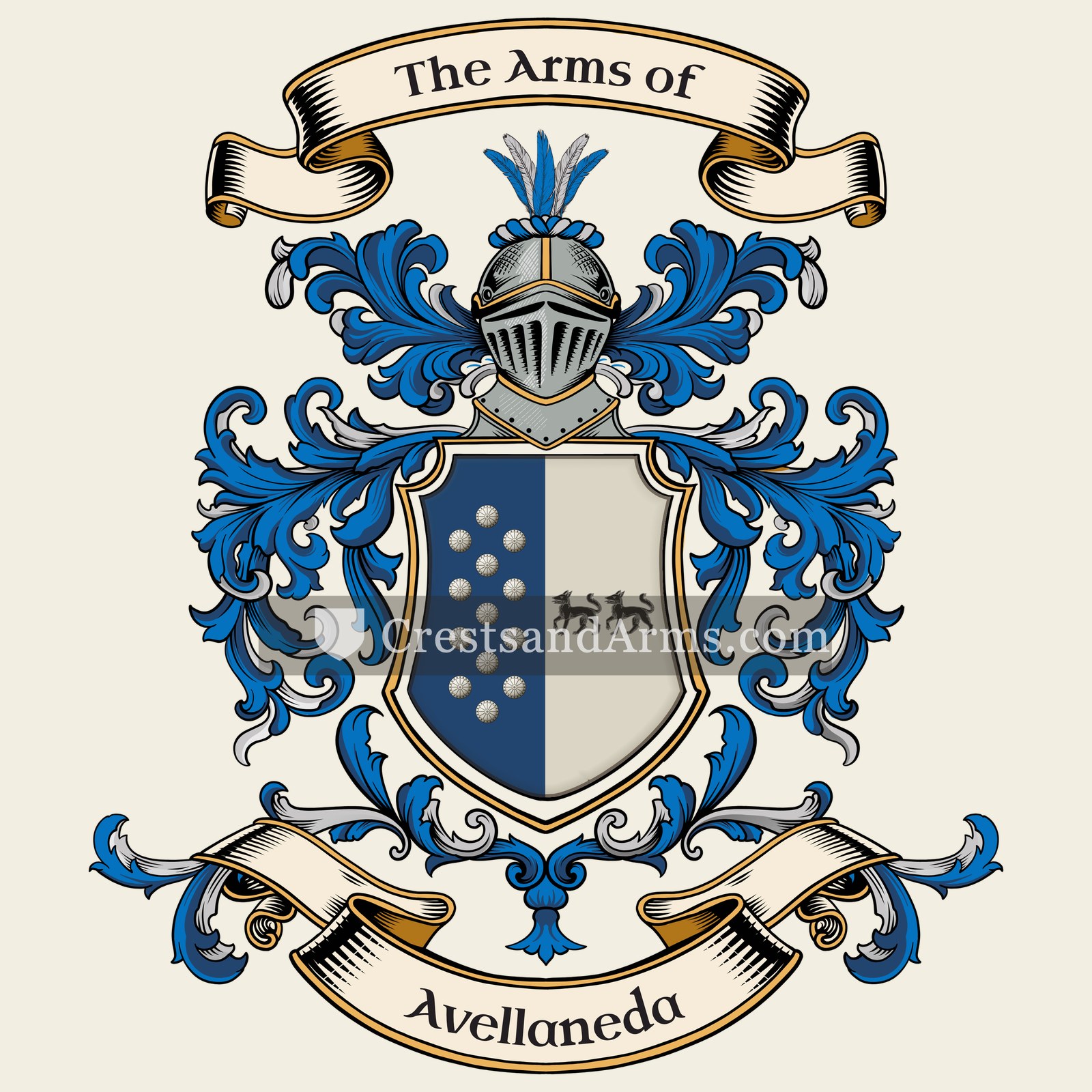


 escallopThe pilgrim's shell, and a long journey made