Map of Spain showing where the Ayala arms are recorded
The Ayala arms were recorded in Spain, c. 1722.
Arms such as these were typically recorded in Castile.
Castile was the heart of Spain and the source of most of its noble families. Land won in the long wars against the Moors was granted out to fighting men, and a man granted land was granted arms along with it.
This is where the arms were entered in the register. Families often moved to other parts of the country, so the same name can turn up in more than one region.
The body that granted and recorded arms in Spain in this period.
Philip V of Spain
Sovereign of the period
Philip V of Spain
1714–1724
Reigning in Spain when the Ayala arms are first recorded.
How Arms Worked in Spain
In Spain, a coat of arms was considered a form of property that belonged to the entire family line. These arms were passed down from a father to all his children equally. Younger branches of the family usually kept the original design without needing to add any special marks to distinguish their specific line.
Granting authority
The Cronista Rey de Armas was the official body that regulated and granted coats of arms throughout Spain.
How they got arms
Families often obtained their arms through royal grants or by proving their noble status to the official heraldic authority.
Where arms were recorded
Coats of arms were officially recorded in the registers of the Cronista Rey de Armas starting in 1496.
The family's standing
Recorded among the armigerous families of Spain.
Origin & History of the Ayala Family in Spain
The surname Ayala originates from the Basque region of northern Spain and is a locative name, meaning it was taken from a specific place. The name is derived from the Basque words "ai" and "ala," which together suggest a location characterized by a hillside or a slope covered in pastures. During the Middle Ages, the family established a strong presence in the province of Álava, where they became influential landowners and local leaders. As the influence of the Castilian crown expanded, members of the family moved south into the heart of Castile to serve the monarchy and manage new territories. By the early 18th century, the family was firmly integrated into the social and administrative structures of the Castilian heartland, as evidenced by records confirming their presence there in 1722. This transition from a regional Basque lineage to a prominent Castilian family highlights their long history of mobility and social advancement within the Spanish kingdoms.
Coat of Arms & Family Crest Details
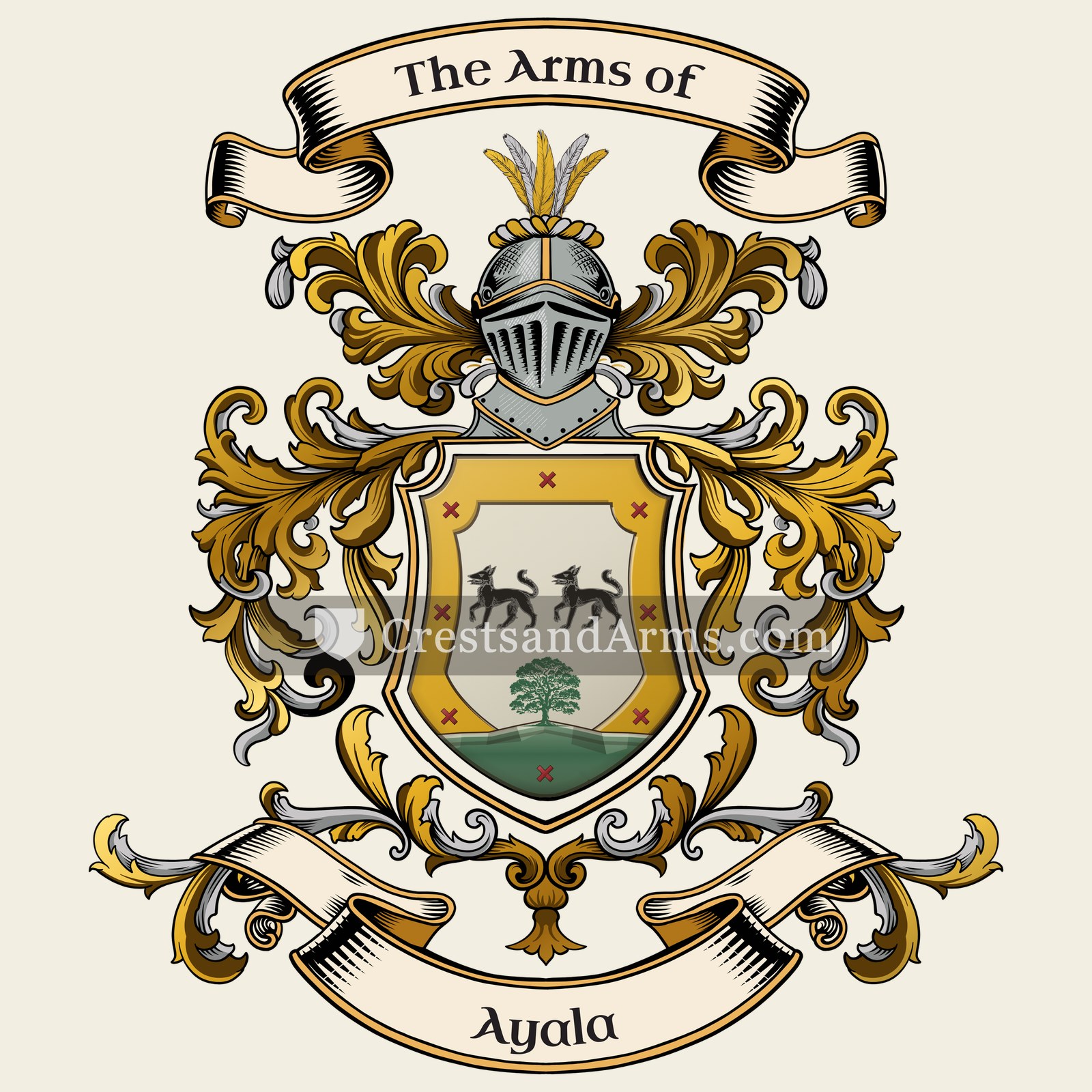
Symbols on this shield
mountThe ground held, and steadfastness upon it
wolfReward from long service and hard work
treeLife, endurance and deep roots
saltire coupedResolution, and the cross of St Andrew
Colours
Silver (Argent)Means: Peace and sincerity
Gold (Or)Means: Generosity
Green (Vert)Means: Hope
Black (Sable)Means: Constancy
Red (Gules)Means: Military strength
Historical info
Source
J. B. Rietstap, Armorial Général, Gouda: G. B. van Goor Zonen, 1884–87
Blazon (the actual original written record)
“D'arg. à deux loups de sa., pass. l'un devant et l'autre derrière un arbre de sin., terrassé du même; à la bord. d'or, ch. de huit flanchis de gu.”
FlandreFlandre, c. 1663
Digital archive packCoat of arms PNG, gold border print PDF, vector SVG and the certificate of authenticity. Sent to your email in minutes.
Map of France showing where the Ayala arms are recorded
The Ayala arms were recorded in Flandre, c. 1663.
Flandre grew rich on cloth, and its towns were among the busiest in Europe. Merchant families bought land with their profits and took arms to go with it, so trade put as many names in the registers here as land did.
This is where the arms were entered in the register. Families often moved to other parts of the country, so the same name can turn up in more than one region.
The body that granted and recorded arms in France in this period.
Louis XIV of France
Sovereign of the period
Louis XIV of France
1643–1715
Reigning in Spain when the Ayala arms are first recorded.
How Arms Worked in France
In France, a coat of arms was a mark of honor that passed down through the male line to all legitimate descendants. Families often used the same shield without changes to show their shared heritage. If a branch wanted to stand out, they could add a small mark to their shield to show their specific place in the family tree.
Granting authority
The Juge d'armes de France acted as the official authority that regulated and verified coats of arms across the country.
How they got arms
Families typically inherited their arms from ancestors, though they could also receive them through royal grants or by proving their noble status.
Where arms were recorded
Coats of arms were officially recorded in the Armorial Général de France, which began its main collection in the year 1696.
The family's standing
Recorded among the armigerous families of Flandre.
Origin & History of the Ayala Family in France
The history of the Ayala family in France is deeply connected to the movement of people across European borders during the seventeenth century. While the name has strong roots in the Iberian Peninsula, records confirm that members of the family were established in the region of Flandre by 1663. During this period, Flandre was a dynamic area experiencing frequent shifts in political control and significant migration due to ongoing regional conflicts. The presence of the Ayala family in this northern territory suggests they were likely involved in the complex administrative or military networks that defined life in the borderlands. By settling in this area, these early family members became part of a diverse population that navigated the changing loyalties of the time. Their transition into French-speaking territories reflects the broader historical trend of families relocating to seek new opportunities or to serve in the professional capacities required by the growing states of the era.
Ayala Meaning & Related Branches
Root word
aya
Basque term referring to a slope, hillside, or pasture.
This name
AyalaA topographic surname denoting someone who lived on a hillside or meadow.
also spelled
Ayale
Ayalla
Ayalas
Ayalah
Related arms
Floriorecorded with Ayala, same area
Gambowrecorded with Ayala, same area
Lousadarecorded with Ayala, same area
Lusada, or Losadarecorded with Ayala, same area
Documented Sources
J. B. Rietstap, Armorial Général, Gouda: G. B. van Goor Zonen, 1884–87
Mendizábal, Luis. Linajes de Álava. 1968
Pérez de Urbel, Justo. Historia del Condado de Castilla. 1945
Archivo de la Real Chancillería de Valladolid, Registro de Ejecutorias
Digital archive packCoat of arms PNG, gold border print PDF, vector SVG and the certificate of authenticity. Sent to your email in minutes.


 wolfReward from long service and hard work
 wolfReward from long service and hard work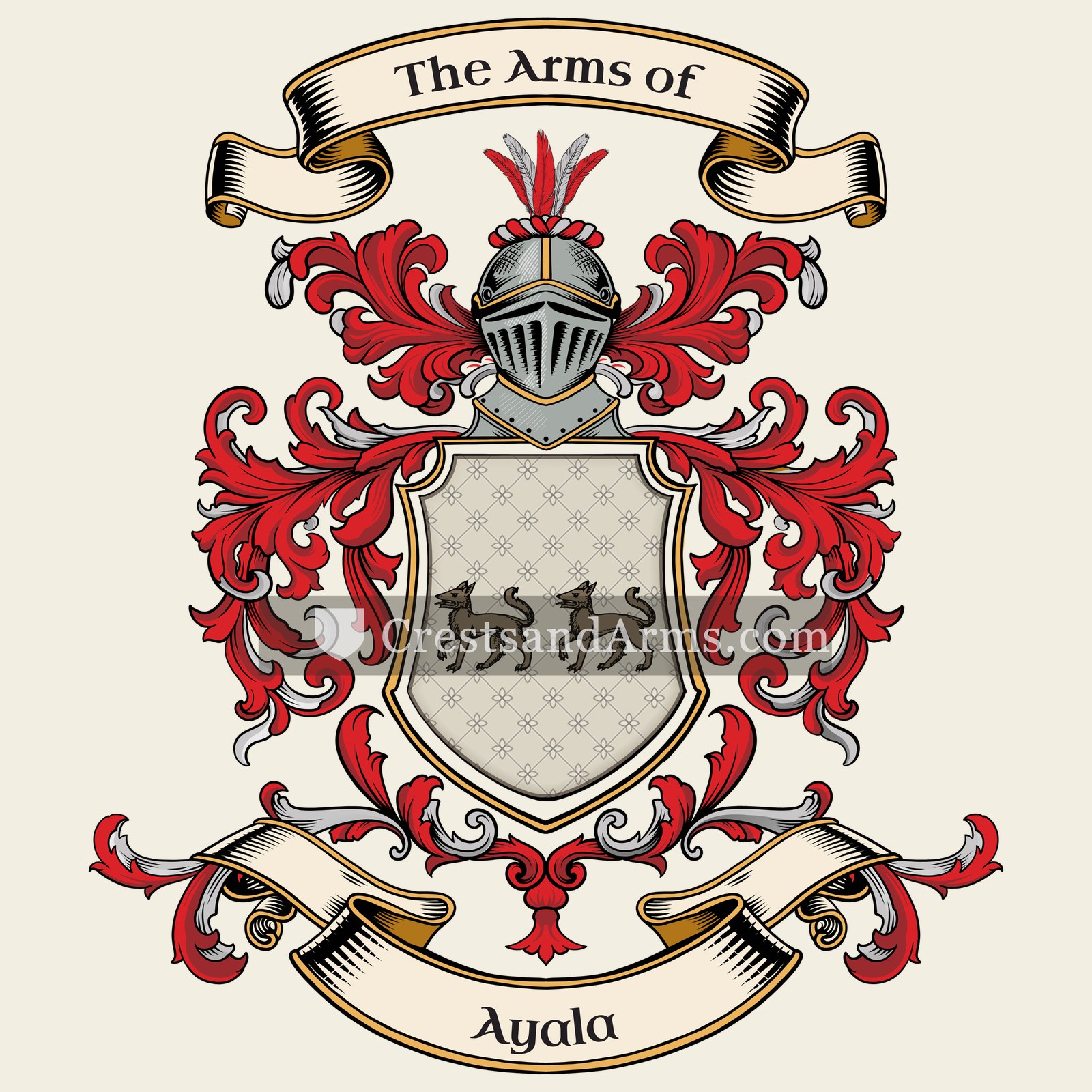


 mountThe ground held, and steadfastness upon it
 treeLife, endurance and deep roots
 saltire coupedResolution, and the cross of St Andrew