A record of documented arms, meaning and origin, researched for the Aylett family lines. Documented in 2 countries.
Reg. 4502 · Austrian, A–C
Coat of Arms & Family Crest Details
Symbols on this shield
cross symbolChristian faith and service
boarA fierce fighter who battles to the end
Colours
Blue (Azure)Means: Loyalty and truth
Red (Gules)Means: Military strength
Gold (Or)Means: Generosity
Silver (Argent)Means: Peace and sincerity
Historical info
Source
J. B. Rietstap, Armorial Général, Gouda: G. B. van Goor Zonen, 1884–87
Blazon (the actual original written record)
“Coupé: au 1 d'azur à une croix latine d'or; au 2 de gu. au porc pass. d'arg. Cq. cour. C.: un bras en pal, paré d'azur, lisé d'or, la main de carn. empoignant un lézard au nat.”
Austriac. 1804
Digital archive packCoat of arms PNG, gold border print PDF, vector SVG and the certificate of authenticity. Sent to your email in minutes.
Map of Austria showing where the Aylett arms are recorded
The Aylett arms were recorded in Austria, c. 1804.
Arms such as these were typically recorded in Tyrol.
Tyrol was mountain country in western Austria, where the valleys were held by families who had been there a very long time. Old tenure counted for more than money, and old families carried arms.
This is where the arms were entered in the register. Families often moved to other parts of the country, so the same name can turn up in more than one region.
Region
Tyrol
First recorded
1804
Granting Authority for the Aylett Arms
Imperial and Royal chancery
Sodacan · CC BY-SA 3.0
The body that granted and recorded arms in Austria in this period.
Francis II, Holy Roman Emperor
Sovereign of the period
Francis II, Holy Roman Emperor
1792–1806
Reigning in Austria when the Aylett arms are first recorded.
How Arms Worked in Austria
Austrian coats of arms were often linked directly to noble titles granted by the Emperor. These symbols belonged to the entire family line rather than just one individual. When a family grew, new branches kept the original design without needing to change it. This system allowed all members of a noble house to share the same identity across many generations.
Granting authority
The Imperial and Royal chancery managed all heraldic matters and controlled the official granting of arms throughout the Austrian lands.
How they got arms
Families typically received their arms through a formal imperial decree that often accompanied the elevation of a person to noble status.
Where arms were recorded
Official records of these grants were kept in the Imperial Register of Nobility which began its formal documentation process in 1453.
The family's standing
Recorded among the armigerous families of Austria.
Origin & History of the Aylett Family in Austria
The family name Aylett traces its roots in the Austrian region of Tyrol to at least the year 1804. During this period, the family lived in a landscape defined by the rugged Alps and the shifting political borders of the Napoleonic era. Tyrol was a place of deep tradition where families often identified themselves through their local trade or their connection to specific mountain valleys. As the family established their presence in this region, they became part of the local social fabric that relied on agriculture and regional commerce to survive the harsh winters. By settling in Tyrol, the early Aylett family members participated in a culture that valued community ties and resilience in the face of significant historical change. This early history reflects a life shaped by the unique geography of the Austrian mountains rather than the influence of urban centers.
Coat of Arms & Family Crest Details
Symbols on this shield
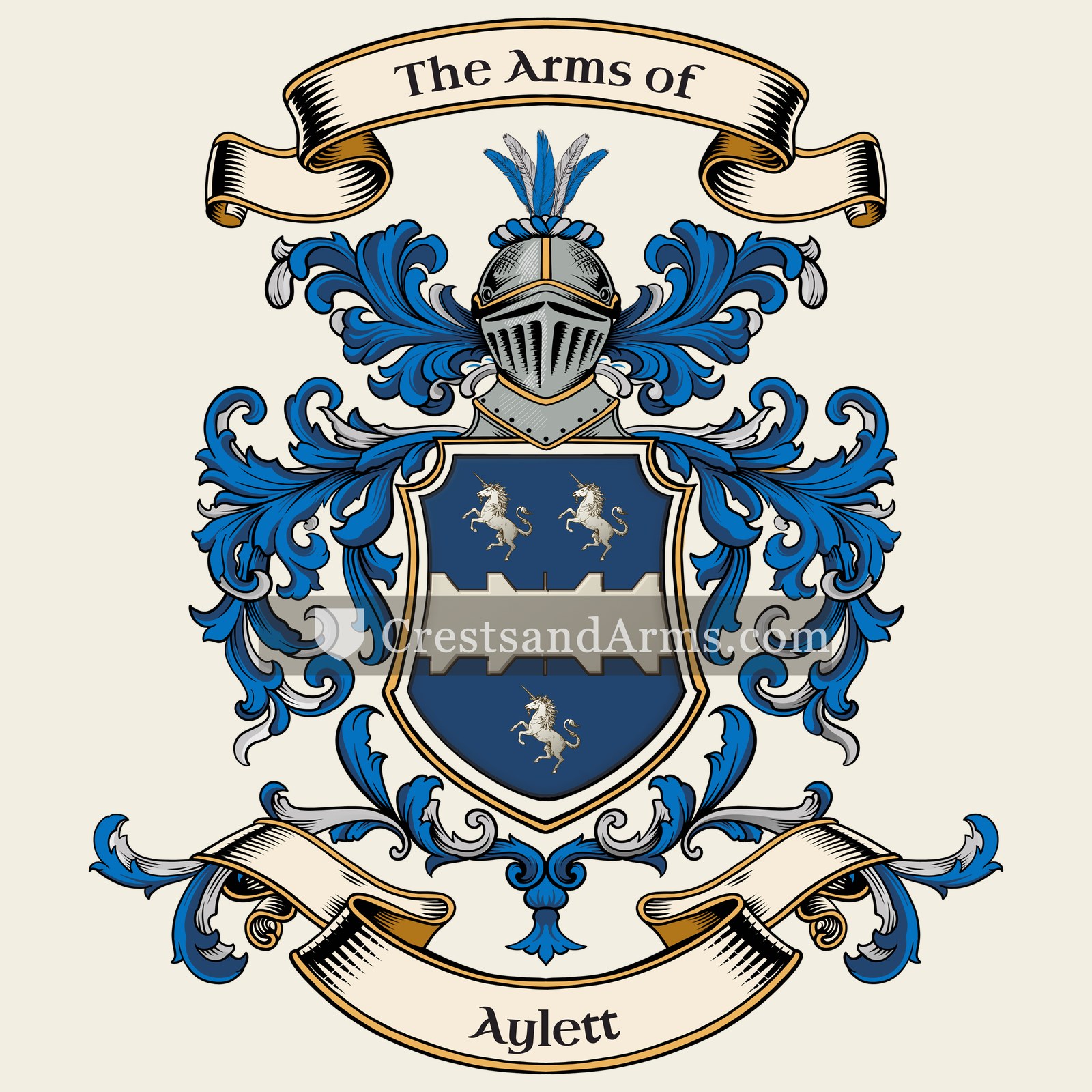
fessThe military belt, and readiness to serve
unicornPurity, and extreme courage in defence of honour
Colours
Blue (Azure)Means: Loyalty and truth
Silver (Argent)Means: Peace and sincerity
Historical info
Source
Sir Bernard Burke, The General Armory of England, Scotland, Ireland and Wales, London: Harrison & Sons, 1884
Blazon (the actual original written record)
“Az. a fesse embattled betw. three unicorns' heads erased ar. crined and armed or”
EssexBraintree · Essex, c. 1620
Digital archive packCoat of arms PNG, gold border print PDF, vector SVG and the certificate of authenticity. Sent to your email in minutes.
Map of England showing where the Aylett arms are recorded
The Aylett arms were recorded in Essex, c. 1620.
Essex lay close enough to London for City money to buy land there. Merchants who prospered moved out to estates within a day's ride, and a new landowner almost always wanted arms to go with the ground.
This is where the arms were entered in the register. Families often moved to other parts of the country, so the same name can turn up in more than one region.
The body that granted and recorded arms in England in this period.
James VI and I
Sovereign of the period
James VI and I
1603–1625
Reigning in Austria when the Aylett arms are first recorded.
How Arms Worked in England
English heraldry allowed arms to be shared by all legitimate descendants of the original owner. These symbols were treated as personal property that moved through the generations to all children. While the eldest son kept the original design, other family members could use the same shield without needing to change it or register their own unique versions.
Granting authority
The College of Arms in London has regulated the use of coats of arms throughout England and Wales since 1484.
How they got arms
Families typically obtained their coats of arms through a formal grant from the Crown or by proving their ancient right to them.
Where arms were recorded
All official coats of arms are recorded in the registers kept at the College of Arms, which date back to the fifteenth century.
The family's standing
Recorded among the armigerous families of Essex.
Origin & History of the Aylett Family in England
The Aylett family name has deep roots in the English county of Essex, where members of the family were well-established by the early seventeenth century. The name is believed to be a variation of the Old English personal name Aethelgeat, which translates roughly to noble gate or noble way. By the year 1620, the Ayletts had become prominent landowners and local figures within the region, particularly around the areas of Coggeshall and Kelvedon. They were often involved in the administration of their local parishes and held positions of influence within their communities. Their presence in Essex during this period suggests that they were part of the rising class of yeoman farmers and minor gentry who helped shape the rural economy of East Anglia. Through their long-standing ties to the land and their participation in local governance, the Aylett family became a recognized part of the social fabric of Essex long before the modern era.
Aylett Meaning & Related Branches
Root word
Aegidius
Derived from the Greek word for a shield or goatskin.
This name
AylettA diminutive form indicating a descendant of someone named Giles or Aegidius.
also spelled
Ailet
Aylet
Related arms
Lingwoodrecorded with Aylett, same area
Mottrecorded with Aylett, same area
Documented Sources
J. B. Rietstap, Armorial Général, Gouda: G. B. van Goor Zonen, 1884–87
Hermann Wopfner, Die Besiedlung der Hochalpen durch die Tiroler Bauern, 1927


 cross symbolChristian faith and service
 boarA fierce fighter who battles to the end
 cross symbolChristian faith and service
 boarA fierce fighter who battles to the end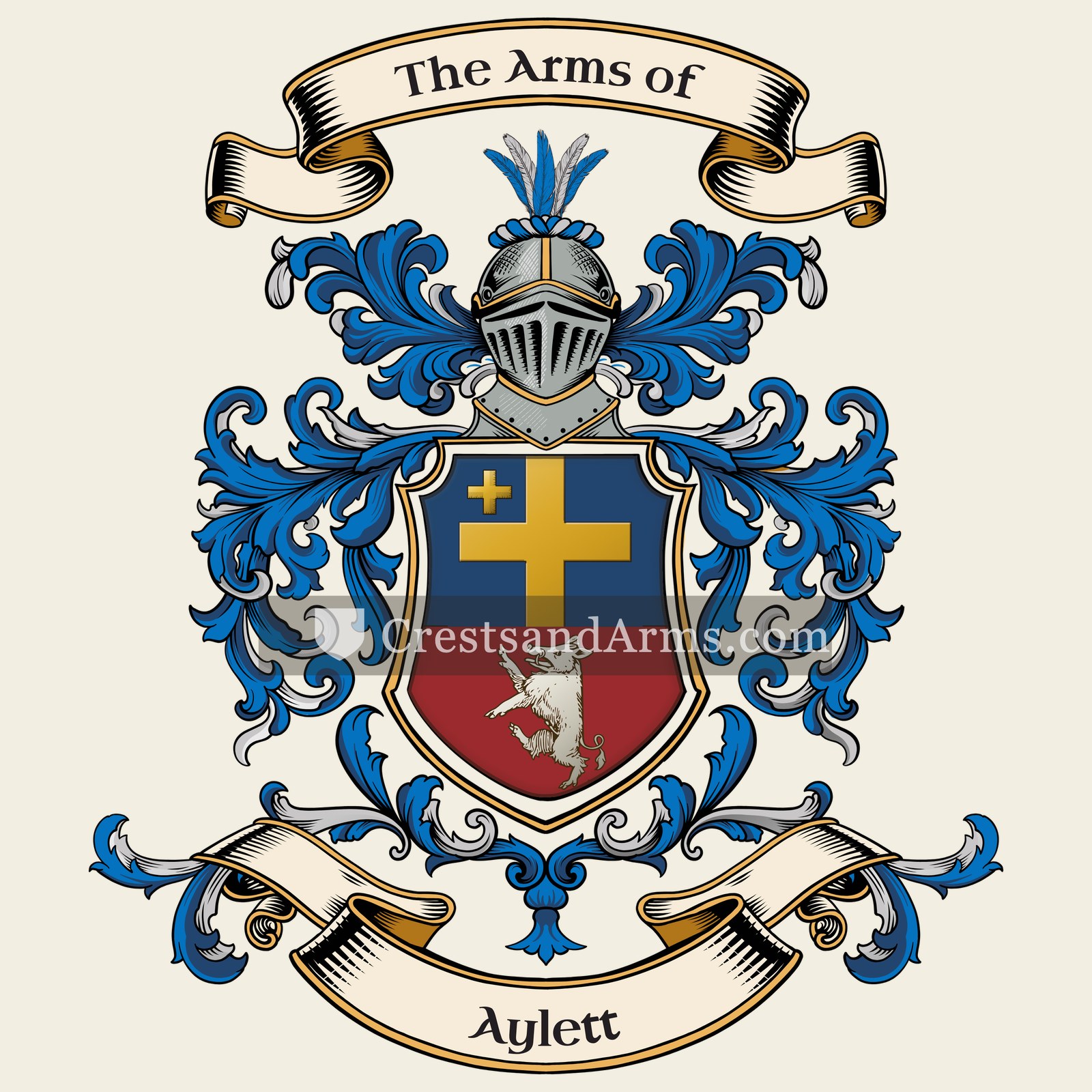


 fessThe military belt, and readiness to serve
 unicornPurity, and extreme courage in defence of honour