A record of documented arms, meaning and origin, researched for the Aylott family lines. Documented in 2 countries.
Reg. 0922 · Austrian, A–C
Meaning of the Aylott family crest colors & symbols
Symbols on this shield
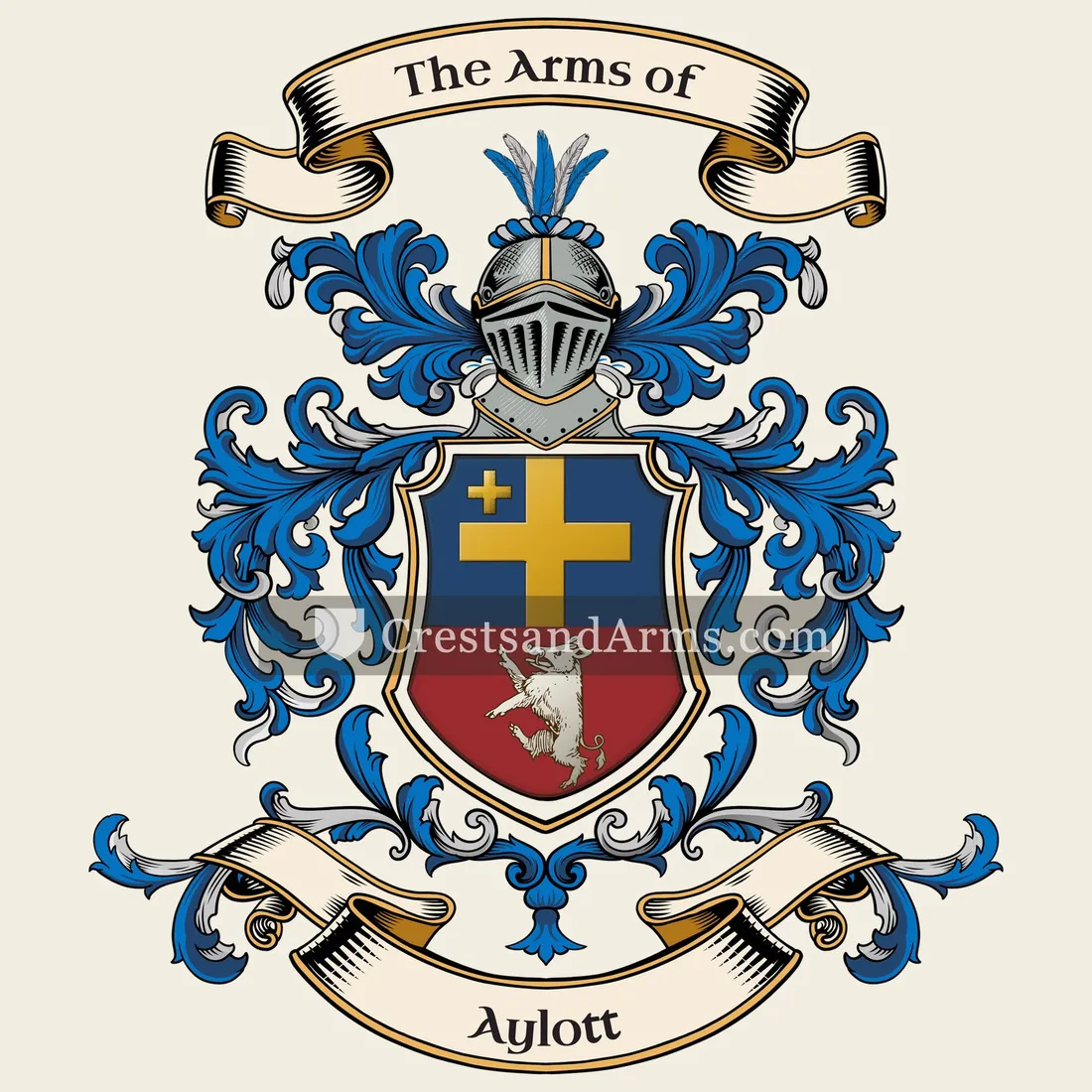
cross symbolChristian faith and service
boarA fierce fighter who battles to the end
Colours
Blue (Azure)Means: Loyalty and truth
Red (Gules)Means: Military strength
Gold (Or)Means: Generosity
Silver (Argent)Means: Peace and sincerity
Historical info
Source
J. B. Rietstap, Armorial Général, Gouda: G. B. van Goor Zonen, 1884–87
Blazon (the actual original written record)
“Coupé: au 1 d'azur à une croix latine d'or; au 2 de gu. au porc pass. d'arg. Cq. cour. C.: un bras en pal, paré d'azur, lisé d'or, la main de carn. empoignant un lézard au nat.”
Austriac. 1804
Digital archive packCoat of arms PNG, gold border print PDF, vector SVG and the certificate of authenticity. Sent to your email in minutes.
Map of Austria showing where the Aylott arms are recorded
The Aylott arms were recorded in Austria, c. 1804.
Arms such as these were typically recorded in Tyrol.
Tyrol was mountain country in western Austria, where the valleys were held by families who had been there a very long time. Old tenure counted for more than money, and old families carried arms.
This is where the arms were entered in the register. Families often moved to other parts of the country, so the same name can turn up in more than one region.
Region
Tyrol
First recorded
1804
Granting Authority for the Aylott Arms
Imperial and Royal chancery
Sodacan · CC BY-SA 3.0
The body that granted and recorded arms in Austria in this period.
Francis II, Holy Roman Emperor
Sovereign of the period
Francis II, Holy Roman Emperor
1792–1806
Reigning in Austria when the Aylott arms are first recorded.
How Arms Worked in Austria
Austrian coats of arms were often linked directly to noble titles granted by the Emperor. These symbols belonged to the entire family line rather than just one individual. When a family grew, new branches kept the original design without needing to change it. This system allowed all members of a noble house to share the same identity across many generations.
Granting authority
The Imperial and Royal chancery managed all heraldic matters and controlled the official granting of arms throughout the Austrian lands.
How they got arms
Families typically received their arms through a formal imperial decree that often accompanied the elevation of a person to noble status.
Where arms were recorded
Official records of these grants were kept in the Imperial Register of Nobility which began its formal documentation process in 1453.
The family's standing
Recorded among the armigerous families of Austria.
Origin & History of the Aylott Family in Austria
The history of the Aylott family in Austria is deeply connected to the rugged landscape of the Tyrol region during the early nineteenth century. By 1804, members of the family were already established in this mountainous area, which served as a critical crossroads between Germanic and Italian cultures. During this period, Tyrol was a place of significant political upheaval as the region transitioned through various administrative changes under the Austrian Empire. Families living in these high-altitude valleys often worked as skilled tradespeople or farmers, relying on strong community bonds to survive the harsh winters and the shifting borders of the Napoleonic era. The presence of the Aylott name in local records from this time suggests that the family was well-integrated into the social fabric of the Alpine villages. They likely contributed to the local economy and participated in the traditional customs that defined life in the Austrian Alps. This early foothold in Tyrol provides a clear window into the resilience and adaptability of the family as they navigated the complexities of life in Central Europe.
Meaning of the Aylott family crest colors & symbols
Symbols on this shield
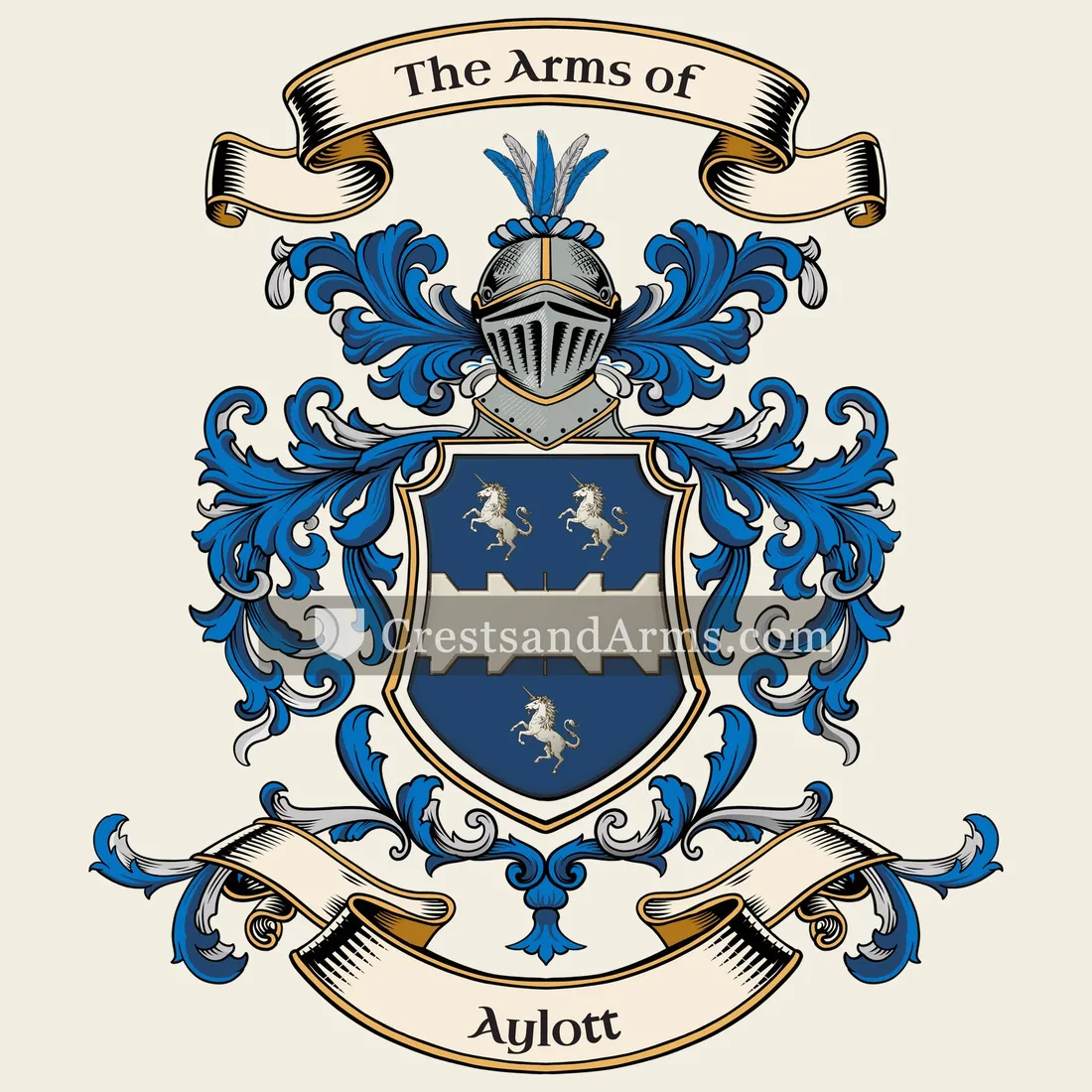
fessThe military belt, and readiness to serve
unicornPurity, and extreme courage in defence of honour
Colours
Blue (Azure)Means: Loyalty and truth
Silver (Argent)Means: Peace and sincerity
Historical info
Source
Sir Bernard Burke, The General Armory of England, Scotland, Ireland and Wales, London: Harrison & Sons, 1884
Blazon (the actual original written record)
“Az. a fesse embattled betw. three unicorns' heads erased ar. crined and armed or”
EssexBraintree · Essex, c. 1620
Digital archive packCoat of arms PNG, gold border print PDF, vector SVG and the certificate of authenticity. Sent to your email in minutes.
Map of England showing where the Aylott arms are recorded
The Aylott arms were recorded in Essex, c. 1620.
Essex lay close enough to London for City money to buy land there. Merchants who prospered moved out to estates within a day's ride, and a new landowner almost always wanted arms to go with the ground.
This is where the arms were entered in the register. Families often moved to other parts of the country, so the same name can turn up in more than one region.
The body that granted and recorded arms in England in this period.
James VI and I
Sovereign of the period
James VI and I
1603–1625
Reigning in Austria when the Aylott arms are first recorded.
How Arms Worked in England
English heraldry allowed arms to be shared by all legitimate descendants of the original owner. These symbols were treated as personal property that moved through the generations to all children. While the eldest son kept the original design, other family members could use the same shield without needing to change it or register their own unique versions.
Granting authority
The College of Arms in London has regulated the use of coats of arms throughout England and Wales since 1484.
How they got arms
Families typically obtained their coats of arms through a formal grant from the Crown or by proving their ancient right to them.
Where arms were recorded
All official coats of arms are recorded in the registers kept at the College of Arms, which date back to the fifteenth century.
The family's standing
Recorded among the armigerous families of Essex.
Origin & History of the Aylott Family in England
The family name Aylott has deep roots in the English county of Essex, where records confirm the family was well-established by the early 17th century. The name is believed to be a variation of the Old English personal name Aethelgeat, which translates roughly to noble gate or noble path. During the medieval period, surnames often evolved from personal names or descriptions of where a person lived, and the Aylott line likely emerged as a distinct family group in the rural landscape of East Anglia. By 1620, members of the family were active participants in the local community, living through a time of significant social and agricultural change in England. As the family grew, they became part of the fabric of Essex life, contributing to the local economy and the development of the region over several generations. Their presence in these historical records provides a clear window into the lives of ordinary families who helped shape the identity of the English countryside.
Aylott Meaning & Related Branches
Root word
Aegidius
Derived from the Greek word for a goatskin shield or protection.
This name
AylottA diminutive form of the name Giles, historically signifying a protected or shielded individual.
also spelled
Ailet
Aylet
Documented Sources
J. B. Rietstap, Armorial Général, Gouda: G. B. van Goor Zonen, 1884–87
Tiroler Landesarchiv, Tiroler Volkszählung 1804
Huter, Franz, Tiroler Urkundenbuch, 1937
Obermair, Hannes, Soziale Strukturen in Tiroler Gemeinden, 1995
Digital archive packCoat of arms PNG, gold border print PDF, vector SVG and the certificate of authenticity. Sent to your email in minutes.


 cross symbolChristian faith and service
 boarA fierce fighter who battles to the end
 cross symbolChristian faith and service
 boarA fierce fighter who battles to the end


 fessThe military belt, and readiness to serve
 unicornPurity, and extreme courage in defence of honour