Map of England showing where the Aytekin arms are recorded
The Aytekin arms were recorded in Somersetshire, c. 1620.
This is where the arms were entered in the register. Families often moved to other parts of the country, so the same name can turn up in more than one region.
The body that granted and recorded arms in England in this period.
James VI and I
Sovereign of the period
James VI and I
1603–1625
Reigning in England when the Aytekin arms are first recorded.
How Arms Worked in England
English heraldry allowed arms to be shared by all legitimate descendants of the original owner. These symbols were treated as personal property that moved through the generations to all children. While the eldest son kept the original design, other family members could use the same shield without needing to change it or register their own unique versions.
Granting authority
The College of Arms in London has regulated the use of coats of arms throughout England and Wales since 1484.
How they got arms
Families typically obtained their coats of arms through a formal grant from the Crown or by proving their ancient right to them.
Where arms were recorded
All official coats of arms are recorded in the registers kept at the College of Arms, which date back to the fifteenth century.
The family's standing
Recorded among the armigerous families of Somersetshire.
Origin & History of the Aytekin Family in England
The family name Aytekin has roots that stretch back to the early seventeenth century in the county of Somersetshire, England. By the year 1620, records indicate that members of the family were already established within this region, living as part of the local rural community. During this era, families in Somersetshire were often involved in the thriving wool trade or small-scale agriculture, which defined the economic landscape of the West Country. While the name itself carries linguistic origins from outside of Britain, its presence in English parish registers from this period suggests that the family integrated into the local social fabric during a time of significant transition for the English countryside. These early settlers likely navigated the challenges of life in the Stuart period, contributing to the development of their local parishes through their work and community involvement. Their presence in Somersetshire serves as a historical anchor, marking the beginning of the family’s long-standing connection to the English landscape.
Meaning of the Aytekin family crest colors & symbols
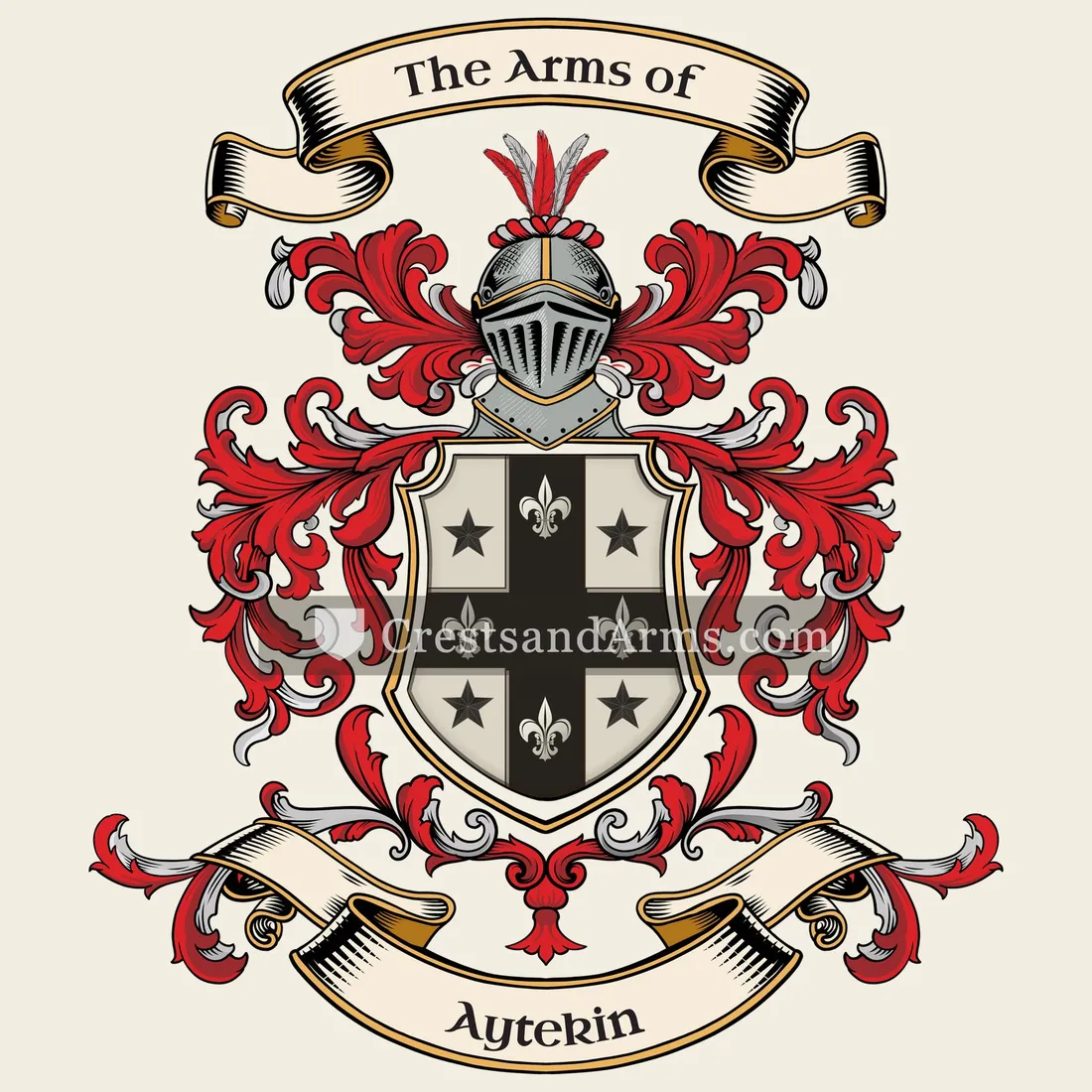
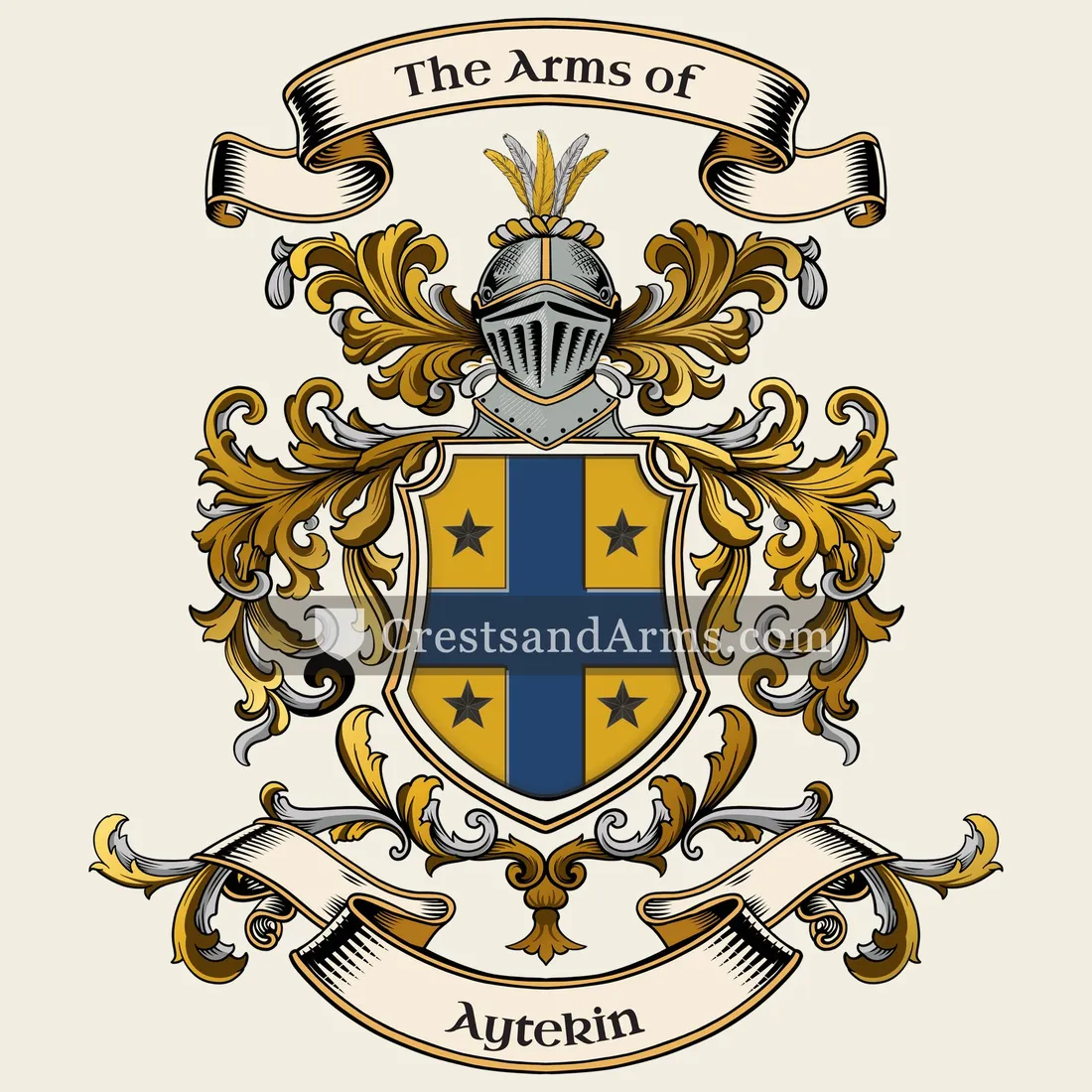
Symbols on this shield
cross symbolChristian faith and service
fleur de lisPurity, light, and the sixth son
mulletThe third son, and a divine quality from above
Colours
Silver (Argent)Means: Peace and sincerity
Historical info
Source
Sir Bernard Burke, The General Armory of England, Scotland, Ireland and Wales, London: Harrison & Sons, 1884
Blazon (the actual original written record)
“Ar. a cross of half fleurs-de-lis betw. four mullets [?] pierced of the field”
CorkFountainville · Cork, c. 1645
Digital archive packCoat of arms PNG, gold border print PDF, vector SVG and the certificate of authenticity. Sent to your email in minutes.
Map of Ireland showing where the Aytekin arms are recorded
The Aytekin arms were recorded in Cork, c. 1645.
Cork was the largest county in Ireland, with a great harbour and a wide farming hinterland. Both English settlers and older Irish families held land there, and holding land is what brought a family into the records.
This is where the arms were entered in the register. Families often moved to other parts of the country, so the same name can turn up in more than one region.
The body that granted and recorded arms in Ireland in this period.
Charles I of England
Sovereign of the period
Charles I of England
1625–1649
Reigning in England when the Aytekin arms are first recorded.
How Arms Worked in Ireland
The Ulster King of Arms granted coats of arms to individuals who proved their social standing and good character. These symbols were typically inherited by all legitimate descendants of the original holder. If a family branch wanted a unique look, they could apply for a specific change to their design through the office to ensure their identity remained distinct.
Granting authority
The Ulster King of Arms acted as the official body that regulated and issued all coats of arms throughout Ireland.
How they got arms
Families obtained their arms through formal grants issued by the office after proving their eligibility and paying the required fees.
Where arms were recorded
All official grants were recorded in the registers held by the Ulster King of Arms starting from the year 1552.
The family's standing
Recorded among the armigerous families of Cork.
Origin & History of the Aytekin Family in Ireland
The history of the Aytekin family in Ireland is a unique chapter that begins in the mid-seventeenth century. Records indicate that members of the family were established in the port city of Cork by 1645. During this period, Cork was a bustling center for international trade and maritime activity. It is likely that the family arrived in Ireland through these busy shipping lanes, possibly as merchants or travelers seeking new opportunities in a growing urban environment. Their presence in a major coastal hub suggests they were integrated into the commercial life of the city during a time of significant social and political change. By settling in Cork, the early Aytekin family became part of the diverse tapestry of people who contributed to the city's development throughout the seventeenth century.
Aytekin Meaning & Related Branches
Root word
Ay-Tekin
Turkic roots meaning moon and prince or unique person.
This name
AytekinA name signifying a person who is as bright as the moon and noble.
also spelled
Atkyns
Atkines
Atkyn
Documented Sources
Sir Bernard Burke, The General Armory of England, Scotland, Ireland and Wales, London: Harrison & Sons, 1884
Somerset Archives, Bishop’s Transcripts of Parish Registers, 1620


 cross symbolChristian faith and service
 mulletThe third son, and a divine quality from above
 cross symbolChristian faith and service
 mulletThe third son, and a divine quality from above


 fleur de lisPurity, light, and the sixth son