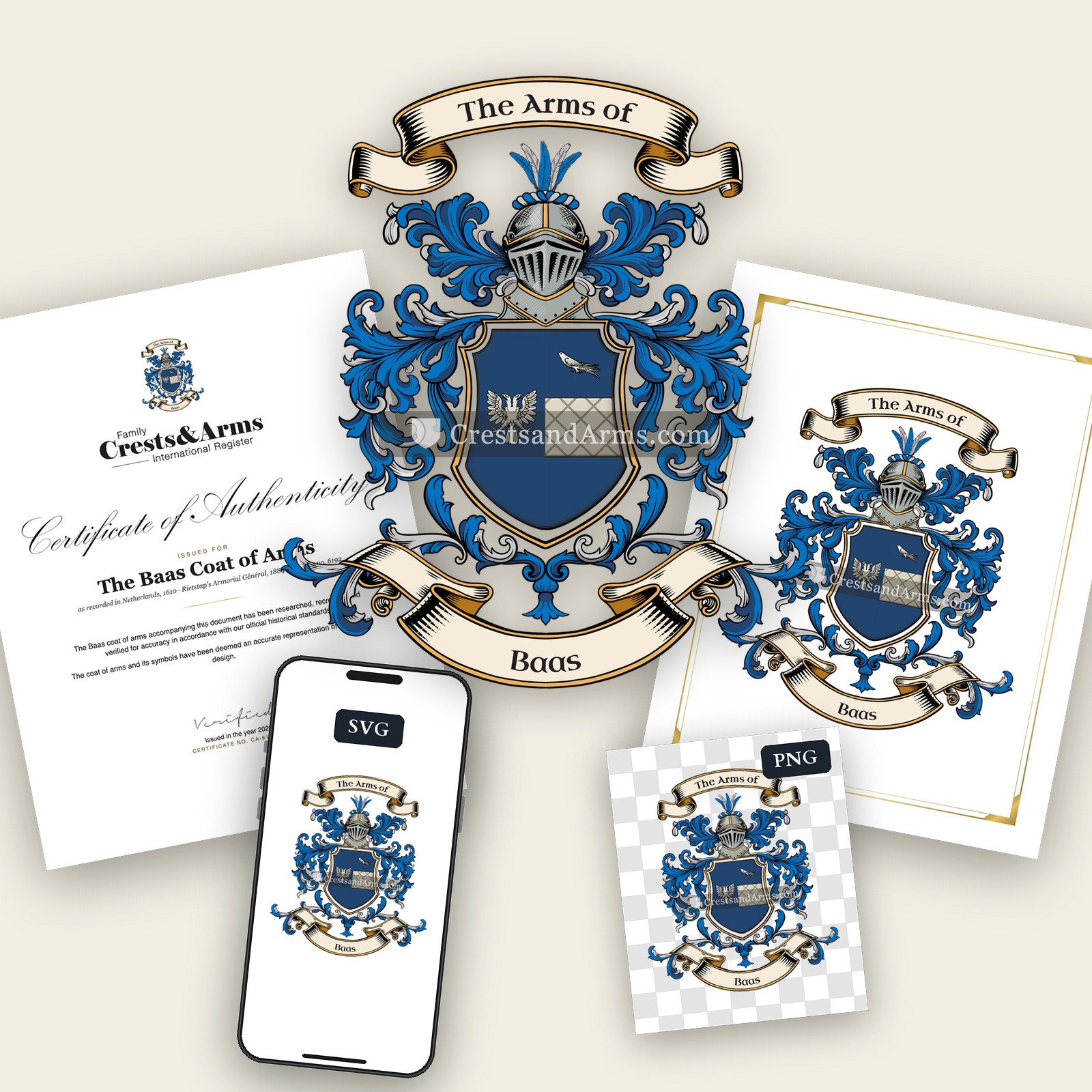
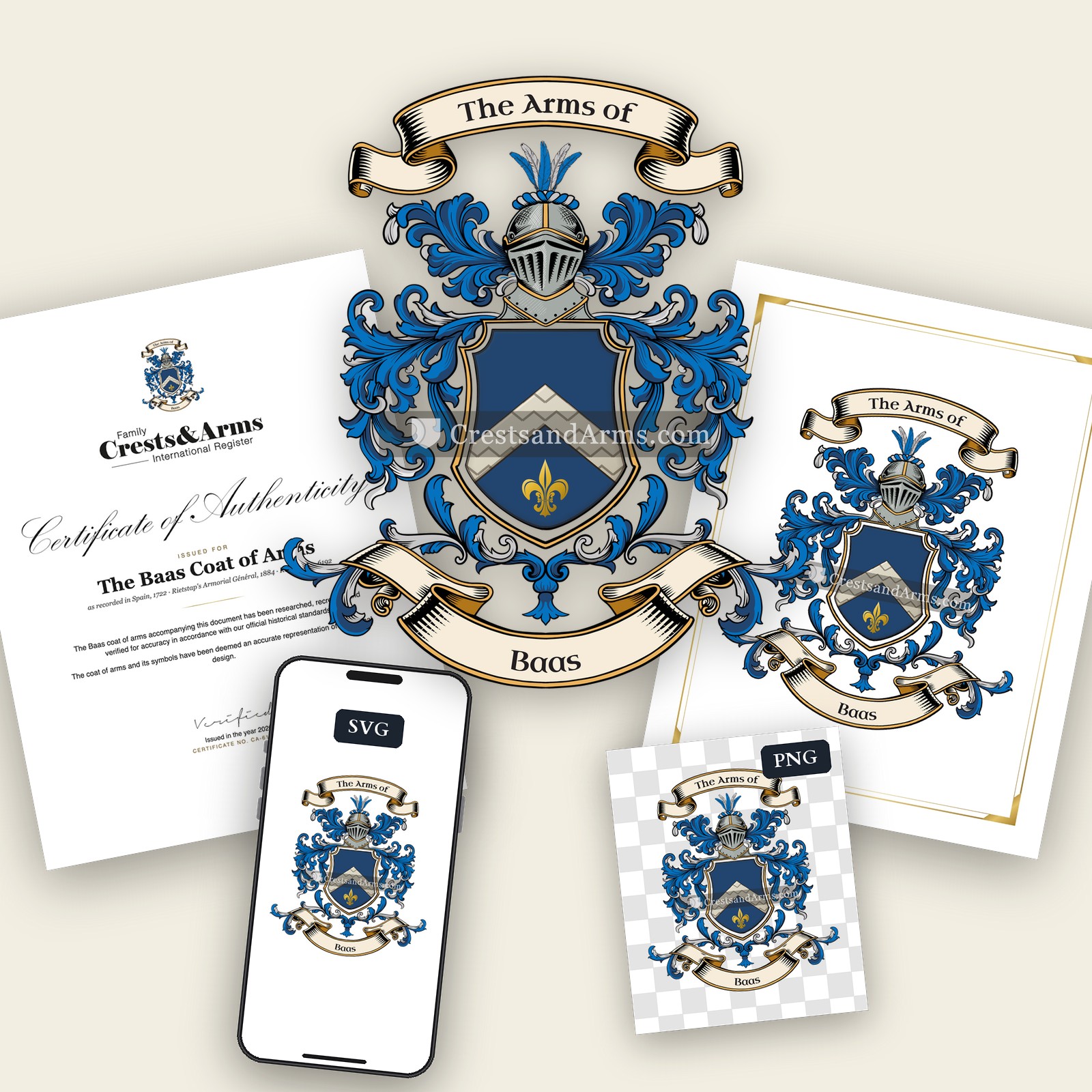
A record of documented arms, meaning and origin, researched for the Baas family lines. Documented in 2 countries.
Reg. 6192 · Dutch, A–C
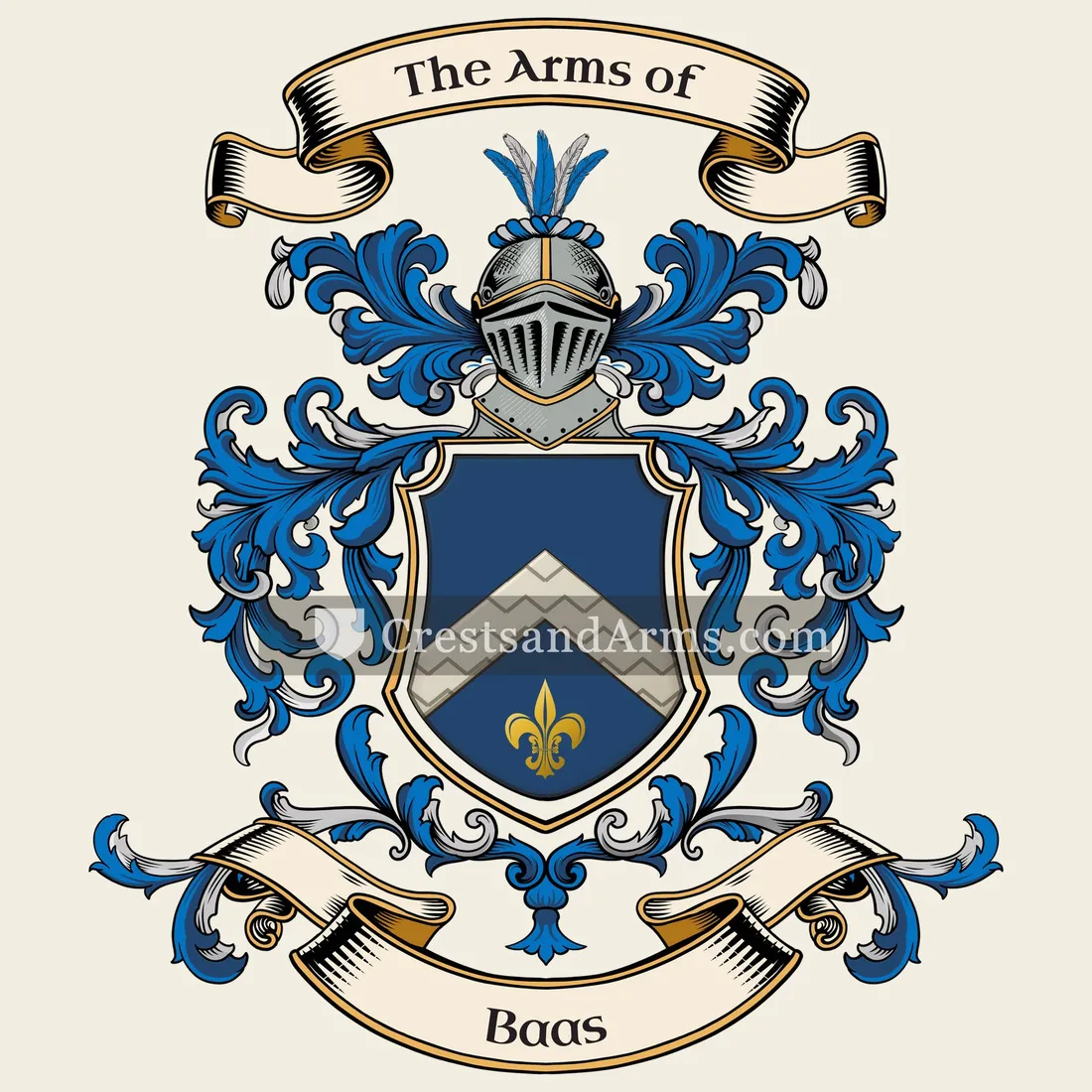
Meaning of the Baas family crest colors & symbols
Symbols on this shield
fessThe military belt, and readiness to serve
vairProtection, and the winter fur
eagleNobility, strength and a keen mind
martletA younger son, who must win his own land
Colours
Blue (Azure)Means: Loyalty and truth
Silver (Argent)Means: Peace and sincerity
Historical info
Source
J. B. Rietstap, Armorial Général, Gouda: G. B. van Goor Zonen, 1884–87
Blazon (the actual original written record)
“Parti: au 1 d'azur à l'aigle d'arg., tenant en son bec un rameau d'olivier de sin.; au 2 coupé: a. d'azur à un vanneau d'arg.; b. fascé de gu. et de vair, la première fasce supp. le vanneau. C.: le vanneau, entre un vol au nat.”
Netherlandsc. 1610
Digital archive packCoat of arms PNG, gold border print PDF, vector SVG and the certificate of authenticity. Sent to your email in minutes.
Map of Netherlands showing where the Baas arms are recorded
The Baas arms were recorded in Netherlands, c. 1610.
Arms such as these were typically recorded in Friesland.
Friesland was low, wet country on the northern coast of the Netherlands, farmed by families who had held the same land for centuries. Free landholders were unusually common there, and a free landholder could carry arms.
This is where the arms were entered in the register. Families often moved to other parts of the country, so the same name can turn up in more than one region.
Region
Friesland
First recorded
1610
Granting Authority for the Baas Arms
Hoge Raad van Adel
Photograph made by me · CC BY-SA 3.0
The body that granted and recorded arms in Netherlands in this period.
How Arms Worked in Netherlands
In the Netherlands, coats of arms were often used by noble families and those who held specific public offices. These arms were passed down through the generations to legitimate descendants. Younger branches of a family usually kept the original design without needing to add special marks. This system ensured that the family identity remained clear and consistent over many years.
Granting authority
The Hoge Raad van Adel is the official body that regulates and manages noble titles and coats of arms in the Netherlands.
How they got arms
Families typically obtained their coats of arms through official royal grants or by proving their long-standing historical use of the symbols.
Where arms were recorded
Coats of arms are officially recorded in the registers held by the Hoge Raad van Adel, which began its work in 1814.
The family's standing
Recorded among the armigerous families of Netherlands.
Origin & History of the Baas Family in Netherlands
The surname Baas carries a rich history rooted in the social structure of the Netherlands. In the Dutch language, the word "baas" historically functioned as a title for a master, a foreman, or the head of a household. When people began adopting permanent surnames, this term was often used to identify someone who held a position of authority or owned a business. By 1610, records confirm that members of the Baas family were already established in the province of Friesland. During this period, Friesland was a unique region with its own distinct legal traditions and a strong sense of local identity. Families living there often played active roles in the agricultural or maritime trades that defined the Dutch economy. As the name spread from these northern roots, it remained a reflection of the family’s historical status as independent workers and community leaders.
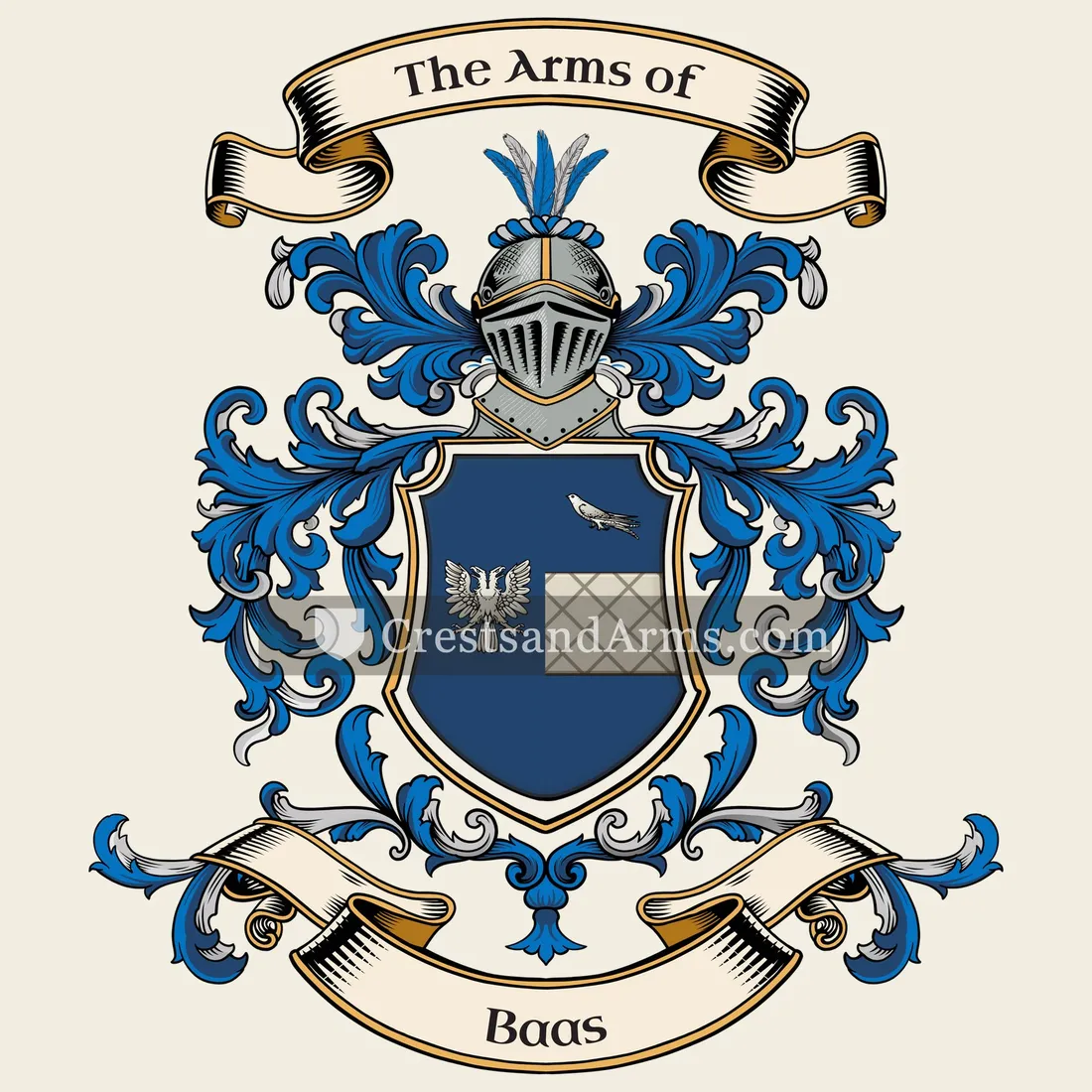
Meaning of the Baas family crest colors & symbols
Symbols on this shield
chevronProtection, and faithful service completed
fleur de lisPurity, light, and the sixth son
Colours
Blue (Azure)Means: Loyalty and truth
Silver (Argent)Means: Peace and sincerity
Gold (Or)Means: Generosity
Historical info
Source
J. B. Rietstap, Armorial Général, Gouda: G. B. van Goor Zonen, 1884–87
Blazon (the actual original written record)
“D'azur au chev. d'arg., acc. en p. d'une fleur-de-lis d'or.”
Spainc. 1722
Digital archive packCoat of arms PNG, gold border print PDF, vector SVG and the certificate of authenticity. Sent to your email in minutes.
Map of Spain showing where the Baas arms are recorded
The Baas arms were recorded in Spain, c. 1722.
Arms such as these were typically recorded in Castile.
Castile was the heart of Spain and the source of most of its noble families. Land won in the long wars against the Moors was granted out to fighting men, and a man granted land was granted arms along with it.
This is where the arms were entered in the register. Families often moved to other parts of the country, so the same name can turn up in more than one region.
The body that granted and recorded arms in Spain in this period.
Philip V of Spain
Sovereign of the period
Philip V of Spain
1714–1724
Reigning in Netherlands when the Baas arms are first recorded.
How Arms Worked in Spain
In Spain, a coat of arms was considered a form of property that belonged to the entire family line. These arms were passed down from a father to all his children equally. Younger branches of the family usually kept the original design without needing to add any special marks to distinguish their specific line.
Granting authority
The Cronista Rey de Armas was the official body that regulated and granted coats of arms throughout Spain.
How they got arms
Families often obtained their arms through royal grants or by proving their noble status to the official heraldic authority.
Where arms were recorded
Coats of arms were officially recorded in the registers of the Cronista Rey de Armas starting in 1496.
The family's standing
Recorded among the armigerous families of Spain.
Origin & History of the Baas Family in Spain
The family name Baas has roots that stretch deep into the historical landscape of Castile during the early eighteenth century. By 1722, records confirm that members of the family were established within this region, which was a time of significant social and administrative change following the War of the Spanish Succession. During this era, families often moved across the Iberian Peninsula to seek new opportunities in agriculture or local governance as the Bourbon monarchy consolidated its power. The name itself reflects the linguistic diversity of the time, as it likely originated from terms denoting a master, overseer, or head of a household. As these early ancestors settled into the Castilian countryside, they became part of the local fabric, contributing to the development of their communities through trade and land management. Their presence in 1722 serves as a window into how families navigated the shifting political borders and economic demands of colonial and domestic Spain.
Baas Meaning & Related Branches
Root word
bāsi
A Proto-Germanic term referring to a master or leader.
This name
BaasAn occupational surname for a master, boss, or head of a household.
also spelled
Baz
Bass
Documented Sources
J. B. Rietstap, Armorial Général, Gouda: G. B. van Goor Zonen, 1884–87
Meertens, P.J., Voornamen en familienamen in Nederland, 1959
Van der Schaar, J., Woordenboek van familienamen, 1988
Tresoar (Fries Historisch en Letterkundig Centrum), Doop-, trouw- en begraafregisters van Friesland (1600-1811)
Digital archive packCoat of arms PNG, gold border print PDF, vector SVG and the certificate of authenticity. Sent to your email in minutes.


 fessThe military belt, and readiness to serve
 eagleNobility, strength and a keen mind
 martletA younger son, who must win his own land
 fessThe military belt, and readiness to serve
 eagleNobility, strength and a keen mind
 martletA younger son, who must win his own land

 chevronProtection, and faithful service completed
 fleur de lisPurity, light, and the sixth son