Map of Netherlands showing where the Bachmann arms are recorded
The Bachmann arms were recorded in Zeeland, c. 1815.
Zeeland was a scatter of islands in the south-west of the Netherlands, living on the sea and on land reclaimed from it. Families who drained and held that land were counted among the gentry, and gentry carried arms.
This is where the arms were entered in the register. Families often moved to other parts of the country, so the same name can turn up in more than one region.
Region
Zeeland
Town
Nördlingen
First recorded
1815
Granting Authority for the Bachmann Arms
Hoge Raad van Adel
Photograph made by me · CC BY-SA 3.0
The body that granted and recorded arms in Netherlands in this period.
William I of the Netherlands
Sovereign of the period
William I of the Netherlands
1815–1840
Reigning in Netherlands when the Bachmann arms are first recorded.
How Arms Worked in Netherlands
In the Netherlands, coats of arms were often used by noble families and those who held specific public offices. These arms were passed down through the generations to legitimate descendants. Younger branches of a family usually kept the original design without needing to add special marks. This system ensured that the family identity remained clear and consistent over many years.
Granting authority
The Hoge Raad van Adel is the official body that regulates and manages noble titles and coats of arms in the Netherlands.
How they got arms
Families typically obtained their coats of arms through official royal grants or by proving their long-standing historical use of the symbols.
Where arms were recorded
Coats of arms are officially recorded in the registers held by the Hoge Raad van Adel, which began its work in 1814.
The family's standing
Recorded among the armigerous families of Zeeland.
Origin & History of the Bachmann Family in Netherlands
The surname Bachmann carries a history rooted in the Germanic linguistic tradition, where it originally served as a descriptive name for someone who lived near a stream or a brook. While the name is closely associated with German-speaking regions, its presence in the Netherlands became established through migration and the shifting borders of the early nineteenth century. By 1815, records confirm that members of the Bachmann family were settled in the province of Zeeland. During this period, the Netherlands was undergoing significant political changes following the Napoleonic era, and the formal registration of surnames became more standardized under the civil administration. Families like the Bachmanns often integrated into local coastal communities, where they contributed to the regional economy and social fabric of the Dutch provinces. Their presence in Zeeland highlights the movement of families across European borders during a time of great transition, marking the beginning of their long-standing connection to Dutch history.
Coat of Arms & Family Crest Details
Symbols on this shield
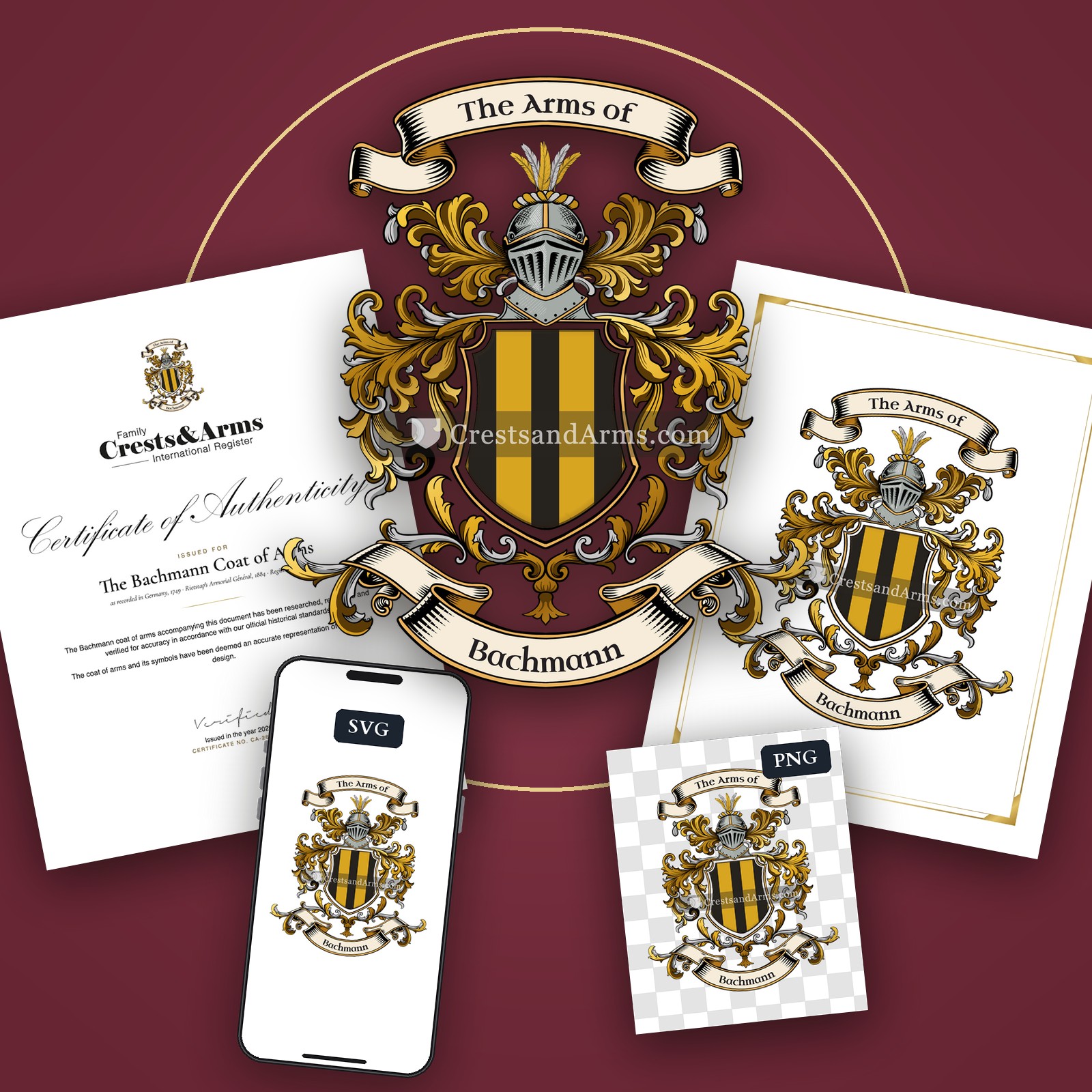
paleMilitary strength, and a fortified defence
Colours
Gold (Or)Means: Generosity
Black (Sable)Means: Constancy
Historical info
Source
J. B. Rietstap, Armorial Général, Gouda: G. B. van Goor Zonen, 1884–87
Blazon (the actual original written record)
“D'or à trois pals de sa., le premier failli en p. Cq. cour. C.: un vol à l'antique, aux armes de l'écu.”
Germanyc. 1749
Digital archive packCoat of arms PNG, gold border print PDF, vector SVG and the certificate of authenticity. Sent to your email in minutes.
Map of Germany showing where the Bachmann arms are recorded
The Bachmann arms were recorded in Germany, c. 1749.
Arms such as these were typically recorded in Bavaria.
Bavaria was a country of old landed families and walled market towns. Estates passed down the same line for centuries, and both the landowners and the leading townsmen kept arms, which is why so many Bavarian names sit in the registers.
This is where the arms were entered in the register. Families often moved to other parts of the country, so the same name can turn up in more than one region.
The body that granted and recorded arms in Germany in this period.
Francis I, Holy Roman Emperor
Sovereign of the period
Francis I, Holy Roman Emperor
1745–1765
Reigning in Netherlands when the Bachmann arms are first recorded.
How Arms Worked in Germany
In the Holy Roman Empire, coats of arms were often granted to individuals by the Emperor or his representatives. These arms were then passed down through the generations to all legitimate descendants of the original holder. Younger branches of a family usually kept the same shield design without needing to change it, as the arms belonged to the entire lineage.
Granting authority
The Holy Roman Emperor held the sole power to grant new coats of arms throughout his vast imperial territories.
How they got arms
Families typically obtained their coats of arms through a formal imperial grant or by proving their noble status to the authorities.
Where arms were recorded
These grants were officially recorded in the Imperial Chancery registers, which began keeping formal records of such honors during the Middle Ages.
The family's standing
Recorded among the armigerous families of Germany.
Origin & History of the Bachmann Family in Germany
The surname Bachmann is a classic example of a topographic name, which means it was originally given to people based on where they lived. In the German language, the name combines the word Bach, meaning a brook or small stream, with the word Mann, meaning man. This suggests that the earliest ancestors to carry this name likely lived near a flowing stream or a small river. By the time records confirm the presence of the Bachmann family in Bavaria in 1749, the name had already been established for generations as a way to identify families by their local geography. During this period in German history, surnames were becoming increasingly fixed as local governments began to keep more formal records of their citizens. Families like the Bachmanns were often tied to the land they farmed or the trades they practiced in their small villages. This connection to the local landscape helped define their identity within the social structure of the Bavarian region.
Coat of Arms & Family Crest Details
Symbols on this shield
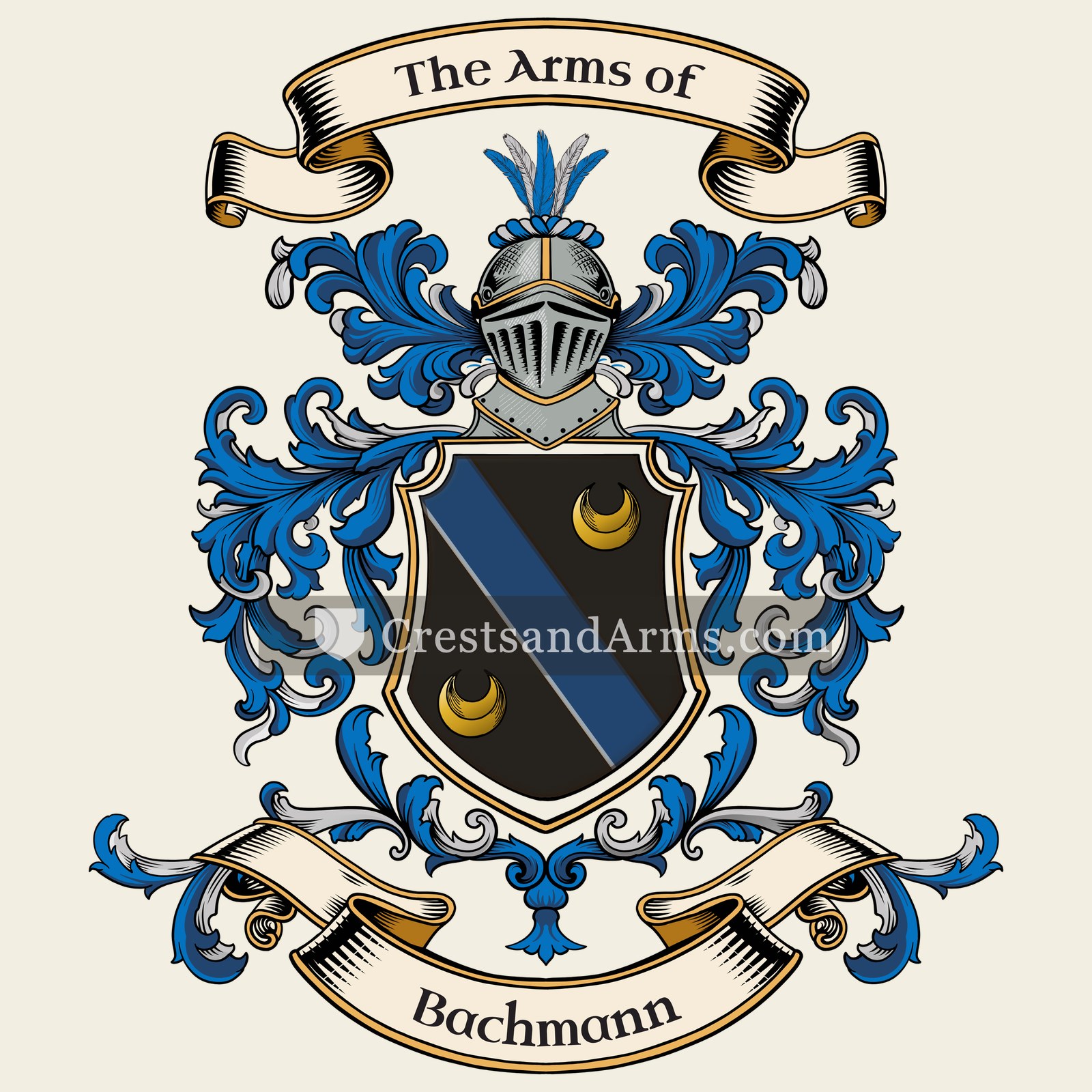
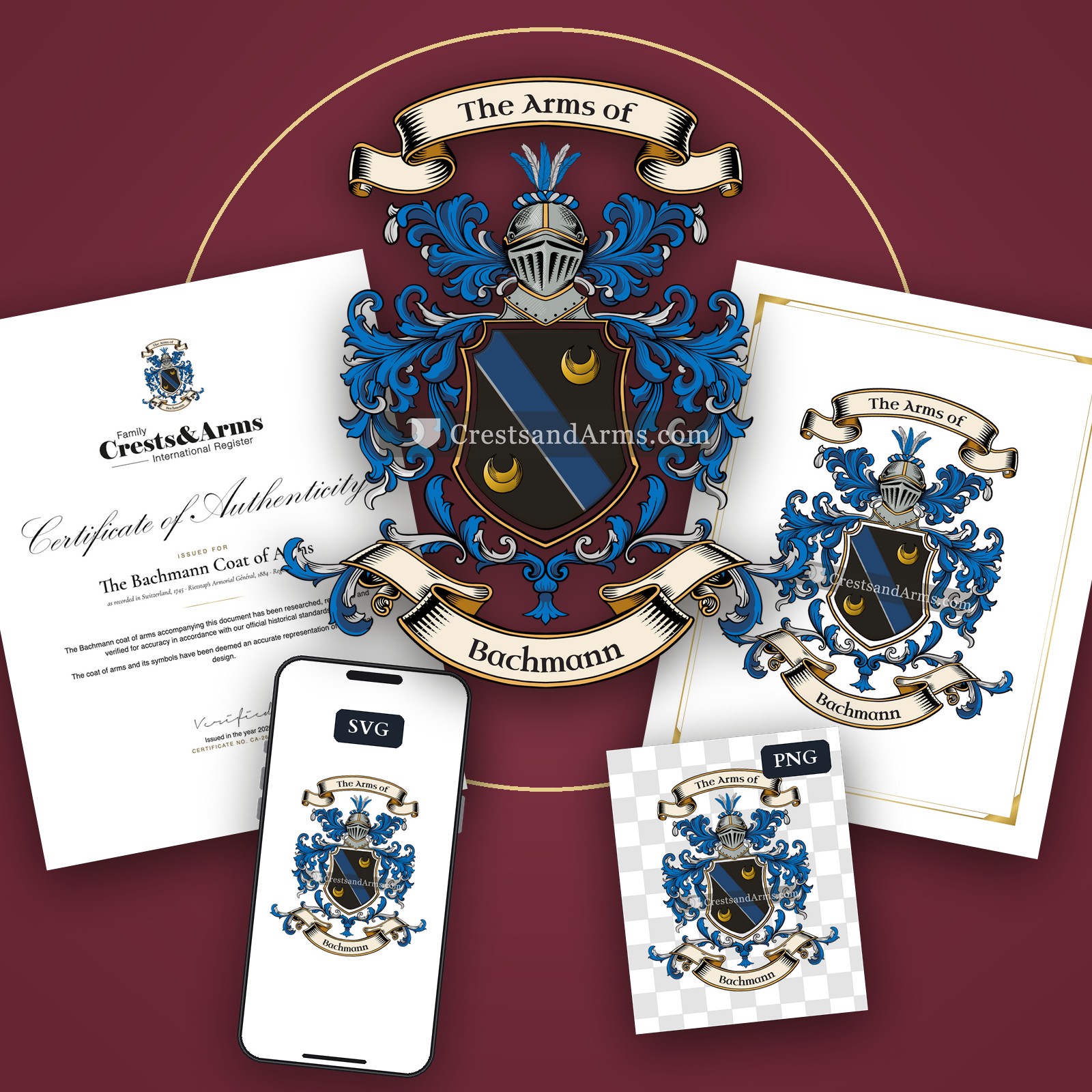
bendDefence, and the scarf of a commander
crescentHonour by the sovereign, and the second son
Colours
Black (Sable)Means: Constancy
Blue (Azure)Means: Loyalty and truth
Gold (Or)Means: Generosity
Historical info
Source
J. B. Rietstap, Armorial Général, Gouda: G. B. van Goor Zonen, 1884–87
Blazon (the actual original written record)
“De sa. à la bande ondée d'azur, acc. de deux croiss. d'or, celui en chef versé. C.: un demi-vol, aux armes de l'écu. L. d'or et de sa.”
SwitzerlandBâle, c. 1745
Digital archive packCoat of arms PNG, gold border print PDF, vector SVG and the certificate of authenticity. Sent to your email in minutes.
Map of Switzerland showing where the Bachmann arms are recorded
The Bachmann arms were recorded in Bâle, c. 1745.
This is where the arms were entered in the register. Families often moved to other parts of the country, so the same name can turn up in more than one region.
The body that granted and recorded arms in Switzerland in this period.
How Arms Worked in Switzerland
In Switzerland, coats of arms were not restricted to the nobility and were often adopted by common citizens and families. These symbols were passed down through generations to show family identity. When branches of a family grew, they often changed small details of the design to distinguish their own line from the original group.
Granting authority
Cantonal and civic authorities managed the use of coats of arms within their specific regions and local jurisdictions.
How they got arms
Families typically assumed their own coats of arms based on local custom rather than receiving them from a central monarch.
Where arms were recorded
Arms were recorded in various cantonal and civic registers starting from the fourteenth century throughout the Swiss region.
The family's standing
Recorded among the armigerous families of Switzerland.
Origin & History of the Bachmann Family in Switzerland
The family name Bachmann is a classic example of a topographic surname, which means it was originally used to identify people based on where they lived. In the German language, the name combines the words for "brook" and "man," suggesting that the earliest ancestors likely built their homes or farmed land near a small stream or creek. By the time the family was firmly established in Basel during the mid-1700s, the name had become a common identifier for families deeply integrated into the local community. During this era, Basel was a bustling center of trade and craftsmanship, and families like the Bachmanns were often involved in the city's guild system, which organized workers into professional groups. Because the name is descriptive rather than tied to a single noble house, it emerged independently in several different regions across Switzerland. This allowed the family to grow and thrive in various cantons, eventually becoming a well-recognized part of the Swiss social landscape.
Bachmann Meaning & Related Branches
Root word
Bach
A small stream or brook of water.
This name
BachmannA person who lived near a small stream or worked as a miller.
also spelled
Bachman
Bahkman
Related arms
Malainsimilar arms
Bachmanvariant spelling
Kreglingerrecorded with Bachmann, same area
Documented Sources
J. B. Rietstap, Armorial Général, Gouda: G. B. van Goor Zonen, 1884–87
Zeeuws Archief, Burgerlijke Stand Zeeland (1811–1980)
Meertens, P.J., De betekenis van de Nederlandse familienamen, 1948
Van der Schaar, J., Woordenboek van familienamen, 1992
Digital archive packCoat of arms PNG, gold border print PDF, vector SVG and the certificate of authenticity. Sent to your email in minutes.


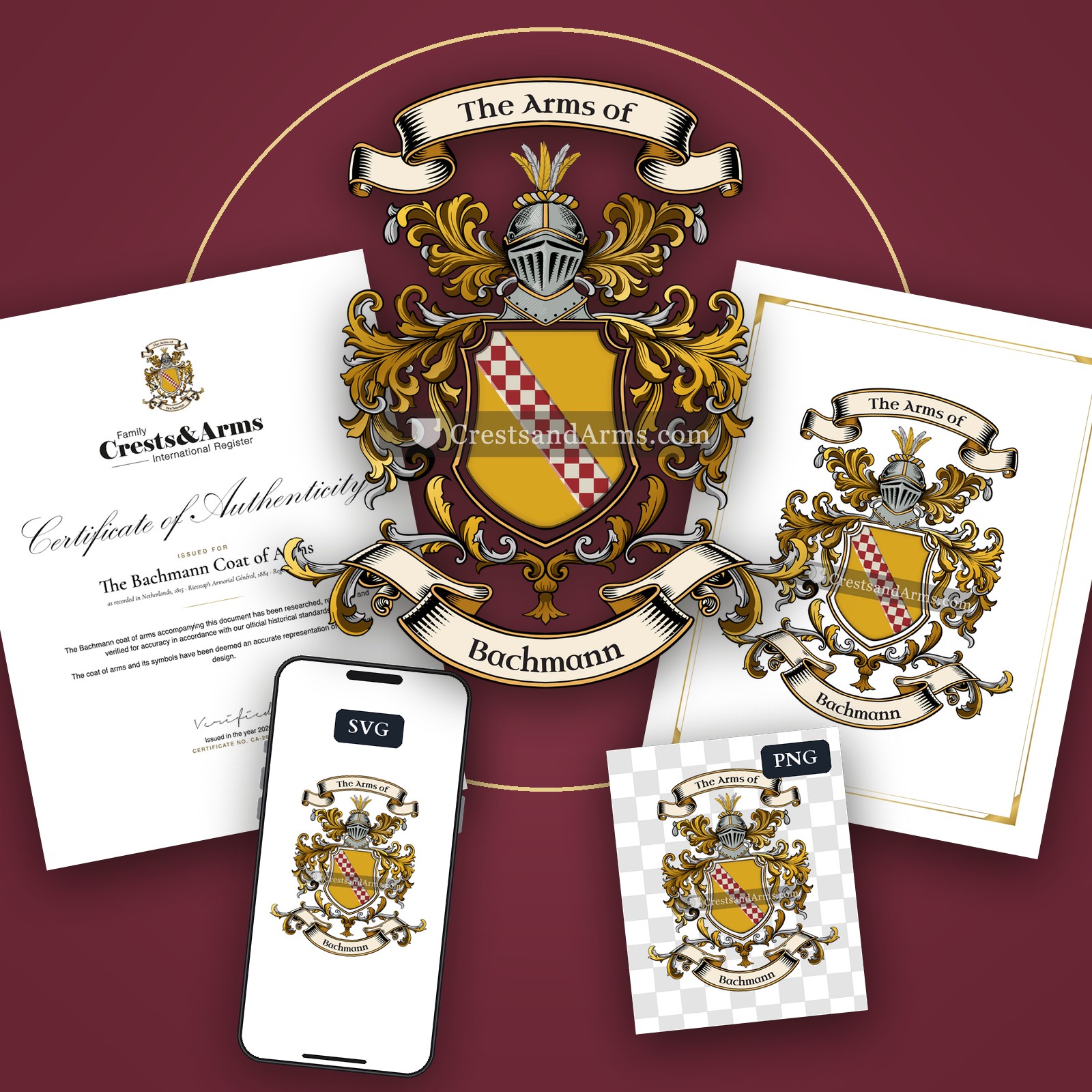
 bendDefence, and the scarf of a commander
 chequyConstancy, and the counting-board
 bendDefence, and the scarf of a commander
 chequyConstancy, and the counting-board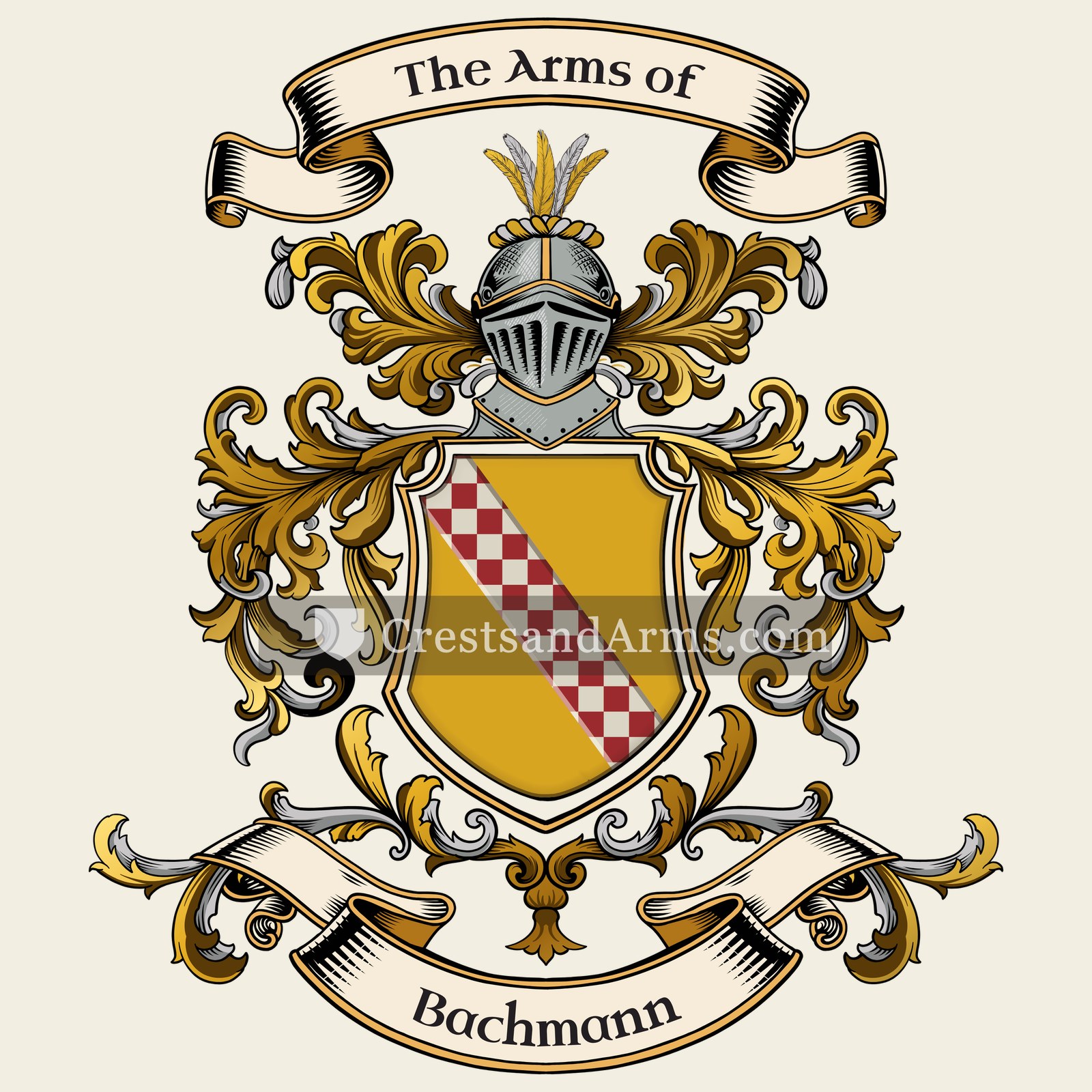


 paleMilitary strength, and a fortified defence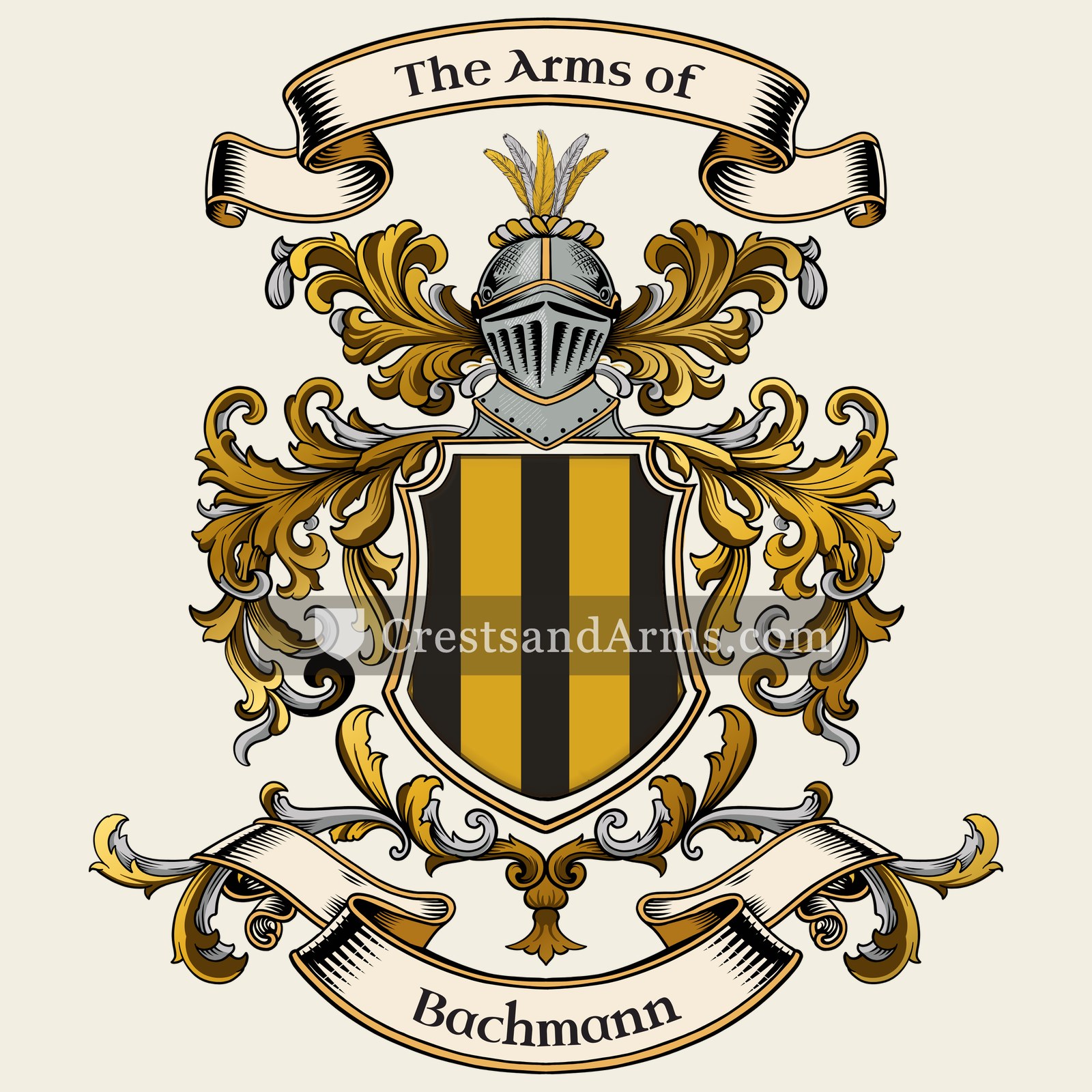


 crescentHonour by the sovereign, and the second son