A record of documented arms, meaning and origin, researched for the Back family lines. Documented in 3 countries.
Reg. 3508 · Belgian, A–C
Coat of Arms & Family Crest Details
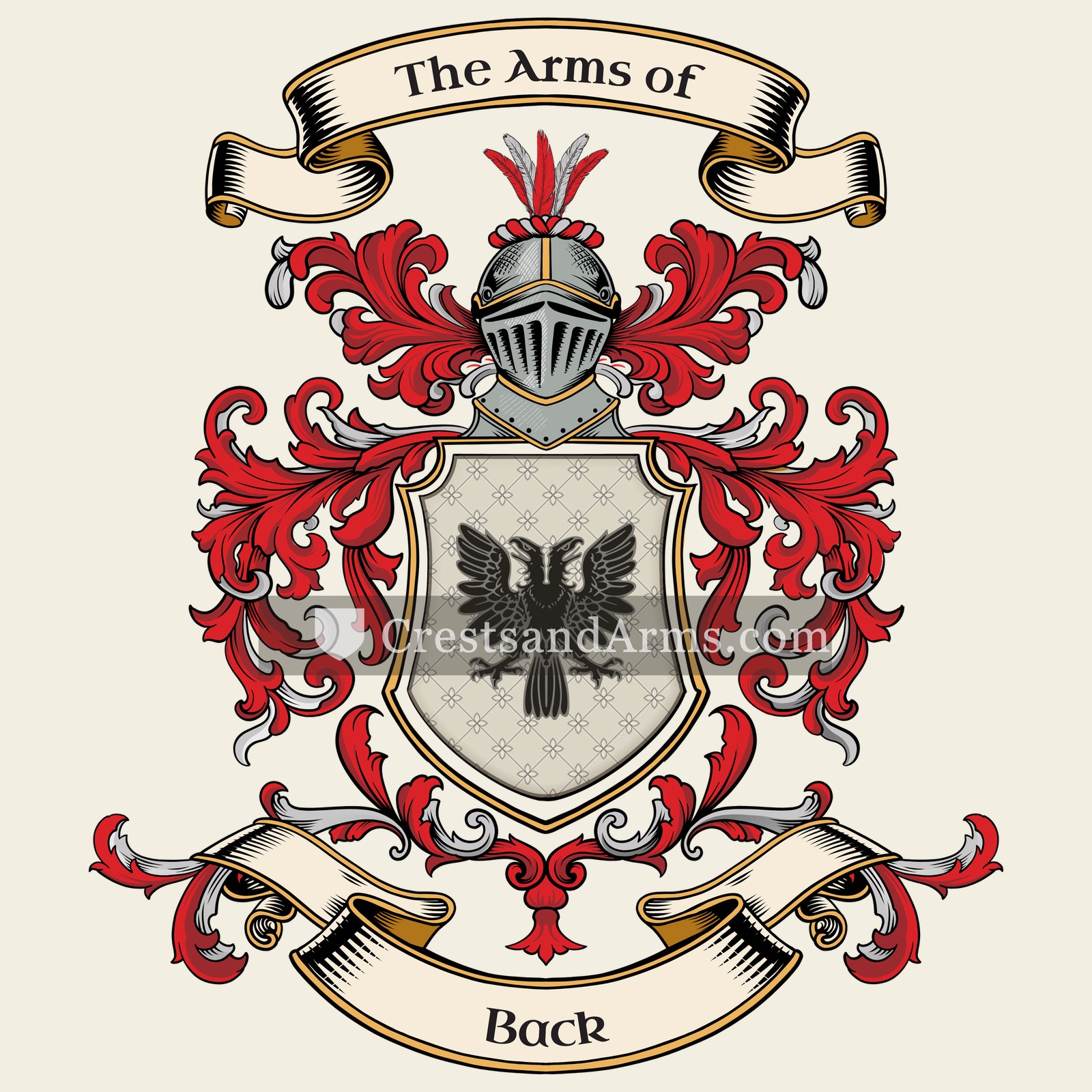
Symbols on this shield
paleMilitary strength, and a fortified defence
chiefAuthority, wisdom and dominion
lionCourage, strength and royalty
Colours
Gold (Or)Means: Generosity
Blue (Azure)Means: Loyalty and truth
Red (Gules)Means: Military strength
Silver (Argent)Means: Peace and sincerity
Historical info
Source
J. B. Rietstap, Armorial Général, Gouda: G. B. van Goor Zonen, 1884–87
Blazon (the actual original written record)
“D'or à trois pals d'azur; au chef de gu., ch. d'un lion léopardé d'arg. C.: le lion, assis sur un chapeau de gu., retr. d'arg. [Plus tard Baex dit de Hertoge : v. ce nom.]”
BrabantBrabant, c. 1737
Digital archive packCoat of arms PNG, gold border print PDF, vector SVG and the certificate of authenticity. Sent to your email in minutes.
Map of Belgium showing where the Back arms are recorded
The Back arms were recorded in Brabant, c. 1737.
Brabant lay at the heart of the Low Countries, where the trade routes met. Its towns were wealthy and its landowners many, and both kinds of family kept arms, which is why the region is so heavily represented.
This is where the arms were entered in the register. Families often moved to other parts of the country, so the same name can turn up in more than one region.
The body that granted and recorded arms in Belgium in this period.
Charles VI, Holy Roman Emperor
Sovereign of the period
Charles VI, Holy Roman Emperor
1711–1740
Reigning in Belgium when the Back arms are first recorded.
How Arms Worked in Belgium
In Belgium, a coat of arms is considered personal property that is passed down through the male line to legitimate descendants. Families often use the same shield design across generations to show their shared heritage. If a branch of the family wants to change the design, they must apply for an official update to their specific version of the arms.
Granting authority
The Conseil héraldique is the official body that regulates and approves all coats of arms in Belgium.
How they got arms
Families obtain their coats of arms through formal royal grants or by confirming their historical right to use existing designs.
Where arms were recorded
All approved coats of arms are officially recorded in the public registers of the Conseil héraldique since 1844.
The family's standing
Recorded among the armigerous families of Brabant.
Origin & History of the Back Family in Belgium
The history of the Back family in Belgium is deeply rooted in the historical region of Brabant, where records confirm their presence as early as 1737. During the eighteenth century, Brabant was a vibrant center of trade and agriculture under the rule of the Austrian Netherlands. Families with the name Back often lived in rural or semi-urban communities where they contributed to the local economy as skilled tradespeople or landholders. The name itself likely originated as a descriptive term for someone living near a specific geographical feature, such as a stream or a ridge, which was a common way for people in the Low Countries to distinguish themselves during that era. As the family established their roots in the region, they became part of the social fabric of the local parishes, leaving behind traces in baptismal and marriage registers that document their growth and movement across the Brabant landscape.
Coat of Arms & Family Crest Details
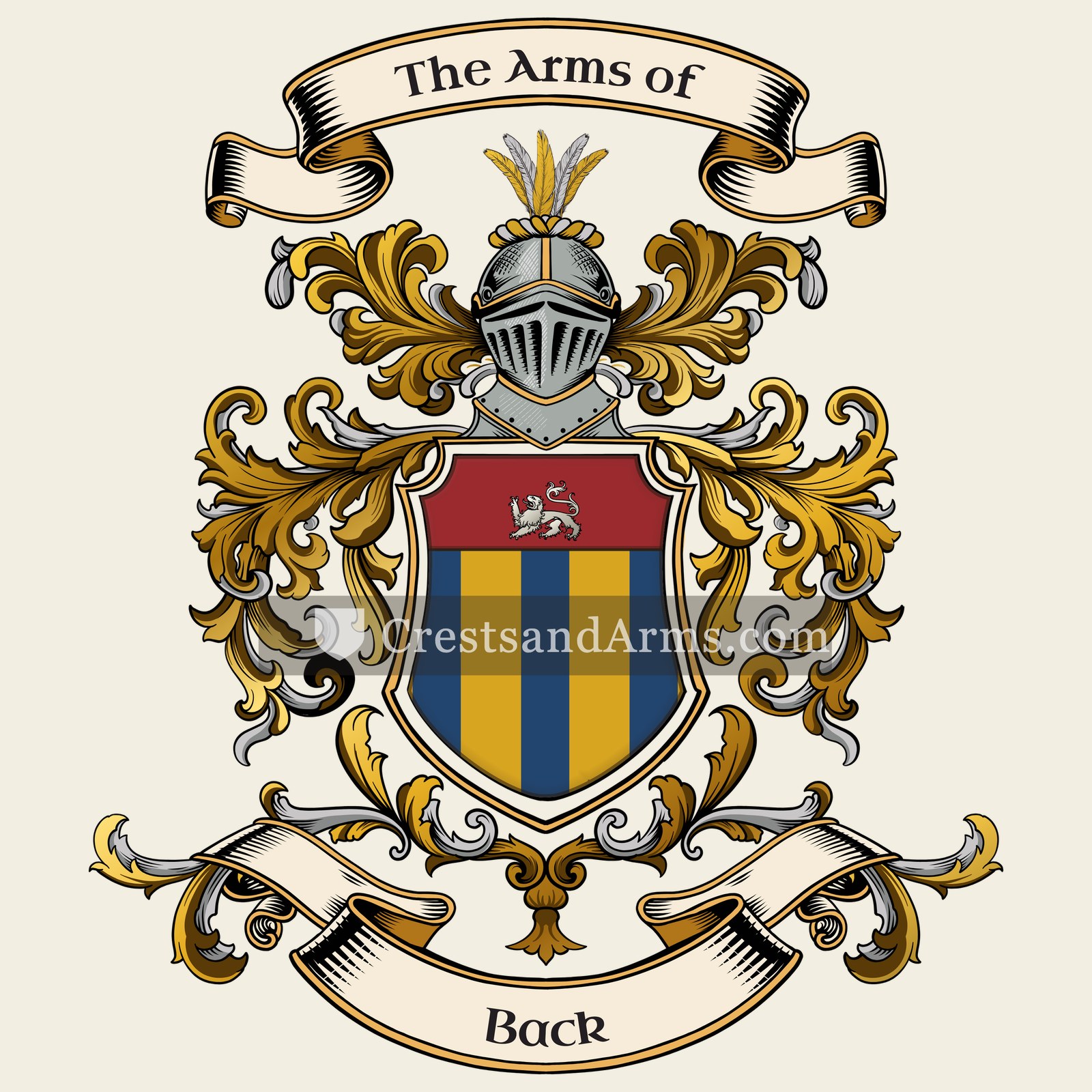
Symbols on this shield
cross symbolChristian faith and service
trefoilPerpetuity, and the Trinity
Colours
Blue (Azure)Means: Loyalty and truth
Gold (Or)Means: Generosity
Green (Vert)Means: Hope
Historical info
Source
J. B. Rietstap, Armorial Général, Gouda: G. B. van Goor Zonen, 1884–87
Blazon (the actual original written record)
“D'azur à une croix pattée alésée d'or, cant. de quatre trèfles de sin. C.: une rose à six feuilles d'arg., entre deux prob. d'azur et d'or. L. d'or et d'azur.”
Finlandc. 1719
Digital archive packCoat of arms PNG, gold border print PDF, vector SVG and the certificate of authenticity. Sent to your email in minutes.
Map of Finland showing where the Back arms are recorded
The Back arms were recorded in Finland, c. 1719.
Arms such as these were typically recorded in Uusimaa.
Uusimaa was the Finnish coast facing Sweden, and the part of the country most closely tied to Stockholm. Its landowners and officers served the Swedish crown, and that service is what put their arms on record.
This is where the arms were entered in the register. Families often moved to other parts of the country, so the same name can turn up in more than one region.
The body that granted and recorded arms in Finland in this period.
How Arms Worked in Finland
Nobility in Finland held the exclusive right to register their coats of arms with the House of Nobility. These symbols were tied to the family name and were inherited by all members of the noble house. If a family branch moved or changed status, they kept their original design to maintain their identity within the official records.
Granting authority
The Finnish House of Nobility served as the official body that managed and protected all noble coats of arms.
How they got arms
Families received their arms through formal letters of nobility or by having their existing ancestral symbols confirmed by the House.
Where arms were recorded
All approved coats of arms were officially recorded in the Finnish House of Nobility Armorial starting in 1818.
The family's standing
Recorded among the armigerous families of Finland.
Origin & History of the Back Family in Finland
The surname Back has deep roots in the coastal regions of southern Finland, particularly within the province of Uusimaa. By the year 1719, families carrying this name were already established in the area, likely living as farmers or tradespeople along the Baltic coastline. The name itself is of Swedish origin and typically refers to a small stream or a hillside, which suggests that the earliest ancestors likely took the name from the specific landscape where they built their homes. During the eighteenth century, Uusimaa was a region defined by its bilingual culture, and the name Back fit naturally into the local naming traditions of the time. Because the region was a hub for maritime trade and agriculture, families with this name were often integrated into the local parish systems, which helped preserve their records through generations of social and political change. These early settlers were part of a resilient community that maintained their identity through the shifting borders and administrative transitions of the era.
Coat of Arms & Family Crest Details
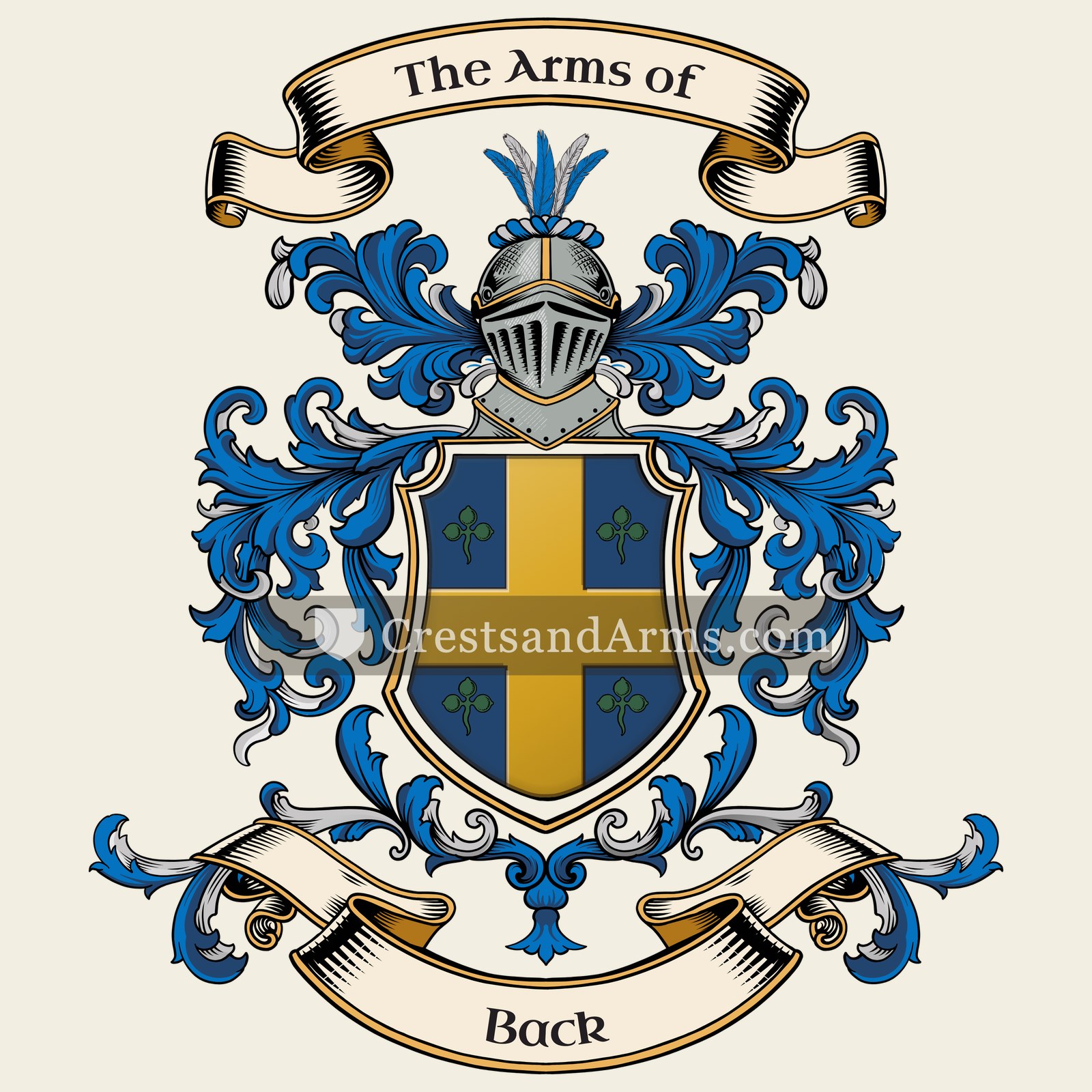
Symbols on this shield
eagleNobility, strength and a keen mind
Colours
Silver (Argent)Means: Peace and sincerity
Black (Sable)Means: Constancy
Historical info
Source
Sir Bernard Burke, The General Armory of England, Scotland, Ireland and Wales, London: Harrison & Sons, 1884
Blazon (the actual original written record)
“Ar. an eagle recursant overture sa”
Englandc. 1620
Digital archive packCoat of arms PNG, gold border print PDF, vector SVG and the certificate of authenticity. Sent to your email in minutes.
Map of England showing where the Back arms are recorded
The Back arms were recorded in England, c. 1620.
Arms such as these were typically recorded in York.
Yorkshire is the largest of the English counties, and it held more gentry families than any other. Land there was split among a great many households rather than a few, so a great many of them carried arms.
This is where the arms were entered in the register. Families often moved to other parts of the country, so the same name can turn up in more than one region.
The body that granted and recorded arms in England in this period.
James VI and I
Sovereign of the period
James VI and I
1603–1625
Reigning in Belgium when the Back arms are first recorded.
How Arms Worked in England
English heraldry allowed arms to be shared by all legitimate descendants of the original owner. These symbols were treated as personal property that moved through the generations to all children. While the eldest son kept the original design, other family members could use the same shield without needing to change it or register their own unique versions.
Granting authority
The College of Arms in London has regulated the use of coats of arms throughout England and Wales since 1484.
How they got arms
Families typically obtained their coats of arms through a formal grant from the Crown or by proving their ancient right to them.
Where arms were recorded
All official coats of arms are recorded in the registers kept at the College of Arms, which date back to the fifteenth century.
The family's standing
Recorded among the armigerous families of England.
Origin & History of the Back Family in England
The surname Back is rooted in the linguistic traditions of medieval England, where it likely functioned as a topographic name for someone who lived near a stream or a ridge. By the early seventeenth century, the family had established a notable presence in the historic city of York. Records from 1620 confirm that members of the family were living in this northern hub during a time of significant social and religious change. Because York served as a major center for trade and administration in the north of England, families like the Backs were often integrated into the local economy as craftsmen or merchants. This period of history saw the family navigating the transition from the Elizabethan era into the Stuart period, leaving behind traces in local parish registers and civic documents that reflect their long-standing connection to the region.
Back Meaning & Related Branches
Root word
Bach
A Middle High German term referring to a small stream or brook.
This name
BackA topographic name for someone who lived near a stream or small river.
also spelled
Bak
Bac
Beck
Bake
Bakke
Related arms
Tilbourgsimilar arms
Bachvariant spelling
Documented Sources
J. B. Rietstap, Armorial Général, Gouda: G. B. van Goor Zonen, 1884–87
Algemeen Rijksarchief (General State Archives of Belgium), Parochieregisters van Brabant (Parish Registers of Brabant)
Devleeschouwer, R., L'arrondissement du Brabant sous l'occupation française (1794-1795), 1964
Verhulst, A., Précis d'histoire rurale de la Belgique, 1990
Digital archive packCoat of arms PNG, gold border print PDF, vector SVG and the certificate of authenticity. Sent to your email in minutes.


 paleMilitary strength, and a fortified defence
 chiefAuthority, wisdom and dominion
 lionCourage, strength and royalty
 paleMilitary strength, and a fortified defence
 chiefAuthority, wisdom and dominion
 lionCourage, strength and royalty


 cross symbolChristian faith and service
 trefoilPerpetuity, and the Trinity

 eagleNobility, strength and a keen mind