Map of Belgium showing where the Badu arms are recorded
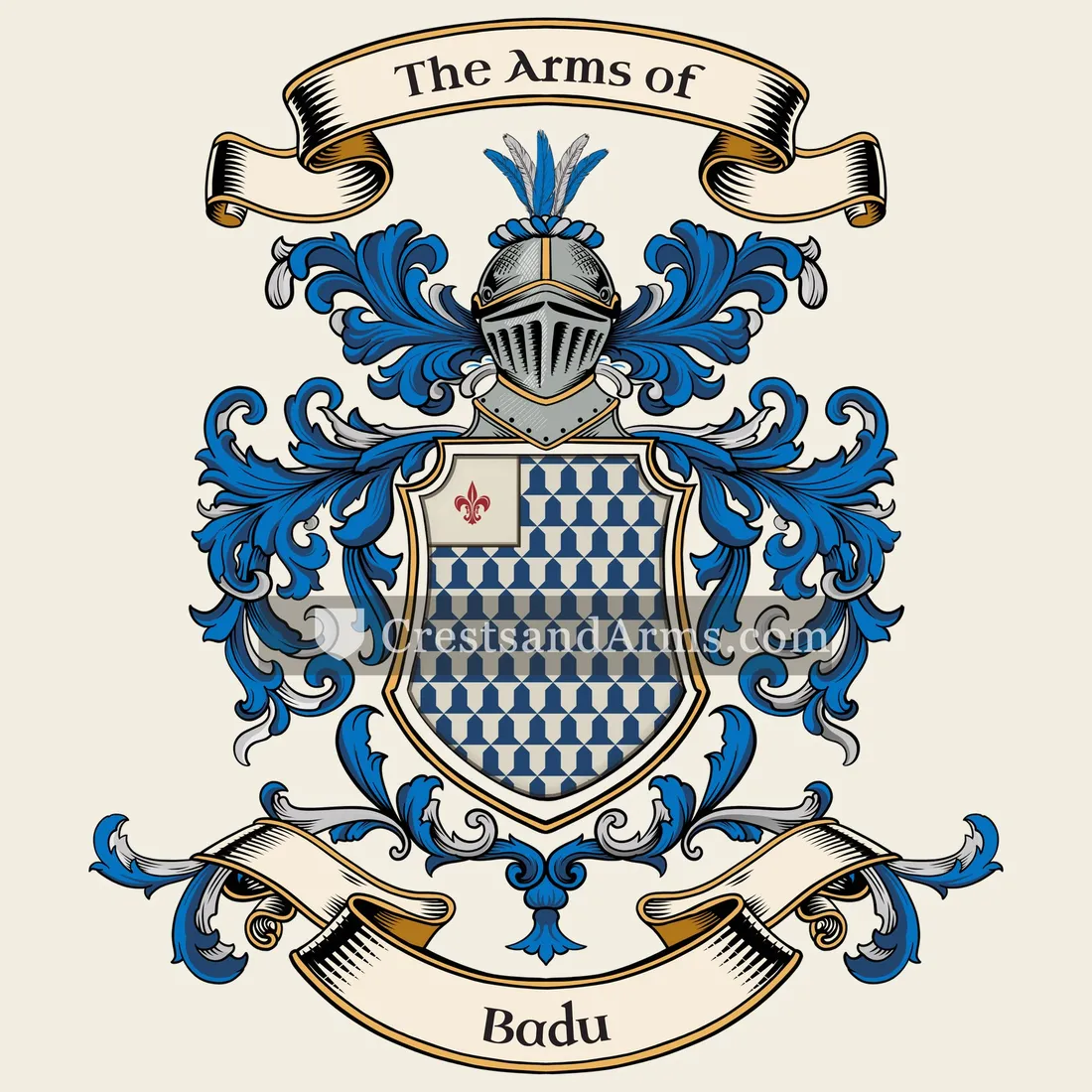
The Badu arms were recorded in Belgium, c. 1737.
Arms such as these were typically recorded in Brabant.
Brabant lay at the heart of the Low Countries, where the trade routes met. Its towns were wealthy and its landowners many, and both kinds of family kept arms, which is why the region is so heavily represented.
This is where the arms were entered in the register. Families often moved to other parts of the country, so the same name can turn up in more than one region.
The body that granted and recorded arms in Belgium in this period.
Charles VI, Holy Roman Emperor
Sovereign of the period
Charles VI, Holy Roman Emperor
1711–1740
Reigning in Belgium when the Badu arms are first recorded.
How Arms Worked in Belgium
In Belgium, a coat of arms is considered personal property that is passed down through the male line to legitimate descendants. Families often use the same shield design across generations to show their shared heritage. If a branch of the family wants to change the design, they must apply for an official update to their specific version of the arms.
Granting authority
The Conseil héraldique is the official body that regulates and approves all coats of arms in Belgium.
How they got arms
Families obtain their coats of arms through formal royal grants or by confirming their historical right to use existing designs.
Where arms were recorded
All approved coats of arms are officially recorded in the public registers of the Conseil héraldique since 1844.
The family's standing
Recorded among the armigerous families of Belgium.
Origin & History of the Badu Family in Belgium
The family name Badu carries a history rooted in the heart of the Low Countries, with documented evidence placing early members in the region of Brabant by 1737. During the eighteenth century, Brabant was a bustling center of trade and agriculture under the rule of the Austrian Habsburgs. Families living in this area often relied on the fertile soil and the proximity to major river networks to sustain their livelihoods. The name likely emerged within this social landscape as a way to identify individuals within their local parish communities. As record-keeping became more standardized through church registries, the Badu name began to appear in official documents that tracked births, marriages, and deaths. These early ancestors were part of a society that valued community ties and local craftsmanship, helping to establish the foundation for the family name as it moved through the generations.
Badu Meaning & Related Branches
Root word
Baudouin
Derived from Germanic elements meaning bold friend or brave protector.
This name
BaduA shortened variant of the Germanic name meaning bold friend or brave protector.
also spelled
Badutte
Badu
Documented Sources
J. B. Rietstap, Armorial Général, Gouda: G. B. van Goor Zonen, 1884–87
State Archives in Belgium (Rijksarchief te België), Parochieregisters van de provincie Brabant
Vandermaelen, Philippe, Dictionnaire géographique de la province de Brabant, 1832
Digital archive packCoat of arms PNG, gold border print PDF, vector SVG and the certificate of authenticity. Sent to your email in minutes.


 fleur de lisPurity, light, and the sixth son
 fleur de lisPurity, light, and the sixth son