Map of Germany showing where the Bael arms are recorded
The Bael arms were recorded in Germany, c. 1765.
Arms such as these were typically recorded in Bavaria.
Bavaria was a country of old landed families and walled market towns. Estates passed down the same line for centuries, and both the landowners and the leading townsmen kept arms, which is why so many Bavarian names sit in the registers.
This is where the arms were entered in the register. Families often moved to other parts of the country, so the same name can turn up in more than one region.
The body that granted and recorded arms in Germany in this period.
Francis I, Holy Roman Emperor
Sovereign of the period
Francis I, Holy Roman Emperor
1745–1765
Reigning in Germany when the Bael arms are first recorded.
How Arms Worked in Germany
In the Holy Roman Empire, coats of arms were often granted to individuals by the Emperor or his representatives. These arms were then passed down through the generations to all legitimate descendants of the original holder. Younger branches of a family usually kept the same shield design without needing to change it, as the arms belonged to the entire lineage.
Granting authority
The Holy Roman Emperor held the sole power to grant new coats of arms throughout his vast imperial territories.
How they got arms
Families typically obtained their coats of arms through a formal imperial grant or by proving their noble status to the authorities.
Where arms were recorded
These grants were officially recorded in the Imperial Chancery registers, which began keeping formal records of such honors during the Middle Ages.
The family's standing
Recorded among the armigerous families of Germany.
Origin & History of the Bael Family in Germany
The family name Bael traces its roots to the southern regions of Germany, particularly within the historical borders of Bavaria. By the mid-eighteenth century, records confirm that members of the family were well-established in this area by 1765. During this period, Bavaria was a landscape defined by small agricultural communities and strict social hierarchies under the rule of the Wittelsbach dynasty. Families like the Baels were often tied to the land or specialized trades that supported the local economy of the Bavarian Electorate. As the region transitioned through the Enlightenment, the name appeared in local parish registers and tax documents that tracked the movement and growth of rural populations. These early ancestors lived through a time of significant cultural change, as the influence of the Catholic Church and the evolving laws of the Holy Roman Empire shaped the daily lives of citizens. The persistence of the name in these records suggests that the family was a stable part of the local community, contributing to the development of the Bavarian social fabric long before the unification of Germany.
Meaning of the Bael family crest colors & symbols
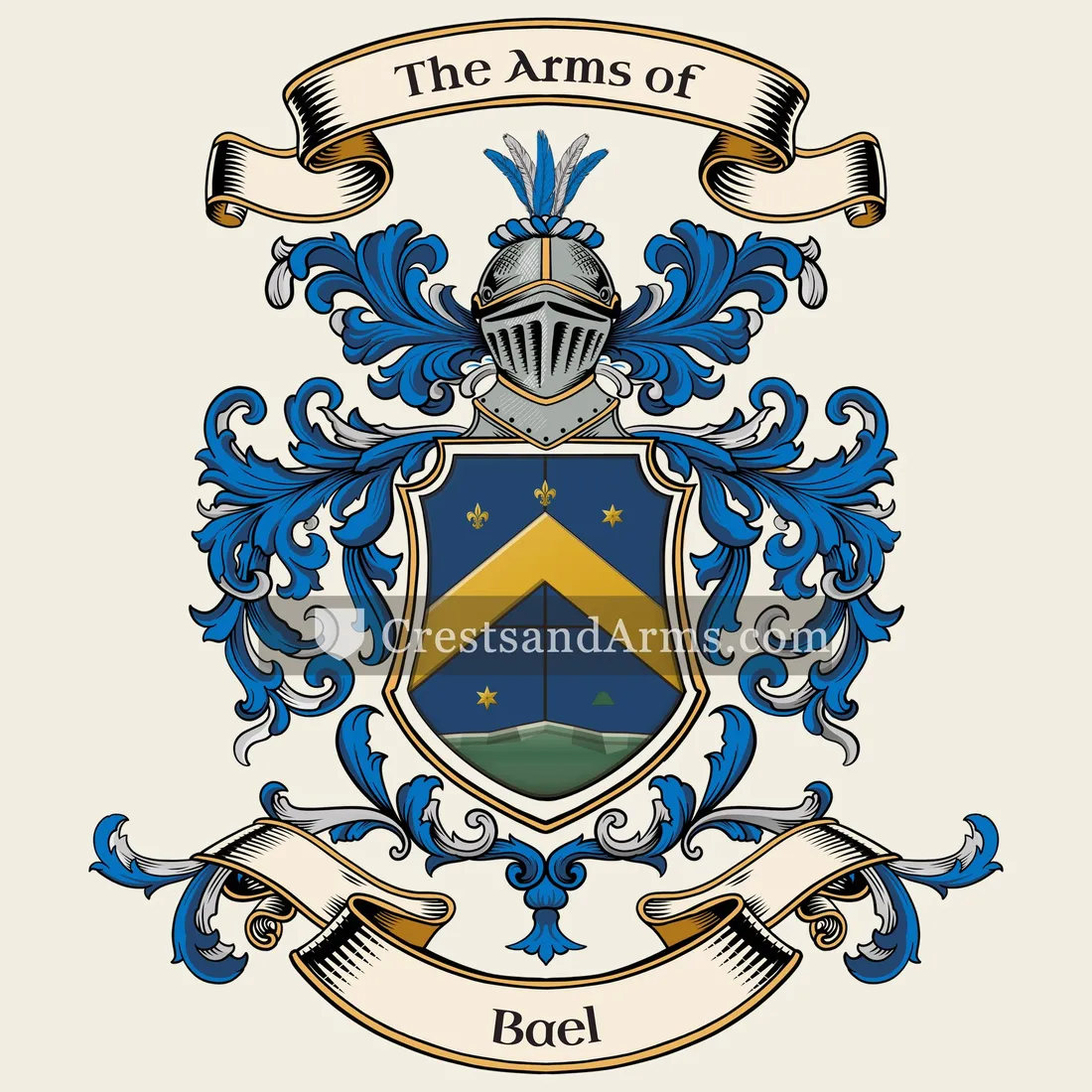
Symbols on this shield
chevronProtection, and faithful service completed
mountThe ground held, and steadfastness upon it
fleur de lisPurity, light, and the sixth son
starThe celestial goddess, and nobility
Colours
Blue (Azure)Means: Loyalty and truth
Gold (Or)Means: Generosity
Green (Vert)Means: Hope
Historical info
Source
J. B. Rietstap, Armorial Général, Gouda: G. B. van Goor Zonen, 1884–87
Blazon (the actual original written record)
“Ec.: aux 1 et 4 d'azur à une fleur-de-lis d'or; aux 2 et 3 d'arg. au chev. d'azur, acc. en chef de deux étoiles (5) d'or et en p. d'un tertre de trois coupeaux de sin.”
Switzerlandc. 1745
Digital archive packCoat of arms PNG, gold border print PDF, vector SVG and the certificate of authenticity. Sent to your email in minutes.
Map of Switzerland showing where the Bael arms are recorded
The Bael arms were recorded in Switzerland, c. 1745.
Arms such as these were typically recorded in Bern.
Bern was the largest of the Swiss cantons and ran itself, with its own council and its own courts. Its governing families held office for generations, and office of that kind carried a shield with it.
This is where the arms were entered in the register. Families often moved to other parts of the country, so the same name can turn up in more than one region.
The body that granted and recorded arms in Switzerland in this period.
How Arms Worked in Switzerland
In Switzerland, coats of arms were not restricted to the nobility and were often adopted by common citizens and families. These symbols were passed down through generations to show family identity. When branches of a family grew, they often changed small details of the design to distinguish their own line from the original group.
Granting authority
Cantonal and civic authorities managed the use of coats of arms within their specific regions and local jurisdictions.
How they got arms
Families typically assumed their own coats of arms based on local custom rather than receiving them from a central monarch.
Where arms were recorded
Arms were recorded in various cantonal and civic registers starting from the fourteenth century throughout the Swiss region.
The family's standing
Recorded among the armigerous families of Switzerland.
Origin & History of the Bael Family in Switzerland
The history of the Bael family in Switzerland is deeply rooted in the administrative and social landscape of the Canton of Bern during the mid-18th century. By 1745, members of the family were established residents of the region, navigating a society defined by strict citizenship laws and local guild structures. During this era, families like the Baels often played essential roles in the agricultural and artisanal sectors that supported the growing city of Bern. Because Switzerland maintained meticulous records of its inhabitants to manage taxes and military service, the presence of the Bael name in these documents highlights their integration into the local community. These early ancestors lived through a period of significant political stability in the Swiss Confederacy, allowing them to build lasting roots within the alpine valleys and urban centers of the Bernese territory. Their story is a reflection of the broader movement of families who helped shape the identity of the Swiss cantons through generations of steady labor and civic participation.
Bael Meaning & Related Branches
Root word
Baal
A Semitic term meaning lord, master, or possessor.
This name
BaelA topographic name for someone living near a specific location or a derivative of ancient honorific titles.
also spelled
Bull
Documented Sources
J. B. Rietstap, Armorial Général, Gouda: G. B. van Goor Zonen, 1884–87


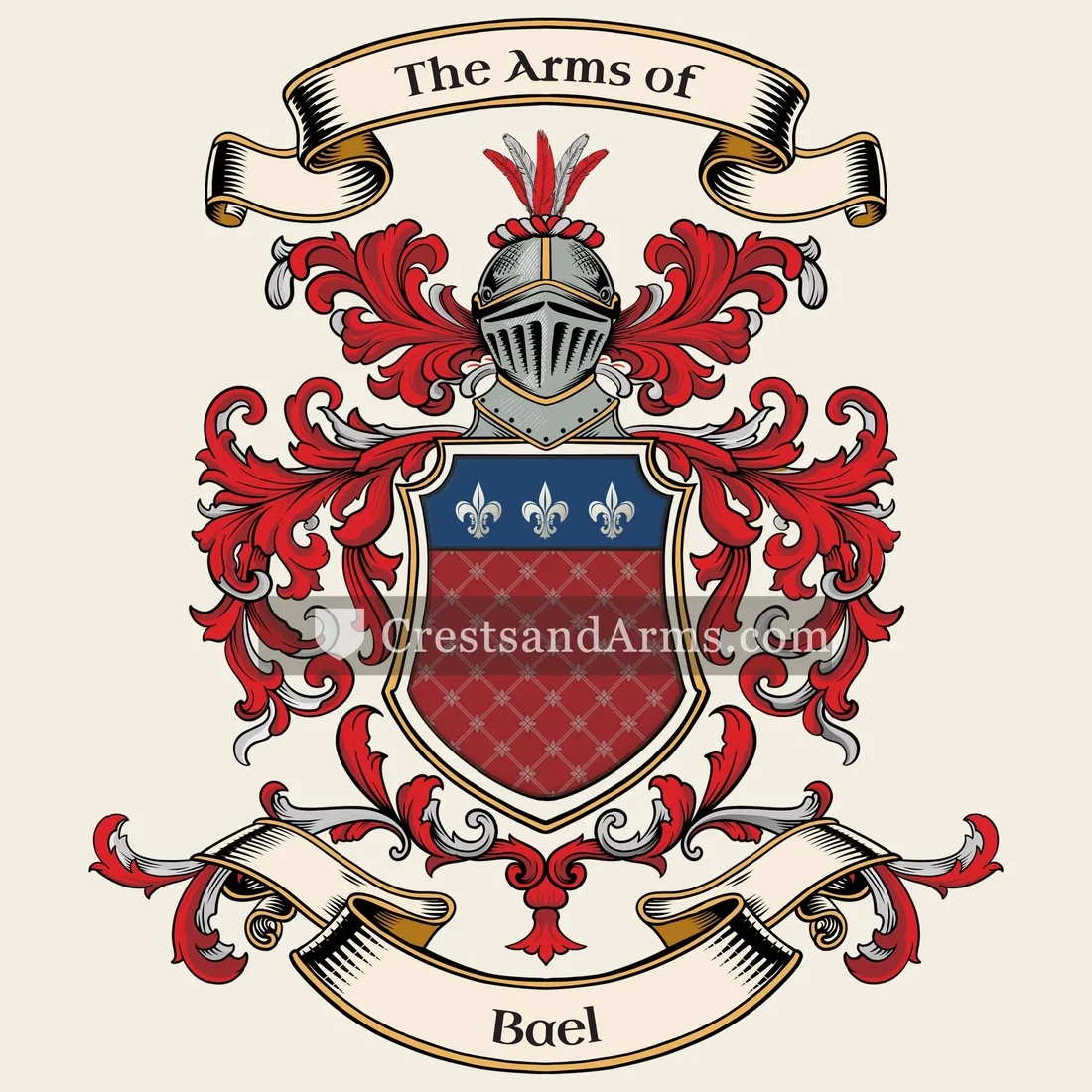
 chiefAuthority, wisdom and dominion
 fleur de lisPurity, light, and the sixth son
 chiefAuthority, wisdom and dominion
 fleur de lisPurity, light, and the sixth son


 chevronProtection, and faithful service completed
 mountThe ground held, and steadfastness upon it
 starThe celestial goddess, and nobility