Map of Germany showing where the Bähr arms are recorded
The Bähr arms were recorded in Germany, c. 1765.
Arms such as these were typically recorded in Bavaria.
Bavaria was a country of old landed families and walled market towns. Estates passed down the same line for centuries, and both the landowners and the leading townsmen kept arms, which is why so many Bavarian names sit in the registers.
This is where the arms were entered in the register. Families often moved to other parts of the country, so the same name can turn up in more than one region.
The body that granted and recorded arms in Germany in this period.
Francis I, Holy Roman Emperor
Sovereign of the period
Francis I, Holy Roman Emperor
1745–1765
Reigning in Germany when the Bähr arms are first recorded.
How Arms Worked in Germany
In the Holy Roman Empire, coats of arms were often granted to individuals by the Emperor or his representatives. These arms were then passed down through the generations to all legitimate descendants of the original holder. Younger branches of a family usually kept the same shield design without needing to change it, as the arms belonged to the entire lineage.
Granting authority
The Holy Roman Emperor held the sole power to grant new coats of arms throughout his vast imperial territories.
How they got arms
Families typically obtained their coats of arms through a formal imperial grant or by proving their noble status to the authorities.
Where arms were recorded
These grants were officially recorded in the Imperial Chancery registers, which began keeping formal records of such honors during the Middle Ages.
The family's standing
Recorded among the armigerous families of Germany.
Origin & History of the Bähr Family in Germany
The surname Bähr is deeply rooted in the German language and serves as a classic example of a name derived from a nickname. In Middle High German, the word "bër" referred to a bear, and it was common for people to adopt this term to describe someone who possessed great strength or a particularly brave personality. By the time the family was firmly established in Bavaria during the mid-18th century, the name had become a permanent fixture of the local population. Families living in the Bavarian region in 1765 often worked in agriculture or skilled trades, and their records were typically kept in local parish registers. These documents were essential for tracking births, marriages, and deaths within the community. Because the name Bähr was descriptive, it likely emerged independently in several different German-speaking areas, meaning that families sharing the name were not always related by blood. Instead, the name reflects a shared cultural tradition of using animal imagery to identify neighbors and community members in everyday life.
Coat of Arms & Family Crest Details
Symbols on this shield
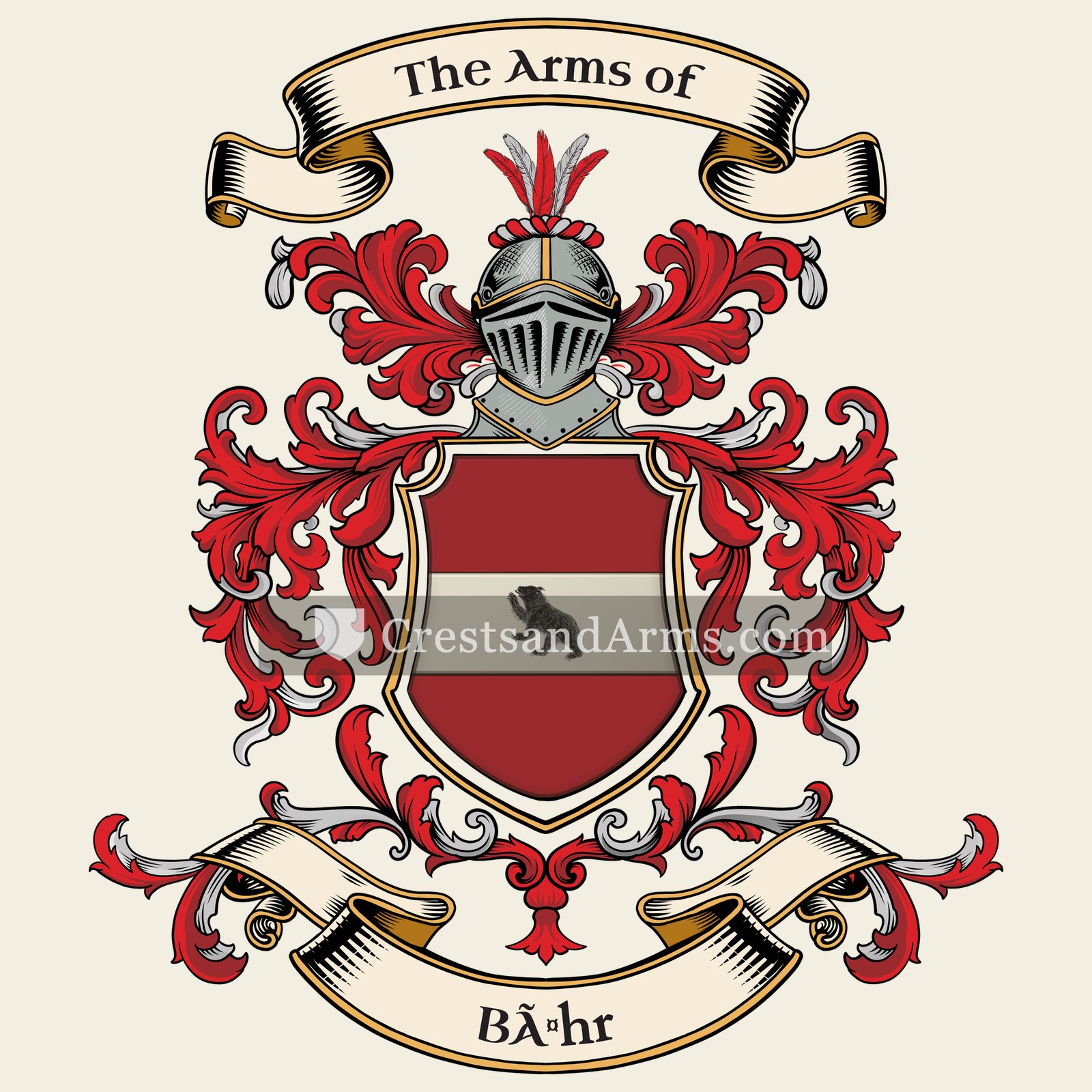
fessThe military belt, and readiness to serve
bearStrength, cunning and protection of kin
Colours
Red (Gules)Means: Military strength
Silver (Argent)Means: Peace and sincerity
Black (Sable)Means: Constancy
Historical info
Source
J. B. Rietstap, Armorial Général, Gouda: G. B. van Goor Zonen, 1884–87
Blazon (the actual original written record)
“De gu. à la fasce d'arg., ch. d'un ours naiss. de sa., s'élançant hors de la fasce. C.: un vol de gu., chaque aile ch. d'une patte d'ours de sa. L. d'arg. et de gu.”
LivoniaLivonia, c. 1772
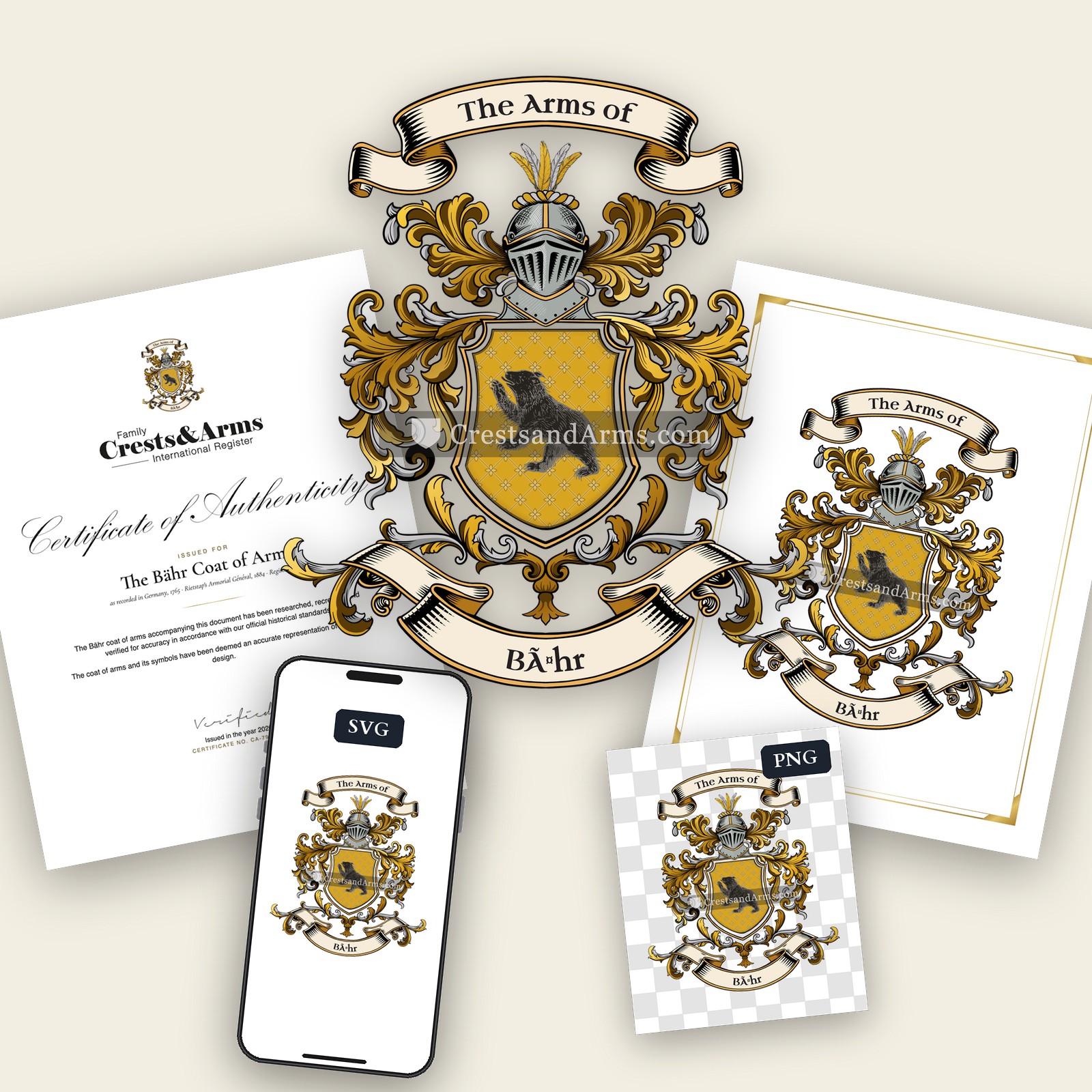
Digital archive packCoat of arms PNG, gold border print PDF, vector SVG and the certificate of authenticity. Sent to your email in minutes.
Map of Poland showing where the Bähr arms are recorded
The Bähr arms were recorded in Livonia, c. 1772.
Livonia was Baltic country held by a small number of landed families who kept their estates for centuries. Land there passed down whole rather than being divided, and long unbroken tenure is what fills a register.
This is where the arms were entered in the register. Families often moved to other parts of the country, so the same name can turn up in more than one region.
Region
Livonia
First recorded
1772
Granting Authority for the Bähr Arms
Ennoblement by the Sejm
Author: Olek Remesz · CC BY-SA 3.0
The body that granted and recorded arms in Poland in this period.
Stanisław August Poniatowski
Sovereign of the period
Stanisław August Poniatowski
1764–1795
Reigning in Germany when the Bähr arms are first recorded.
How Arms Worked in Poland
Polish noble families shared a single coat of arms across many different surnames, creating large clans rather than individual designs. These symbols were held collectively by all members of the clan regardless of their specific family name. When a new family joined the nobility, they were adopted into an existing clan and began using that group's established shield.
Granting authority
The Sejm, which was the Polish parliament, held the power to grant noble status and the right to bear arms.
How they got arms
Families typically received their coat of arms through a formal act of ennoblement granted by the Sejm for distinguished service.
Where arms were recorded
These grants were officially recorded in the Crown Metrica, which served as the central archive for state documents starting in the sixteenth century.
The family's standing
Recorded among the armigerous families of Livonia.
Origin & History of the Bähr Family in Poland
The surname Bähr has deep roots in the Baltic region, where families bearing this name were well-established long before the late eighteenth century. By 1772, members of the Bähr family were documented as residents of Livonia, a historical territory that spanned parts of modern-day Latvia and Estonia. At that time, Livonia was under the influence of the Russian Empire, though it maintained strong cultural and social ties to the German-speaking world. The name itself is derived from the Middle High German word for bear, which was often used as a nickname for a person of great strength or a stoic personality. As these families moved through the borderlands of Poland and the Baltic provinces, they often integrated into the local administrative and professional classes. Their presence in Livonia during this era reflects a period of significant migration and social change, as families sought new opportunities within the shifting borders of Eastern Europe.
Bähr Meaning & Related Branches
Root word
bero
A Germanic term referring to a bear.
This name
BährA nickname for a person with bear-like qualities or a habit of hibernation.
also spelled
Baher
Bahrr
Bar
Documented Sources
J. B. Rietstap, Armorial Général, Gouda: G. B. van Goor Zonen, 1884–87
Bahlow, Hans, Deutsches Namenlexikon: Familien- und Vornamen nach Ursprung und Sinn erklärt, 1967
Heintze, Albert, Die deutschen Familiennamen: geschichtlich, geographisch, sprachlich, 1903
Bayerisches Hauptstaatsarchiv, Kirchenbücher der Pfarreien, 1765
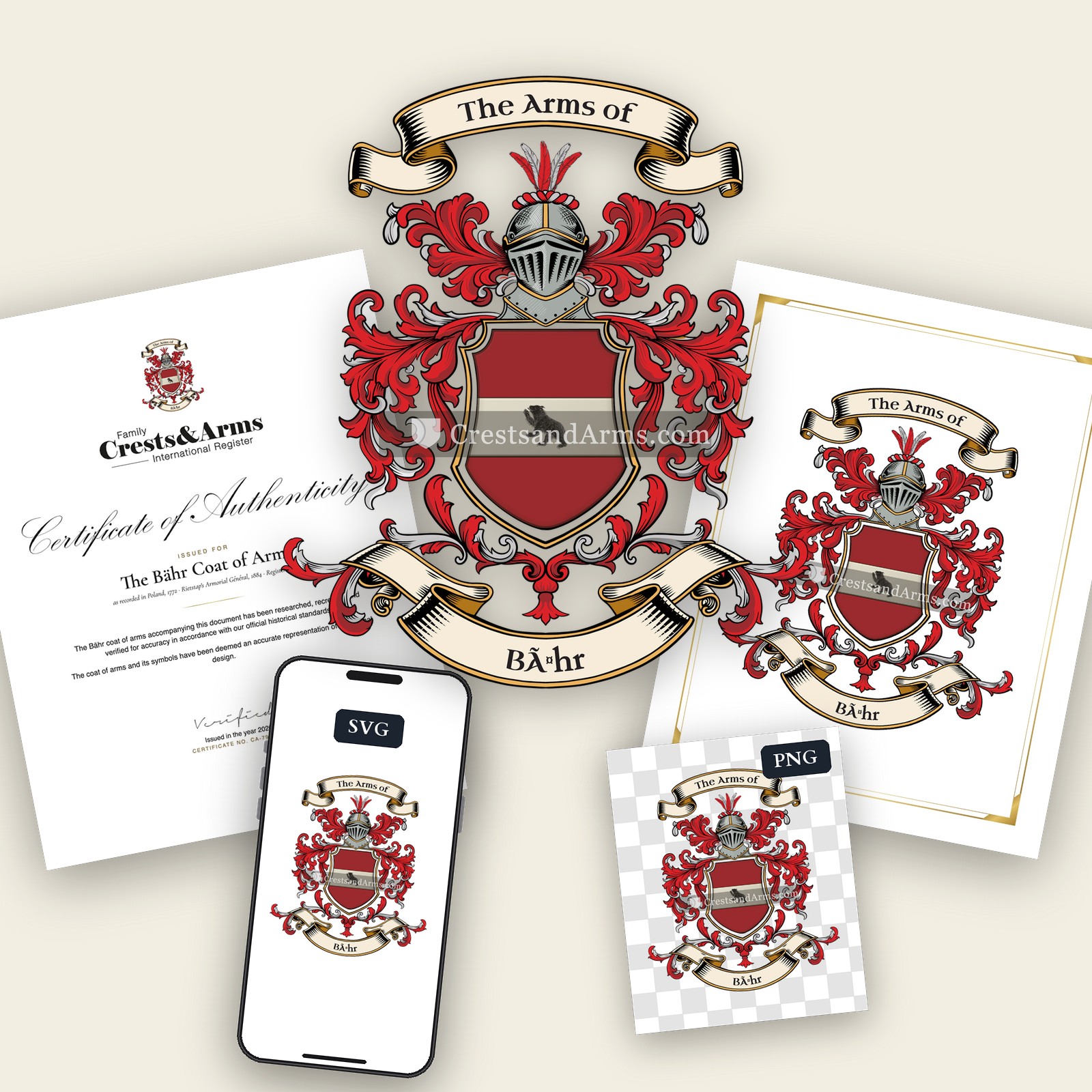
Digital archive packCoat of arms PNG, gold border print PDF, vector SVG and the certificate of authenticity. Sent to your email in minutes.


 bearStrength, cunning and protection of kin
 bearStrength, cunning and protection of kin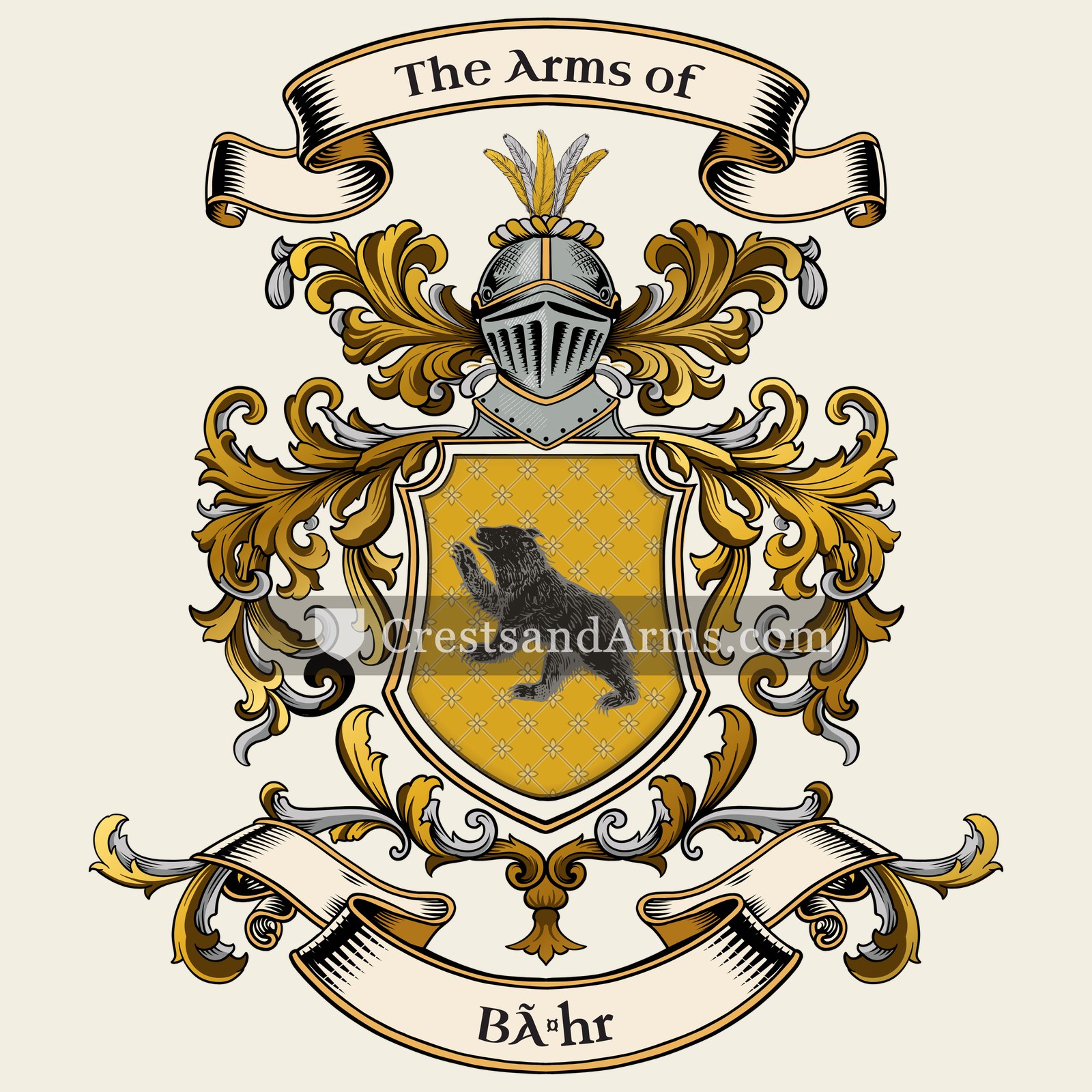


 fessThe military belt, and readiness to serve