Map of Denmark showing where the Baiden arms are recorded
The Baiden arms were recorded in Denmark, c. 1722.
Arms such as these were typically recorded in Sjaælland.
Zealand held the Danish court, the crown's offices and Copenhagen itself. Families who served the king kept estates within reach of it, and royal service was the ordinary route to a coat of arms.
This is where the arms were entered in the register. Families often moved to other parts of the country, so the same name can turn up in more than one region.
The body that granted and recorded arms in Denmark in this period.
Frederik IV of Denmark
Sovereign of the period
Frederik IV of Denmark
1699–1730
Reigning in Denmark when the Baiden arms are first recorded.
How Arms Worked in Denmark
Danish heraldry during this period was closely tied to noble status and royal favor rather than being open to all citizens. Arms were typically granted by the monarch to individuals, and these symbols were then shared by all members of the noble house. If a family line died out, the right to use those specific arms ended with them.
Granting authority
The Danish royal chancery held the power to issue and regulate official coats of arms for the kingdom.
How they got arms
Families usually received their arms through a formal royal grant that confirmed their noble status and rights.
Where arms were recorded
These grants were officially recorded in the Danish Royal Chancery records starting in the sixteenth century.
The family's standing
Recorded among the armigerous families of Denmark.
Origin & History of the Baiden Family in Denmark
The history of the Baiden family in Denmark is rooted in the rural landscape of Sjælland, where records confirm their presence as early as 1722. During the eighteenth century, families in this region often lived in small agricultural communities where their identity was closely tied to the local parish and the land they worked. The name likely emerged as a descriptive identifier or a localized surname during a time when Denmark was transitioning toward more formal record-keeping practices for its citizens. Because the family was established in Sjælland, they were part of the social fabric of the Danish heartland, living through a period of significant agricultural reform and social change. By tracing their origins to this specific time and place, we can see the Baiden family as part of the foundational history of rural Sjælland, contributing to the local community life that defined the island for generations.
Coat of Arms & Family Crest Details
Colours
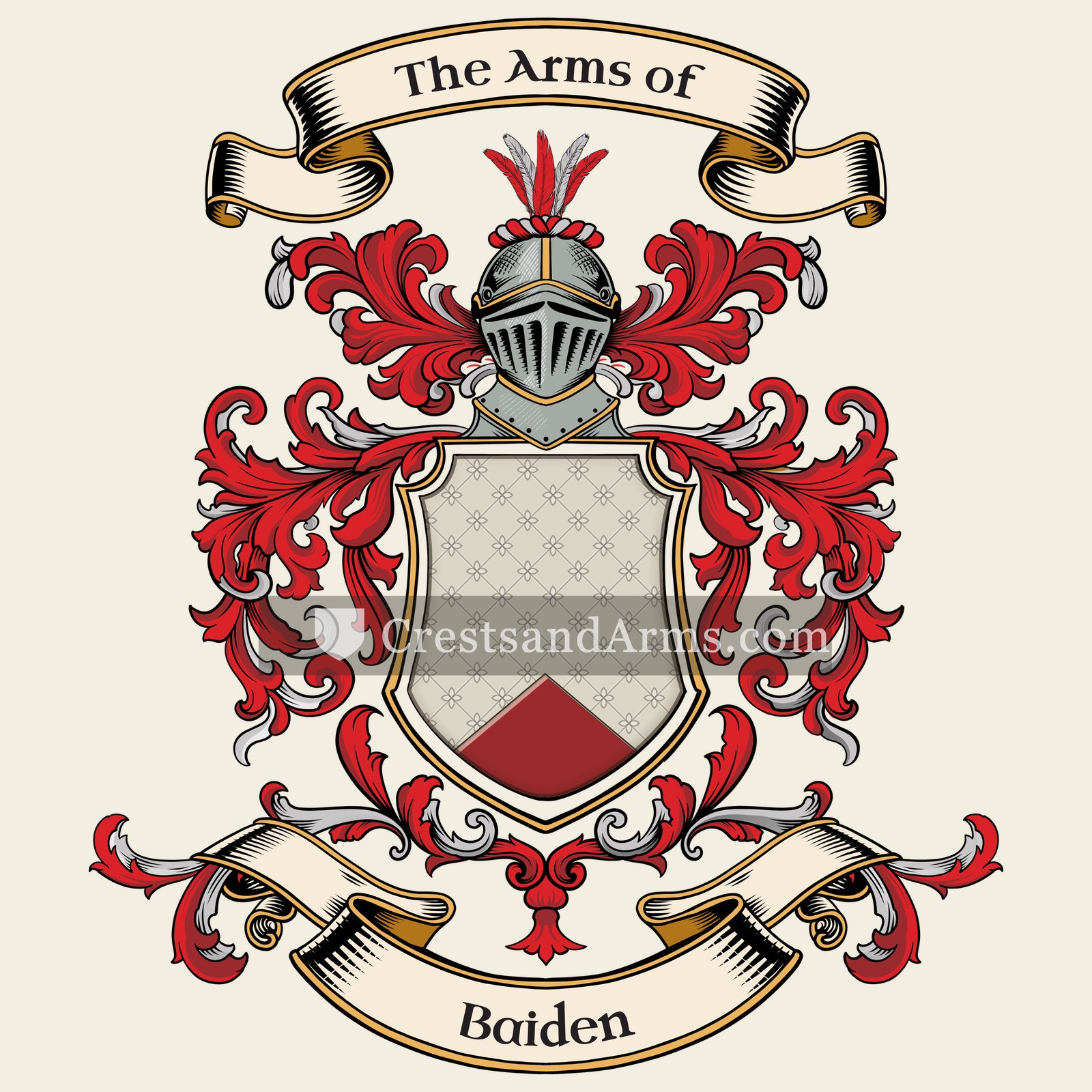
Silver (Argent)Means: Peace and sincerity
Red (Gules)Means: Military strength
Historical info
Source
J. B. Rietstap, Armorial Général, Gouda: G. B. van Goor Zonen, 1884–87
Blazon (the actual original written record)
“D'arg. à une pointe de gu., posée en bande, mouv. du canton sen. de la p. de l'écu. C.: un cor-de-chasse de gu., lié d'or; ou: un chapeau pyramidal de gu., retr. d'arg., sommé d'une boule d'or ornée d'une touffe de plumes de coq d'arg.”
Switzerlandc. 1745
Digital archive packCoat of arms PNG, gold border print PDF, vector SVG and the certificate of authenticity. Sent to your email in minutes.
Map of Switzerland showing where the Baiden arms are recorded
The Baiden arms were recorded in Switzerland, c. 1745.
Arms such as these were typically recorded in Bern.
Bern was the largest of the Swiss cantons and ran itself, with its own council and its own courts. Its governing families held office for generations, and office of that kind carried a shield with it.
This is where the arms were entered in the register. Families often moved to other parts of the country, so the same name can turn up in more than one region.
The body that granted and recorded arms in Switzerland in this period.
How Arms Worked in Switzerland
In Switzerland, coats of arms were not restricted to the nobility and were often adopted by common citizens and families. These symbols were passed down through generations to show family identity. When branches of a family grew, they often changed small details of the design to distinguish their own line from the original group.
Granting authority
Cantonal and civic authorities managed the use of coats of arms within their specific regions and local jurisdictions.
How they got arms
Families typically assumed their own coats of arms based on local custom rather than receiving them from a central monarch.
Where arms were recorded
Arms were recorded in various cantonal and civic registers starting from the fourteenth century throughout the Swiss region.
The family's standing
Recorded among the armigerous families of Switzerland.
Origin & History of the Baiden Family in Switzerland
The history of the Baiden family in Switzerland is rooted in the social and economic landscape of the mid-eighteenth century. Official records confirm that members of the family were established in the city of Bern by 1745. During this period, Bern was a powerful city-state governed by a strict patrician class, and families living within its walls were often deeply integrated into the local guild system or agricultural administration. The name likely evolved from regional dialects spoken in the German-speaking parts of the Swiss Confederation, where surnames were frequently tied to specific occupations or geographic locations. As residents of Bern, the early Baidens would have navigated a society defined by religious reform and the expansion of trade routes through the Alps. Their presence in such a prominent administrative center suggests that they were part of the growing urban population that helped shape the civic life of the region during the Enlightenment era.
Coat of Arms & Family Crest Details
Symbols on this shield
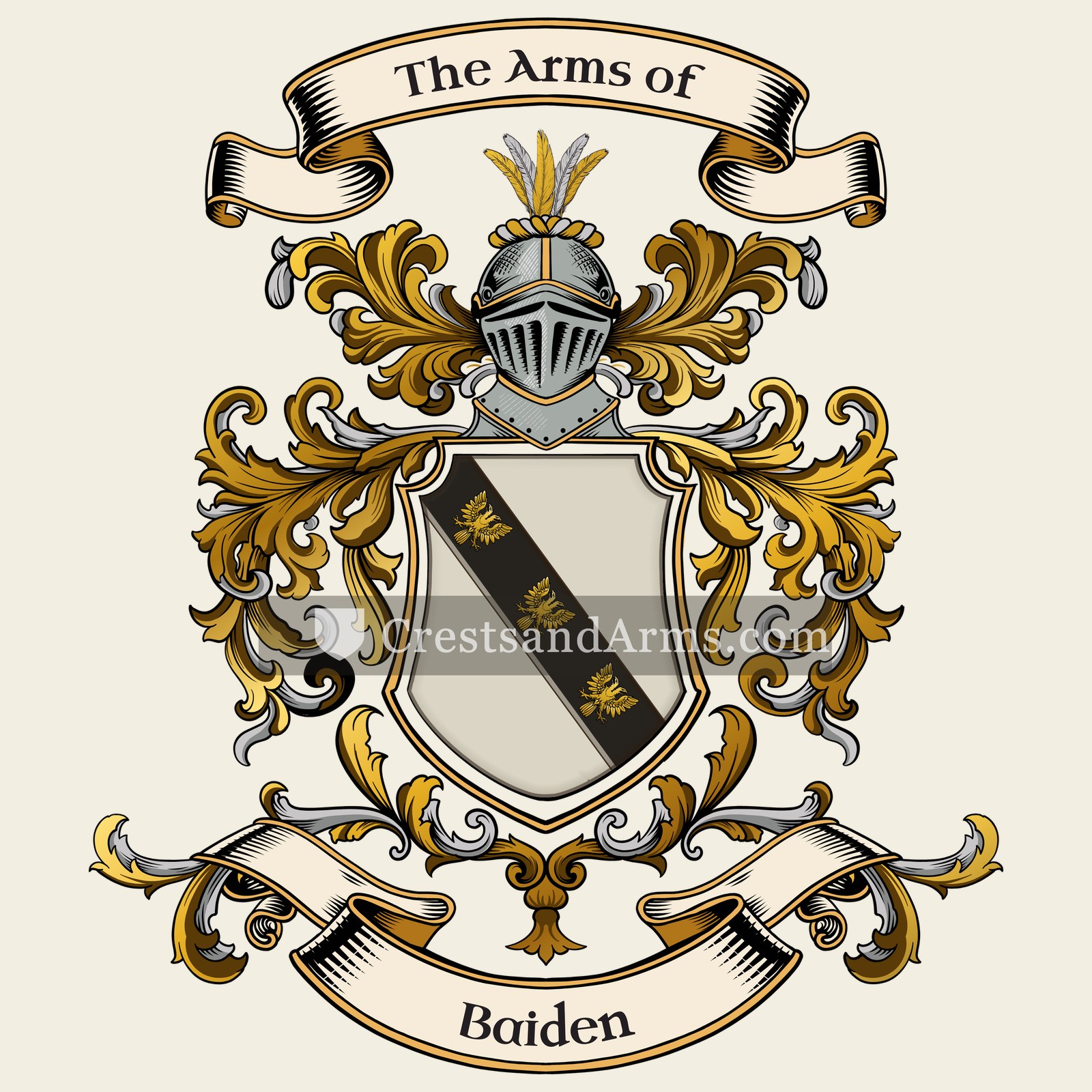
bendDefence, and the scarf of a commander
eagleNobility, strength and a keen mind
Colours
Silver (Argent)Means: Peace and sincerity
Black (Sable)Means: Constancy
Gold (Or)Means: Generosity
Historical info
Source
Sir Bernard Burke, The General Armory of England, Scotland, Ireland and Wales, London: Harrison & Sons, 1884
Blazon (the actual original written record)
“Ar. on a bend double cottised sa. three eagles displ. or”
Germanyc. 1765
Digital archive packCoat of arms PNG, gold border print PDF, vector SVG and the certificate of authenticity. Sent to your email in minutes.
Map of Germany showing where the Baiden arms are recorded
The Baiden arms were recorded in Germany, c. 1765.
Arms such as these were typically recorded in Bavaria.
Bavaria was a country of old landed families and walled market towns. Estates passed down the same line for centuries, and both the landowners and the leading townsmen kept arms, which is why so many Bavarian names sit in the registers.
This is where the arms were entered in the register. Families often moved to other parts of the country, so the same name can turn up in more than one region.
The body that granted and recorded arms in Germany in this period.
Francis I, Holy Roman Emperor
Sovereign of the period
Francis I, Holy Roman Emperor
1745–1765
Reigning in Denmark when the Baiden arms are first recorded.
How Arms Worked in Germany
In the Holy Roman Empire, coats of arms were often granted to individuals by the Emperor or his representatives. These arms were then passed down through the generations to all legitimate descendants of the original holder. Younger branches of a family usually kept the same shield design without needing to change it, as the arms belonged to the entire lineage.
Granting authority
The Holy Roman Emperor held the sole power to grant new coats of arms throughout his vast imperial territories.
How they got arms
Families typically obtained their coats of arms through a formal imperial grant or by proving their noble status to the authorities.
Where arms were recorded
These grants were officially recorded in the Imperial Chancery registers, which began keeping formal records of such honors during the Middle Ages.
The family's standing
Recorded among the armigerous families of Germany.
Origin & History of the Baiden Family in Germany
The history of the Baiden family name in Germany is deeply connected to the cultural landscape of Bavaria during the middle of the eighteenth century. By 1765, records confirm that members of the family were established within this region, which was then part of the Holy Roman Empire. During this era, surnames often evolved based on a family’s specific trade, their physical traits, or the geographic features of their local village. The name likely emerged as a localized variation of regional dialects, reflecting the linguistic shifts common in southern German territories at the time. Families like the Baidens were typically part of the agrarian or artisan classes, living in small communities where they contributed to the local economy through farming or skilled craftsmanship. Their presence in Bavaria suggests they were part of a stable population that maintained deep roots in the rural districts, navigating the social and economic changes that defined the late Enlightenment period in central Europe.
Related Branches & Arms
Root word
Bade
Old Norse term referring to a bath or a bathing place.
This name
BaidenA topographic name for someone who lived near a public bath or a bathing site.
also spelled
Badenne
Baaden
Baddan
Badin
Badon
Documented Sources
J. B. Rietstap, Armorial Général, Gouda: G. B. van Goor Zonen, 1884–87
Rigsarkivet (Danish National Archives), Kirkebøger (Parish Registers), Sjælland Stift


 paleMilitary strength, and a fortified defence
 chiefAuthority, wisdom and dominion
 paleMilitary strength, and a fortified defence
 chiefAuthority, wisdom and dominion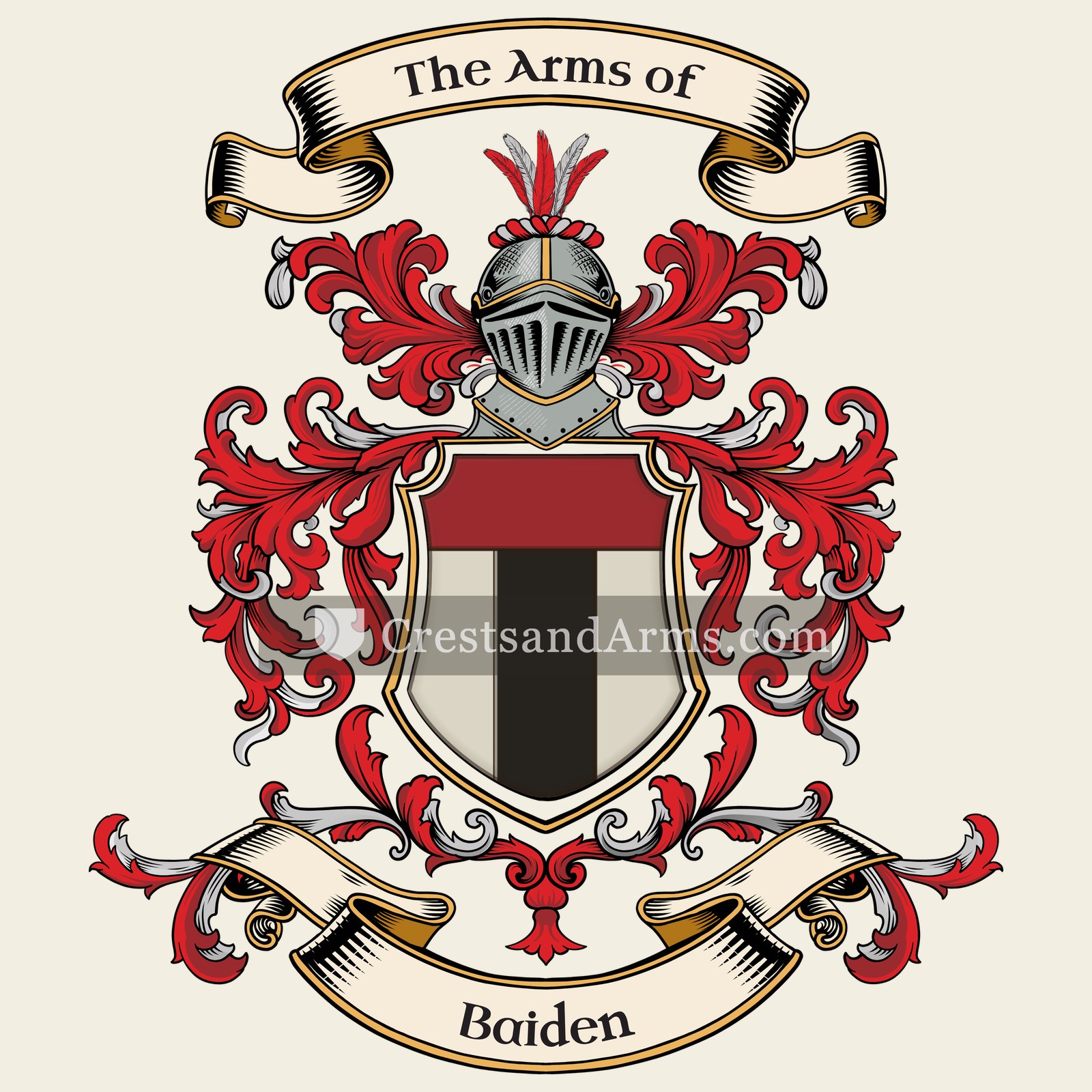



 bendDefence, and the scarf of a commander
 eagleNobility, strength and a keen mind