Map of Netherlands showing where the Bailly arms are recorded
The Bailly arms were recorded in Amsterdam, c. 1815.
This is where the arms were entered in the register. Families often moved to other parts of the country, so the same name can turn up in more than one region.
Region
Amsterdam
Town
Amsterdam
First recorded
1815
Granting Authority for the Bailly Arms
Hoge Raad van Adel
Photograph made by me · CC BY-SA 3.0
The body that granted and recorded arms in Netherlands in this period.
William I of the Netherlands
Sovereign of the period
William I of the Netherlands
1815–1840
Reigning in Netherlands when the Bailly arms are first recorded.
How Arms Worked in Netherlands
In the Netherlands, coats of arms were often used by noble families and those who held specific public offices. These arms were passed down through the generations to legitimate descendants. Younger branches of a family usually kept the original design without needing to add special marks. This system ensured that the family identity remained clear and consistent over many years.
Granting authority
The Hoge Raad van Adel is the official body that regulates and manages noble titles and coats of arms in the Netherlands.
How they got arms
Families typically obtained their coats of arms through official royal grants or by proving their long-standing historical use of the symbols.
Where arms were recorded
Coats of arms are officially recorded in the registers held by the Hoge Raad van Adel, which began its work in 1814.
The family's standing
Recorded among the armigerous families of Netherlands.
Origin & History of the Bailly Family in Netherlands
The name Bailly carries a rich history that reflects the movement of people across European borders during the early nineteenth century. While the name has roots in French-speaking regions, records confirm that members of the family were firmly established in Amsterdam by 1815. During this period, Amsterdam was a bustling center of trade and recovery following the end of the Napoleonic Wars. Families like the Baillys often moved to the Netherlands to take advantage of the city's growing commercial opportunities and its reputation as a hub for international exchange. As they settled into Dutch society, they integrated into the local urban culture while maintaining the distinct identity associated with their surname. This transition highlights how families adapted to new environments during a time of significant political and social change in Europe.
Coat of Arms & Family Crest Details
Symbols on this shield
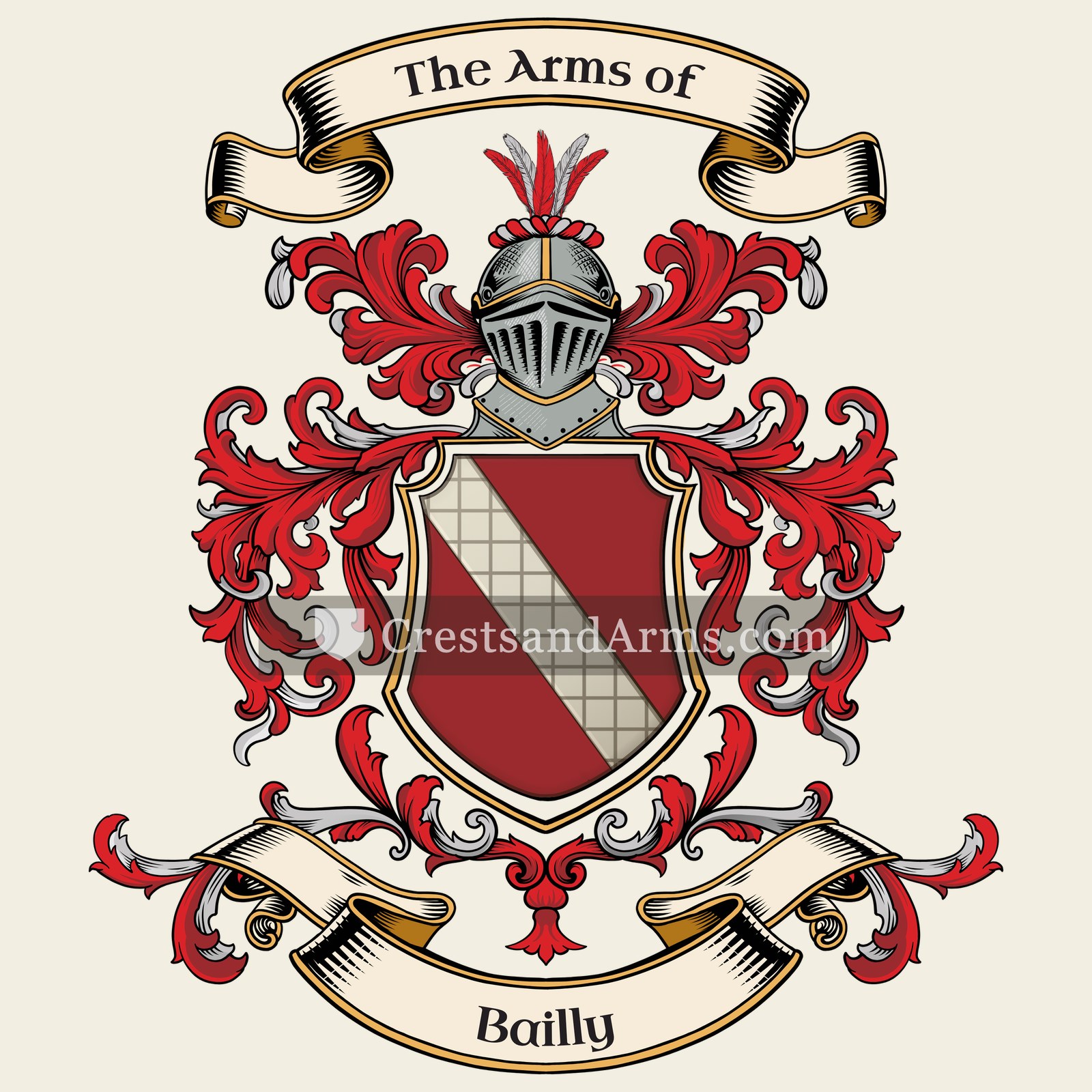
bendDefence, and the scarf of a commander
Colours
Red (Gules)Means: Military strength
Silver (Argent)Means: Peace and sincerity
Historical info
Source
J. B. Rietstap, Armorial Général, Gouda: G. B. van Goor Zonen, 1884–87
Blazon (the actual original written record)
“De gu. à la bande d'arg., ch. d'un chien basset de sa.”
LorraineLorraine, c. 1540
Digital archive packCoat of arms PNG, gold border print PDF, vector SVG and the certificate of authenticity. Sent to your email in minutes.
Map of France showing where the Bailly arms are recorded
The Bailly arms were recorded in Lorraine, c. 1540.
Lorraine sat on the border between France and the German lands, and border country bred soldiers. Families here held small estates and served in arms, and a fighting man was exactly the sort who carried a shield of his own.
This is where the arms were entered in the register. Families often moved to other parts of the country, so the same name can turn up in more than one region.
The body that granted and recorded arms in France in this period.
Francis I of France
Sovereign of the period
Francis I of France
1515–1547
Reigning in Netherlands when the Bailly arms are first recorded.
How Arms Worked in France
In France, a coat of arms was a mark of honor that passed down through the male line to all legitimate descendants. Families often used the same shield without changes to show their shared heritage. If a branch wanted to stand out, they could add a small mark to their shield to show their specific place in the family tree.
Granting authority
The Juge d'armes de France acted as the official authority that regulated and verified coats of arms across the country.
How they got arms
Families typically inherited their arms from ancestors, though they could also receive them through royal grants or by proving their noble status.
Where arms were recorded
Coats of arms were officially recorded in the Armorial Général de France, which began its main collection in the year 1696.
The family's standing
Recorded among the armigerous families of Lorraine.
Origin & History of the Bailly Family in France
The name Bailly originated in France as an occupational title derived from the Old French word "bailli," which referred to an official responsible for administrative, financial, and judicial duties in a specific district. By the mid-16th century, the family had established a notable presence in the Lorraine region, a territory then caught between the influences of the Holy Roman Empire and the French Crown. As these early ancestors served as local administrators or legal representatives, they became deeply integrated into the social fabric of their communities. Their role required them to act as intermediaries between the ruling authorities and the common people, which helped the family gain local prominence. Over time, the name transitioned from a professional description into a hereditary surname that identified families who held these positions of trust and governance across various French provinces.
Bailly Meaning & Related Branches
Root word
baiulus
Latin term for a carrier, porter, or person in charge.
This name
BaillyAn occupational surname for a bailiff, steward, or official administrator.
also spelled
Baylly
Bailli
Baylee
Bailey
Baily
Related arms
Marchandsame arms
Agdesimilar arms
Clementisimilar arms
Documented Sources
J. B. Rietstap, Armorial Général, Gouda: G. B. van Goor Zonen, 1884–87
Stadsarchief Amsterdam, Bevolkingsregister van Amsterdam (1811-1850)
Gemeente Amsterdam, Burgerlijke Stand van Amsterdam: Huwelijksakten (1815)
Digital archive packCoat of arms PNG, gold border print PDF, vector SVG and the certificate of authenticity. Sent to your email in minutes.


 crescentHonour by the sovereign, and the second son
 crescentHonour by the sovereign, and the second son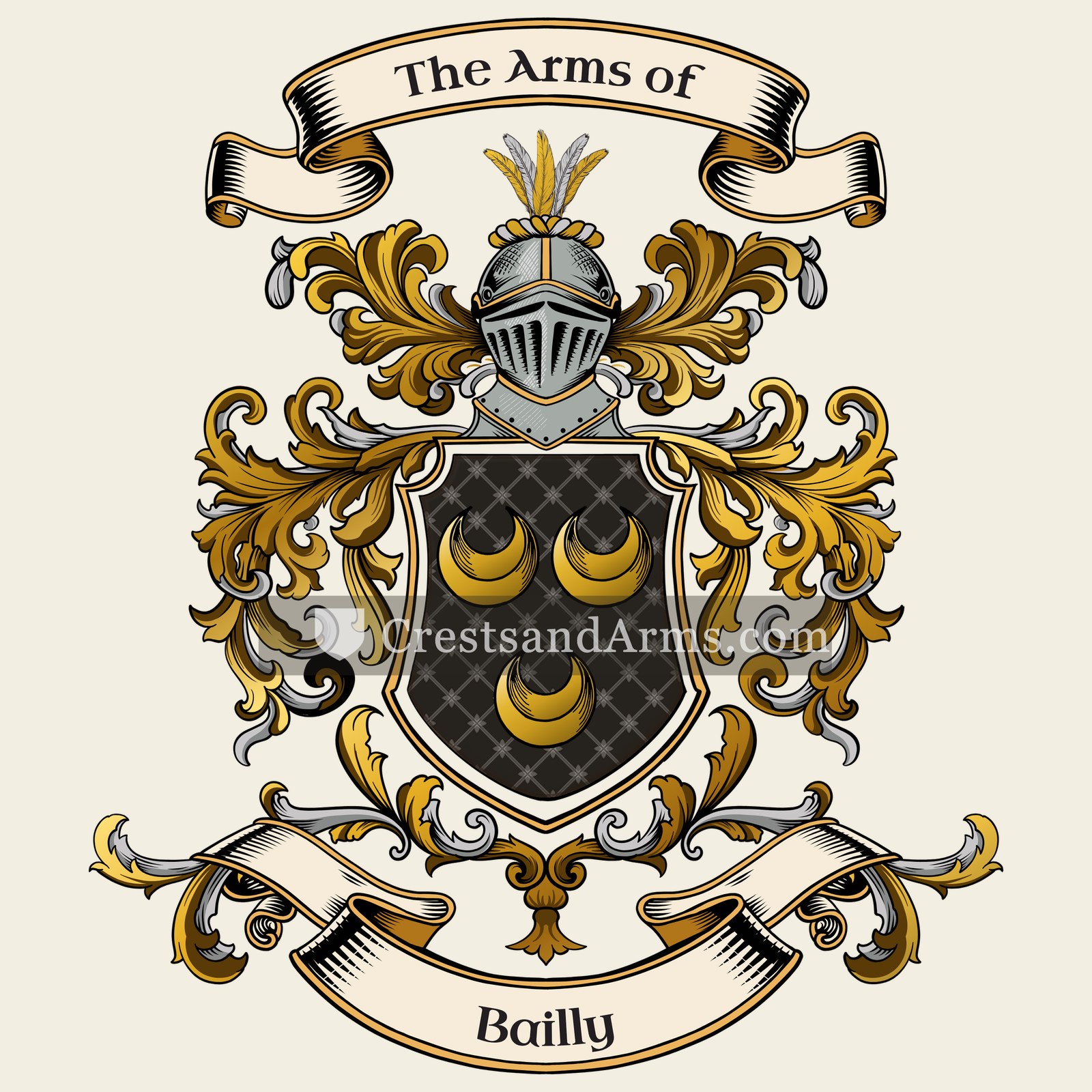


 bendDefence, and the scarf of a commander