Map of Germany showing where the Balbi arms are recorded
The Balbi arms were recorded in Germany, c. 1765.
Arms such as these were typically recorded in Bavaria.
Bavaria was a country of old landed families and walled market towns. Estates passed down the same line for centuries, and both the landowners and the leading townsmen kept arms, which is why so many Bavarian names sit in the registers.
This is where the arms were entered in the register. Families often moved to other parts of the country, so the same name can turn up in more than one region.
The body that granted and recorded arms in Germany in this period.
Francis I, Holy Roman Emperor
Sovereign of the period
Francis I, Holy Roman Emperor
1745–1765
Reigning in Germany when the Balbi arms are first recorded.
How Arms Worked in Germany
In the Holy Roman Empire, coats of arms were often granted to individuals by the Emperor or his representatives. These arms were then passed down through the generations to all legitimate descendants of the original holder. Younger branches of a family usually kept the same shield design without needing to change it, as the arms belonged to the entire lineage.
Granting authority
The Holy Roman Emperor held the sole power to grant new coats of arms throughout his vast imperial territories.
How they got arms
Families typically obtained their coats of arms through a formal imperial grant or by proving their noble status to the authorities.
Where arms were recorded
These grants were officially recorded in the Imperial Chancery registers, which began keeping formal records of such honors during the Middle Ages.
The family's standing
Recorded among the armigerous families of Germany.
Origin & History of the Balbi Family in Germany
The history of the Balbi family in Germany is deeply rooted in the cultural landscape of Bavaria during the eighteenth century. While the name is often associated with Mediterranean origins, records confirm that members of the family were established residents in the Bavarian region by 1765. During this era, families with this surname were often integrated into the local administrative and social structures of southern Germany. They lived through a period of significant transition as the region moved toward the modern era of the Holy Roman Empire. These early ancestors likely contributed to the local economy and community life in towns where they settled. Their presence in Bavaria highlights the movement of families across European borders long before the formation of modern nation-states. By settling in this area, the Balbi family became part of the long and complex history of the German lands.
Coat of Arms & Family Crest Details
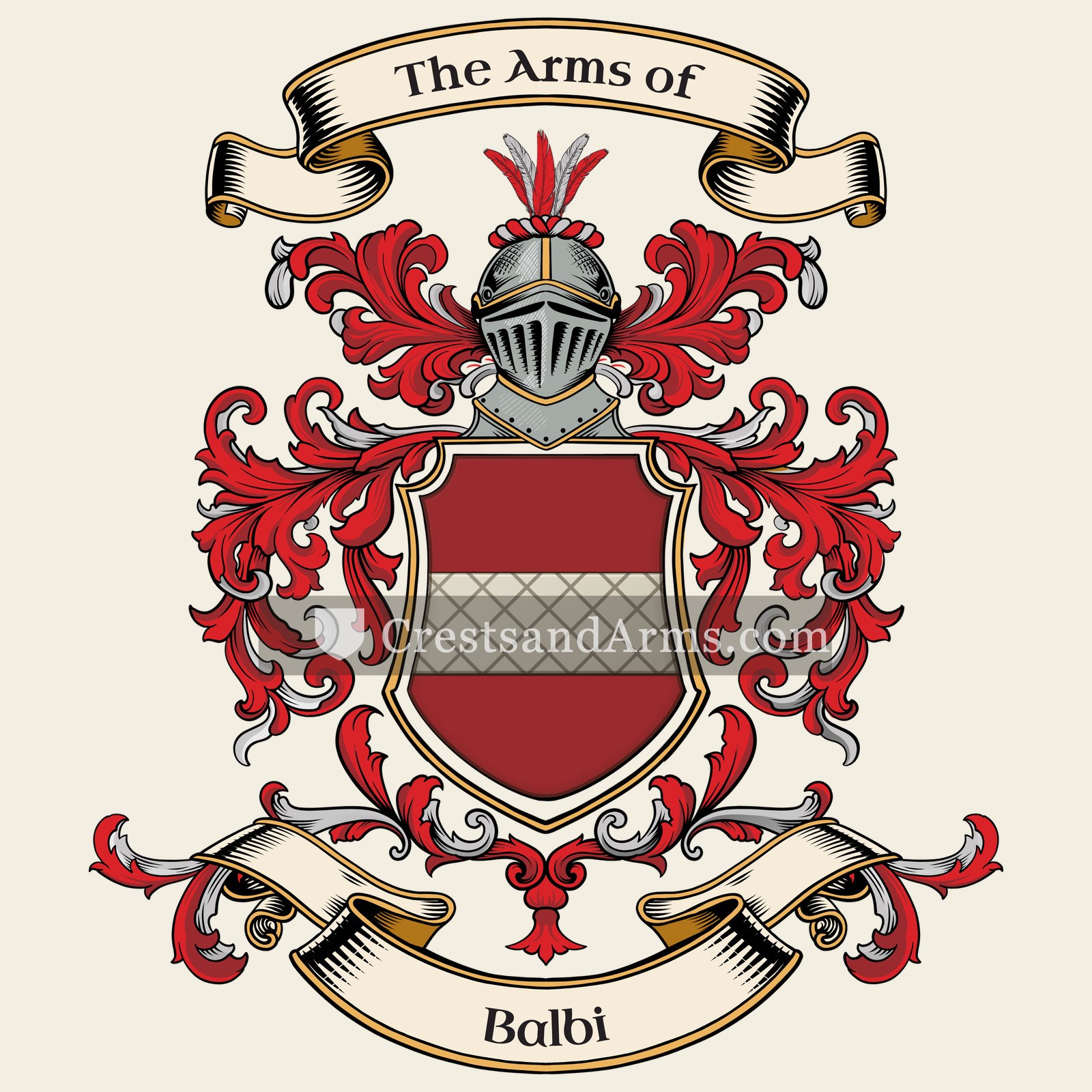
Symbols on this shield
fessThe military belt, and readiness to serve
Colours
Red (Gules)Means: Military strength
Historical info
Source
J. B. Rietstap, Armorial Général, Gouda: G. B. van Goor Zonen, 1884–87
Blazon (the actual original written record)
“De gu. à une fasce partie d'or et d'azur.”
VeniceVenice, c. 1775
Digital archive packCoat of arms PNG, gold border print PDF, vector SVG and the certificate of authenticity. Sent to your email in minutes.
Map of Italy showing where the Balbi arms are recorded
The Balbi arms were recorded in Venice, c. 1775.
Venice ran on trade, and its great families were merchants before they were anything else. The city kept a formal list of its noble houses, and a name on that list carried arms as a matter of record.
This is where the arms were entered in the register. Families often moved to other parts of the country, so the same name can turn up in more than one region.
The body that granted and recorded arms in Italy in this period.
Alvise Giovanni Mocenigo
Sovereign of the period
Alvise Giovanni Mocenigo
1763–1778
Reigning in Germany when the Balbi arms are first recorded.
How Arms Worked in Italy
In the Italian states, coats of arms were often used by noble families to show their status and history. These symbols were passed down through the generations to all legitimate male descendants. Younger branches of a family usually kept the original design but sometimes added small changes to distinguish their specific line from the main branch.
Granting authority
Various local rulers and city governments controlled the use of coats of arms across the different Italian states.
How they got arms
Families often assumed their own arms or received them as official grants from local lords, popes, or city councils.
Where arms were recorded
Arms were recorded in local city archives or private family books rather than in one single national register.
The family's standing
Recorded among the armigerous families of Venice.
Origin & History of the Balbi Family in Italy
The Balbi family name holds a significant place in the history of the Venetian Republic, where members of the lineage were established as prominent figures long before the late eighteenth century. The name itself is believed to derive from the Latin word balbus, which means someone who stammers or speaks with a lisp, a common way to assign nicknames in the medieval period. By the time the family was active in Venice in 1775, they were already deeply integrated into the social and political fabric of the city. They were recognized as part of the Venetian patriciate, which meant they held high-ranking roles in government and contributed to the city's vast maritime trade networks. Throughout their early history in Italy, the Balbi family was known for commissioning grand architecture and supporting the arts, which helped solidify their reputation as influential leaders within the Venetian state.
Balbi Meaning & Related Branches
Root word
Balbus
Latin term meaning someone who stammers or has a speech impediment.
This name
BalbiA surname derived from a nickname for an individual with a stutter.
also spelled
Balby
Related arms
Ruyssenaerssimilar arms
Documented Sources
J. B. Rietstap, Armorial Général, Gouda: G. B. van Goor Zonen, 1884–87


 fishA true and generous mind, and Christian faith
 fishA true and generous mind, and Christian faith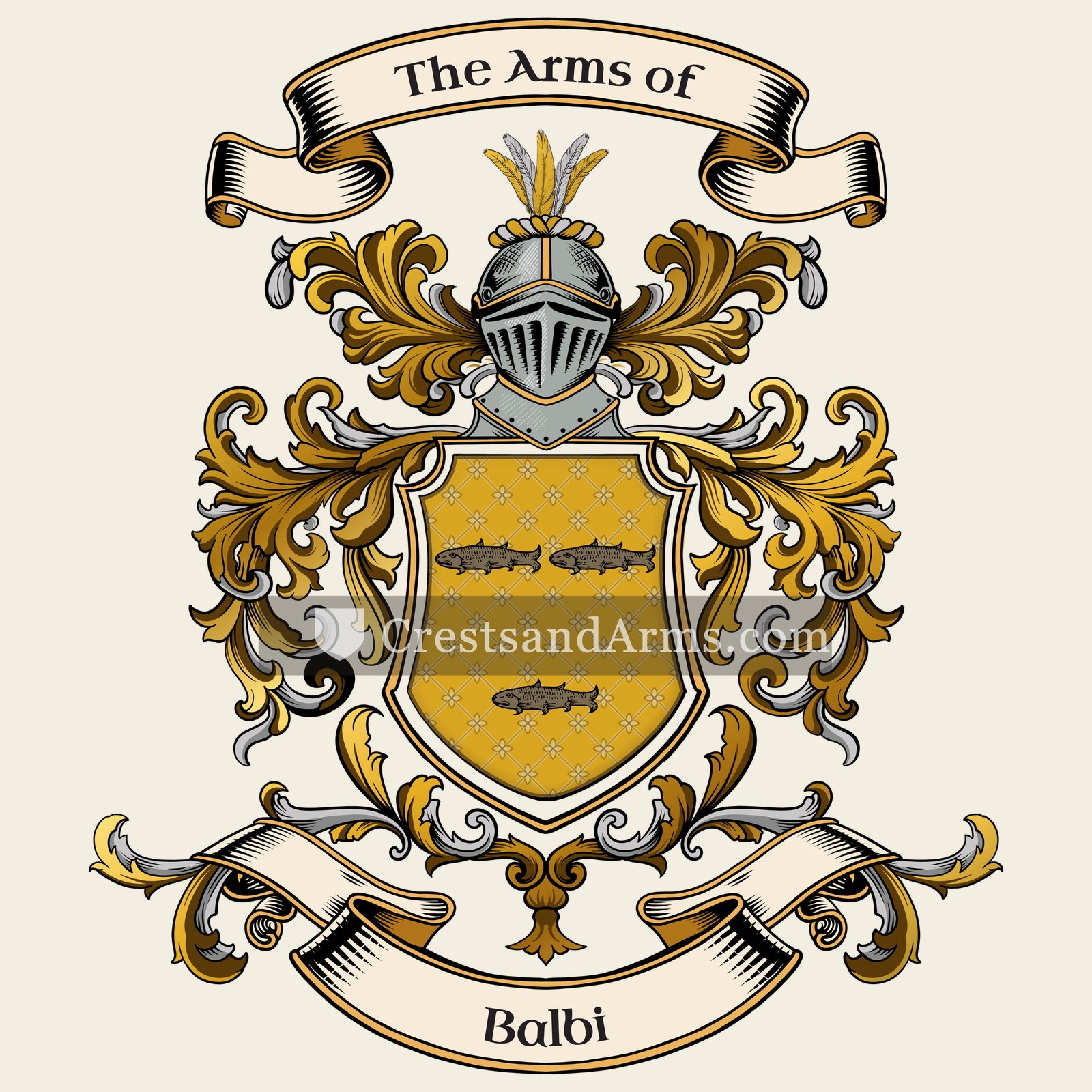


 fessThe military belt, and readiness to serve