Map of France showing where the Balkind arms are recorded
The Balkind arms were recorded in Lorraine, c. 1756.
Lorraine sat on the border between France and the German lands, and border country bred soldiers. Families here held small estates and served in arms, and a fighting man was exactly the sort who carried a shield of his own.
This is where the arms were entered in the register. Families often moved to other parts of the country, so the same name can turn up in more than one region.
The body that granted and recorded arms in France in this period.
Louis XV of France
Sovereign of the period
Louis XV of France
1715–1774
Reigning in France when the Balkind arms are first recorded.
How Arms Worked in France
In France, a coat of arms was a mark of honor that passed down through the male line to all legitimate descendants. Families often used the same shield without changes to show their shared heritage. If a branch wanted to stand out, they could add a small mark to their shield to show their specific place in the family tree.
Granting authority
The Juge d'armes de France acted as the official authority that regulated and verified coats of arms across the country.
How they got arms
Families typically inherited their arms from ancestors, though they could also receive them through royal grants or by proving their noble status.
Where arms were recorded
Coats of arms were officially recorded in the Armorial Général de France, which began its main collection in the year 1696.
The family's standing
Recorded among the armigerous families of Lorraine.
Origin & History of the Balkind Family in France
The history of the Balkind family in France is rooted in the cultural landscape of the Lorraine region during the eighteenth century. By 1756, members of the family were established within this territory, which served as a vital crossroads between French and Germanic influences. During this period, Lorraine was a center of transition where families often navigated shifting borders and evolving administrative requirements. The name itself reflects the linguistic diversity of the area, as it likely emerged from the blend of local dialects and the movement of people across the borderlands. Living in this province meant that the family was part of a society undergoing significant social and economic changes under the influence of the French crown. These early ancestors were likely involved in the local trades or agricultural life that defined the rural communities of the region before the onset of the French Revolution. Their presence in the historical record during this time highlights a family that was integrated into the fabric of provincial life in eastern France.
Meaning of the Balkind family crest colors & symbols
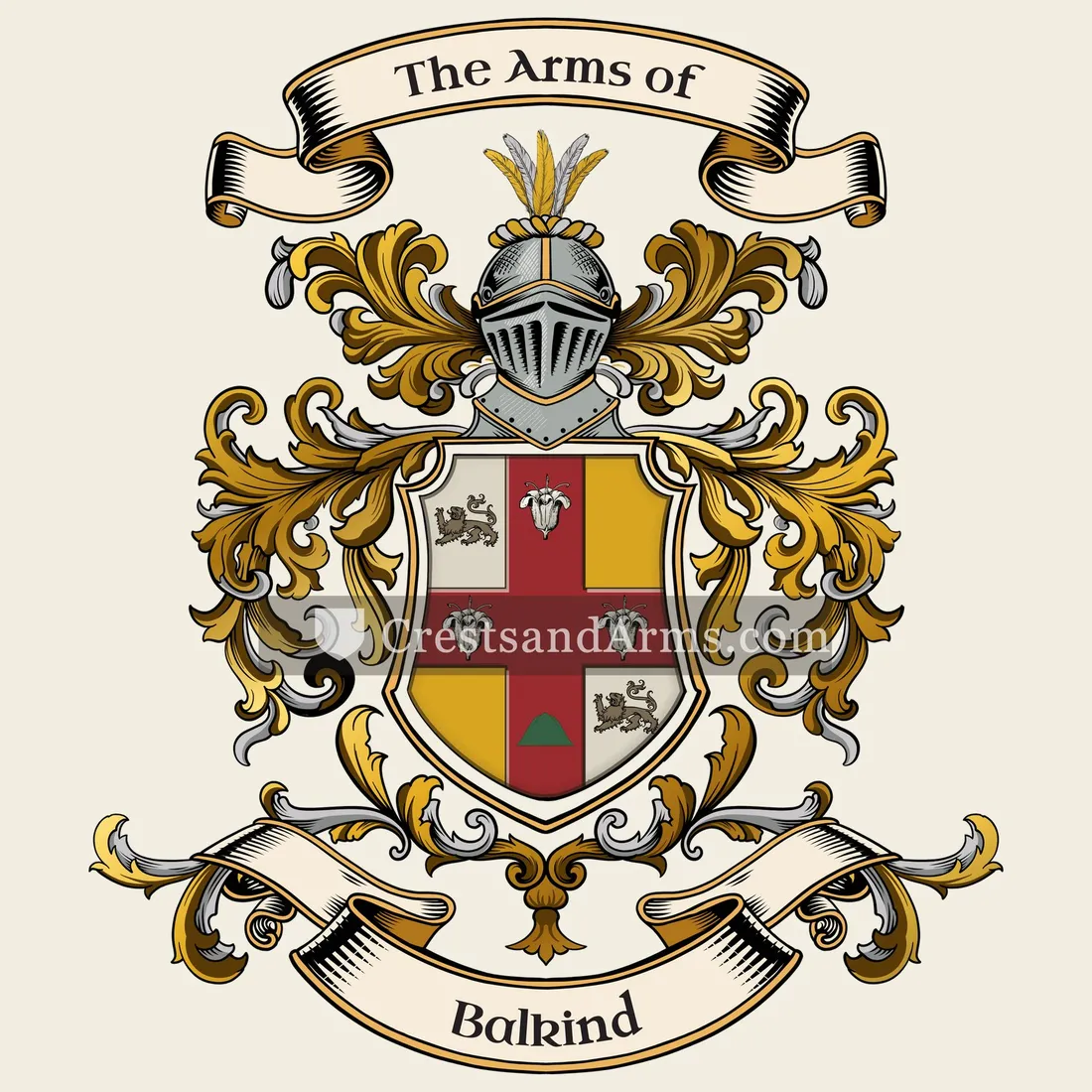
Symbols on this shield
cross symbolChristian faith and service
mountThe ground held, and steadfastness upon it
lilyPurity and the promise of resurrection
lionCourage, strength and royalty
Colours
Silver (Argent)Means: Peace and sincerity
Gold (Or)Means: Generosity
Red (Gules)Means: Military strength
Green (Vert)Means: Hope
Historical info
Source
J. B. Rietstap, Armorial Général, Gouda: G. B. van Goor Zonen, 1884–87
Blazon (the actual original written record)
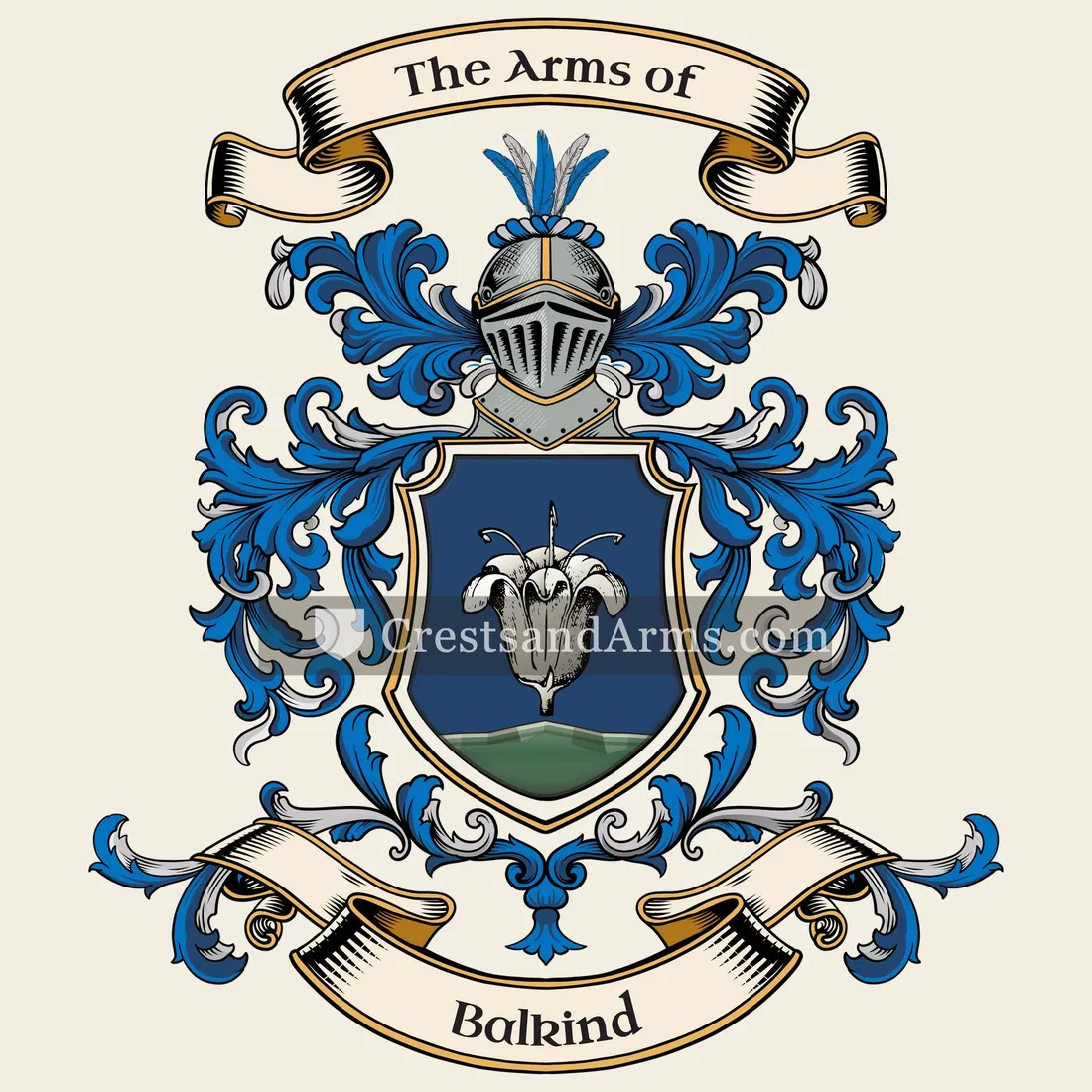
“Éc., d'arg. au lion au nat., et d'or plein: à la croix de gu., br. sur les écartelures. Sur le tout d'azur à trois lis de jardin d'arg., tigés et feuillés de sin., posés sur une terrasse du même. S.: deux lions reg., au nat.”
BavariaBavaria, c. 1813
Digital archive packCoat of arms PNG, gold border print PDF, vector SVG and the certificate of authenticity. Sent to your email in minutes.
Map of Germany showing where the Balkind arms are recorded
The Balkind arms were recorded in Bavaria, c. 1813.
Bavaria was a country of old landed families and walled market towns. Estates passed down the same line for centuries, and both the landowners and the leading townsmen kept arms, which is why so many Bavarian names sit in the registers.
This is where the arms were entered in the register. Families often moved to other parts of the country, so the same name can turn up in more than one region.
The body that granted and recorded arms in Germany in this period.
Frederick William III of Prussia
Sovereign of the period
Frederick William III of Prussia
1797–1840
Reigning in France when the Balkind arms are first recorded.
How Arms Worked in Germany
Prussian heraldry was strictly tied to social rank and noble status rather than being a free choice for every citizen. These symbols were treated as permanent family property that moved through the generations to all legitimate heirs. If a family branch wanted to change their design to stand out, they had to apply for official permission to alter their specific version of the shield.
Granting authority
The Prussian Heroldsamt acted as the central state office that managed and strictly controlled all noble titles and coats of arms.
How they got arms
Families usually obtained their arms through formal royal grants or by proving their long-standing noble status to the state authorities.
Where arms were recorded
All official coats of arms were kept in the rolls of the Prussian Heroldsamt, which functioned from 1706 until 1918.
The family's standing
Recorded among the armigerous families of Bavaria.
Origin & History of the Balkind Family in Germany
The family name Balkind traces its roots to the German-speaking regions of Central Europe, with documented evidence placing family members in the Bavarian region by 1813. During this era, the Napoleonic Wars were reshaping the political landscape of the German states, and the administration of Bavaria began to implement stricter civil registration laws. These laws required families to adopt stable, hereditary surnames for tax and military conscription purposes. The name likely originated as a descriptive or occupational identifier within the local community, reflecting the linguistic traditions of the Bavarian population at the time. As the family navigated the transition from the old feudal systems to the modern bureaucratic state, they became part of the growing urban and professional classes that defined 19th-century German society. This period of history was marked by significant social change, and the presence of the Balkind name in official records from 1813 serves as a clear marker of the family’s integration into the administrative life of the region.
Balkind Meaning & Related Branches
Root word
Balde
Old Germanic root meaning bold, brave, or courageous.
This name
BalkindA surname of French origin likely denoting a descendant of a bold or courageous individual.
also spelled
Baligant
Baligande
Documented Sources
J. B. Rietstap, Armorial Général, Gouda: G. B. van Goor Zonen, 1884–87
Archives départementales de Meurthe-et-Moselle, Registres paroissiaux et d'état civil
Cabourdin, Guy, Terres et hommes en Lorraine 1550-1635, 1977
Schneider, Jean, La ville de Metz aux XIIIe et XIVe siècles, 1950
Digital archive packCoat of arms PNG, gold border print PDF, vector SVG and the certificate of authenticity. Sent to your email in minutes.


 mountThe ground held, and steadfastness upon it
 lilyPurity and the promise of resurrection
 mountThe ground held, and steadfastness upon it
 lilyPurity and the promise of resurrection


 cross symbolChristian faith and service
 lionCourage, strength and royalty