Map of France showing where the Banal arms are recorded
The Banal arms were recorded in France, c. 1663.
Arms such as these were typically recorded in Bretagne.
More families held coats of arms in Bretagne than anywhere else in France. The land was divided into many small estates rather than a few large ones, so far more households counted as gentry, and each needed a shield of its own to be told apart.
This is where the arms were entered in the register. Families often moved to other parts of the country, so the same name can turn up in more than one region.
The body that granted and recorded arms in France in this period.
Louis XIV of France
Sovereign of the period
Louis XIV of France
1643–1715
Reigning in France when the Banal arms are first recorded.
How Arms Worked in France
In France, a coat of arms was a mark of honor that passed down through the male line to all legitimate descendants. Families often used the same shield without changes to show their shared heritage. If a branch wanted to stand out, they could add a small mark to their shield to show their specific place in the family tree.
Granting authority
The Juge d'armes de France acted as the official authority that regulated and verified coats of arms across the country.
How they got arms
Families typically inherited their arms from ancestors, though they could also receive them through royal grants or by proving their noble status.
Where arms were recorded
Coats of arms were officially recorded in the Armorial Général de France, which began its main collection in the year 1696.
The family's standing
Recorded among the armigerous families of France.
Origin & History of the Banal Family in France
The family name Banal traces its roots to the historic region of Brittany in northwestern France, where records confirm the presence of family members as early as 1663. During this period, the name was closely tied to the social and economic structure of the French countryside. In the Old French language, the term "banal" referred to things held in common by a community, such as a mill, an oven, or a wine press that belonged to a local lord but were used by all the peasants. Families carrying this name were often associated with these communal lands or served as administrators who managed these shared resources for the local nobility. As the family established itself in the Breton landscape, they became deeply integrated into the rural life of the province, living through the agricultural traditions and local customs that defined seventeenth-century France. This connection to the land and the community suggests that the early Banal ancestors played a practical role in the daily operations of their villages.
Coat of Arms & Family Crest Details
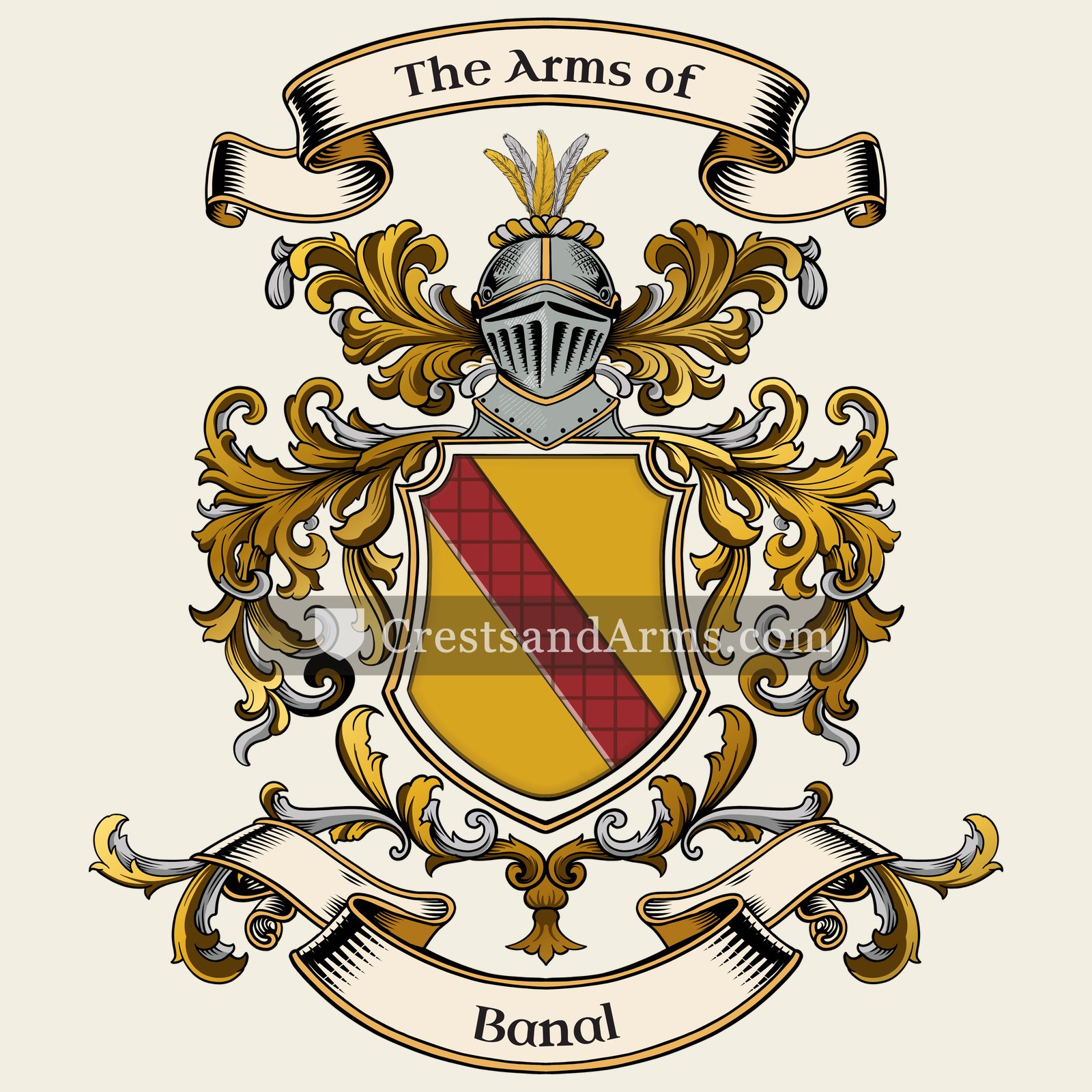
Symbols on this shield
bendDefence, and the scarf of a commander
Colours
Gold (Or)Means: Generosity
Red (Gules)Means: Military strength
Historical info
Source
J. B. Rietstap, Armorial Général, Gouda: G. B. van Goor Zonen, 1884–87
Blazon (the actual original written record)
“D'or à trois bandes de gu.”
SpainBiscaye, c. 1722
Digital archive packCoat of arms PNG, gold border print PDF, vector SVG and the certificate of authenticity. Sent to your email in minutes.
Map of Spain showing where the Banal arms are recorded
The Banal arms were recorded in Biscaye, c. 1722.
This is where the arms were entered in the register. Families often moved to other parts of the country, so the same name can turn up in more than one region.
The body that granted and recorded arms in Spain in this period.
Philip V of Spain
Sovereign of the period
Philip V of Spain
1714–1724
Reigning in France when the Banal arms are first recorded.
How Arms Worked in Spain
In Spain, a coat of arms was considered a form of property that belonged to the entire family line. These arms were passed down from a father to all his children equally. Younger branches of the family usually kept the original design without needing to add any special marks to distinguish their specific line.
Granting authority
The Cronista Rey de Armas was the official body that regulated and granted coats of arms throughout Spain.
How they got arms
Families often obtained their arms through royal grants or by proving their noble status to the official heraldic authority.
Where arms were recorded
Coats of arms were officially recorded in the registers of the Cronista Rey de Armas starting in 1496.
The family's standing
Recorded among the armigerous families of Spain.
Origin & History of the Banal Family in Spain
The family name Banal finds its historical roots in the rugged landscape of the Basque Country, specifically within the province of Biscay. By the year 1722, records confirm that members of the Banal family were established residents in this region, which is known for its distinct cultural identity and deep ties to the northern coast of Spain. The name likely evolved from the local linguistic traditions of the area, where surnames often reflected a family's connection to their specific village or the natural features of their land. During the early eighteenth century, families in Biscay lived under a unique legal system known as the Fueros, which granted them specific local rights and a strong sense of autonomy. As the Banal family navigated this period, they were part of a society that prioritized ancestral land ownership and close-knit community structures. Their presence in the region during this time suggests they were integrated into the traditional agricultural or maritime life that defined the Basque economy before the modern era.
Related Branches & Arms
Root word
ban
A public proclamation, decree, or a territorial jurisdiction under a lord.
This name
BanalRefers to a person who lived under a specific jurisdiction or was subject to a public decree.
also spelled
Bonale
Bonall
Documented Sources
J. B. Rietstap, Armorial Général, Gouda: G. B. van Goor Zonen, 1884–87
Archives départementales du Finistère, Registres paroissiaux et d'état civil, Series E
Gaultier du Mottay, Joachim, Répertoire archéologique du département des Côtes-du-Nord, 1885
Morvan, Françoise, La douce vie des fées des houles, 2005
Digital archive packCoat of arms PNG, gold border print PDF, vector SVG and the certificate of authenticity. Sent to your email in minutes.


 paleMilitary strength, and a fortified defence
 fessThe military belt, and readiness to serve
 paleMilitary strength, and a fortified defence
 fessThe military belt, and readiness to serve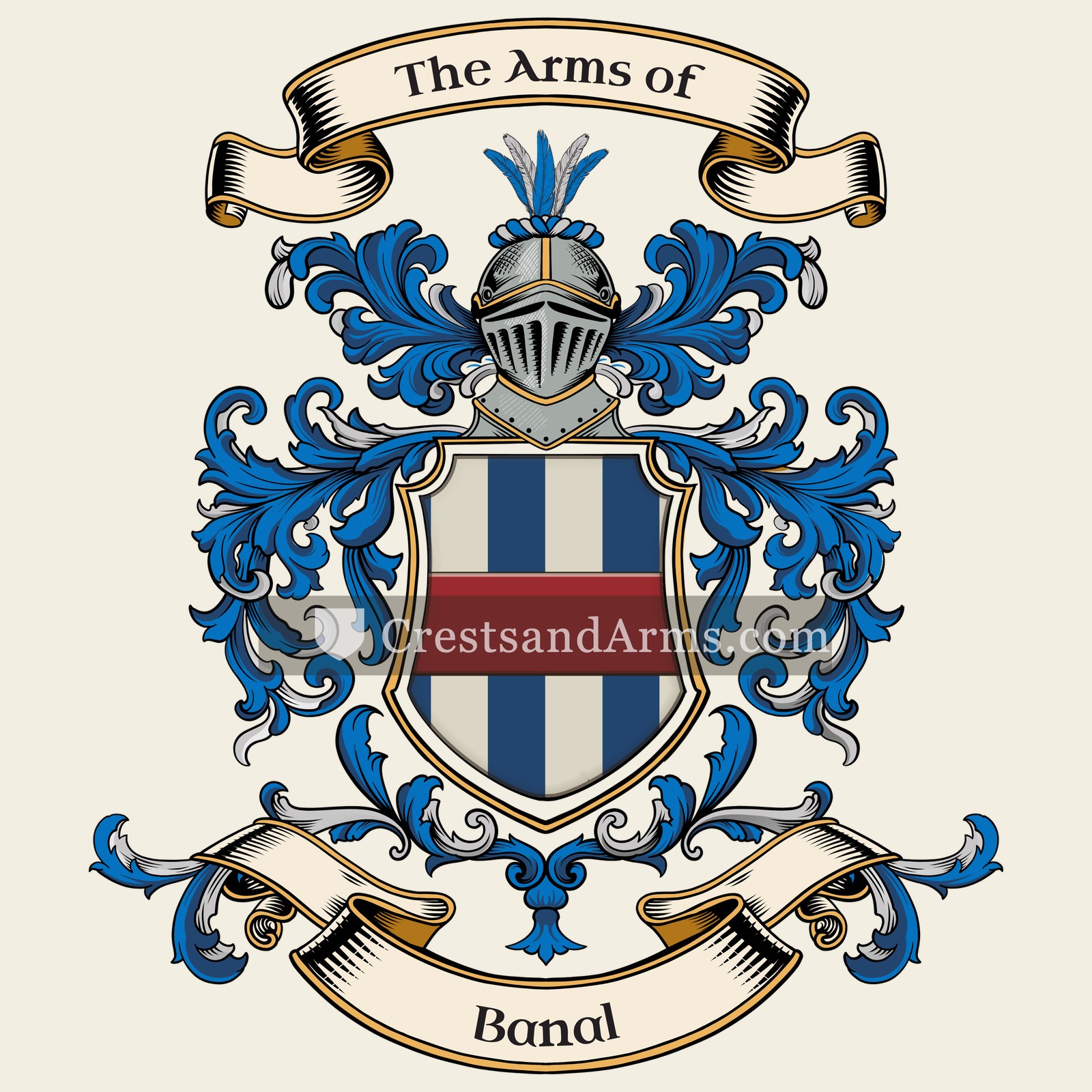


 bendDefence, and the scarf of a commander