Map of Poland showing where the Bankowski arms are recorded
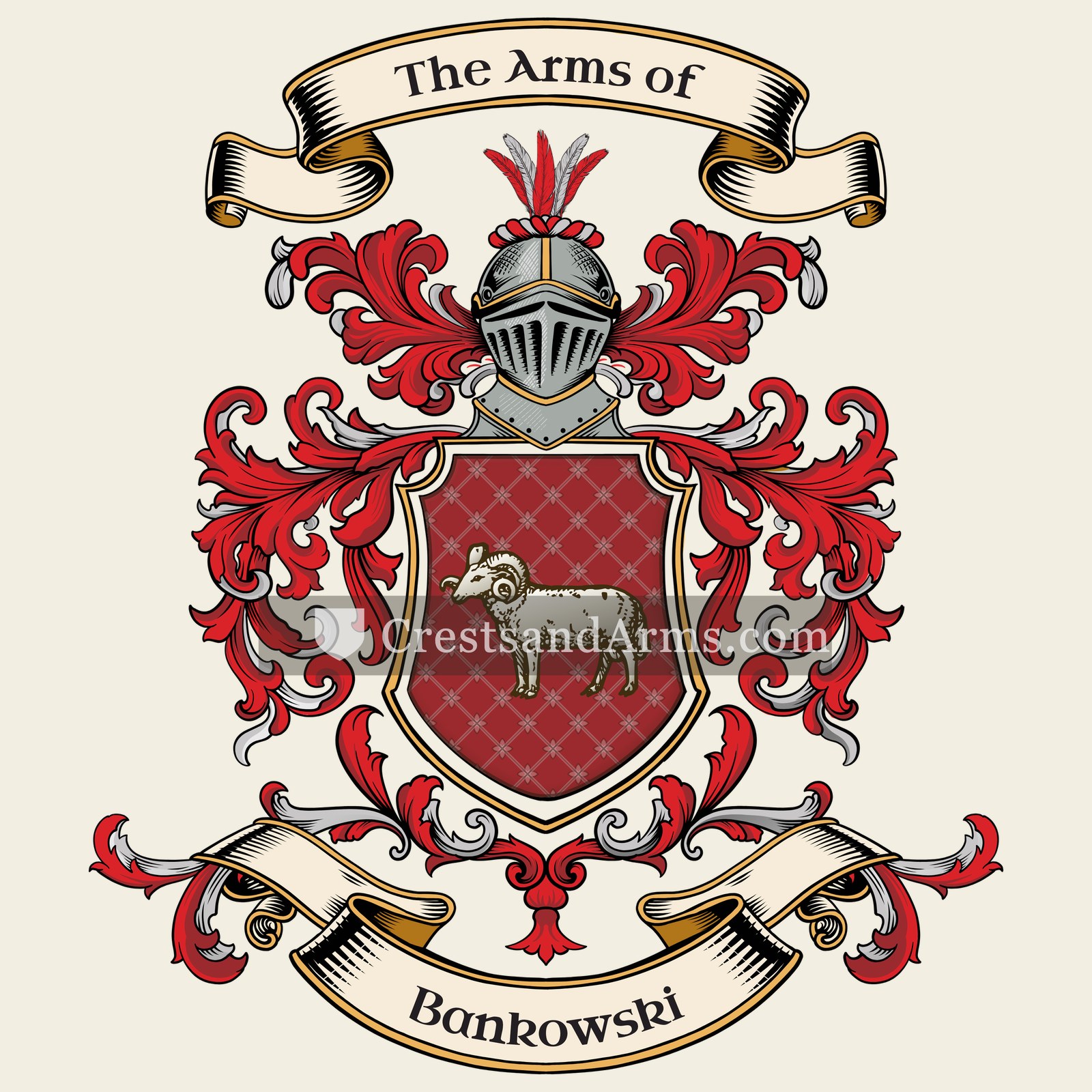
The Bankowski arms were recorded in Poland, c. 1725.
Arms such as these were typically recorded in Mazovia.
Mazovia held Warsaw, the Polish court and the assemblies where the szlachta met. Poland's nobles were unusually numerous and every one of them bore arms, and Warsaw is where those arms were argued over and recorded.
This is where the arms were entered in the register. Families often moved to other parts of the country, so the same name can turn up in more than one region.
Region
Mazovia
First recorded
1725
Granting Authority for the Bankowski Arms
Ennoblement by the Sejm
Author: Olek Remesz · CC BY-SA 3.0
The body that granted and recorded arms in Poland in this period.
Augustus II the Strong
Sovereign of the period
Augustus II the Strong
1709–1733
Reigning in Poland when the Bankowski arms are first recorded.
How Arms Worked in Poland
Polish noble families shared a single coat of arms across many different surnames, creating large clans rather than individual designs. These symbols were held collectively by all members of the clan regardless of their specific family name. When a new family joined the nobility, they were adopted into an existing clan and began using that group's established shield.
Granting authority
The Sejm, which was the Polish parliament, held the power to grant noble status and the right to bear arms.
How they got arms
Families typically received their coat of arms through a formal act of ennoblement granted by the Sejm for distinguished service.
Where arms were recorded
These grants were officially recorded in the Crown Metrica, which served as the central archive for state documents starting in the sixteenth century.
The family's standing
Recorded among the armigerous families of Poland.
Origin & History of the Bankowski Family in Poland
The surname Bankowski is a topographic name that originated in Poland, specifically linked to families who lived near or managed a "bank," which in the historical Polish language often referred to a riverbank, a raised piece of land, or a specific administrative district. By the year 1725, records confirm that the family was well-established within the Mazovia region, a historical province in east-central Poland known for its flat plains and the winding Vistula River. During this era, families in Mazovia were often tied to the land through agricultural work or service to local nobility. As the family grew, they likely moved between small villages and rural estates, carrying the name as a way to identify their ancestral connection to the specific landscape of the Mazovian heartland. This period marked a time of transition for many families in the region as they became more formally recorded in parish registers and local land documents.
Bankowski Meaning & Related Branches
Root word
bank
A bench, counter, or table used for financial transactions.
This name
BankowskiRefers to a person who lived near a bank or worked as a money changer.
also spelled
Bankowsky
Bankovski
Documented Sources
J. B. Rietstap, Armorial Général, Gouda: G. B. van Goor Zonen, 1884–87
Krzysztof Rymut, Nazwiska Polaków: Słownik historyczno-etymologiczny, 1999
Kazimierz Rymut, Słownik nazwisk używanych w Polsce na początku XXI wieku, 2003
Archiwum Główne Akt Dawnych (AGAD), Księgi metrykalne parafii rzymskokatolickich z terenu Mazowsza
Digital archive packCoat of arms PNG, gold border print PDF, vector SVG and the certificate of authenticity. Sent to your email in minutes.


 ramLeadership and authority
 ramLeadership and authority