Map of Italy showing where the Bao arms are recorded
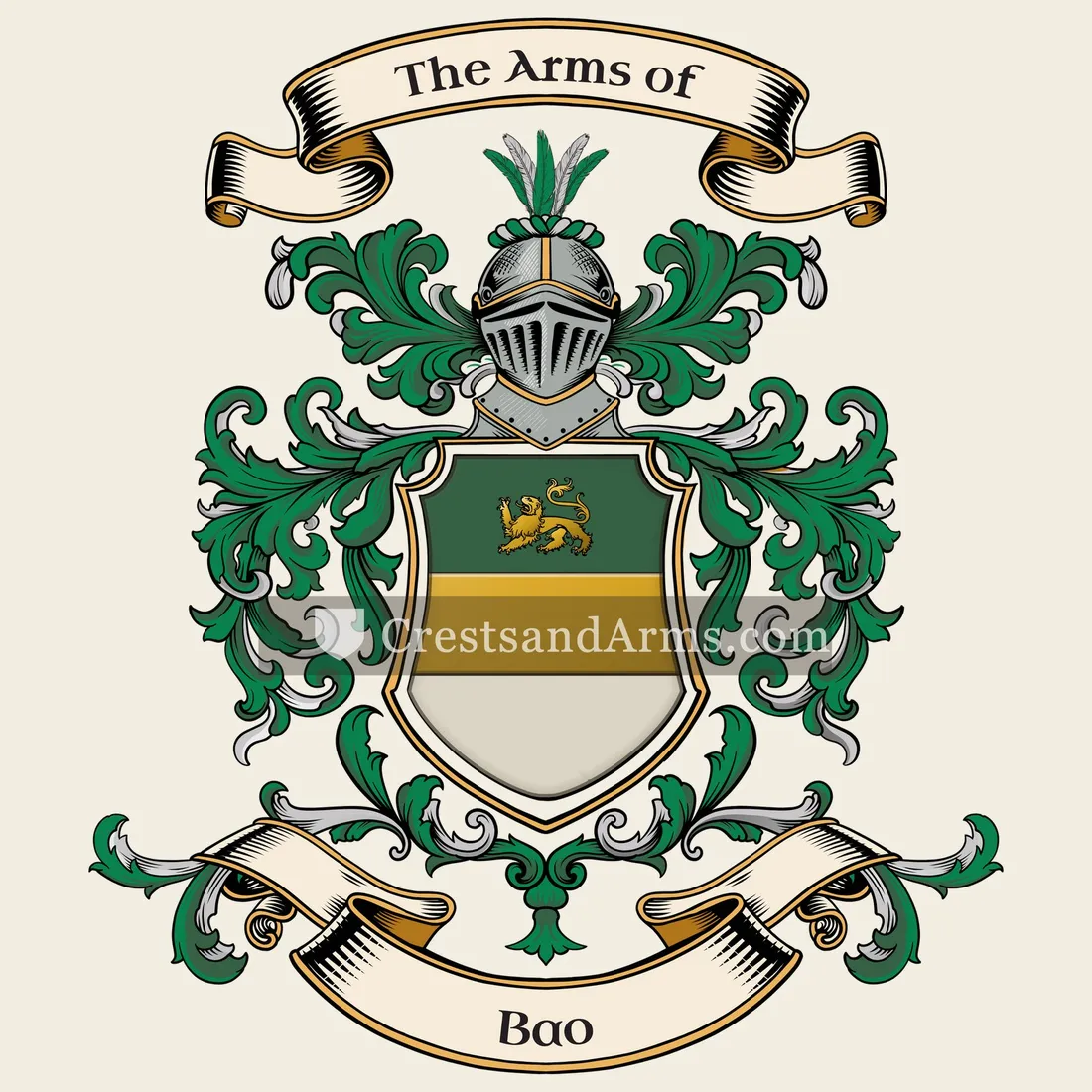
The Bao arms were recorded in Italy, c. 1775.
Arms such as these were typically recorded in Venice.
Venice ran on trade, and its great families were merchants before they were anything else. The city kept a formal list of its noble houses, and a name on that list carried arms as a matter of record.
This is where the arms were entered in the register. Families often moved to other parts of the country, so the same name can turn up in more than one region.
The body that granted and recorded arms in Italy in this period.
Alvise Giovanni Mocenigo
Sovereign of the period
Alvise Giovanni Mocenigo
1763–1778
Reigning in Italy when the Bao arms are first recorded.
How Arms Worked in Italy
In the Italian states, coats of arms were often used by noble families to show their status and history. These symbols were passed down through the generations to all legitimate male descendants. Younger branches of a family usually kept the original design but sometimes added small changes to distinguish their specific line from the main branch.
Granting authority
Various local rulers and city governments controlled the use of coats of arms across the different Italian states.
How they got arms
Families often assumed their own arms or received them as official grants from local lords, popes, or city councils.
Where arms were recorded
Arms were recorded in local city archives or private family books rather than in one single national register.
The family's standing
Recorded among the armigerous families of Italy.
Origin & History of the Bao Family in Italy
The family name Bao traces its historical roots to the vibrant maritime culture of Venice, where records confirm members of the family were well-established by 1775. During this period, Venice served as a major hub for trade and cultural exchange, and families like the Bao were often involved in the intricate networks of commerce that defined the city. The name itself reflects the linguistic diversity of the region, potentially originating from local dialects or shorthand used in maritime ledgers to track goods and merchants. As the family navigated the social and economic landscape of the Venetian Republic, they became part of the city’s enduring legacy of craftsmanship and trade. Their presence in the late 18th century highlights a history deeply connected to the movement of people and ideas across the Adriatic Sea.
Bao Meaning & Related Branches
Root word
Bavus
A Latin term referring to a person from the Bavaria region.
This name
BaoAn Italian topographic or habitational surname denoting someone of Bavarian origin.
also spelled
Boe
Boo
Documented Sources
J. B. Rietstap, Armorial Général, Gouda: G. B. van Goor Zonen, 1884–87
Archivio di Stato di Venezia, Anagrafe di Venezia, Sezione Sestiere di San Marco, 1775
Lane, Frederic C., Venice, A Maritime Republic, 1973
Digital archive packCoat of arms PNG, gold border print PDF, vector SVG and the certificate of authenticity. Sent to your email in minutes.


 lionCourage, strength and royalty
 lionCourage, strength and royalty