Map of Netherlands showing where the Barea arms are recorded
The Barea arms were recorded in Zeeland, c. 1815.
Zeeland was a scatter of islands in the south-west of the Netherlands, living on the sea and on land reclaimed from it. Families who drained and held that land were counted among the gentry, and gentry carried arms.
This is where the arms were entered in the register. Families often moved to other parts of the country, so the same name can turn up in more than one region.
Region
Zeeland
First recorded
1815
Granting Authority for the Barea Arms
Hoge Raad van Adel
Photograph made by me · CC BY-SA 3.0
The body that granted and recorded arms in Netherlands in this period.
William I of the Netherlands
Sovereign of the period
William I of the Netherlands
1815–1840
Reigning in Netherlands when the Barea arms are first recorded.
How Arms Worked in Netherlands
In the Netherlands, coats of arms were often used by noble families and those who held specific public offices. These arms were passed down through the generations to legitimate descendants. Younger branches of a family usually kept the original design without needing to add special marks. This system ensured that the family identity remained clear and consistent over many years.
Granting authority
The Hoge Raad van Adel is the official body that regulates and manages noble titles and coats of arms in the Netherlands.
How they got arms
Families typically obtained their coats of arms through official royal grants or by proving their long-standing historical use of the symbols.
Where arms were recorded
Coats of arms are officially recorded in the registers held by the Hoge Raad van Adel, which began its work in 1814.
The family's standing
Recorded among the armigerous families of Zeeland.
Origin & History of the Barea Family in Netherlands
The Barea family name appears in the historical record of the Netherlands during a time of significant transition for the Dutch state. By 1815, the year the Kingdom of the Netherlands was officially established following the Napoleonic Wars, records confirm that members of the Barea family were living in the province of Zeeland. This region, defined by its complex network of islands and its long struggle against the encroaching North Sea, was a hub for maritime trade and agriculture. Families residing in Zeeland during the early nineteenth century often lived in close-knit communities that relied heavily on the local dikes and shipping routes for their livelihood. While the name itself likely arrived in the region through migration, the presence of the Barea family in Zeeland during this formative period suggests they were part of the local population that helped rebuild the social and economic structure of the province after years of foreign occupation.
Meaning of the Barea family crest colors & symbols
Symbols on this shield
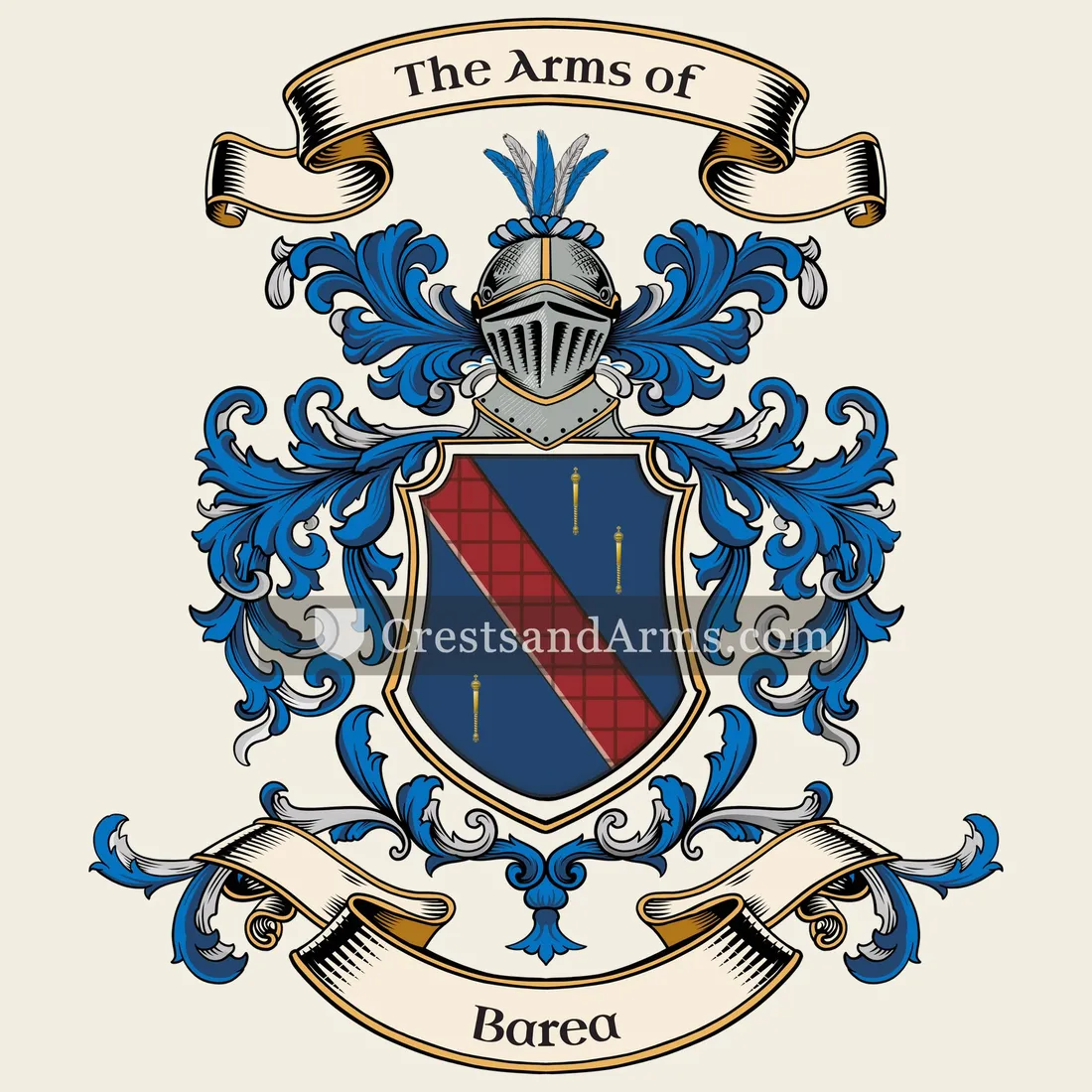
bendDefence, and the scarf of a commander
sceptreRoyal authority and justice
Colours
Blue (Azure)Means: Loyalty and truth
Red (Gules)Means: Military strength
Gold (Or)Means: Generosity
Historical info
Source
J. B. Rietstap, Armorial Général, Gouda: G. B. van Goor Zonen, 1884–87
Blazon (the actual original written record)
“D'azur à trois sceptres d'or, posés en barres; à la bande de gu., br. sur le tout.”
Francec. 1663
Digital archive packCoat of arms PNG, gold border print PDF, vector SVG and the certificate of authenticity. Sent to your email in minutes.
Map of France showing where the Barea arms are recorded
The Barea arms were recorded in France, c. 1663.
Arms such as these were typically recorded in Bretagne.
More families held coats of arms in Bretagne than anywhere else in France. The land was divided into many small estates rather than a few large ones, so far more households counted as gentry, and each needed a shield of its own to be told apart.
This is where the arms were entered in the register. Families often moved to other parts of the country, so the same name can turn up in more than one region.
The body that granted and recorded arms in France in this period.
Louis XIV of France
Sovereign of the period
Louis XIV of France
1643–1715
Reigning in Netherlands when the Barea arms are first recorded.
How Arms Worked in France
In France, a coat of arms was a mark of honor that passed down through the male line to all legitimate descendants. Families often used the same shield without changes to show their shared heritage. If a branch wanted to stand out, they could add a small mark to their shield to show their specific place in the family tree.
Granting authority
The Juge d'armes de France acted as the official authority that regulated and verified coats of arms across the country.
How they got arms
Families typically inherited their arms from ancestors, though they could also receive them through royal grants or by proving their noble status.
Where arms were recorded
Coats of arms were officially recorded in the Armorial Général de France, which began its main collection in the year 1696.
The family's standing
Recorded among the armigerous families of France.
Origin & History of the Barea Family in France
The history of the Barea family in France is deeply rooted in the rugged landscape of Brittany, where records confirm their presence as early as 1663. During this period, the region was a center for maritime trade and traditional agriculture, shaping the daily lives of families who lived in small rural parishes. The name likely emerged from local linguistic variations, reflecting the way people identified themselves by their specific trade or the geographic features of their home. As members of the Barea family settled into these coastal communities, they became part of the social fabric of the province, participating in the local church life and community governance that defined seventeenth-century French society. Their survival and growth in Brittany suggest a family that was well-integrated into the regional economy, moving through generations as farmers, artisans, or laborers who helped build the unique cultural identity of the Breton people.
Barea Meaning & Related Branches
Root word
Bar
A Germanic or Old French term referring to a bear or barrier.
This name
BareaA topographic name for someone living near a gate or a barrier.
also spelled
Bareaux
Bareo
Baro
Documented Sources
J. B. Rietstap, Armorial Général, Gouda: G. B. van Goor Zonen, 1884–87
Zeeuws Archief, Bevolkingsregister van de provincie Zeeland (1811-1820)
Nationaal Archief, Burgerlijke Stand van de provincie Zeeland
Blok, D.P., Algemene Geschiedenis der Nederlanden, 1977
Van der Aa, A.J., Aardrijkskundig Woordenboek der Nederlanden, 1839
Digital archive packCoat of arms PNG, gold border print PDF, vector SVG and the certificate of authenticity. Sent to your email in minutes.


 fleur de lisPurity, light, and the sixth son
 fleur de lisPurity, light, and the sixth son
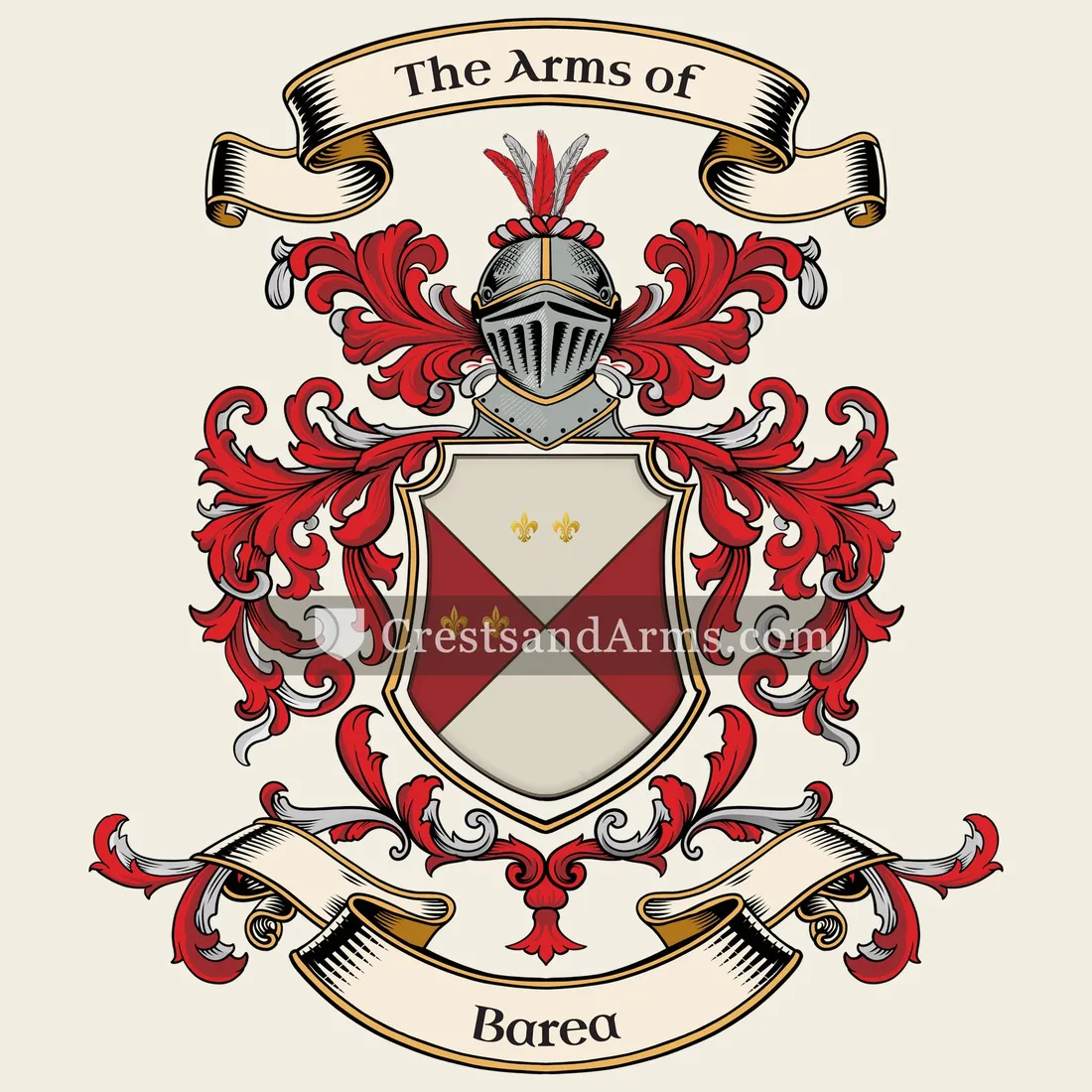


 bendDefence, and the scarf of a commander
 sceptreRoyal authority and justice