Map of France showing where the Barnabe arms are recorded
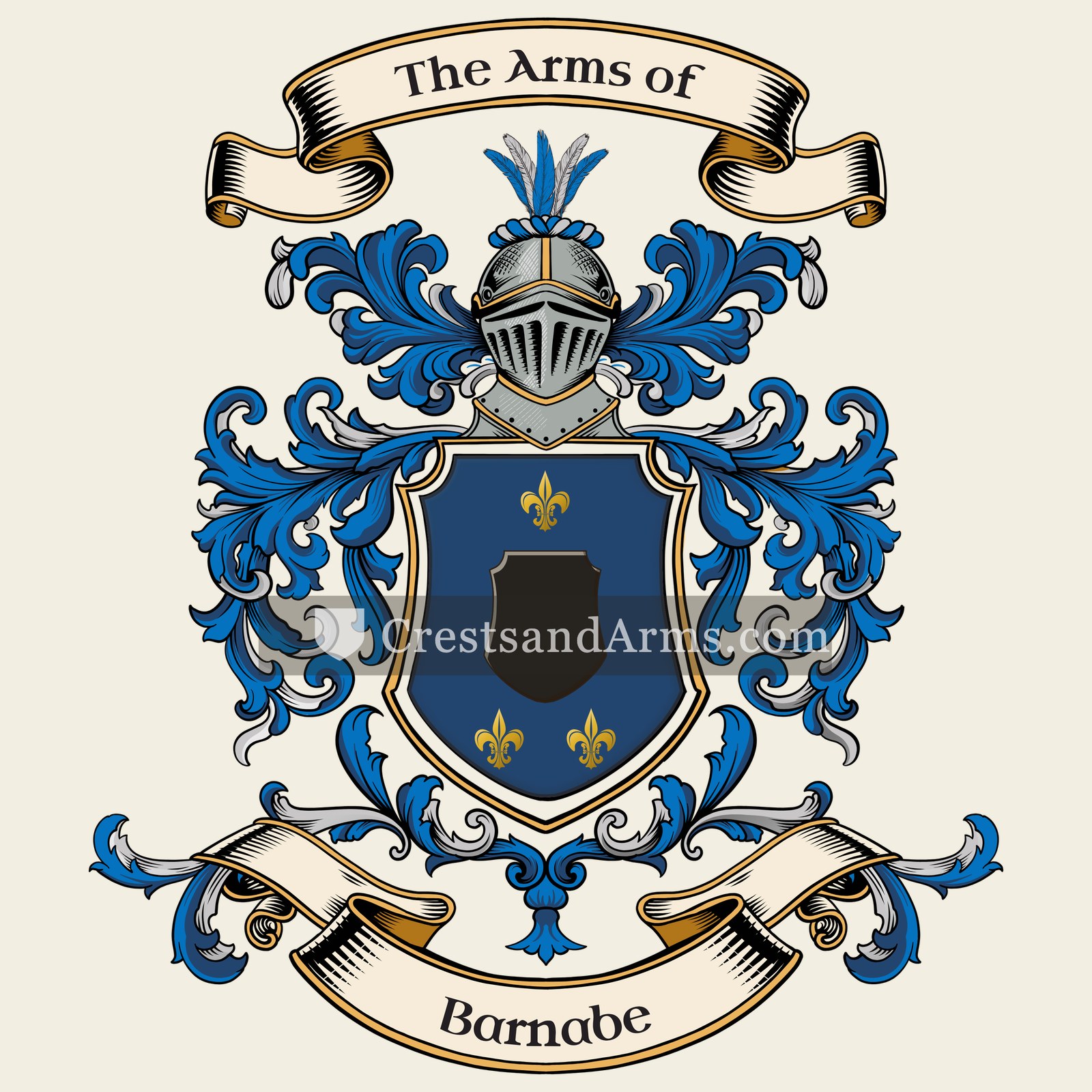
The Barnabe arms were recorded in Anjou, c. 1663.
Anjou was rich valley country along the Loire, with a dense scatter of small manors. Its gentry were numerous rather than wealthy, and even a modest holding was enough to justify a shield of one's own.
This is where the arms were entered in the register. Families often moved to other parts of the country, so the same name can turn up in more than one region.
The body that granted and recorded arms in France in this period.
Louis XIV of France
Sovereign of the period
Louis XIV of France
1643–1715
Reigning in France when the Barnabe arms are first recorded.
How Arms Worked in France
In France, a coat of arms was a mark of honor that passed down through the male line to all legitimate descendants. Families often used the same shield without changes to show their shared heritage. If a branch wanted to stand out, they could add a small mark to their shield to show their specific place in the family tree.
Granting authority
The Juge d'armes de France acted as the official authority that regulated and verified coats of arms across the country.
How they got arms
Families typically inherited their arms from ancestors, though they could also receive them through royal grants or by proving their noble status.
Where arms were recorded
Coats of arms were officially recorded in the Armorial Général de France, which began its main collection in the year 1696.
The family's standing
Recorded among the armigerous families of Anjou.
Origin & History of the Barnabe Family in France
The name Barnabe originates from the ancient Aramaic name Barnabas, which translates to son of consolation or son of encouragement. Over many centuries, this name evolved into a surname as it spread across Europe, eventually becoming well-established in the historical province of Anjou in western France. By the year 1663, records confirm that members of the Barnabe family were firmly rooted in this region, living in a society deeply influenced by agricultural traditions and the social structures of the French monarchy. These early ancestors likely worked as farmers or tradespeople, contributing to the local economy of Anjou before some members of the family eventually sought new opportunities in the colonies of New France. Their presence in the historical records of the seventeenth century highlights a long lineage that connects the family to the cultural and linguistic heritage of the Loire Valley.
Barnabe Meaning & Related Branches
Root word
Barnabas
Aramaic term meaning son of consolation or son of encouragement.
This name
BarnabeA French surname derived from the biblical name signifying a person who provides comfort or support.
also spelled
Barnabee
Barnabeh
Barnaby
Documented Sources
J. B. Rietstap, Armorial Général, Gouda: G. B. van Goor Zonen, 1884–87
Dauzat, Albert. Dictionnaire étymologique des noms et prénoms de France. 1951
Jetté, René. Dictionnaire généalogique des familles du Québec. 1983
Archives nationales d'outre-mer, Fonds du greffe de l'intendant
Bibliothèque et Archives nationales du Québec, Registres de l'état civil
Digital archive packCoat of arms PNG, gold border print PDF, vector SVG and the certificate of authenticity. Sent to your email in minutes.


 fleur de lisPurity, light, and the sixth son
 fleur de lisPurity, light, and the sixth son