Map of Spain showing where the Baro arms are recorded
The Baro arms were recorded in Castile, c. 1722.
Castile was the heart of Spain and the source of most of its noble families. Land won in the long wars against the Moors was granted out to fighting men, and a man granted land was granted arms along with it.
This is where the arms were entered in the register. Families often moved to other parts of the country, so the same name can turn up in more than one region.
The body that granted and recorded arms in Spain in this period.
Philip V of Spain
Sovereign of the period
Philip V of Spain
1714–1724
Reigning in Spain when the Baro arms are first recorded.
How Arms Worked in Spain
In Spain, a coat of arms was considered a form of property that belonged to the entire family line. These arms were passed down from a father to all his children equally. Younger branches of the family usually kept the original design without needing to add any special marks to distinguish their specific line.
Granting authority
The Cronista Rey de Armas was the official body that regulated and granted coats of arms throughout Spain.
How they got arms
Families often obtained their arms through royal grants or by proving their noble status to the official heraldic authority.
Where arms were recorded
Coats of arms were officially recorded in the registers of the Cronista Rey de Armas starting in 1496.
The family's standing
Recorded among the armigerous families of Castile.
Origin & History of the Baro Family in Spain
The surname Baro carries a rich history rooted in the Iberian Peninsula, where it emerged as a distinct identifier long before the eighteenth century. By the year 1722, records confirm that members of the Baro family were firmly established within the Kingdom of Castile, a region that served as the political and cultural heart of Spain during that era. The name likely evolved from local geographic markers or descriptive terms used to distinguish individuals living near specific landmarks or within small rural communities. As the family integrated into the social fabric of Castile, they participated in the typical life of the period, which often involved agricultural management or service to local administrative authorities. This early presence in the Castilian heartland suggests that the family was part of the foundational population that helped shape the region’s identity during the transition into the modern era.
Coat of Arms & Family Crest Details
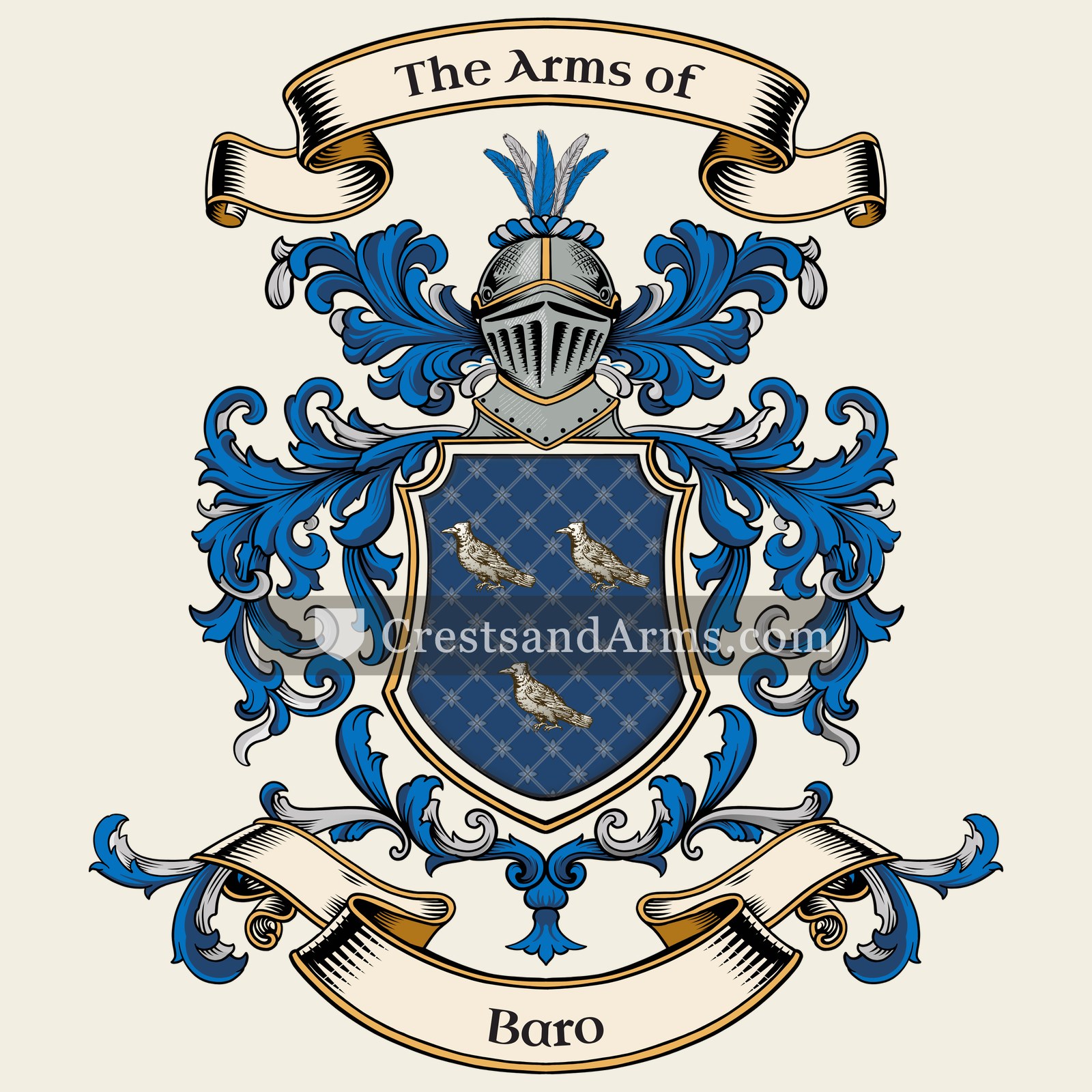
Symbols on this shield
dovePeace, love and the Holy Spirit
Colours
Blue (Azure)Means: Loyalty and truth
Silver (Argent)Means: Peace and sincerity
Historical info
Source
J. B. Rietstap, Armorial Général, Gouda: G. B. van Goor Zonen, 1884–87
Blazon (the actual original written record)
“D'azur à trois colombes d'arg.”
DauphineDauphine, c. 1663
Digital archive packCoat of arms PNG, gold border print PDF, vector SVG and the certificate of authenticity. Sent to your email in minutes.
Map of France showing where the Baro arms are recorded
The Baro arms were recorded in Dauphine, c. 1663.
Dauphine lay in the mountains of south-eastern France, a country of small estates and scattered valleys. Its gentry were many and mostly modest, and even a small landholding was enough to justify arms.
This is where the arms were entered in the register. Families often moved to other parts of the country, so the same name can turn up in more than one region.
The body that granted and recorded arms in France in this period.
Louis XIV of France
Sovereign of the period
Louis XIV of France
1643–1715
Reigning in Spain when the Baro arms are first recorded.
How Arms Worked in France
In France, a coat of arms was a mark of honor that passed down through the male line to all legitimate descendants. Families often used the same shield without changes to show their shared heritage. If a branch wanted to stand out, they could add a small mark to their shield to show their specific place in the family tree.
Granting authority
The Juge d'armes de France acted as the official authority that regulated and verified coats of arms across the country.
How they got arms
Families typically inherited their arms from ancestors, though they could also receive them through royal grants or by proving their noble status.
Where arms were recorded
Coats of arms were officially recorded in the Armorial Général de France, which began its main collection in the year 1696.
The family's standing
Recorded among the armigerous families of Dauphine.
Origin & History of the Baro Family in France
The family name Baro finds its historical roots in the rugged and mountainous region of Dauphiné in southeastern France. By the year 1663, records confirm that members of the family were well-established within this province, which served as a vital gateway between the French kingdom and the Italian states. The name likely evolved from local linguistic traditions, potentially relating to the geographical features of the Alpine landscape or specific roles held by ancestors within their rural communities. During the seventeenth century, families in Dauphiné often lived in close-knit mountain villages where they maintained strong ties to the land and local parish life. As the region was frequently impacted by religious and political shifts during this era, the Baro family would have navigated the complexities of life under the French monarchy while preserving their regional identity. Their presence in this area suggests a long history of resilience and adaptation within the diverse social structure of early modern France.
Baro Meaning & Related Branches
Root word
Varus
Latin term meaning bent, knock-kneed, or bow-legged.
This name
BaroA topographic name for someone living near a barrier or a descriptive nickname for a bow-legged person.
also spelled
Barro
Barrow
Documented Sources
J. B. Rietstap, Armorial Général, Gouda: G. B. van Goor Zonen, 1884–87
Archivo de la Real Chancillería de Valladolid, Registro de Ejecutorias
Archivo Histórico Nacional, Sección Nobleza
Moll, Francesc de Borja, Els llinatges catalans, 1959
Pescador del Hoyo, María del Carmen, La población de Castilla en el siglo XVIII, 1964
Digital archive packCoat of arms PNG, gold border print PDF, vector SVG and the certificate of authenticity. Sent to your email in minutes.


 paleMilitary strength, and a fortified defence
 paleMilitary strength, and a fortified defence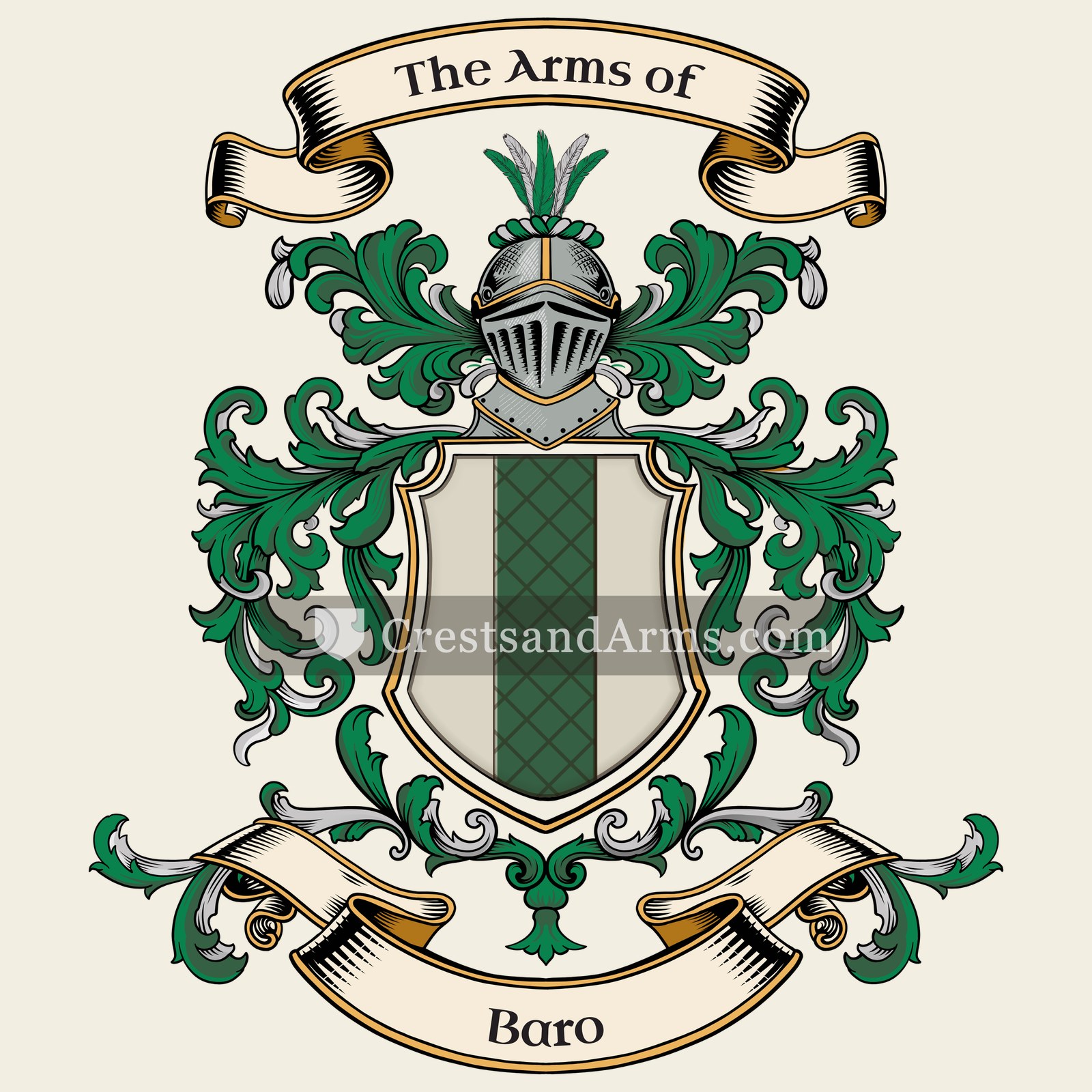


 dovePeace, love and the Holy Spirit